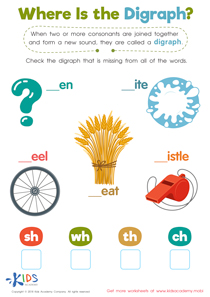
Sound recognition Beginning Consonants Worksheets for Ages 3-6
3 filtered results
-
From - To
Explore our engaging "Sound Recognition Beginning Consonants Worksheets" tailored for children aged 3-6! These expertly designed worksheets help young learners effortlessly recognize and identify consonant sounds. By associating various objects with their beginning phonetic sounds, kids enhance their auditory skills, improve phonemic awareness, and build a robust foundation for reading. Ideal for both classroom and at-home practice, these activities make learning enjoyable through interactive and age-appropriate exercises. Set your child on the path to success with our fun and effective consonant sound worksheets. Visit to download, print, and start learning today!
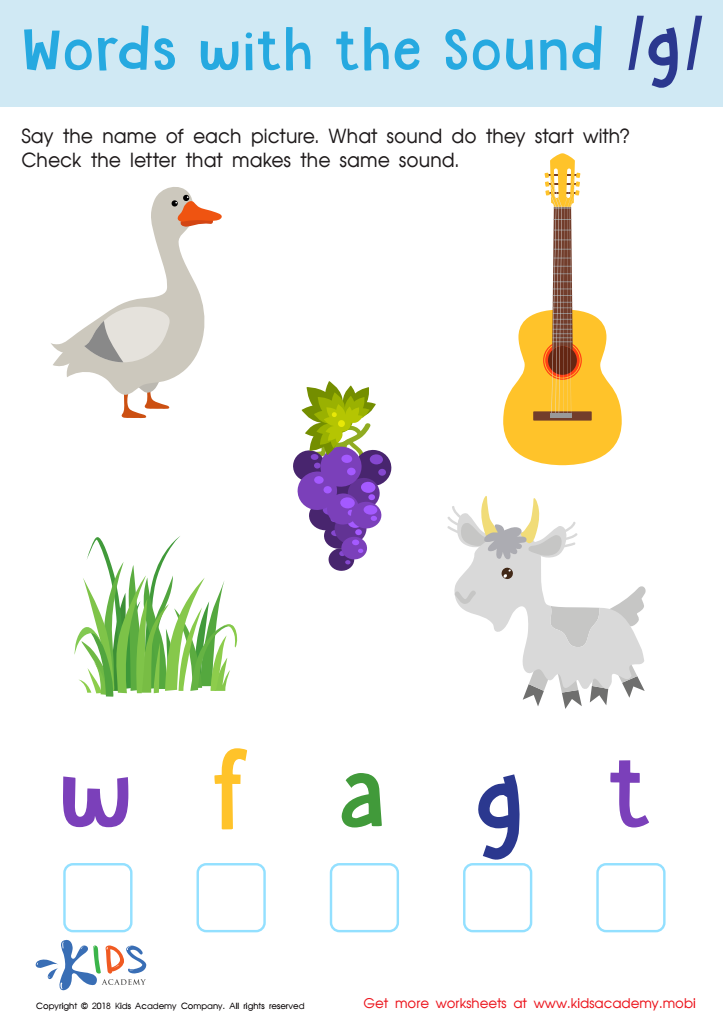
Words with sound g Reading Worksheet
 Assign to My Students
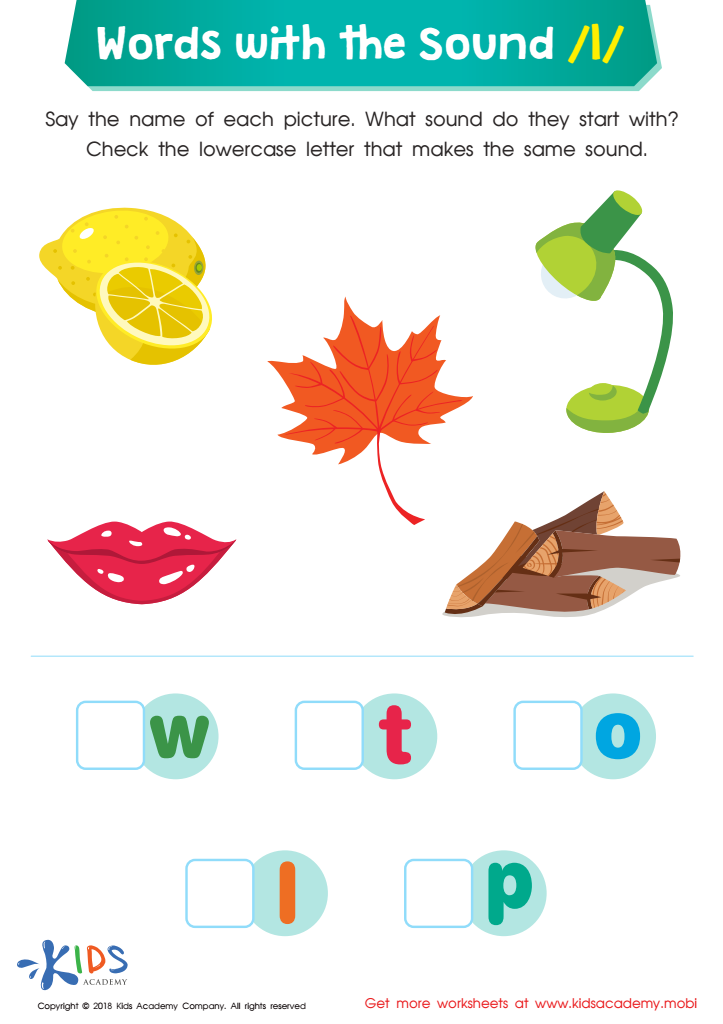
Words with Sound L Reading Worksheet
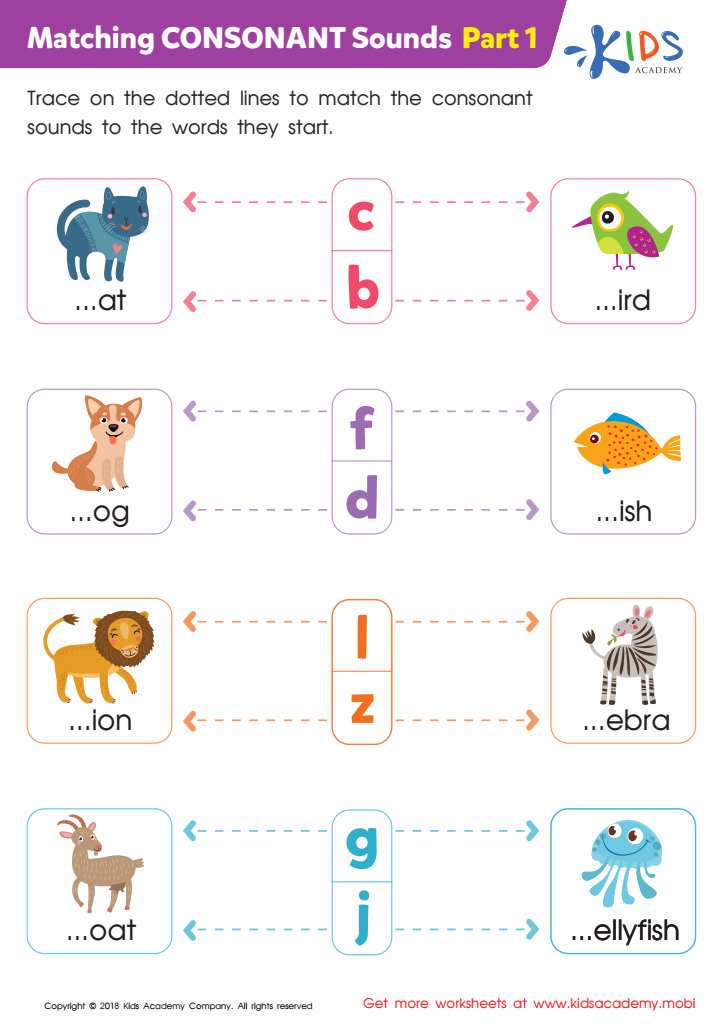
Matching Consonant Sounds: Part 1 Worksheet


Sound recognition and beginning consonants are crucial components of early childhood education, especially for ages 3-6, a critical period for language development. During these formative years, children rapidly acquire communication skills, and understanding consonant sounds lays a foundation for reading and writing proficiency.
Firstly, recognizing beginning consonants helps children develop phonemic awareness—the ability to hear, identify, and manipulate phonemes. This skill is a strong predictor of future reading success. When children can identify consonant sounds, they start to understand how sounds correlate with written letters, facilitating their decoding skills, which are essential for reading fluency.
Furthermore, early mastery of beginning consonants enhances vocabulary development. Children who can recognize sounds are better at figuring out new words, leading to improved language comprehension and communication skills. This foundational knowledge also fosters a love for reading, as kids who find reading easy are more likely to engage with books.
Teachers and parents play a pivotal role in this developmental stage. Activities such as reading aloud, playing sound-matching games, and encouraging the pronunciation of words can make the learning process engaging and effective. By focusing on sound recognition and beginning consonants, educators and parents help set the stage for their children's academic success and lifelong learning enthusiasm.