Discover our engaging Phonics Recognition Letter Sounds Worksheets designed specifically for children ages 3-6. These interactive resources help young learners master essential letter sounds, laying a strong foundation for reading and literacy. With vibrant illustrations and fun activities, each worksheet captures children's interest while enhancing their phonetic awareness. Perfect for home or classroom use, our worksheets support skill development in a playful and effective manner. Enable your little ones to explore the world of sounds through enjoyable exercises that promote both learning and confidence. Start their phonics journey today and watch as they bloom into budding readers!

Check out this FREE Trial Lesson on Letter Sounds for age 3-6!

One-to-one Letter-sound Correspondence

Favorites
With answer key
Interactive
  • 3-6
  • Phonics recognition
  • Letter Sounds
Letter K Sounds Worksheet

Letter K Sounds Worksheet

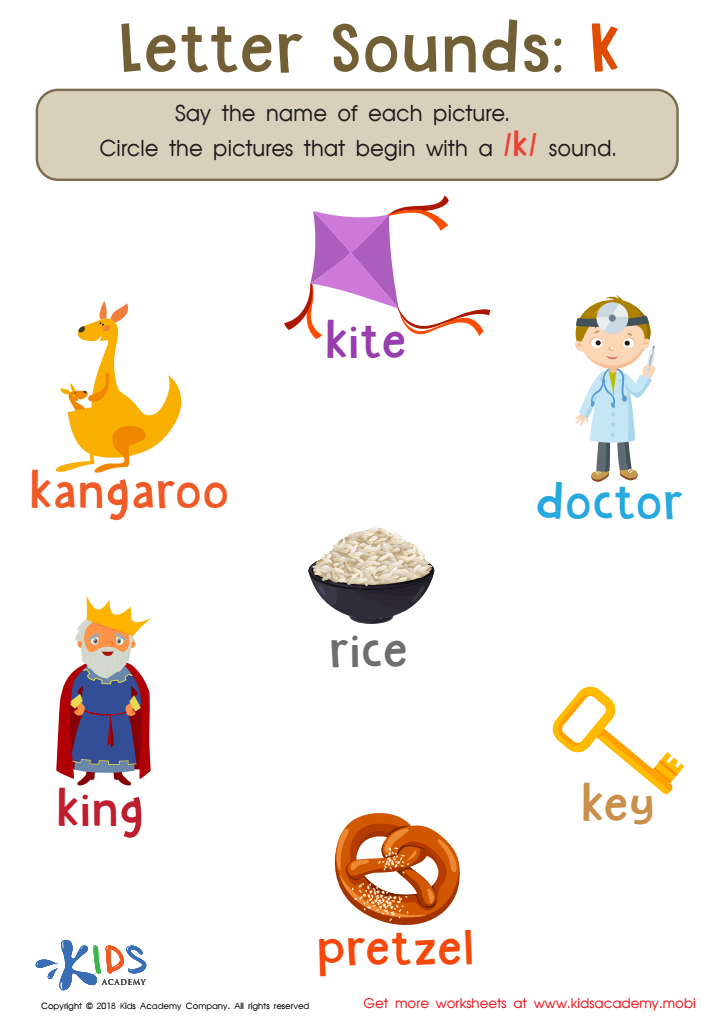
Help your child practice phonics with Kids Academy's illustrated worksheet! Have them look at the pictures, read the words and say them aloud. Only circle those that start with a hard 'K' sound. Perfect for preschoolers and kindergarteners! Plus, they'll learn the silent K used in a few words.
Letter K Sounds Worksheet
Worksheet
What Sound Is it? Worksheet

What Sound Is it? Worksheet

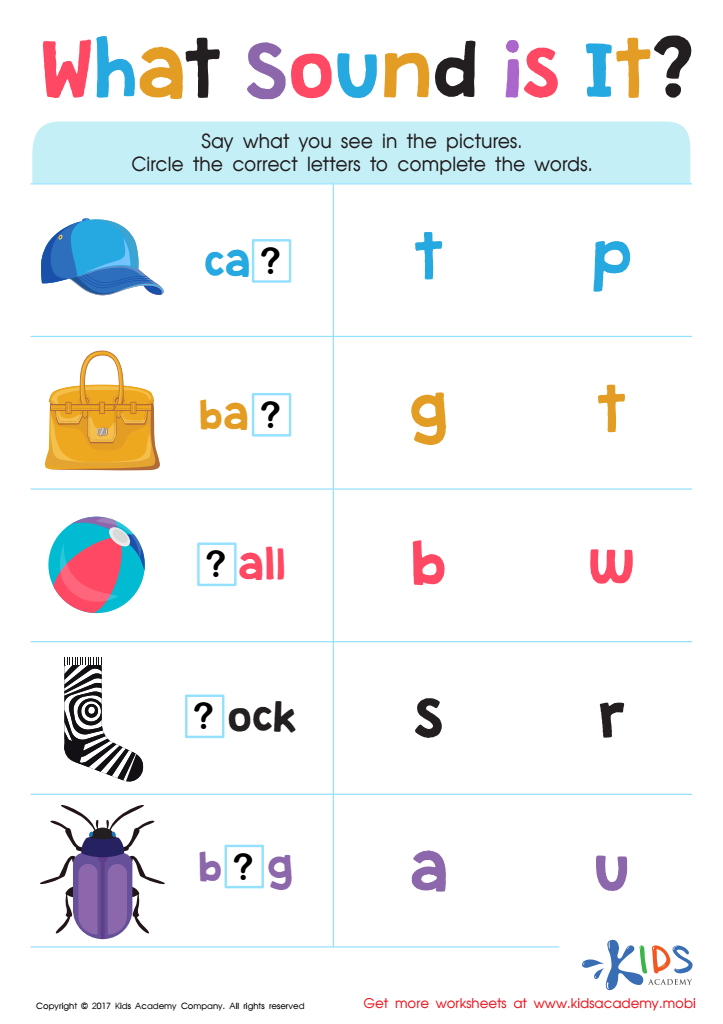
Have your child say the words for the pictures on this fun worksheet. As he or she sounds out the word, your child will use the provided letter choices to complete it, building reading and phonics skills. Visual cues make it easier to identify the correct beginning, middle, or end sound.
What Sound Is it? Worksheet
Worksheet
Letter Sounds: J Printable Worksheet

Letter Sounds: J Printable Worksheet

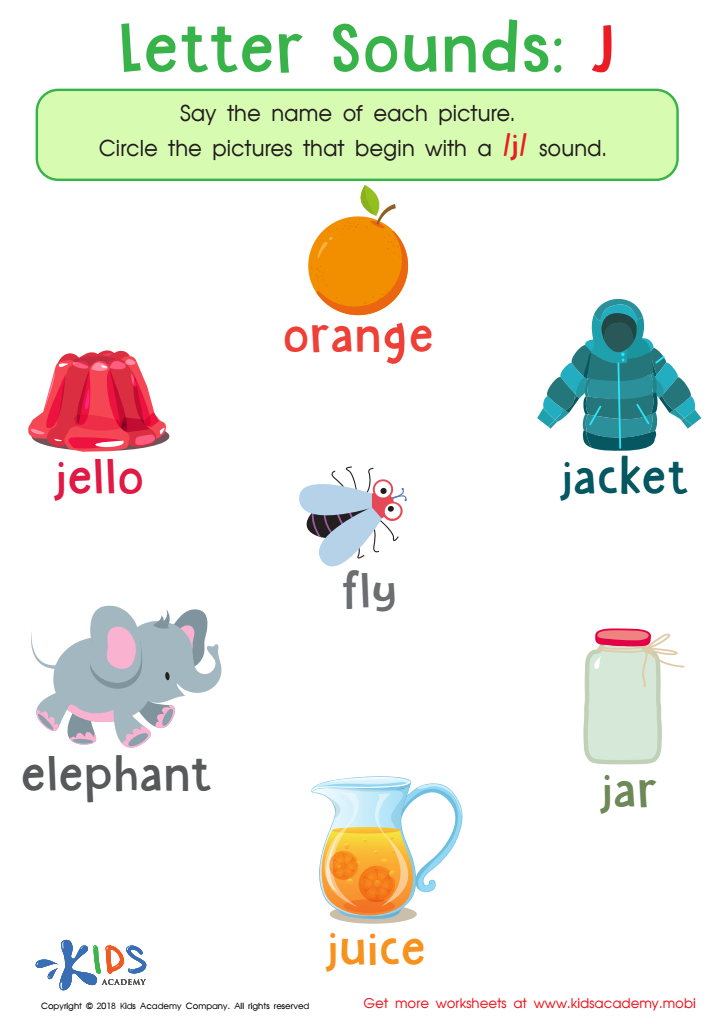
Preschoolers can learn to identify letter sounds by focusing on beginning sounds. This cute and colorful worksheet reviews the hard “j” sound. Kids can point it out by naming the words and circling only those starting with the “j” sound. Read the text out loud and listen closely!
Letter Sounds: J Printable Worksheet
Worksheet
Choose a Sound Worksheet

Choose a Sound Worksheet

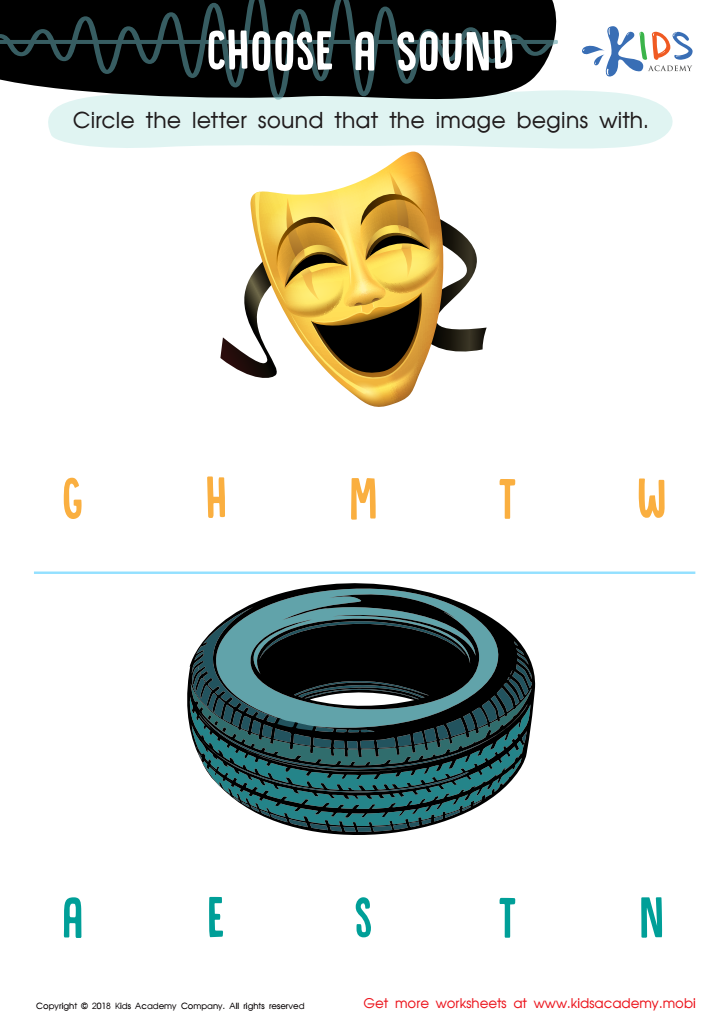
Help your child hone pre-reading skills with this colorful worksheet! They'll practice tracing letter sounds, develop phoneme awareness, and gain confidence. Plus, it's a fun way to work on their fine motor skills.
Choose a Sound Worksheet
Worksheet
Listen to the Sounds Worksheet

Listen to the Sounds Worksheet

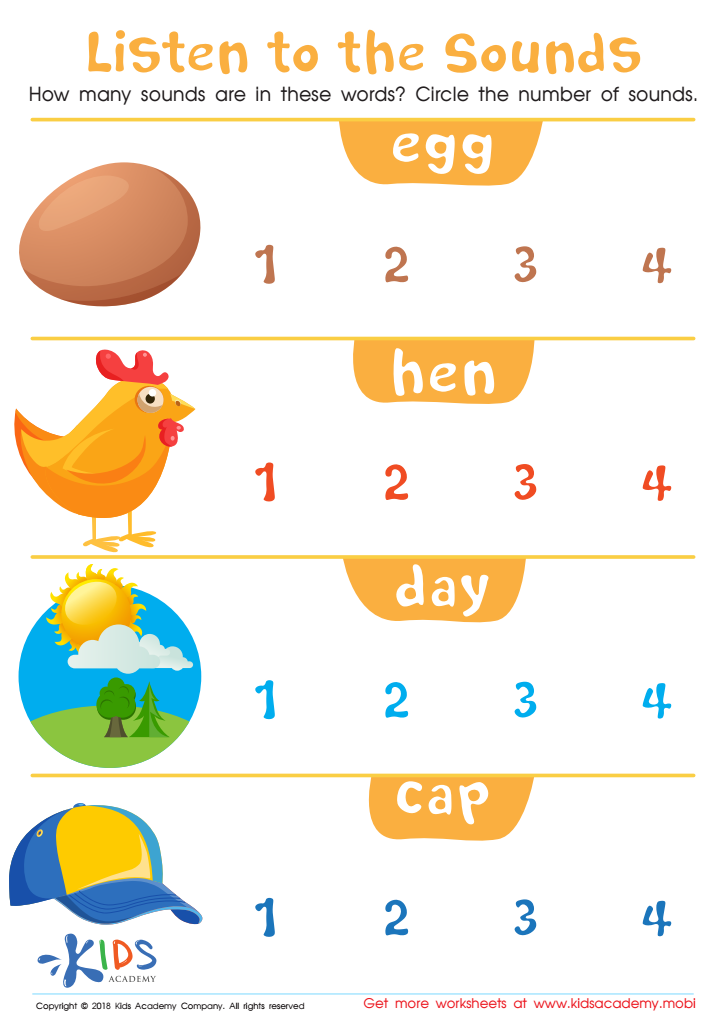
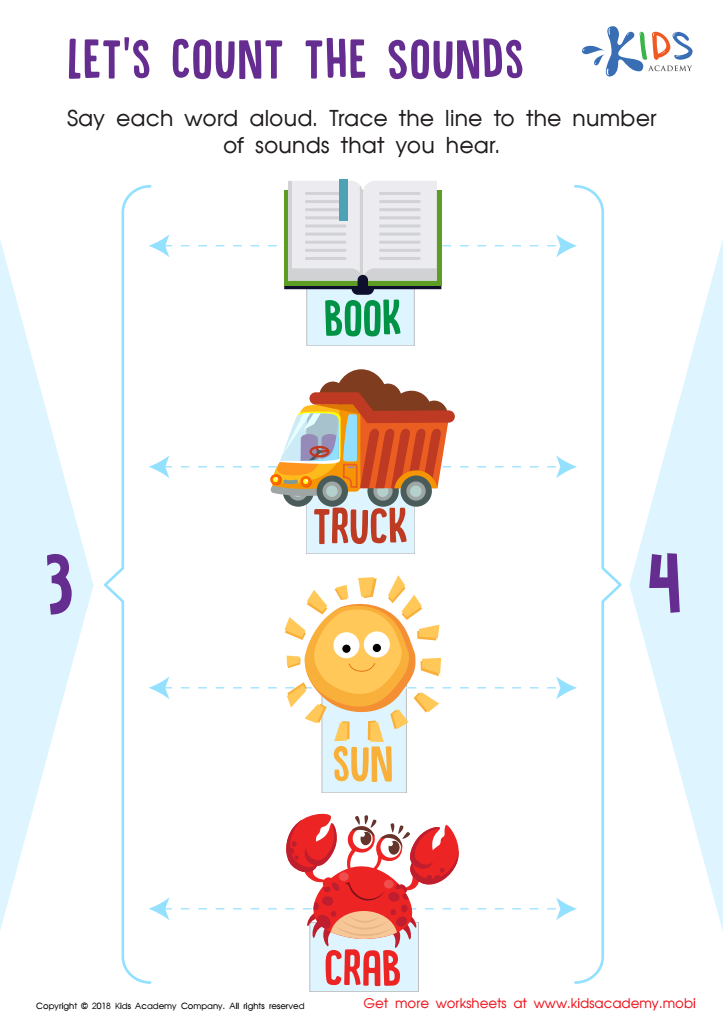
This worksheet builds emerging readers' skills in using sounds for reading and spelling. It helps strengthen auditory processing by having them count the sounds in each word, then trace the corresponding number. Fun and cheerful!
Listen to the Sounds Worksheet
Worksheet
Let's Count the Sounds Worksheet

Let's Count the Sounds Worksheet

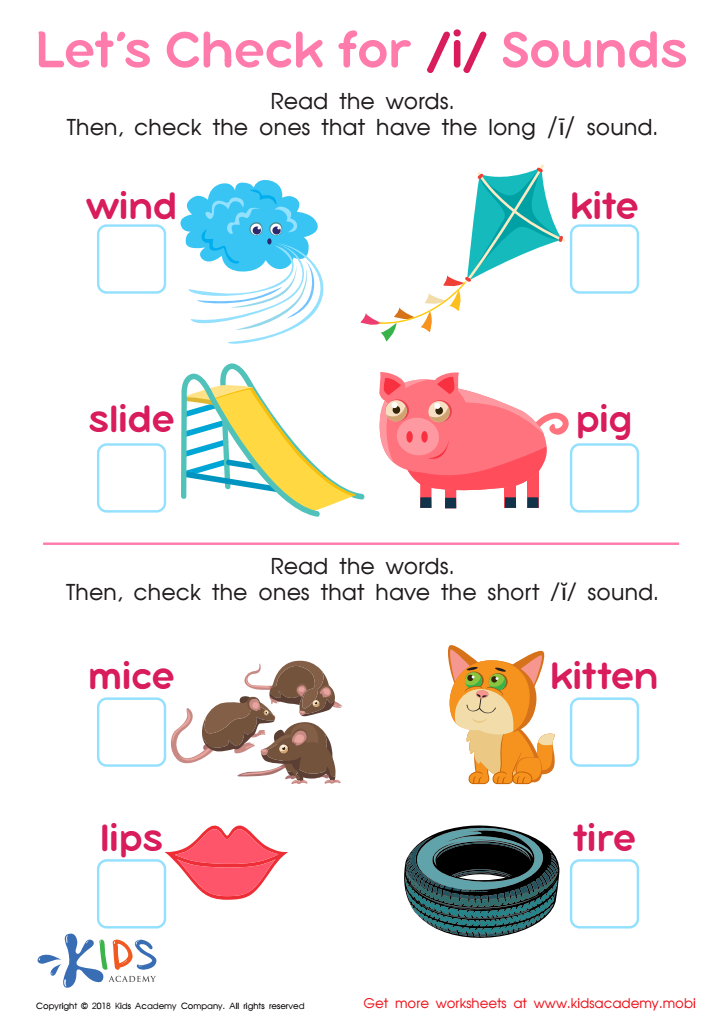
This bright and cheery traceable worksheet encourages children to practice auditory discrimination and phonological awareness. Using picture clues, they read each word and trace the line that represents the number of sounds heard. This builds decoding skills and helps them become successful readers.
Let's Count the Sounds Worksheet
Worksheet
Let's Check for «i» Sounds Worksheet


Let's Check for «i» Sounds Worksheet

This fun worksheet with pictures boosts phonics skills - differentiating between long «ī» and short «i» sounds in 1- and 2-syllable words. Kids use picture clues to read words, then check off the correct ones. It's a great way for new readers to practice early reading skills and find success on their own.
Let's Check for «i» Sounds Worksheet

Worksheet


Phonics recognition, particularly letter sounds, is a fundamental skill for young children aged 3-6 that lays the groundwork for reading and writing. Understanding phonics enables children to connect sounds with their corresponding letters, fostering the ability to decode words. This skill is crucial for literacy development, as it empowers children to sound out unfamiliar words independently, enhancing their reading fluency and comprehension.

Moreover, children who develop strong phonics skills early on exhibit higher confidence in their reading abilities. This boosts their motivation to engage with books and promotes a lifelong love of reading. Phonics also plays a crucial role in spelling; when children know how letters correspond to sounds, they can apply that knowledge to write words correctly.

For parents and teachers, focusing on phonics recognition supports overall academic success. Children with a solid grasp of phonics are often better prepared for future learning and exhibit improved performance in school. Additionally, by nurturing early reading skills, adults can help close literacy gaps, ensuring all children have equal opportunities for success. Ultimately, investing in phonics recognition not only fosters essential language skills but also supports emotional development and self-esteem, setting a strong foundation for lifelong learning.