Filters

7 filtered results

Clear all filters
Favorites
With answer key
Interactive

7 filtered results

Difficulty Level

Grade


Enhance early literacy skills with our Vocabulary Enhancement Letter Sounds Worksheets, designed for children aged 3-6. These engaging worksheets help young learners connect sounds with letters, strengthening their vocabulary and phonemic awareness. Through fun and interactive activities, kids will explore new words and practice letter sounds, laying a solid foundation for reading success. Perfect for homeschooling or classroom use, our resources encourage developmental learning in an enjoyable way. Dive into a colorful world of letters and sounds, and watch your child’s confidence and language skills grow! Discover these invaluable tools today to foster a lifelong love for learning.

Check out this FREE Trial Lesson on Letter Sounds for age 3-6!

Letter Sound Relationship N-P

Favorites
With answer key
Interactive
  • 3-6
  • Vocabulary enhancement
  • Letter Sounds
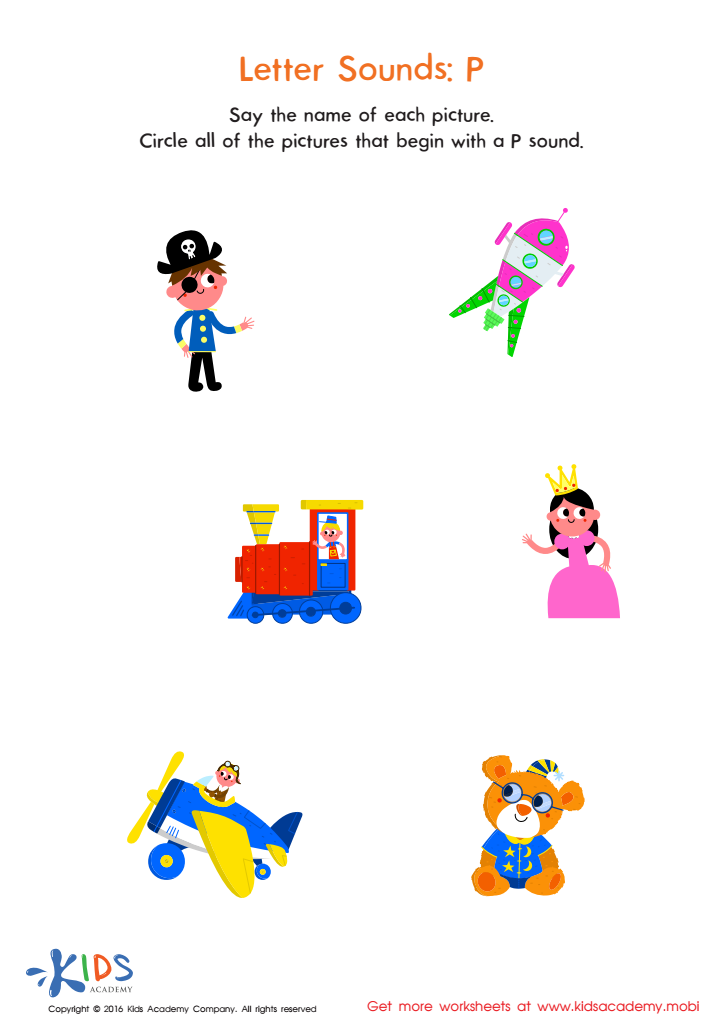
Letter p sound worksheet

Letter P Sound Worksheet

Think P! Kids practice phonics with this fun letter P worksheet. With delightful illustrations, they'll sound out simple words and get closer to reading.
Letter P Sound Worksheet
Worksheet
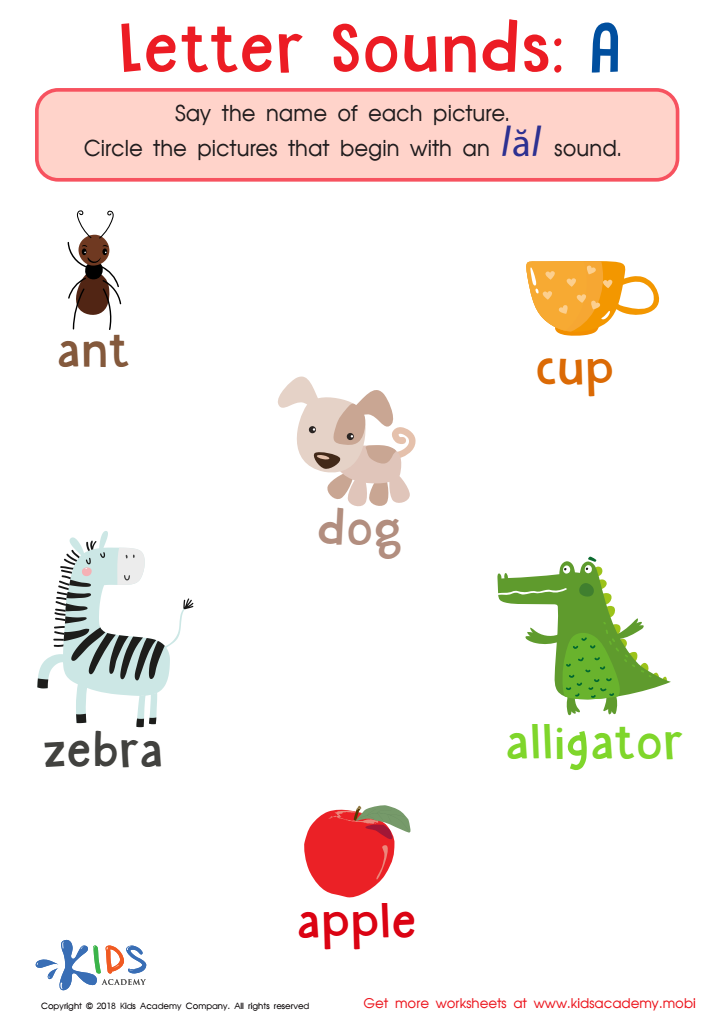
Letter A Sounds Worksheet

Letter A Sounds Worksheet

Encourage your new reader to practice the «ă» sound with this fun, free PDF worksheet. With the help of picture clues, they'll say the name of each word and trace circles around the items that start with «ă». This worksheet is an effective way to boost beginning sound skills while having fun!
Letter A Sounds Worksheet
Worksheet
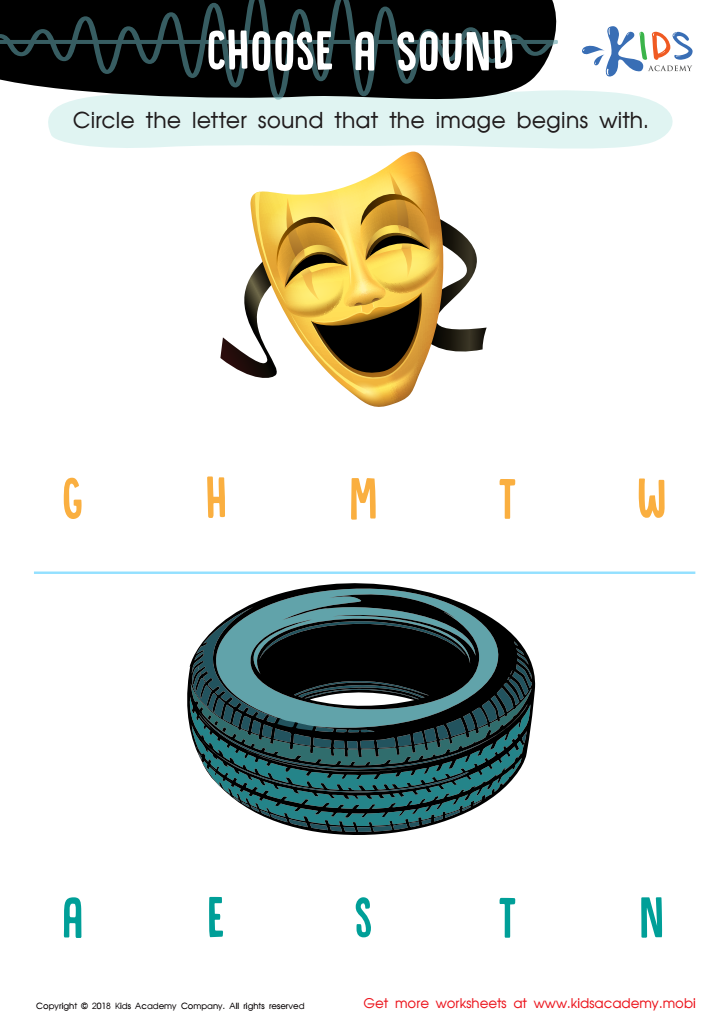
Choose a Sound Worksheet

Choose a Sound Worksheet

Help your child hone pre-reading skills with this colorful worksheet! They'll practice tracing letter sounds, develop phoneme awareness, and gain confidence. Plus, it's a fun way to work on their fine motor skills.
Choose a Sound Worksheet
Worksheet
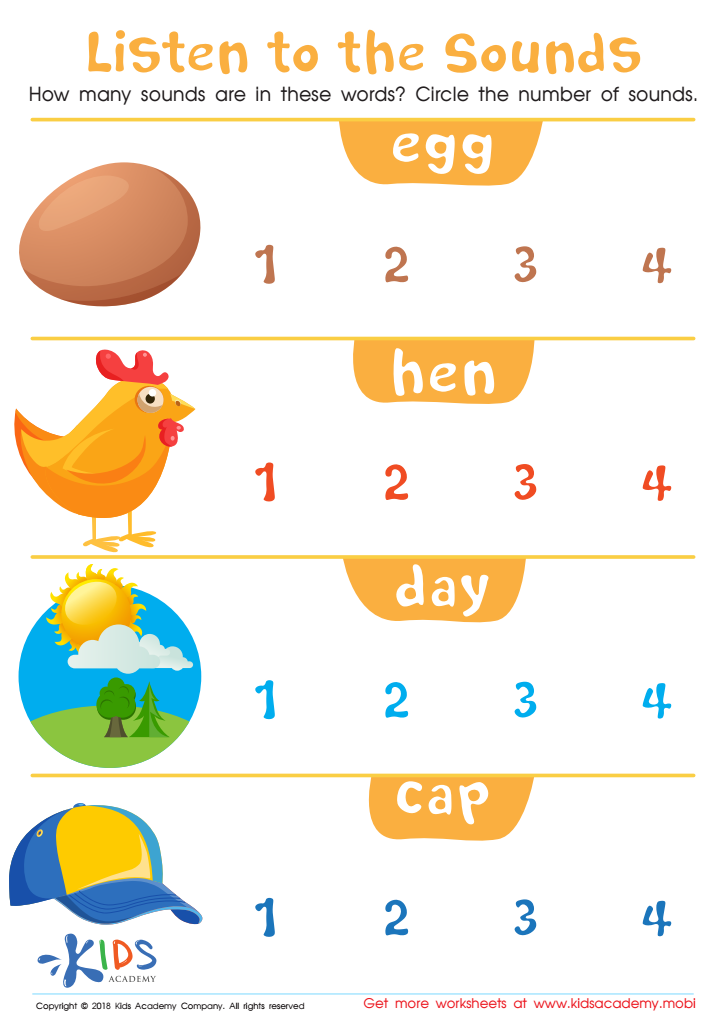
Listen to the Sounds Worksheet

Listen to the Sounds Worksheet

This worksheet builds emerging readers' skills in using sounds for reading and spelling. It helps strengthen auditory processing by having them count the sounds in each word, then trace the corresponding number. Fun and cheerful!
Listen to the Sounds Worksheet
Worksheet
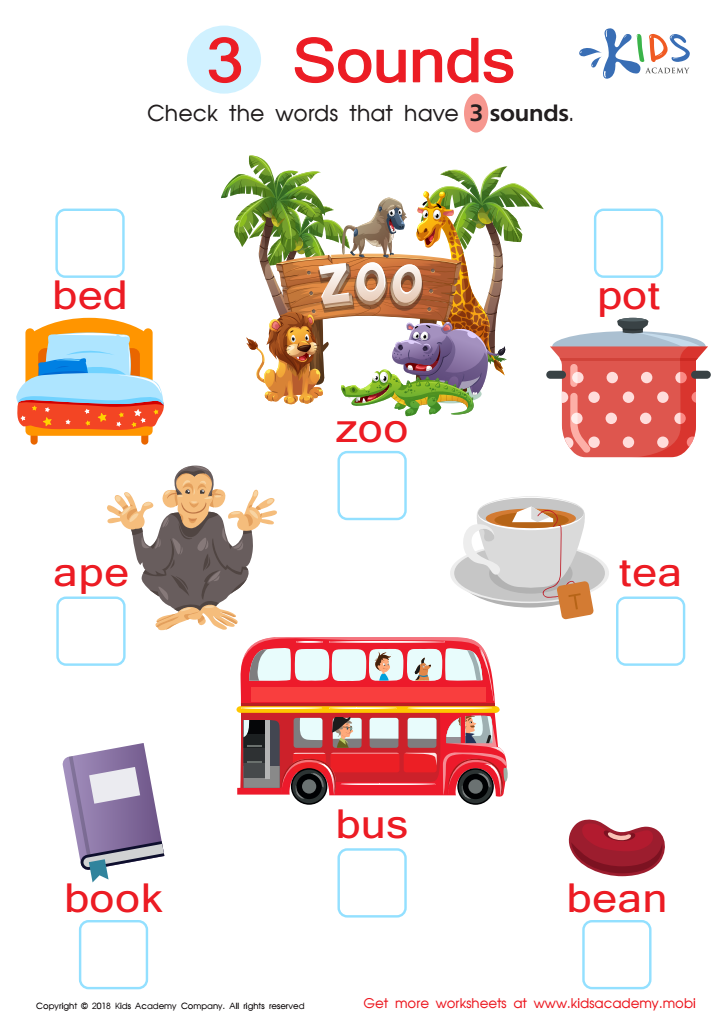
3 Sounds Worksheet
3 Sounds Worksheet

3 Sounds Worksheet

Kids will love learning with this free, colorful worksheet. It's full of familiar words they can name and sound out with three distinct sounds. This helps build decoding skills, plus they get to check off words they read. It's a fun way to teach children to identify and use sounds.
3 Sounds Worksheet
Worksheet
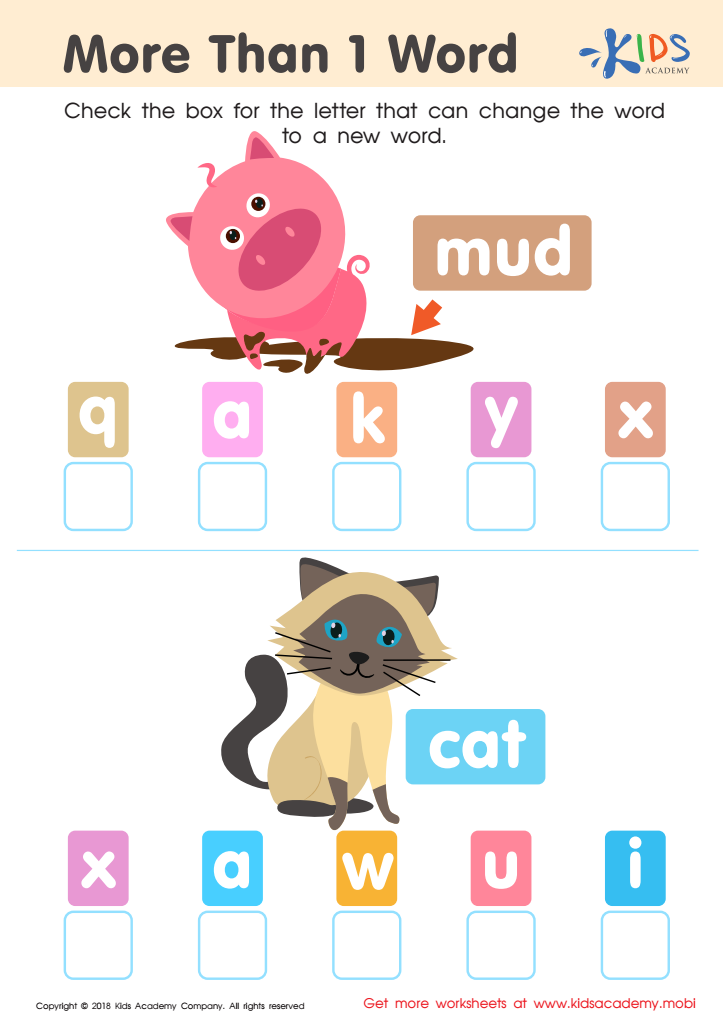
More than 1 word Worksheet

More than 1 word Worksheet

Test your child's reading skills with this fun worksheet! Point out the word in each picture, then switch the middle letter of each word with one from the list and check the box when you find a new word. It's a great way to develop your child's reading skills!
More than 1 word Worksheet
Worksheet
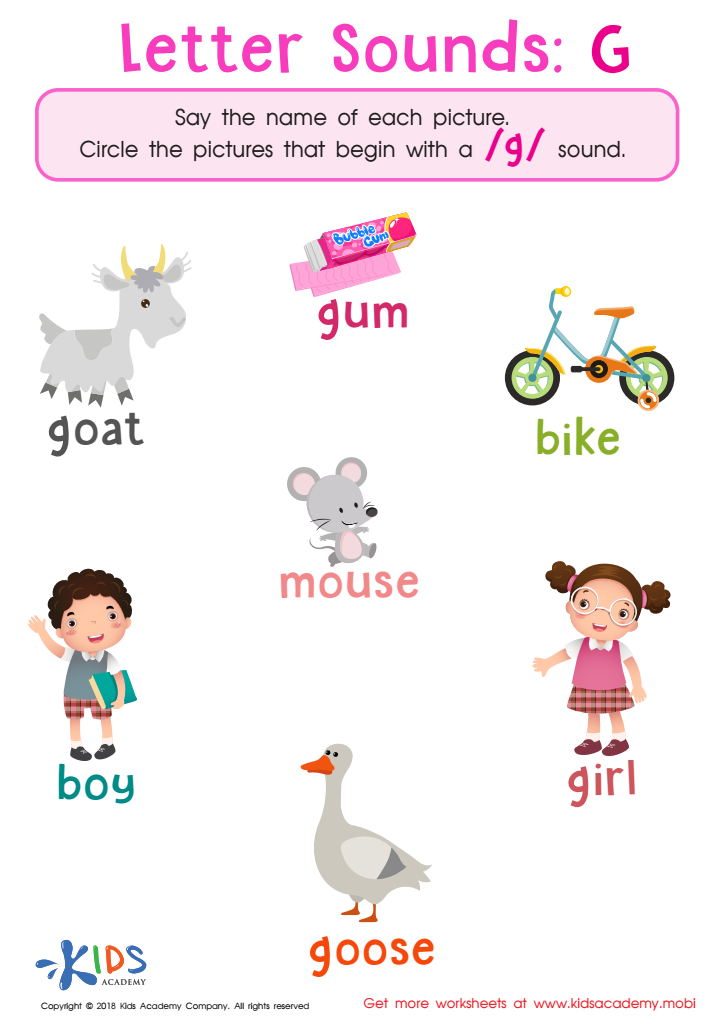
Letter G Sounds Worksheet


Letter G Sounds Worksheet

Help emerging readers build confidence by giving them practice identifying hard "G" with this free PDF worksheet. They'll use picture clues to name the words, and practice fine-motor skills tracing circles around the corresponding pics. It's a great way to introduce or reinforce hard "G" words.
Letter G Sounds Worksheet
Worksheet


Vocabulary enhancement and letter sounds are crucial for children aged 3-6 as they lay the foundation for reading and language skills. During these formative years, children’s brains are rapidly developing, making them highly receptive to new words and sounds. Engaging with varied vocabulary helps to stimulate their cognitive abilities, encouraging deeper comprehension and effective communication.

For parents and teachers, focusing on vocabulary and letter sounds is vital because these skills are directly tied to literacy development. When children understand more words and can recognize letter sounds, they become more proficient readers and writers. This proficiency not only boosts academic performance but also builds self-esteem, making children more eager to engage in learning experiences.

Moreover, the achievements gained through early vocabulary and phonetic recognition can create a love for reading. This enthusiasm often leads to lifelong reading habits, paving the way for success in school and beyond.

Ultimately, investing time and resources in vocabulary enhancement and letter sounds cultivates critical thinking, self-expression, and a solid communicative foundation in children, making it essential for parents and teachers to prioritize these aspects in early education.