Handwriting practice Lowercase/Small Letters Worksheets for Ages 3-6
8 filtered results
-
From - To
Enhance your child’s handwriting skills with our engaging lowercase/small letters worksheets, designed specifically for ages 3 to 6. These printable worksheets are perfect for young learners, providing a fun and effective way to master their letters. Each activity encourages kids to trace, write, and recognize lowercase letters, fostering both fine motor skills and letter familiarity. Our colorful, interactive designs captivate children’s attention and make learning enjoyable. Whether at home or in the classroom, these handwriting practice worksheets offer a valuable resource for early literacy development. Begin your child's writing journey today and watch their confidence flourish with each stroke!
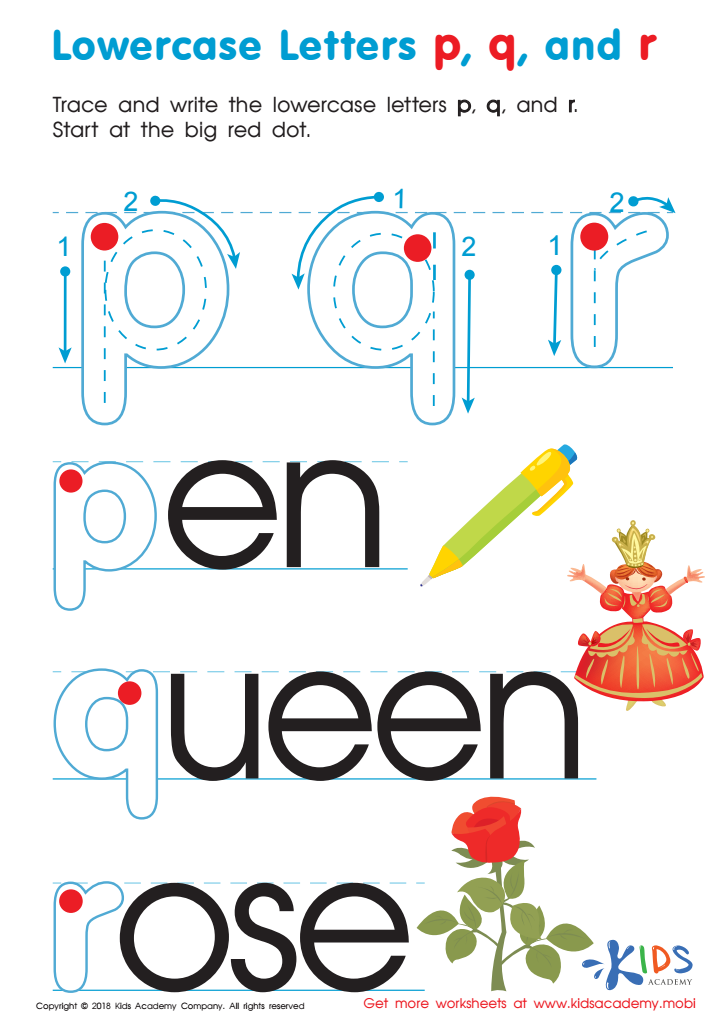
Lowercase Letters p q r Worksheet
 Assign to My Students
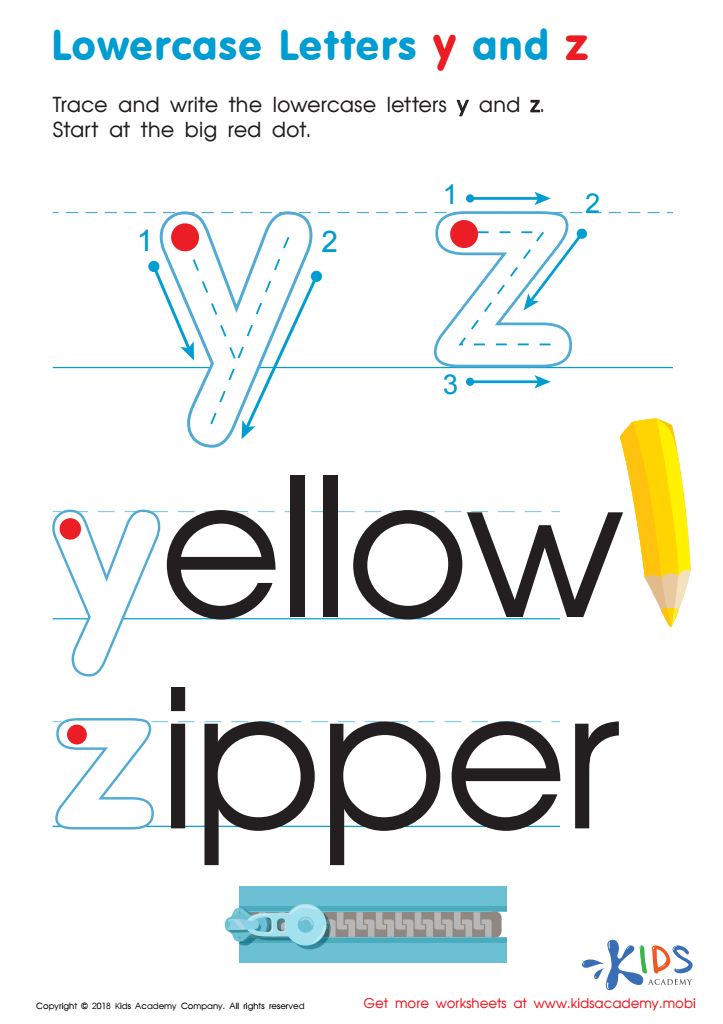
Lowercase Letters y z Worksheet
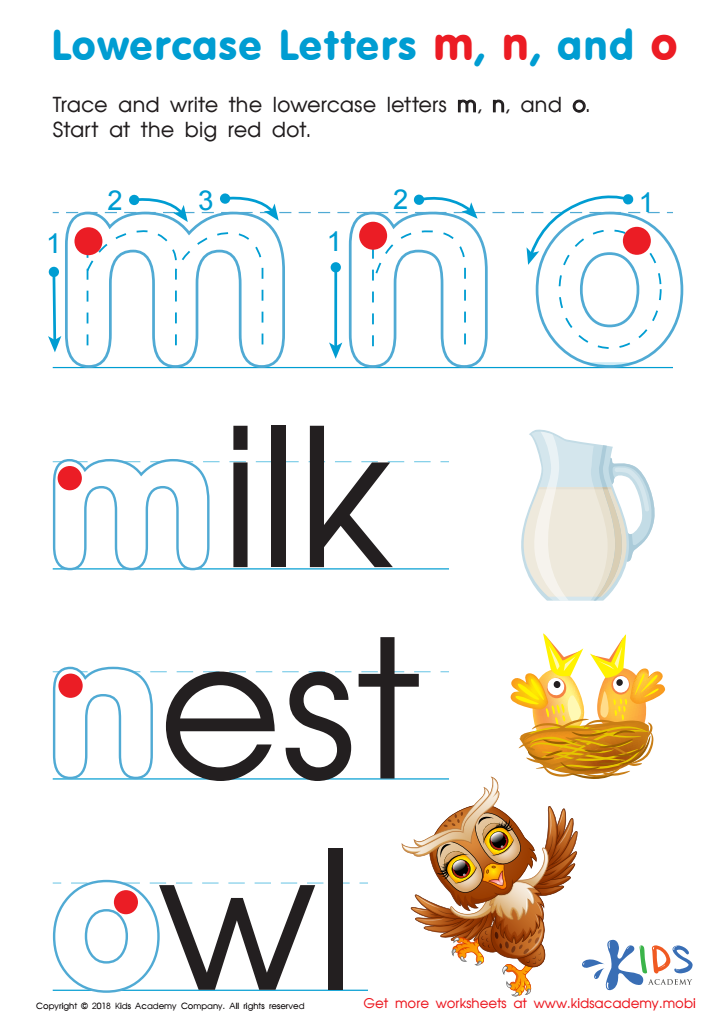
Lowercase Letters m n o Worksheet
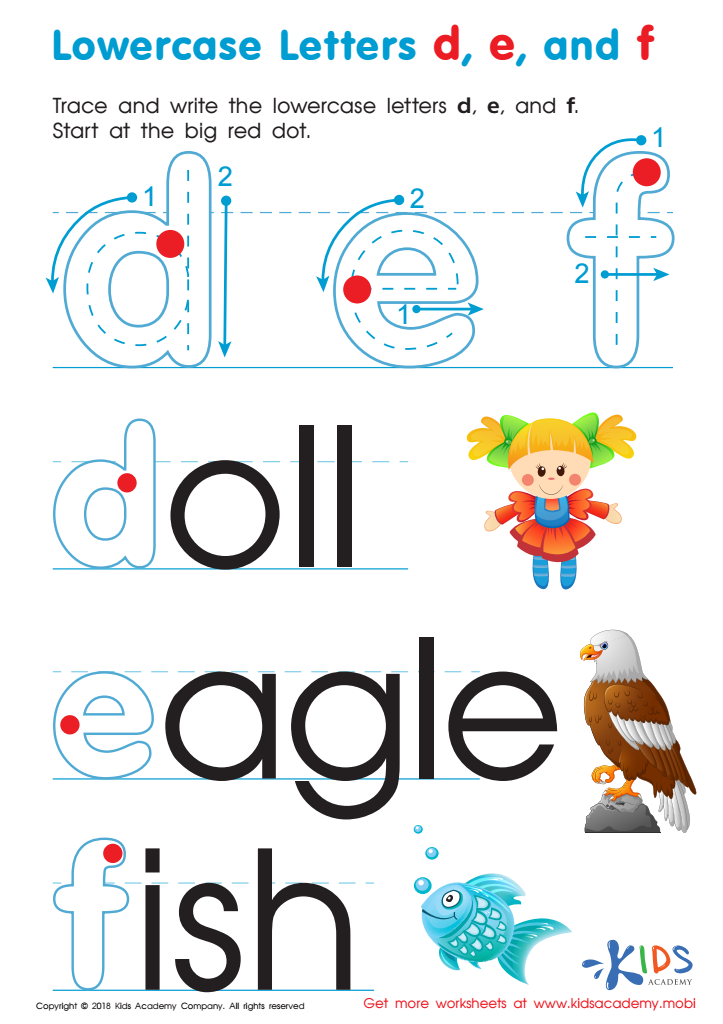
Lowercase Letters d e f Worksheet
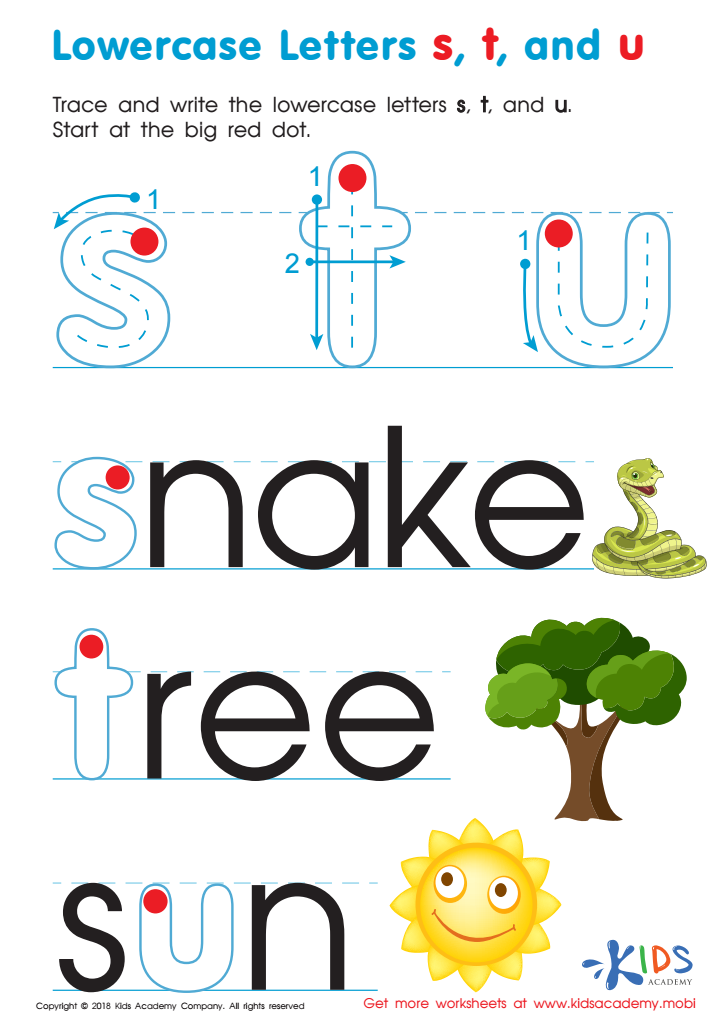
Lowercase Letters s t u Worksheet
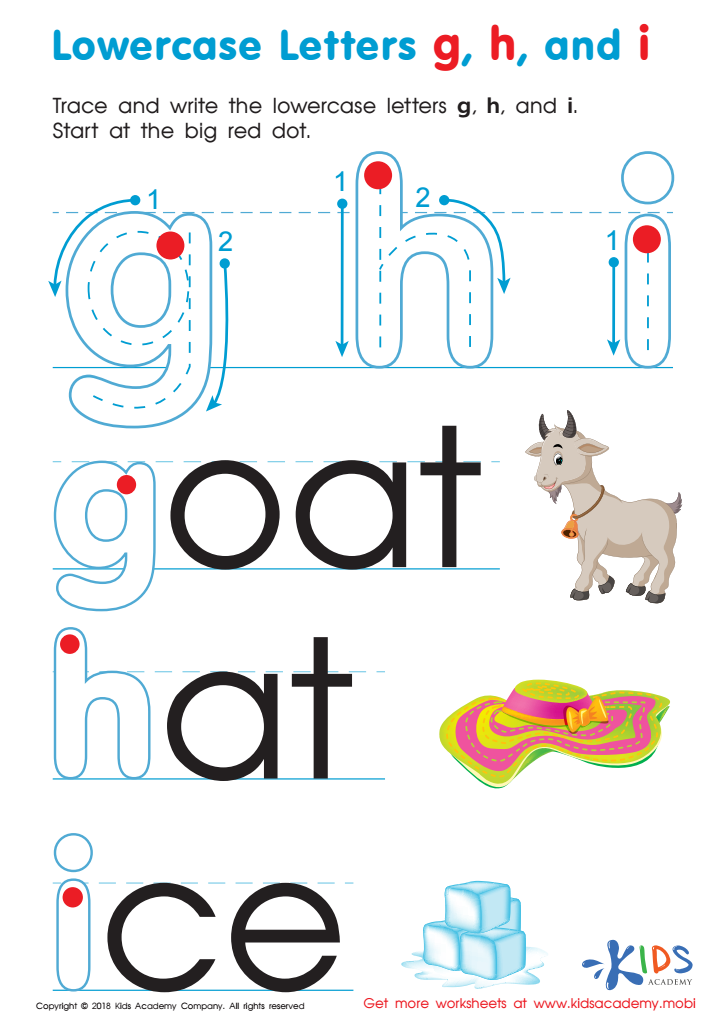
Lowercase Letters g h i Worksheet
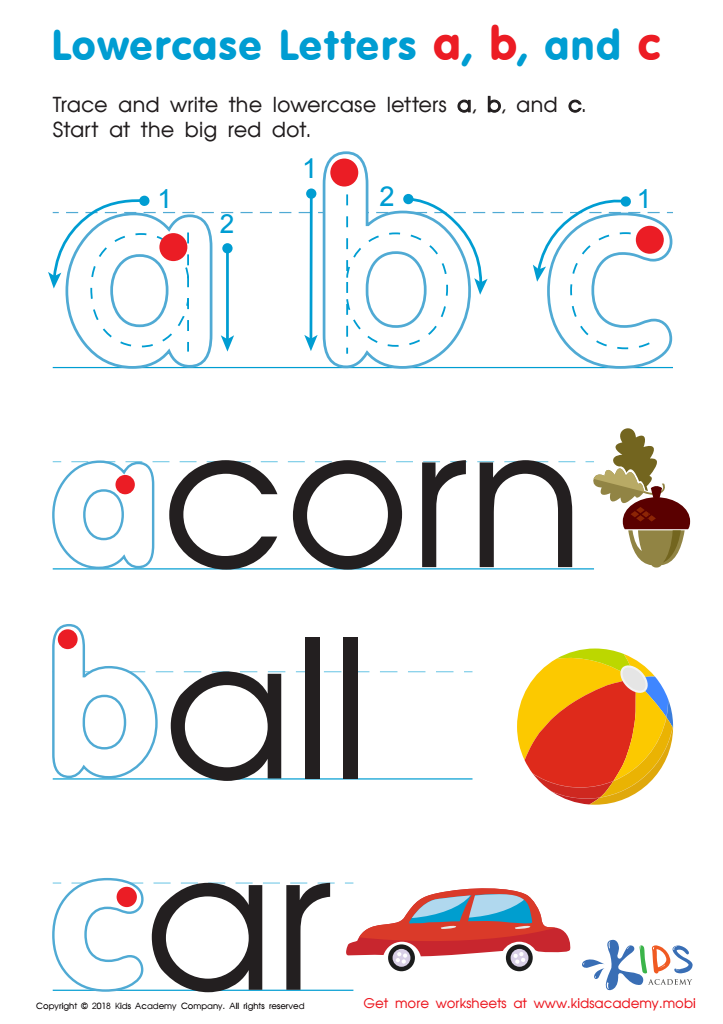
Lowercase Letters a b c Worksheet
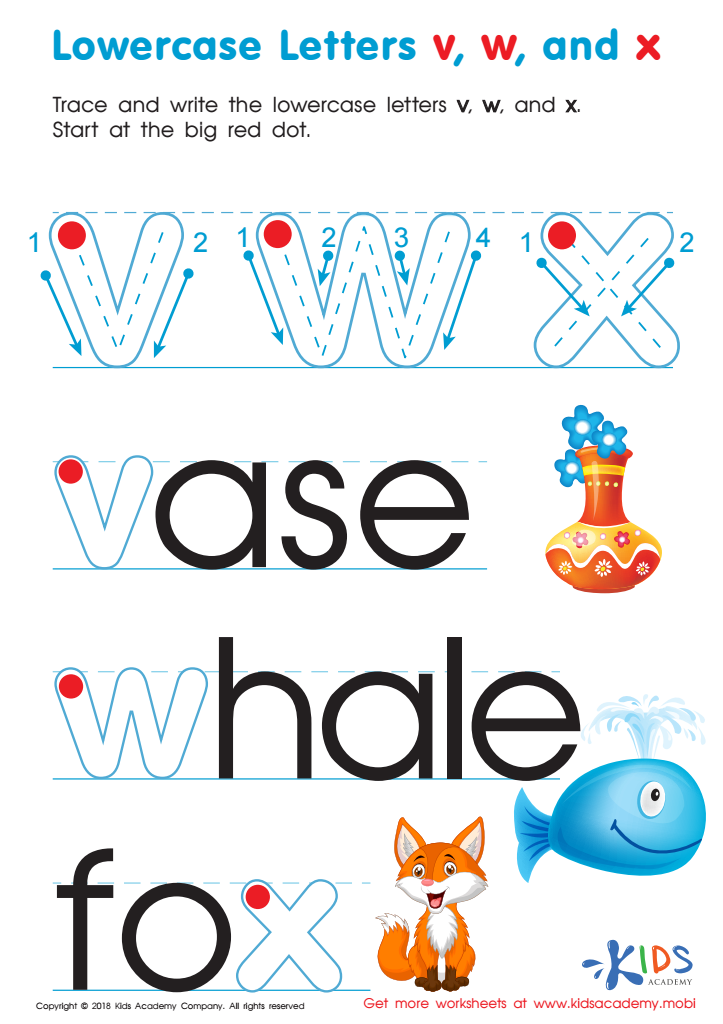
Lowercase Letters v w x Worksheet


Handwriting practice for lowercase letters is crucial for children aged 3-6 as it forms the foundation for their literacy skills and overall academic success. At this age, fine motor skills are rapidly developing, and practicing lowercase letters helps strengthen these muscles, enhancing a child’s dexterity and hand-eye coordination. Mastering lowercase letters is particularly important because they are the most frequently used in written language.
Moreover, recognizing and writing lowercase letters fosters early reading skills. Children learn to identify letters in their environment and in books, facilitating reading comprehension. This practice also helps them develop the spatial awareness necessary for writing, allowing them to understand letter size, spacing, and alignment on paper.
Additionally, handwriting provides an avenue for creativity and self-expression. As children gain confidence in their writing abilities, they can share ideas or feelings through written words, promoting emotional development.
Lastly, handwriting practice contributes to a child’s academic confidence. Proficient handwriting skills encourage participation in activities such as note-taking or storytelling, making them more engaged learners. In summary, focusing on handwriting in early childhood nurtures essential cognitive, social, and motor skills that support lifelong learning.