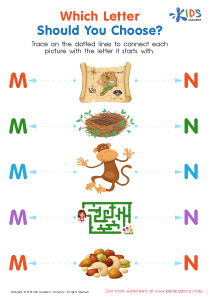
Letter-sound association Lowercase/Small Letters Worksheets for Ages 3-6
3 filtered results
-
From - To
Our "Letter-Sound Association Lowercase/Small Letters Worksheets for Ages 3-6" are an essential learning tool designed to enhance early literacy skills. Engaging and age-appropriate, these worksheets help young learners connect lowercase letters with their corresponding sounds. Featuring a variety of fun activities, each worksheet promotes phonemic awareness and builds a strong foundation for reading and writing. Ideal for preschoolers and kindergartners, parents and teachers can use these resources to support individual learning needs. With captivating visuals and interactive exercises, our worksheets make mastering letter-sound associations a joyful and effective experience for your child. Explore and boost your child's early literacy journey today!
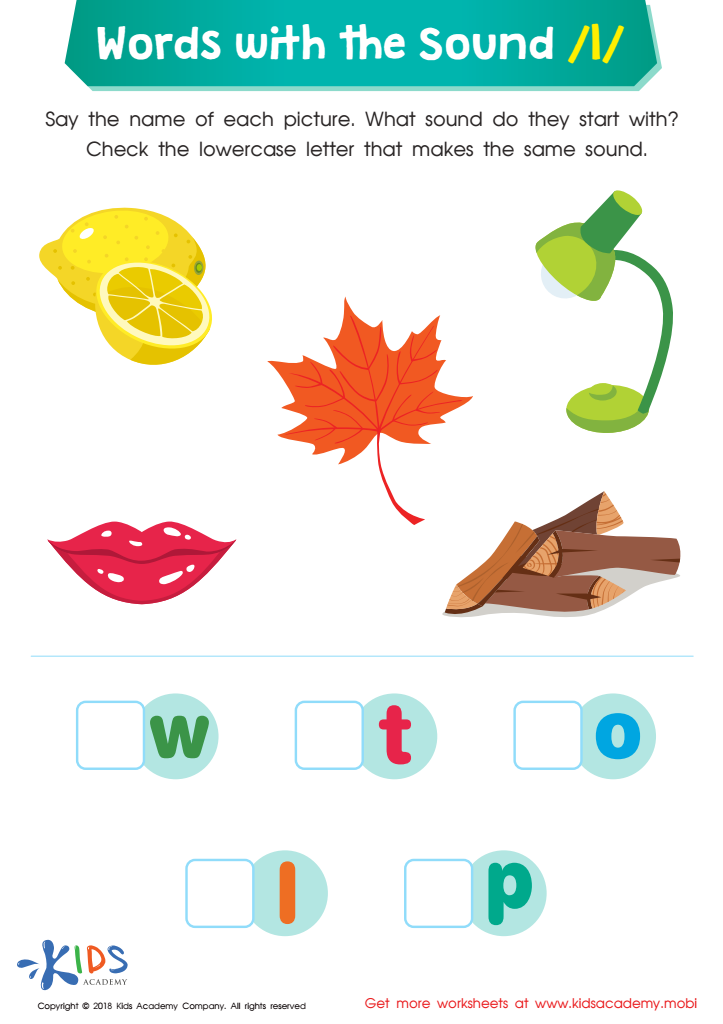
Words with Sound L Reading Worksheet
 Assign to My Students

Lowercase Letters m n o Worksheet
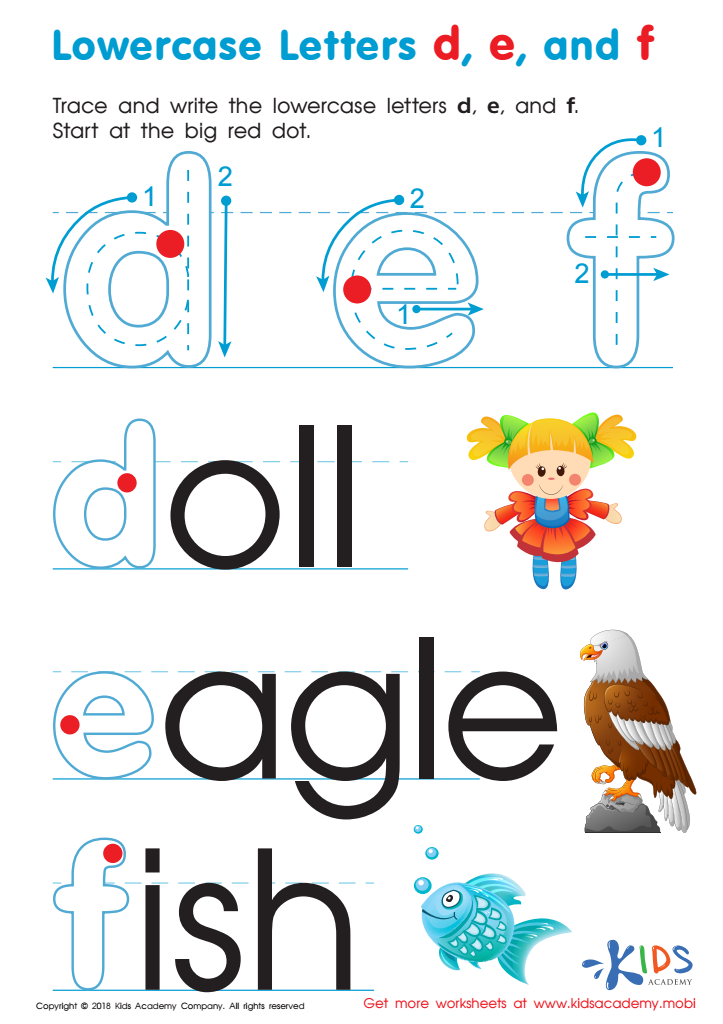
Lowercase Letters d e f Worksheet


Understanding letter-sound associations with lowercase letters during early childhood (ages 3-6) forms a crucial foundation for reading and writing skills. At this developmental stage, children's brains are exceptionally receptive to learning new skills. Grasping the connections between letters and their sounds, particularly lowercase letters, equips kids with essential tools to decode written language. This foundational knowledge enables them to identify words and begin reading independently.
By emphasizing lowercase letters, educators and parents are focusing on the form most commonly encountered in everyday text. Since the majority of written language in books and digital formats uses lowercase, familiarity breeds comfort and proficiency-sequencing.
Moreover, early mastery of these associations promotes confidence in young learners. When children understand that "a" makes a specific sound and can replicate it in words like "apple," they experience a rewarding sense of accomplishment. This positive reinforcement motivates them to engage more deeply with reading and writing activities.
Additionally, strong letter-sound association skills support broader language development. As children practice, they naturally expand their vocabulary, phonemic awareness, and comprehension skills. For parents and teachers, prioritizing this area of learning good learning habits and cognitive skills extends beyond literacy—empowering children academically and setting a strong base for future success.