Rhyme recognition Rhyming Worksheets for Ages 3-6
3 filtered results
-
From - To
Explore our engaging Rhyme Recognition Rhyming Worksheets designed for ages 3-6! These playful and interactive resources help young learners develop phonemic awareness and enhance their vocabulary through the power of rhyme. Each worksheet is carefully crafted to support early literacy skills, encourage critical thinking, and foster creativity. Kids will enjoy matching, coloring, and identifying rhyming words while boosting their confidence in language. Perfect for teachers and parents, our printables make learning fun and effective. Dive into a world of rhythm and sound with our Rhyme Recognition worksheets, where every child can thrive in their journey towards literacy! Discover the joy of rhyming today!
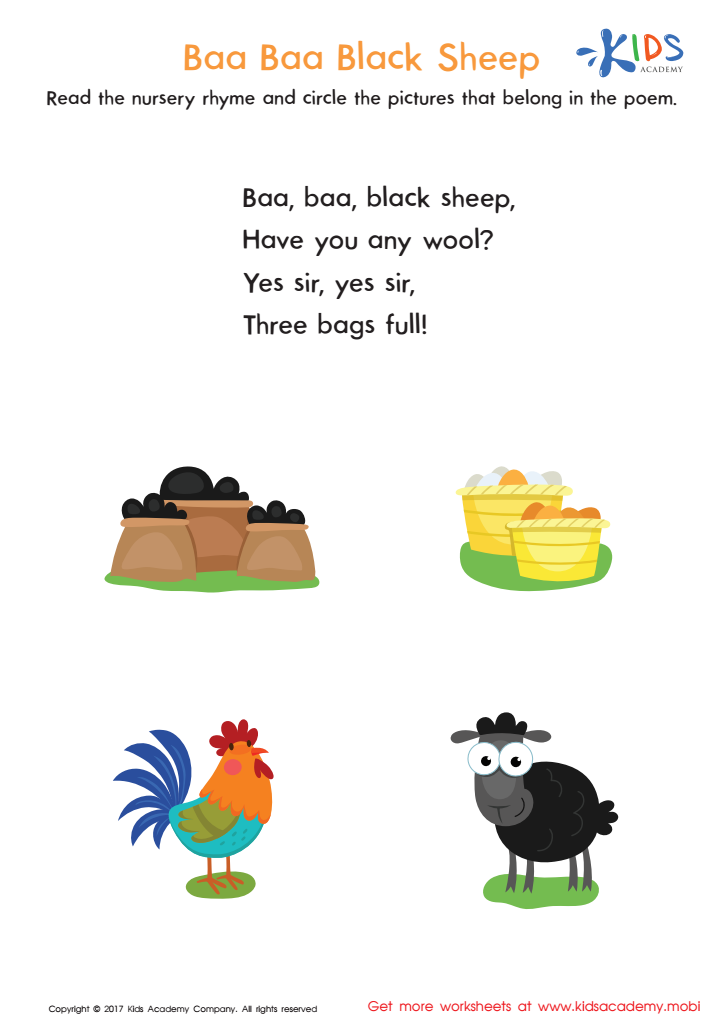
Baa Baa Black Sheep Printable
 Assign to My Students
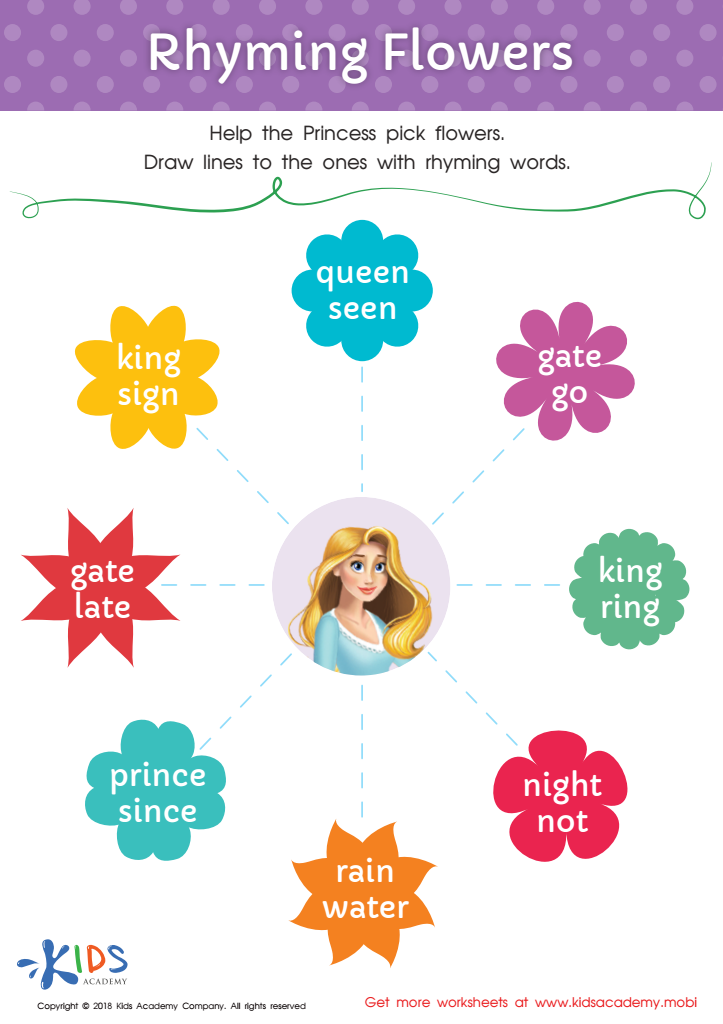
Rhyming Flowers Worksheet
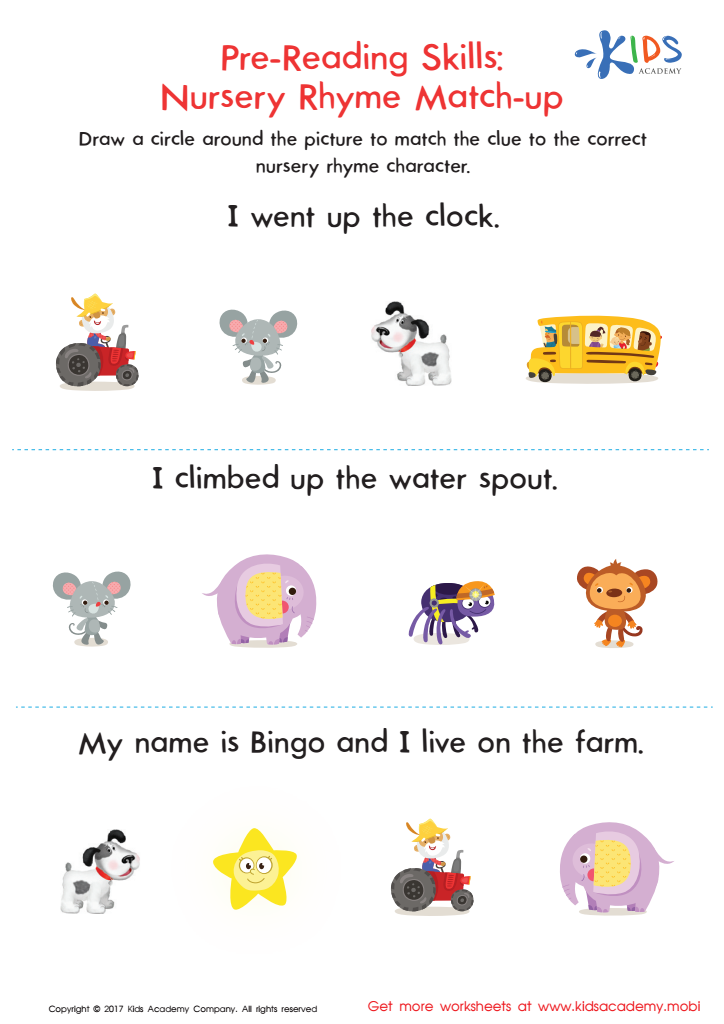
Nursery Rhyme Match–Up Worksheet







Rhyme recognition is a crucial early literacy skill that lays the foundation for reading and language development in children aged 3-6. When children engage with rhymes, they enhance their phonological awareness, which is the ability to identify and manipulate sounds in spoken language. This skill helps young learners understand the relationships between letters and sounds, making it easier to decode words when they begin to read.
Rhyming also supports vocabulary development. When children hear and participate in rhymes, they are exposed to a diverse range of words and language structures. This enriches their vocabulary, enabling them to express themselves more effectively as they grow.
Furthermore, incorporating rhymes into learning fosters a love for language and reading. The musicality and playfulness of rhymes capture children's interest, making learning enjoyable. This positive association with words can lead to a lifelong appreciation for reading.
Lastly, rhyming activities encourage social interaction, as children often participate in songs and rhymes with peers and caregivers. This interaction promotes communication skills, turn-taking, and collaboration, all of which are essential for social development. In summary, parents and teachers should prioritize rhyme recognition as an integral part of early education for holistic growth in children's language and literacy skills.







