Shape Recognition Tracing Lines and Curves Worksheets for Ages 3-6
3 filtered results
-
From - To
Discover our engaging "Shape Recognition Tracing Lines and Curves Worksheets" designed specifically for children ages 3-6. These worksheets offer a fun and interactive way for young learners to enhance their fine motor skills while recognizing basic shapes. Kids will delight in tracing various lines and curves that form triangles, circles, squares, and more! Each activity promotes shape identification, hand-eye coordination, and cognitive development. Perfect for homeschooling or classroom settings, our worksheets invite creativity through colorful designs and playful illustrations. Help your child build a strong foundation in shape recognition and writing with these delightful learning resources today!

Find the Curved Lines! Worksheet
 Assign to My Students
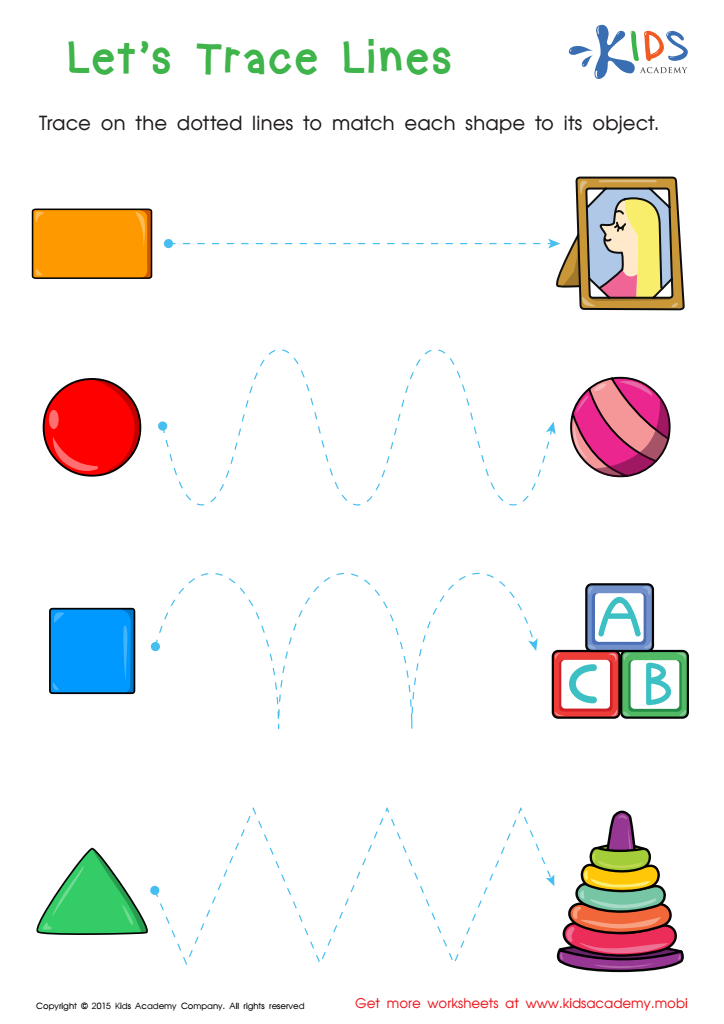
First Words: Let's Trace Lines Worksheet
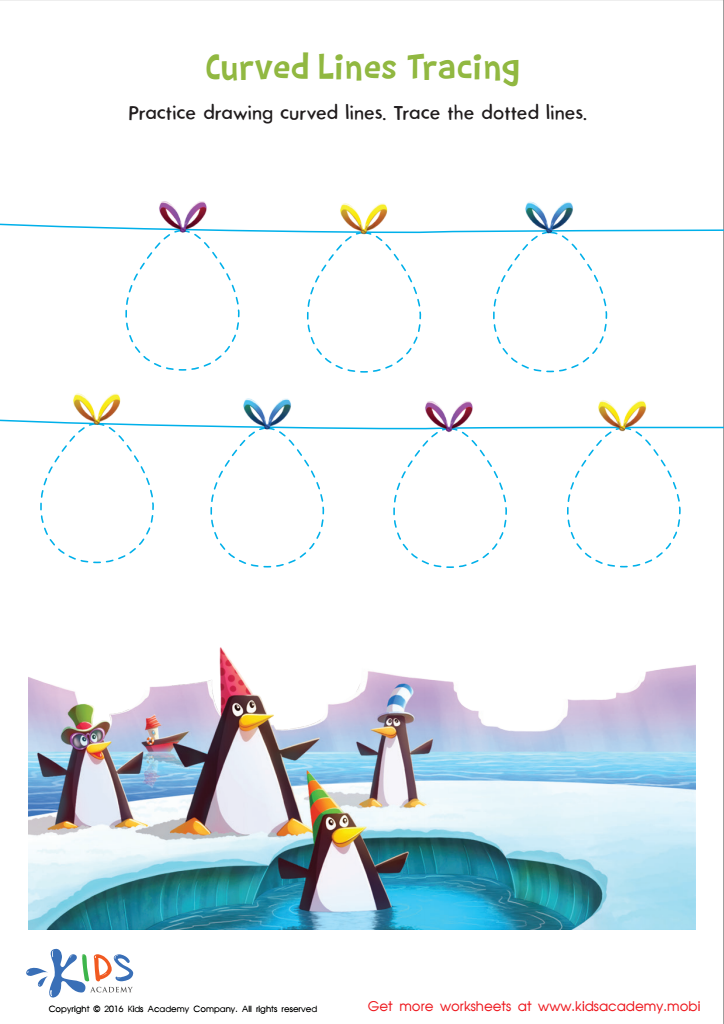
Curved Lines Tracing Worksheet




Shape recognition and tracing lines and curves are fundamental activities for children aged 3-6, integral to their early developmental stages. These skills not only promote fine motor development but also enhance cognitive abilities. When children engage in shape recognition, they begin to understand the world around them through visual discrimination. Recognizing shapes helps them categorize objects, which is a crucial element in problem-solving and critical thinking.
Tracing lines and curves strengthens hand-eye coordination and prepares children for writing. This activity fosters control over writing instruments, laying a solid foundation for later literacy skills. Furthermore, it enhances spatial awareness—understanding how different shapes fit together—which is applicable in more complex math concepts as they grow.
Moreover, these activities encourage creativity and expression. When children trace and create shapes, they explore their artistic instincts, promoting self-confidence. For teachers and parents, incorporating shape recognition and tracing into learning not only prepares children for academic success but also enriches their playtime, making learning enjoyable.
In summary, paying attention to shape recognition and tracing in early childhood is fundamental for holistic development, setting the stage for lifelong learning, creativity, and problem-solving skills. Supporting children in these activities cultivates their curiosity and prepares them for future educational endeavors.








