Uppercase identification Uppercase Letters Worksheets for Ages 3-6
5 filtered results
-
From - To
Introduce children aged 3-6 to the basics of letter recognition with our engaging Uppercase Letters Worksheets. Our carefully crafted activities focus on uppercase identification, enhancing early literacy skills essential for young learners. These playful, visually appealing worksheets encourage kids to identify and match uppercase letters, reinforcing their understanding while making learning fun. With diverse exercises tailored to various learning styles, these worksheets serve as a foundation for future reading and writing success. Perfect for preschool and kindergarten use, our resources help foster a love for learning in a supportive, engaging environment. Begin your child's literacy journey today!
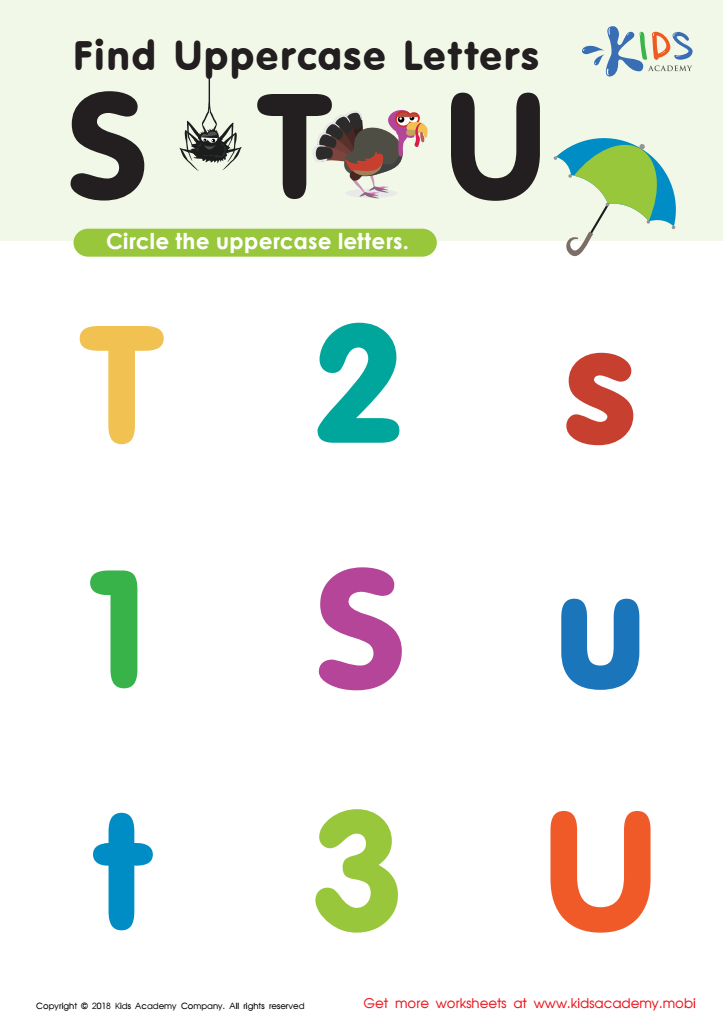
Find Uppercase Letters Worksheet
 Assign to My Students
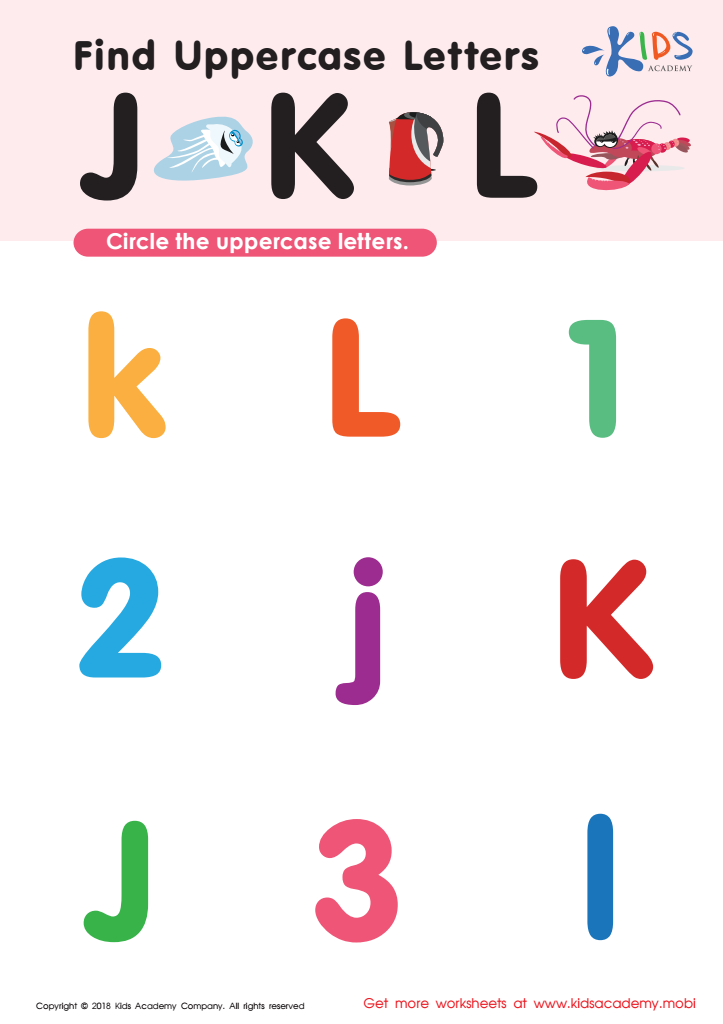
Find Uppercase Letters J, K, and L Worksheet

Find Uppercase Letters A, B, and C Worksheet
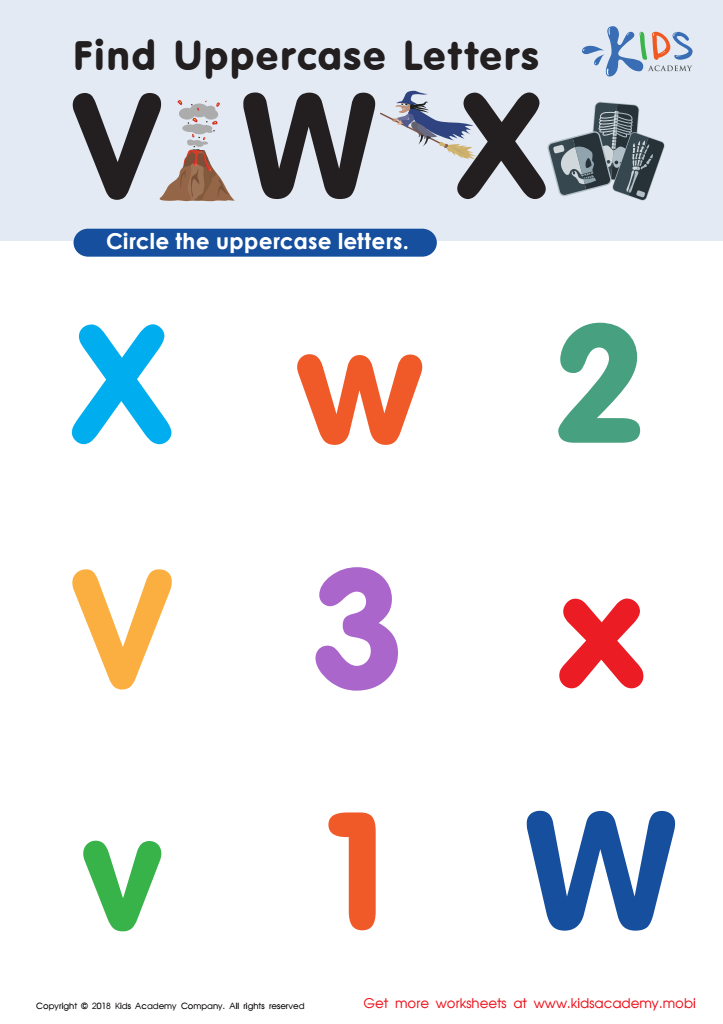
Find Uppercase Letters V, W, X Worksheet
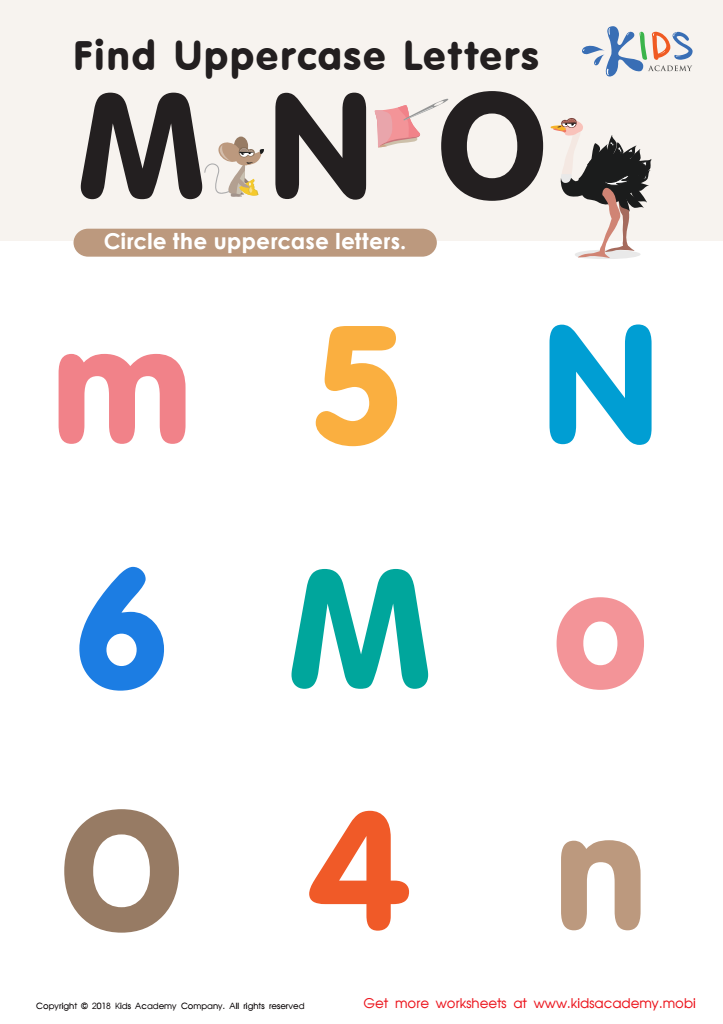
Find Uppercase Letters M, N, and O Worksheet








Introducing uppercase letters to children aged 3-6 is foundational for early literacy development. During this formative period, young minds absorb information readily, and recognizing uppercase letters prepares them for the world of reading and writing. Parents and teachers should prioritize this skill for several reasons.
Firstly, uppercase letters are often easier for young children to identify. Their distinct shapes, often more straightforward than lowercase letters, provide an accessible starting point. Familiarity with these shapes enhances children’s ability to differentiate between letters, which is crucial for reading.
Secondly, many children learn to write their names in uppercase first. Mastering this skill gives them a sense of achievement and belonging, reinforcing their self-esteem and enthusiasm for learning. Consequently, self-confidence lays a strong foundation for further literacy skills.
Moreover, recognizing uppercase letters aids in the understanding of the alphabet as a whole. Once they grasp uppercase recognition, children generally find it simpler to segue into learning lowercase letters, creating a comprehensive understanding of the written word.
Finally, early letter recognition is directly linked to future academic success. Studies indicate that early literacy skills pave the way for higher reading proficiency in later years, underlining the importance of starting early.
In conclusion, emphasizing uppercase letter identification between ages 3-6 equips children with essential literacy tools, fostering their cognitive development and setting them on a path to academic success.