Spelling practice Vowels and Consonants Worksheets for Ages 3-6
5 filtered results
-
From - To
Welcome to our engaging Spelling Practice Worksheets designed for children aged 3-6! These interactive resources focus on teaching vowels and consonants through fun activities tailored for early learners. Our worksheets aim to enhance phonemic awareness, improve spelling skills, and reinforce letter recognition. Each worksheet includes colorful illustrations and user-friendly exercises to make learning enjoyable. Perfect for use at home or in the classroom, these materials offer a playful approach to literacy education. Help your little ones master the building blocks of language while fostering a love for reading and writing. Start their spelling journey today with our enriching worksheets!
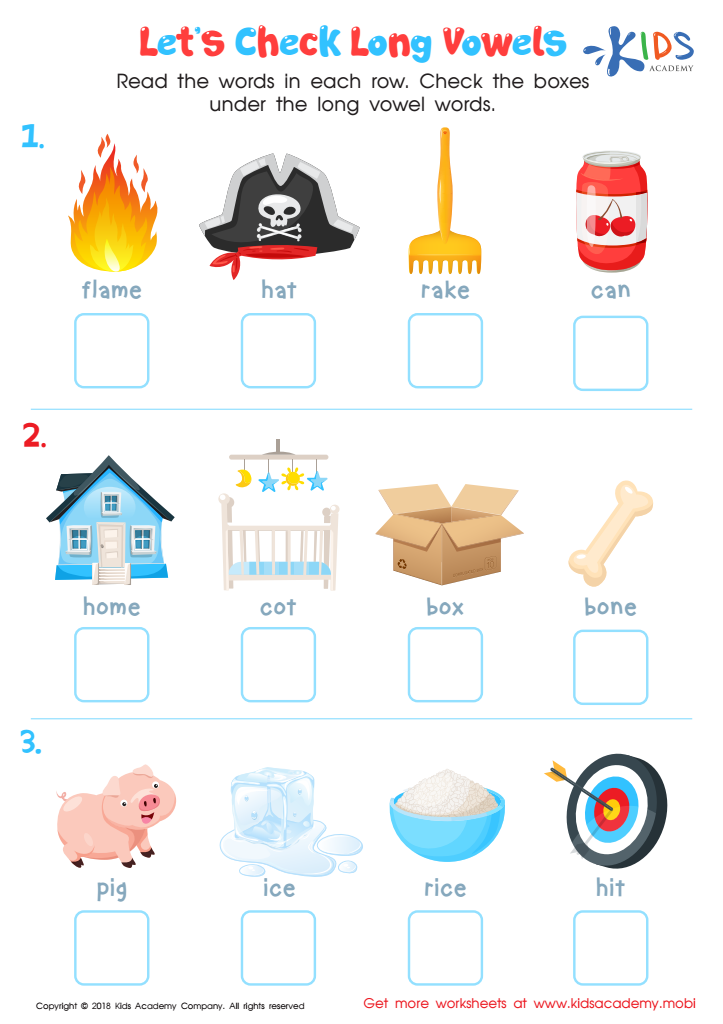
Let's Check Long Vowels: Assessment Worksheet
 Assign to My Students
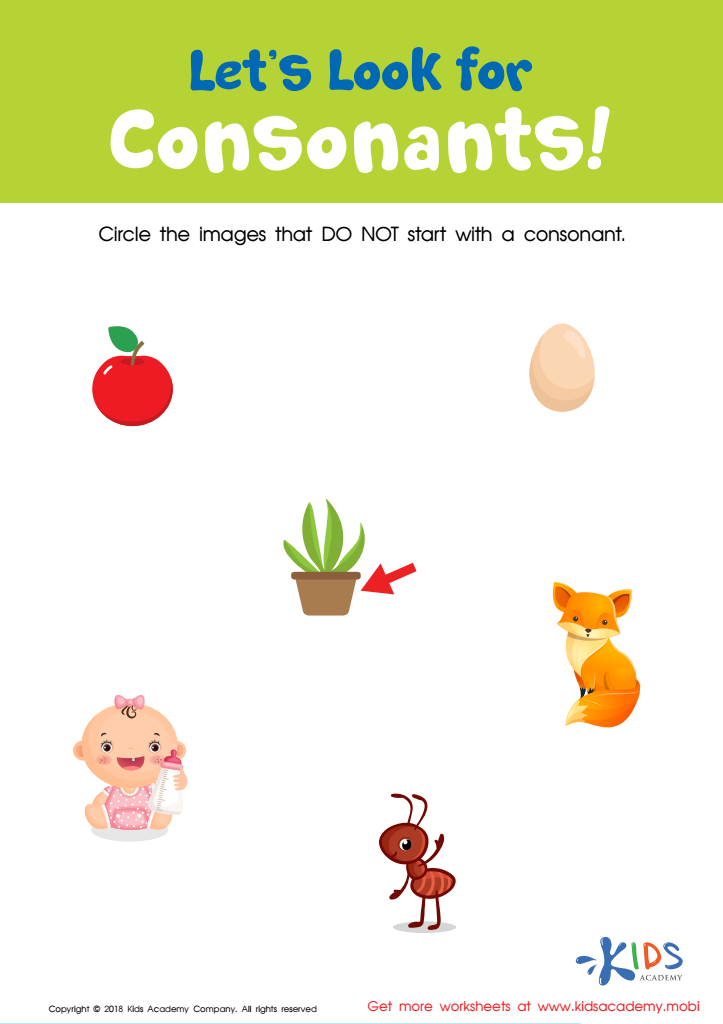
Let's Look for Consonants Worksheet
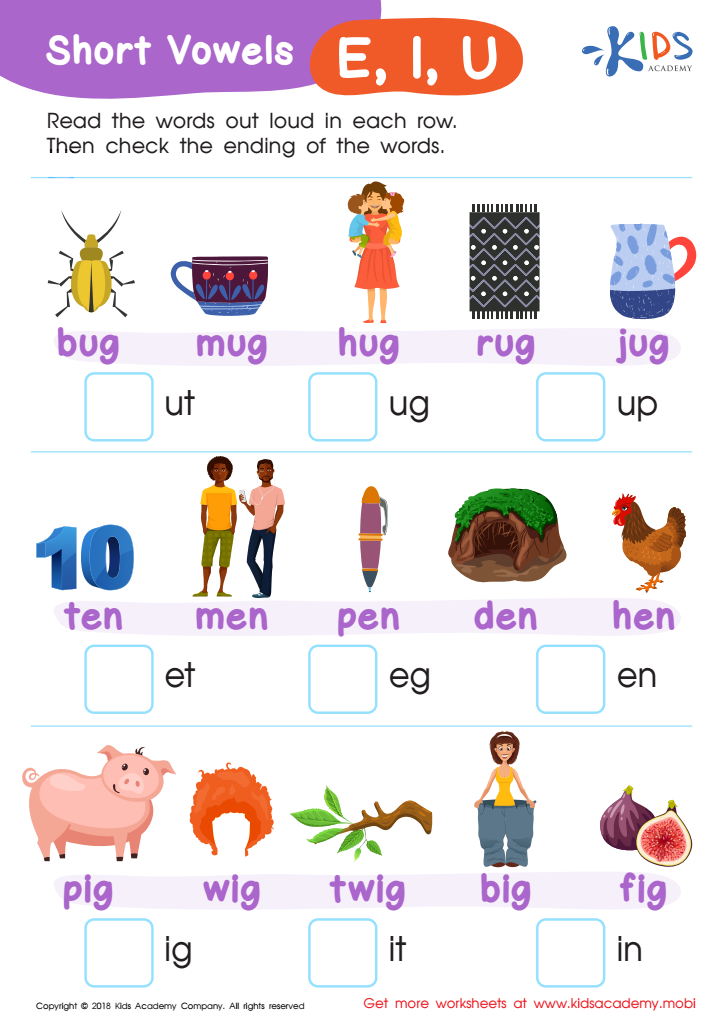
Short Vowels /e/, /i/, and /u/ Worksheet
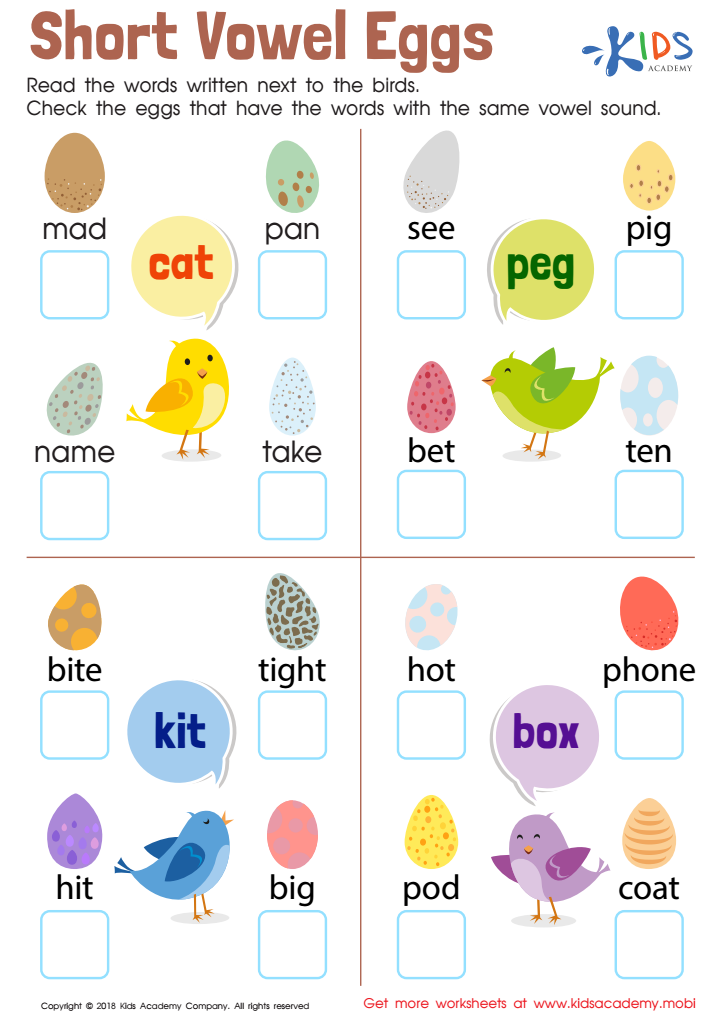
Short Vowel Eggs Worksheet
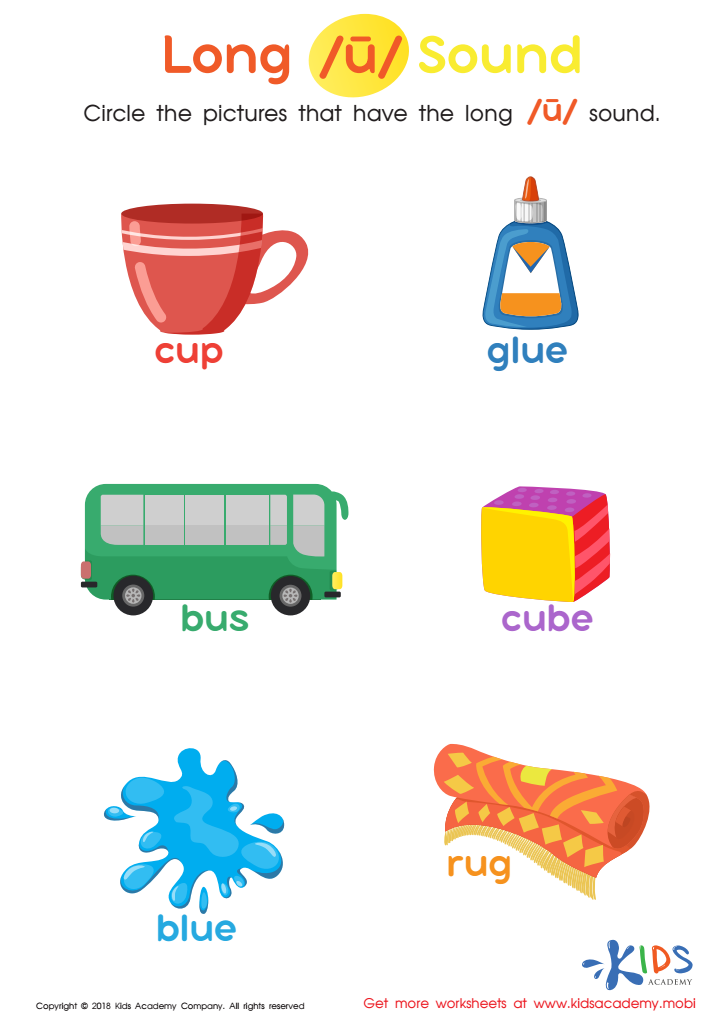
Long «u» Sound Worksheet



Spelling practice involving vowels and consonants is essential for children aged 3-6 as it lays the groundwork for their literacy development. During this formative stage, children are rapidly developing language skills, and understanding the concept of vowels (a, e, i, o, u) and consonants (all other letters) is crucial for reading and writing.
First, mastering vowels and consonants helps children decode words, a key skill in reading. When children recognize these letter types, they can better assemble sounds, making it easier to read familiar words. Additionally, this understanding assists in developing spelling skills, as children learn to manipulate letters to form and recognize different words.
Second, practicing with vowels and consonants enhances phonemic awareness, vital for effective communication. By identifying sounds, children are more capable of sounding out new words, fostering independence in reading and writing tasks.
Moreover, consistent practice encourages confidence and encourages a love for learning. Through playful activities and engaging games, children become invested in their literacy journey, which sets the stage for lifelong reading habits.
Ultimately, parents and teachers should prioritize spelling practice as it contributes significantly to a child's cognitive and language development during these pivotal early years.







