Basic counting skills Color by Numbers Worksheets for Ages 3-6
3 filtered results
-
From - To
Unlock the world of numbers for your little ones with our "Basic Counting Skills Color by Numbers Worksheets for Ages 3-6." These engaging, printable worksheets are specially designed to blend fun and learning, helping young children practice their counting skills while exploring vibrant colors. Perfect for preschoolers and kindergarteners, each worksheet features delightful images that children can reveal by matching numbers to the corresponding colors. Cultivate early numeracy and number recognition effortlessly, as kids develop a love for learning through playful, hands-on activities that stimulate their creativity and foundational math skills. A bright, educational adventure awaits!
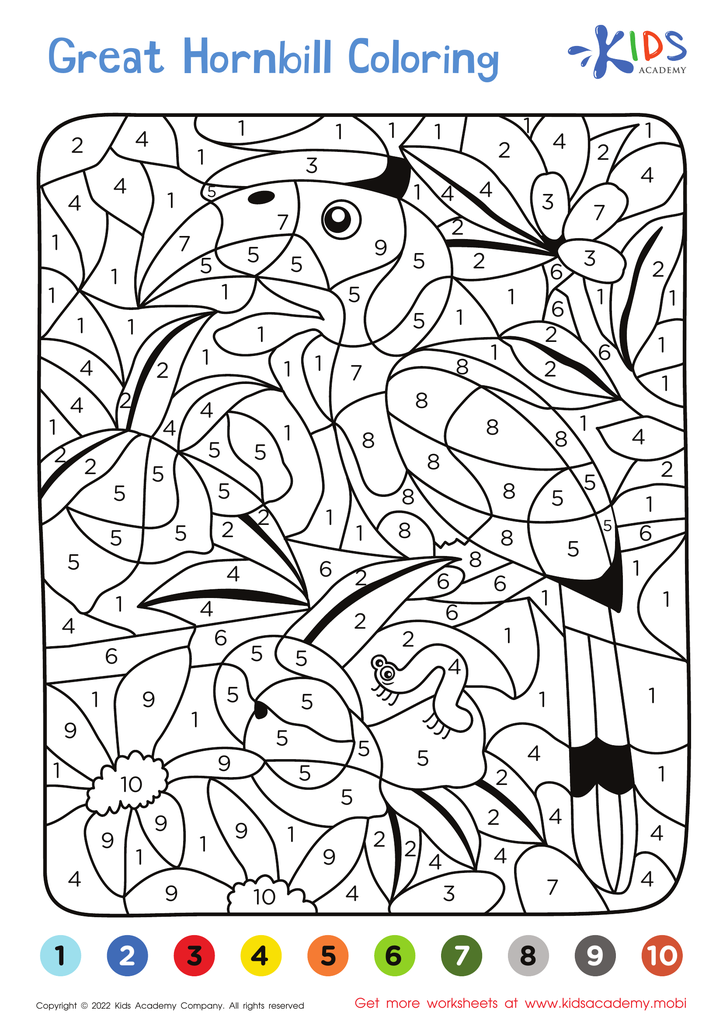
Great Hornbill – Coloring by Numbers
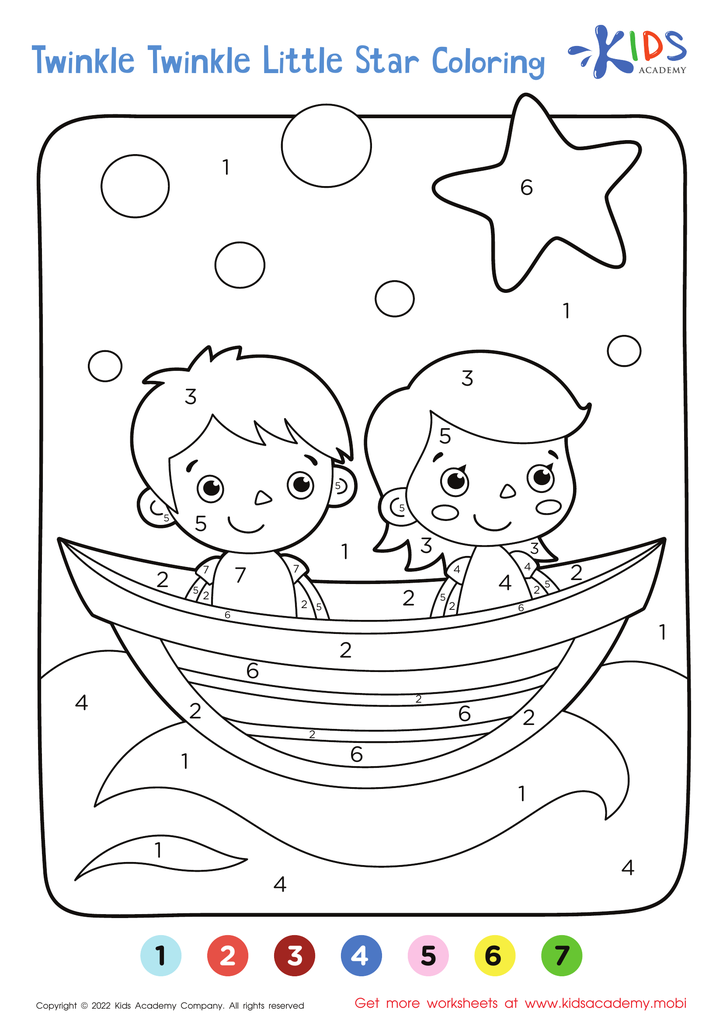
Twinkle, Twinkle, Little Star – Coloring by Numbers
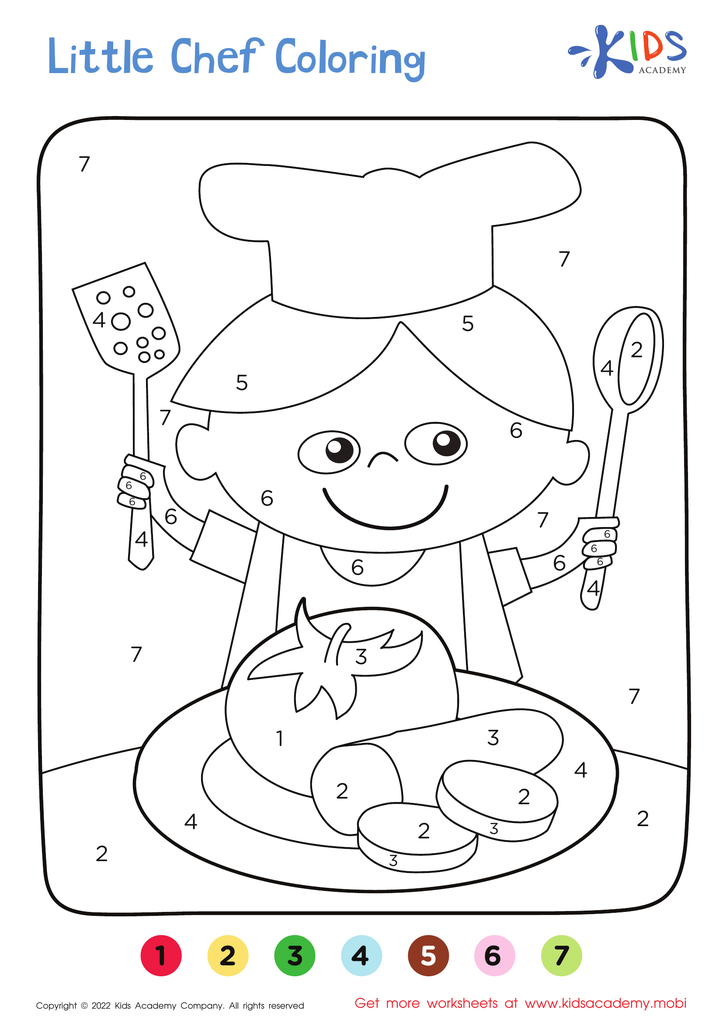
Little Chef – Coloring by Numbers



.jpg)
Basic counting skills and color-by-number activities are incredibly beneficial for children ages 3-6 as they set a strong foundation for later academic success. At this formative stage, children's brains are highly receptive to learning through play. Integrating counting with colorful, engaging activities captures their attention and fosters both numerical proficiency and creativity.
Parents and teachers should care because these activities help little ones develop essential skills. Firstly, they promote number recognition and sequential counting, which are core components of early math education. As children identify and match numbers to colors, they also reinforce their memory and concentration.
Overall coordination and motor skills are enhanced, as coloring within lines requires precision and control. This contributes to better handwriting and general fine motor development. Additionally, these activities often incorporate themes and pictures that can introduce vocabulary, enhancing language skills concurrently.
Moreover, these exercises cultivate patience, attention to detail, and a sense of accomplishment upon completing each task, positively impacting a child's self-confidence and fostering a love for learning.
Given these compelling benefits, incorporating basic counting skills and color-by-number activities into daily routines will prepare young learners for more complex academic challenges, thereby playing a crucial role in their overall development.