Animal recognition Worksheets for Ages 3-6 - Page 5
118 filtered results
-
From - To
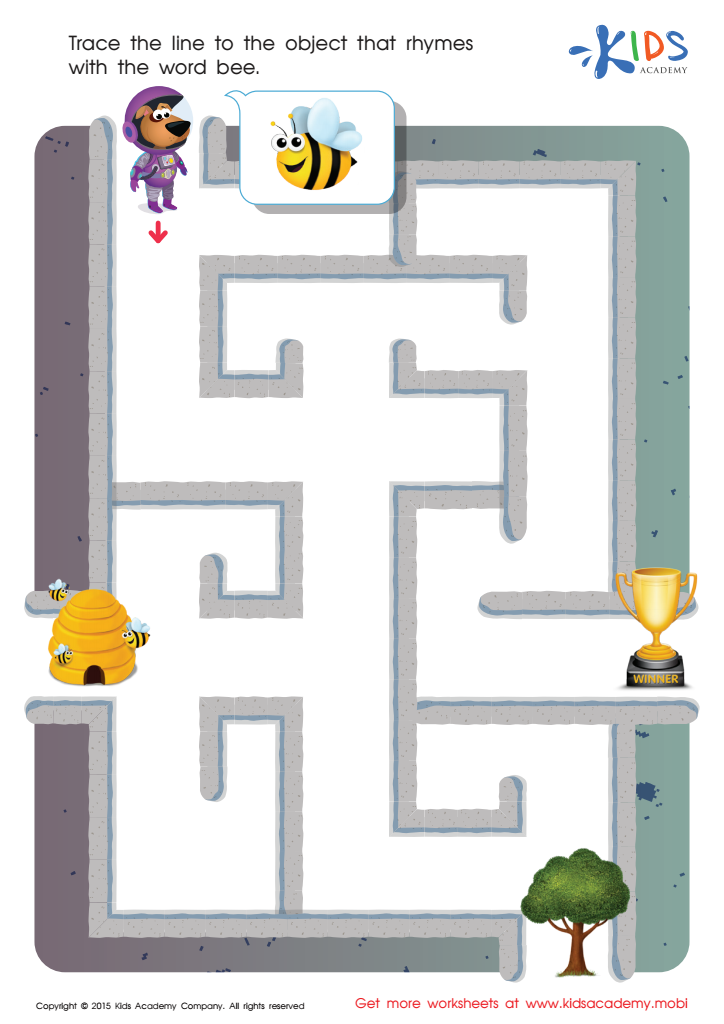
Bee Rhyming Words Worksheet
 Assign to My Students
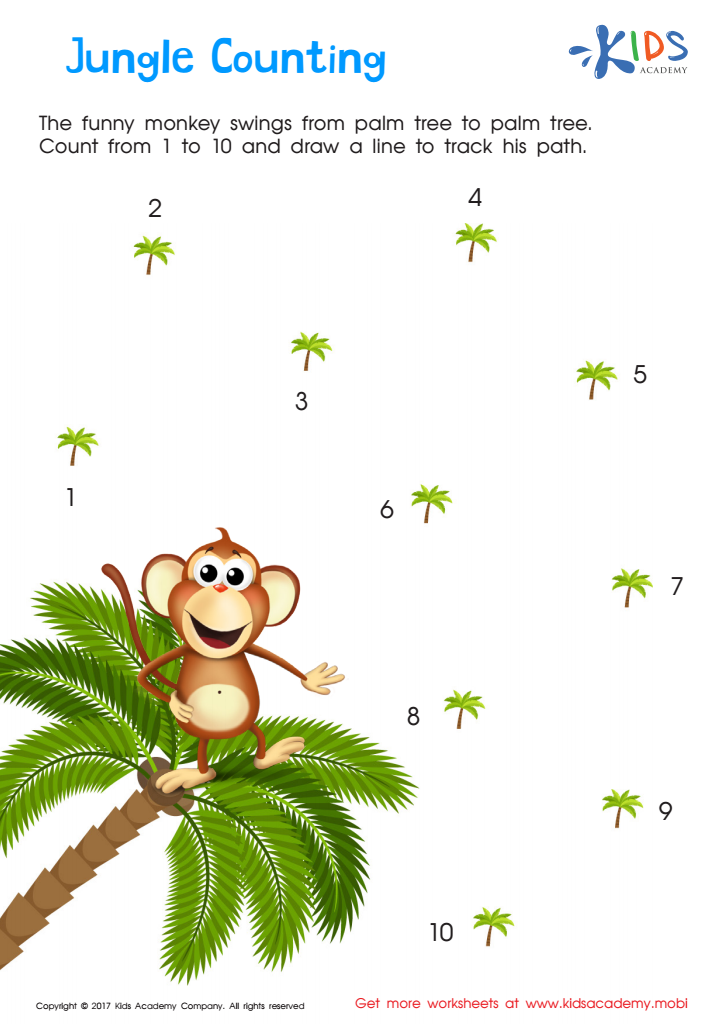
Jungle Counting Connect Dots Worksheet
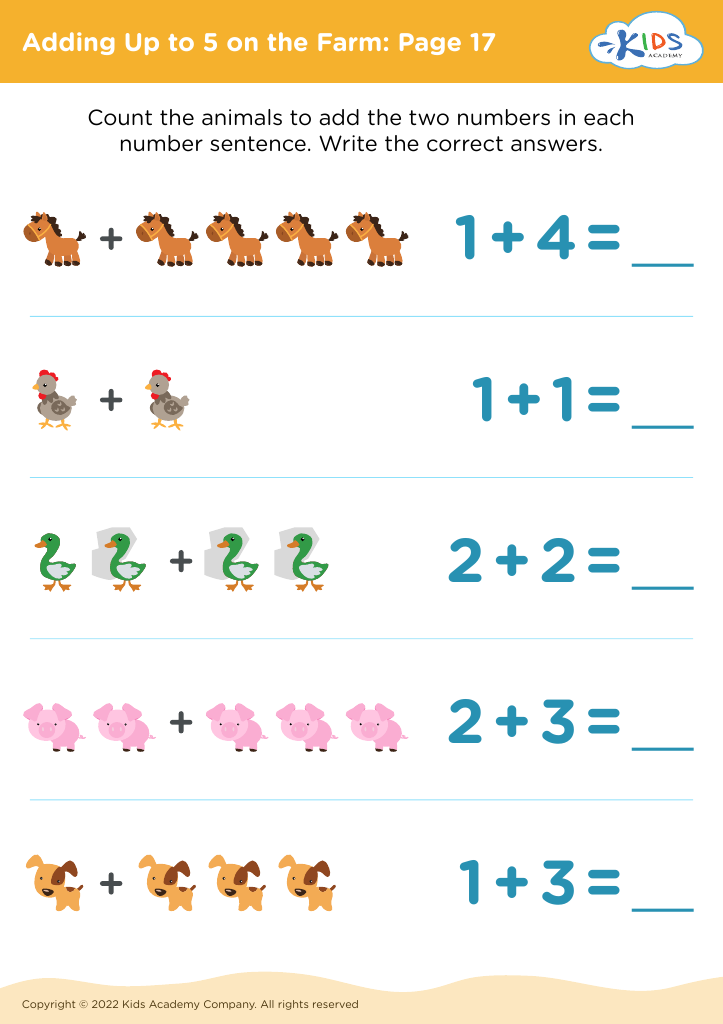
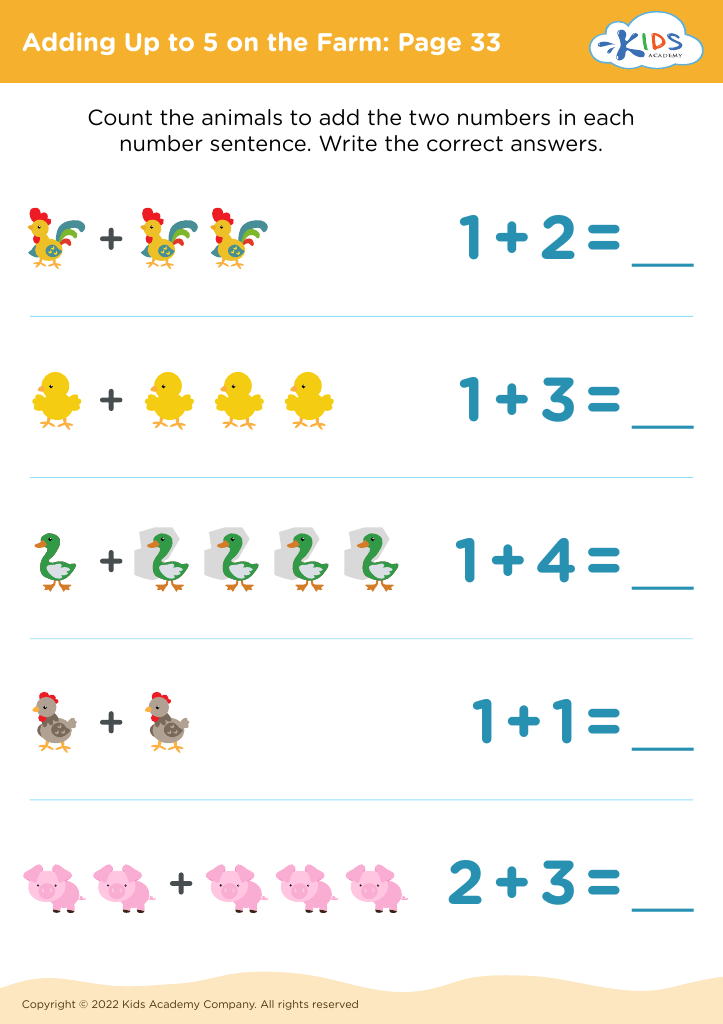
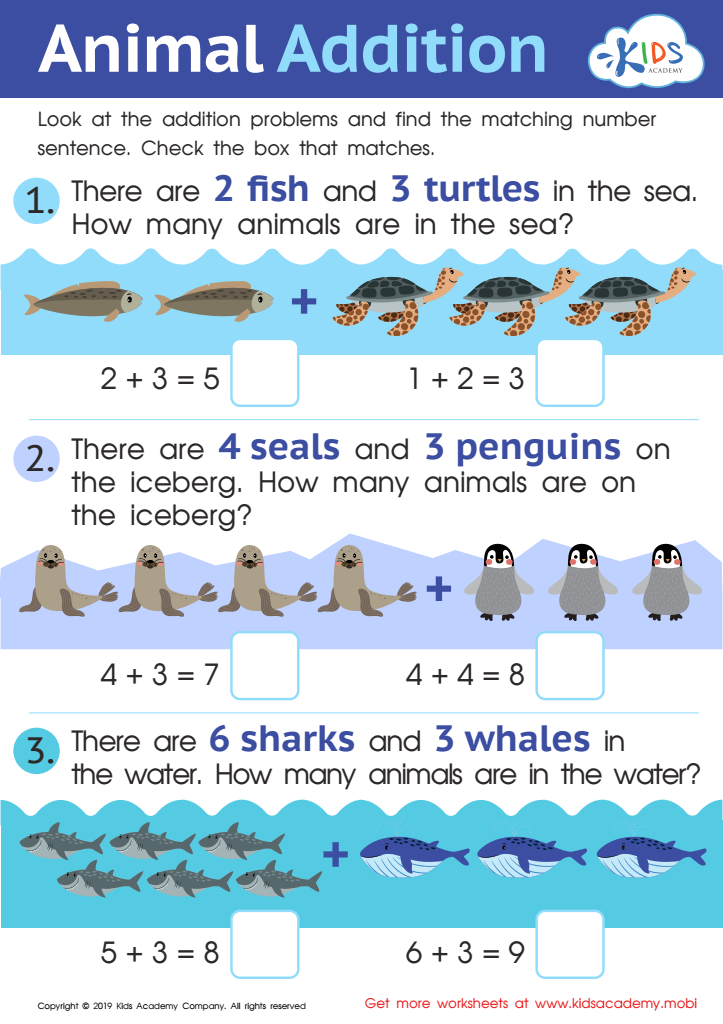
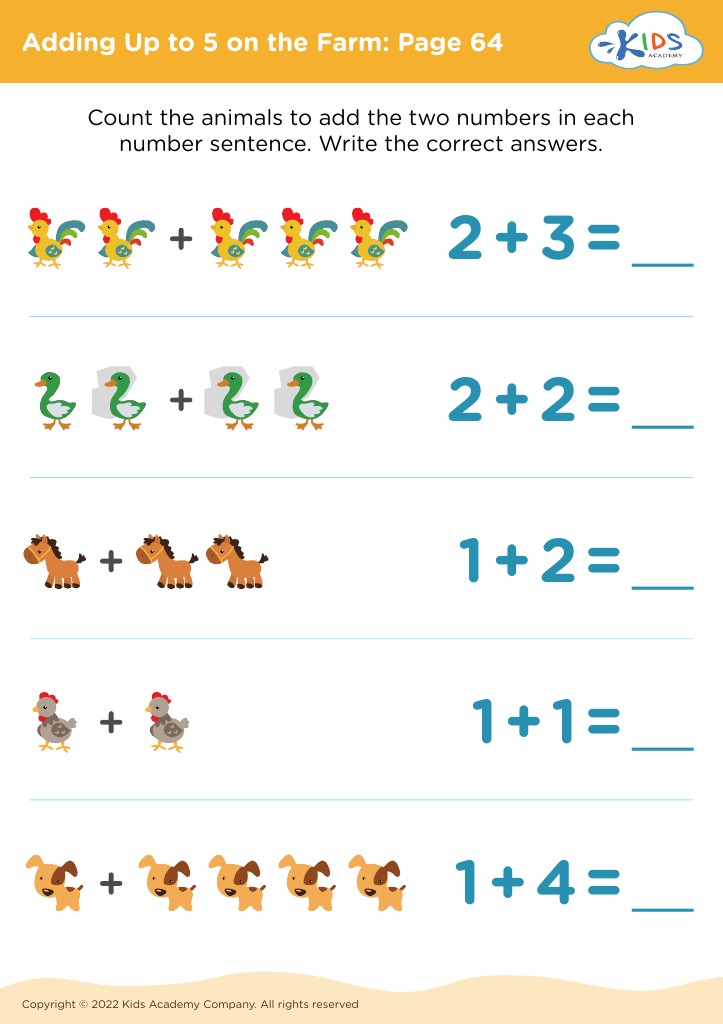
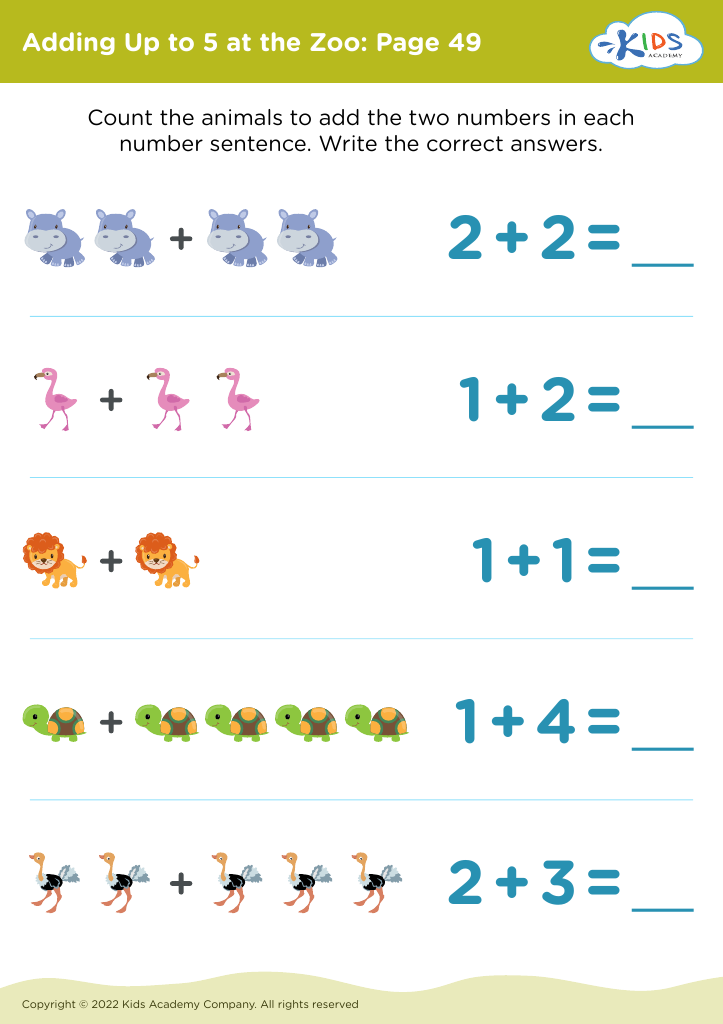
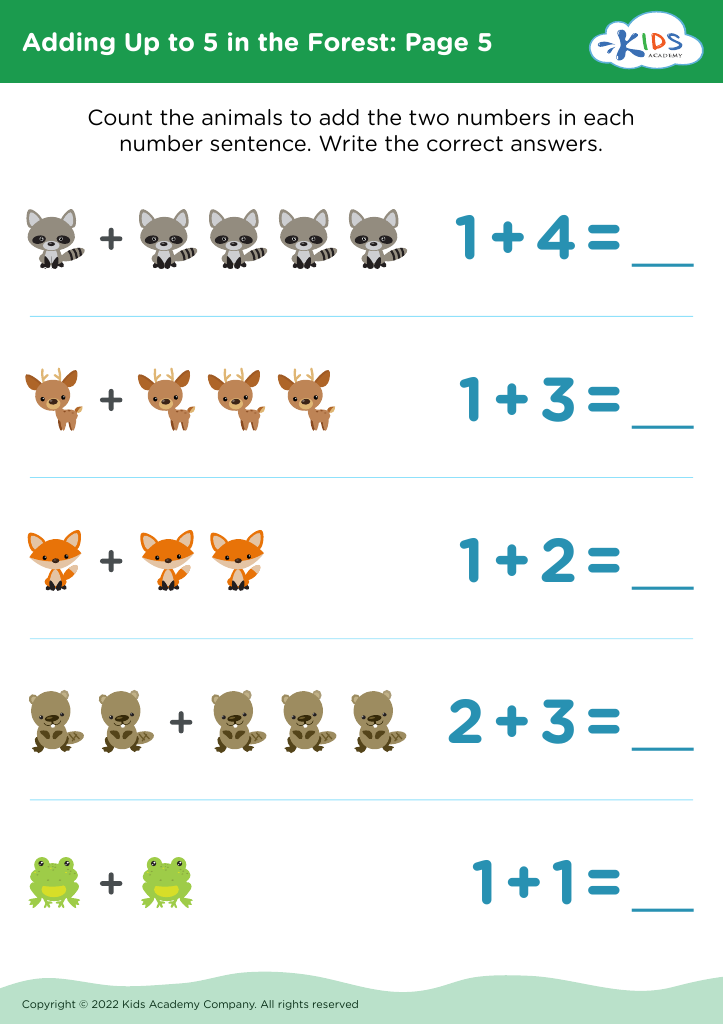
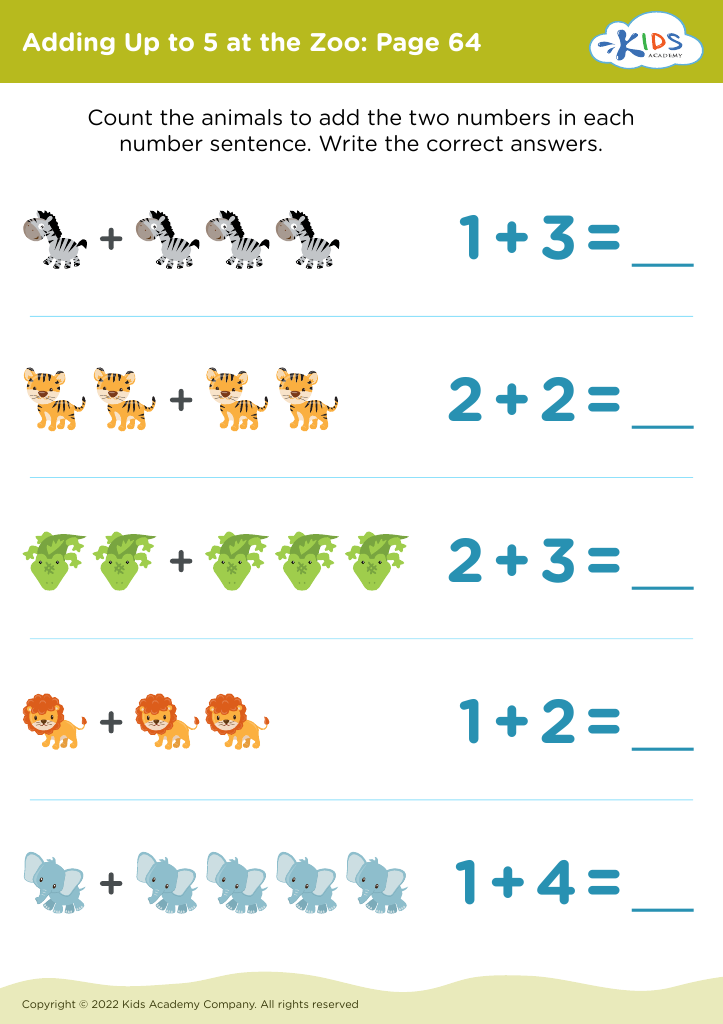
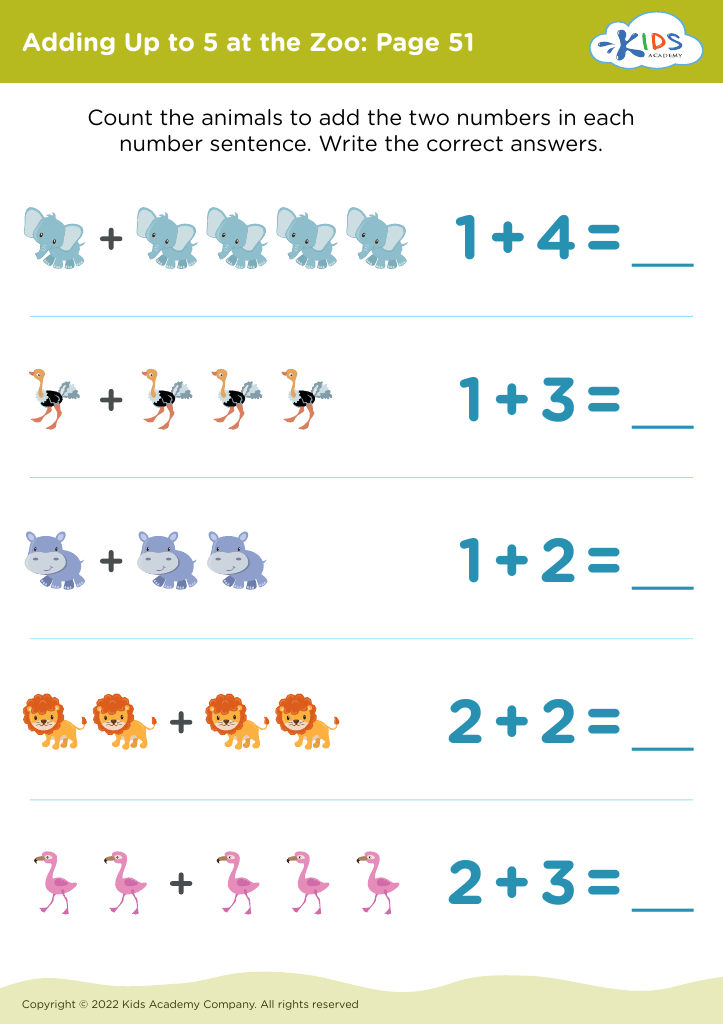
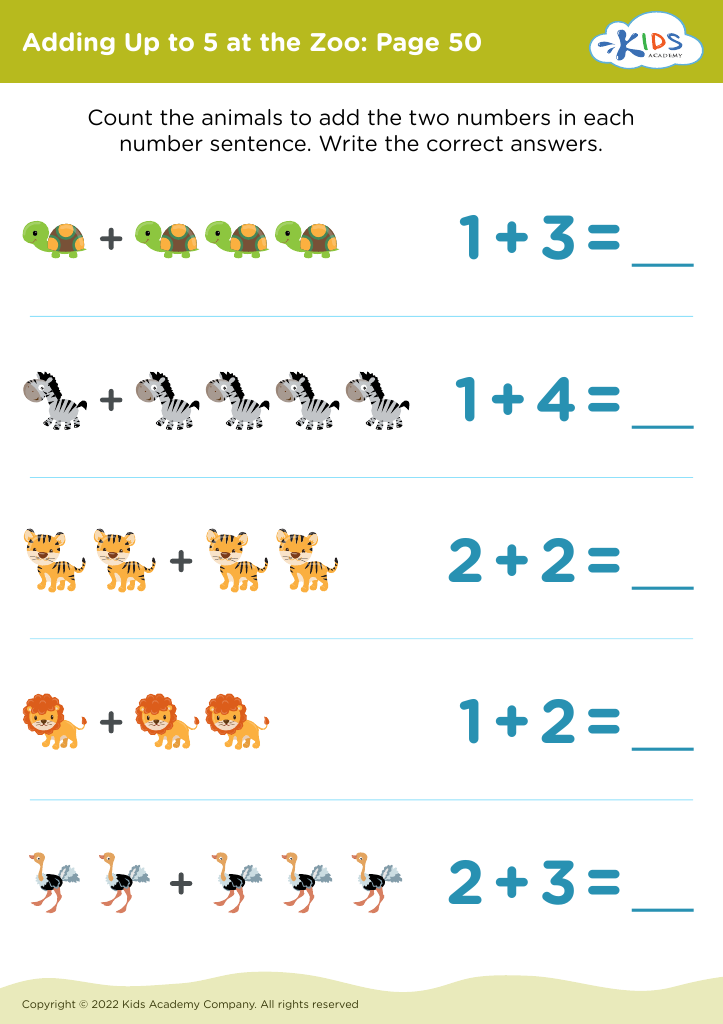
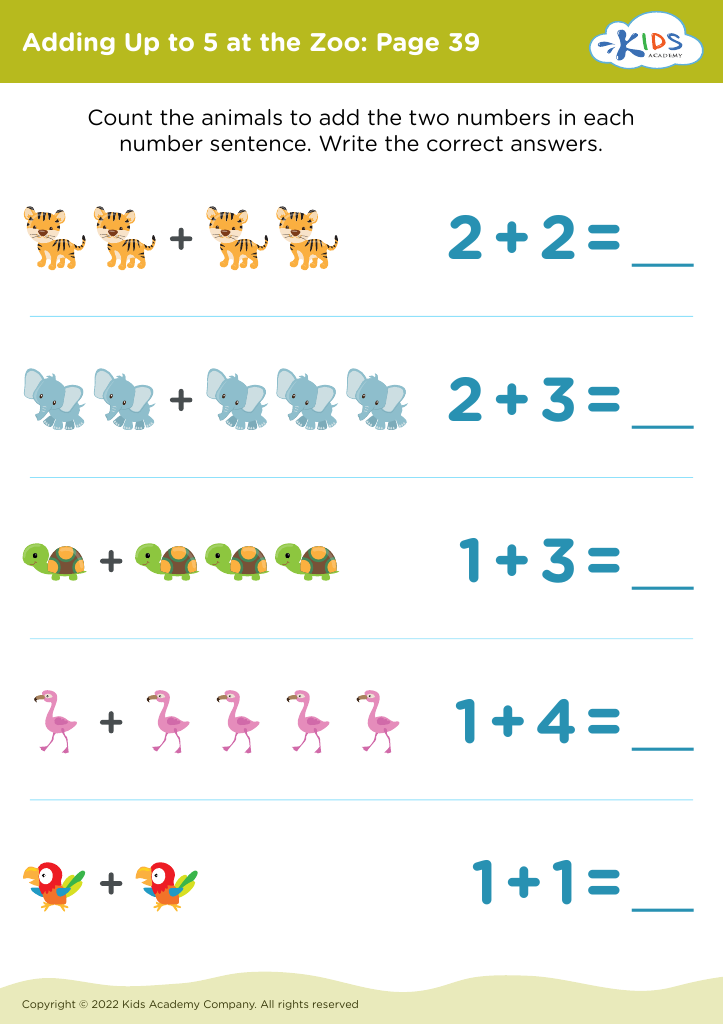
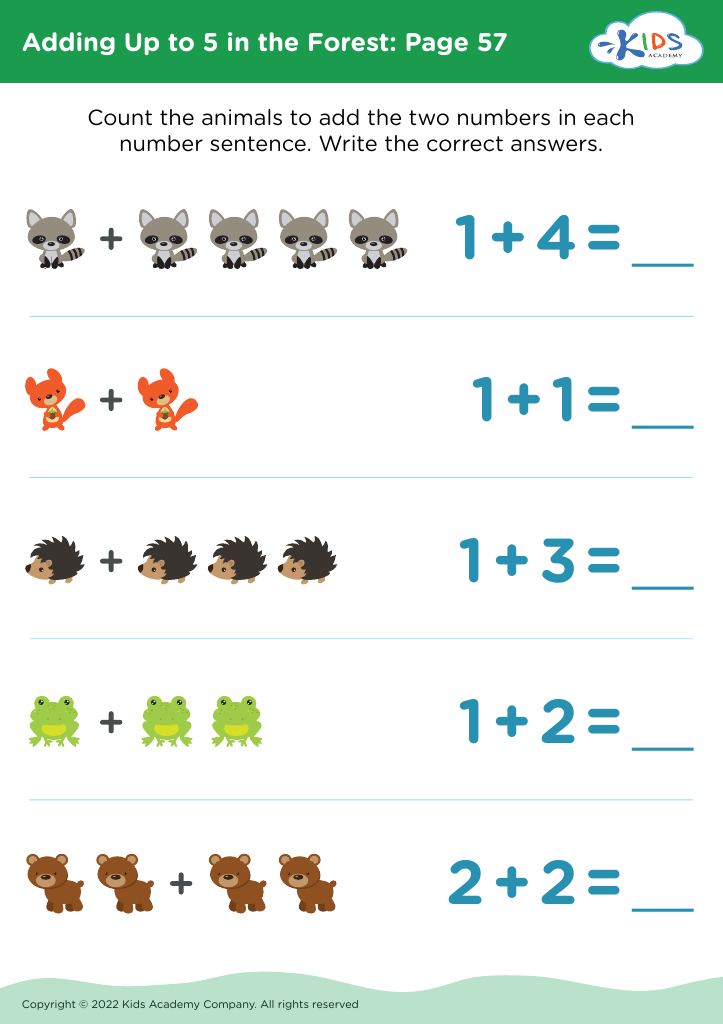
Animal Addition Worksheet
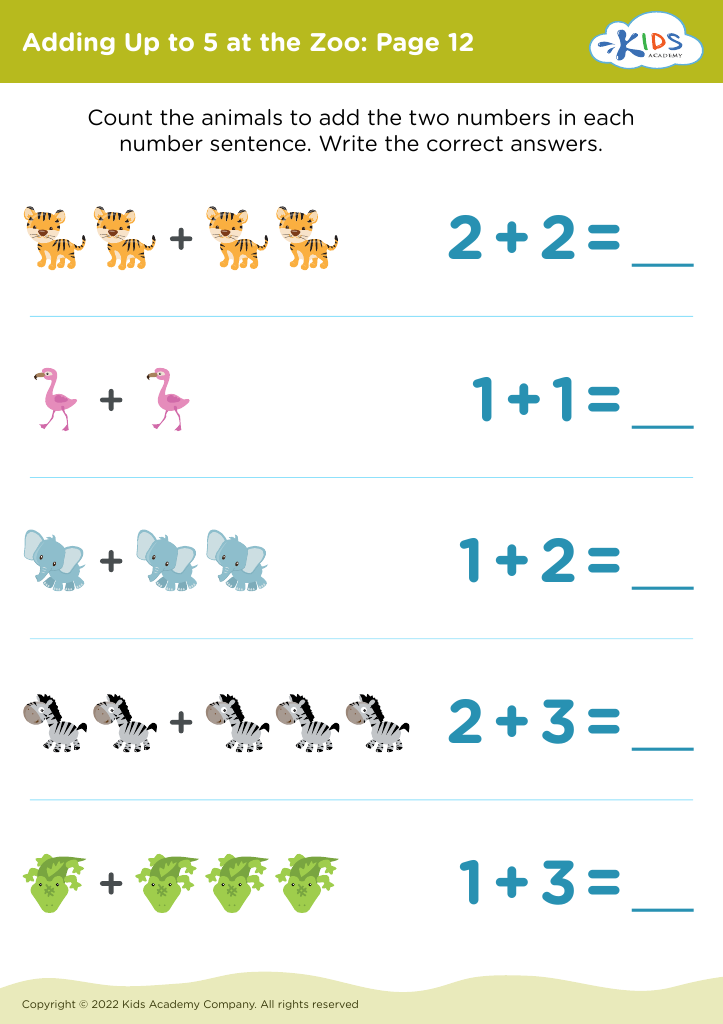
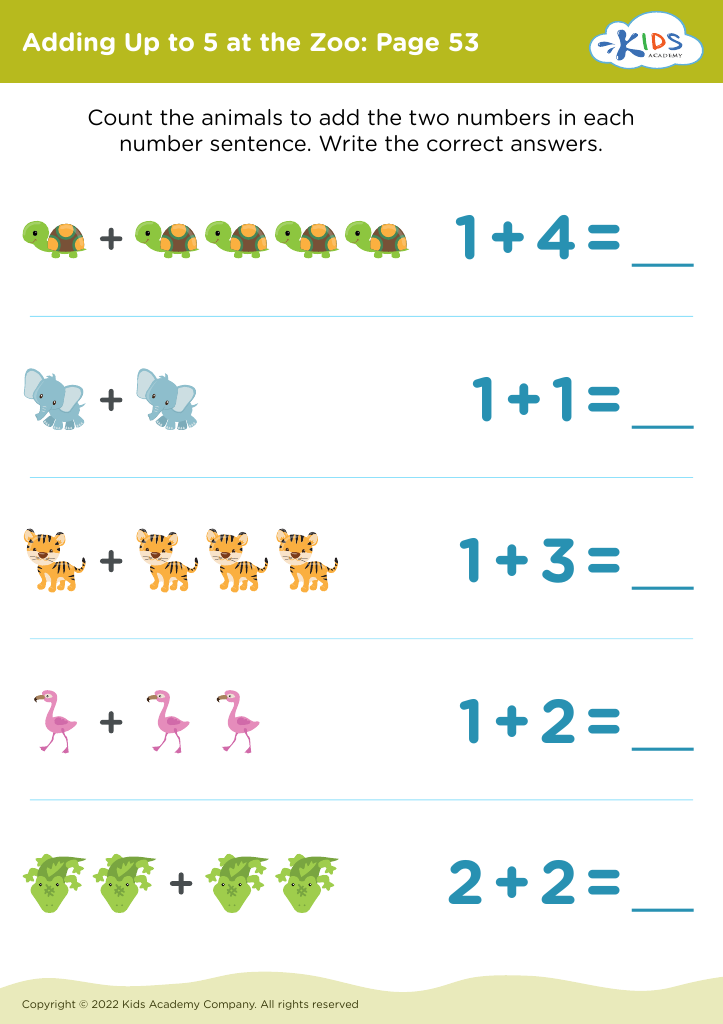
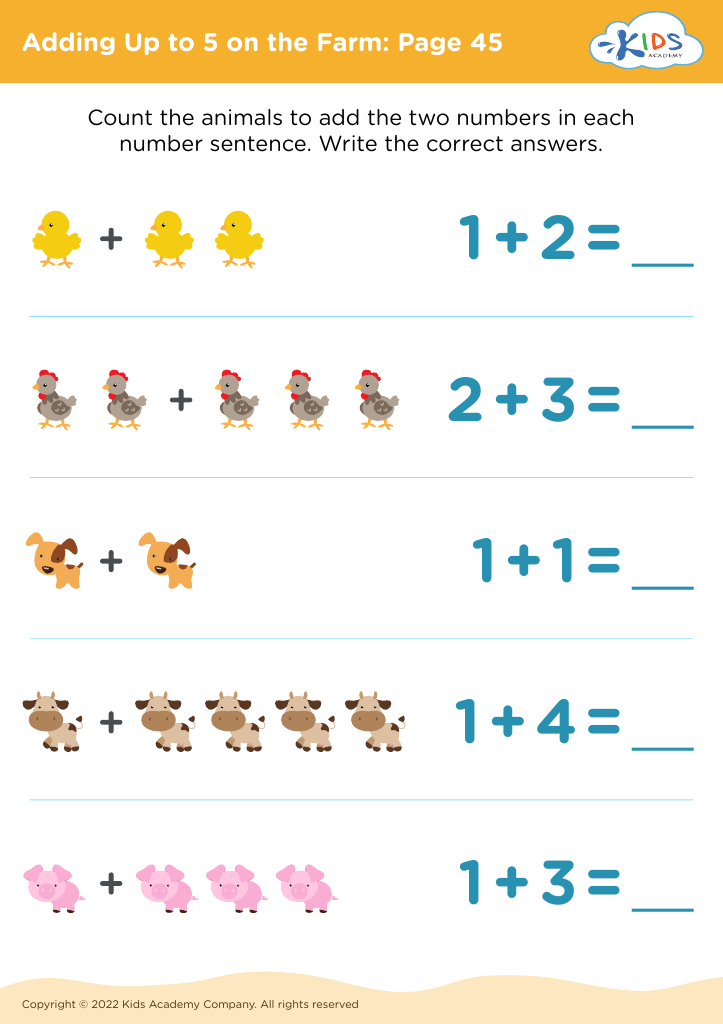
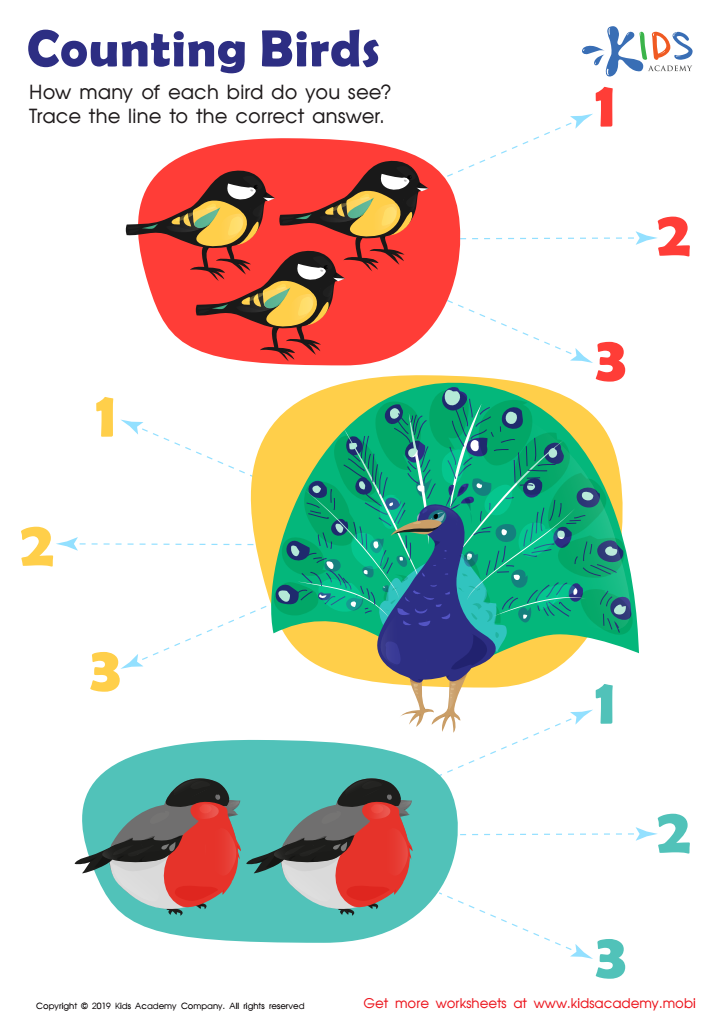
Counting Birds Worksheet
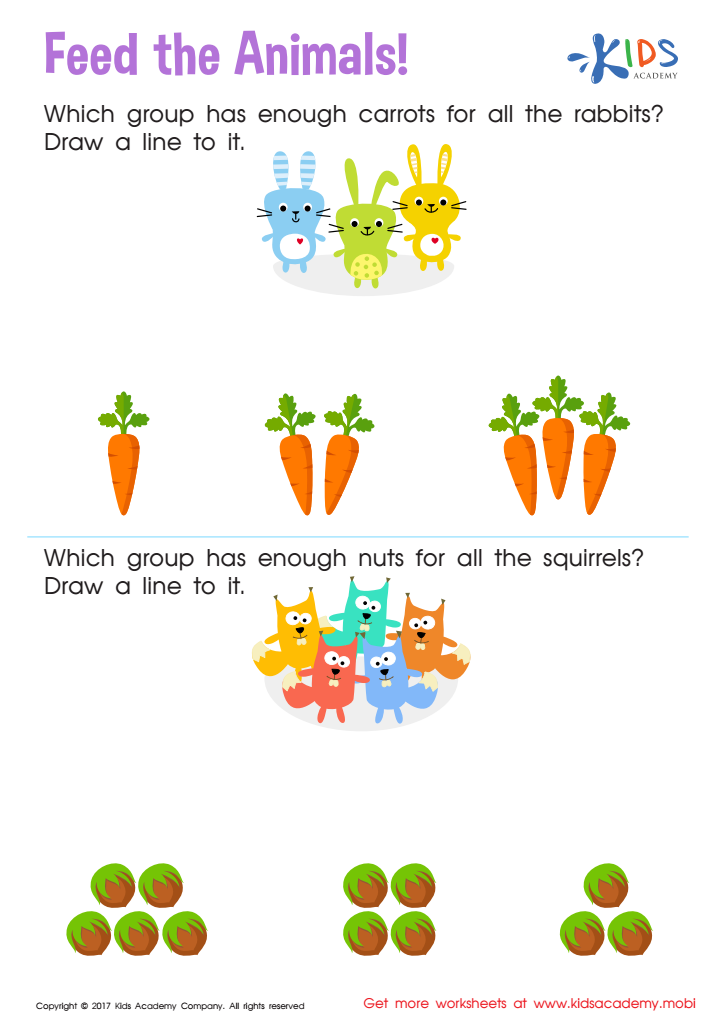
Count and Match: Feed the Animals Worksheet
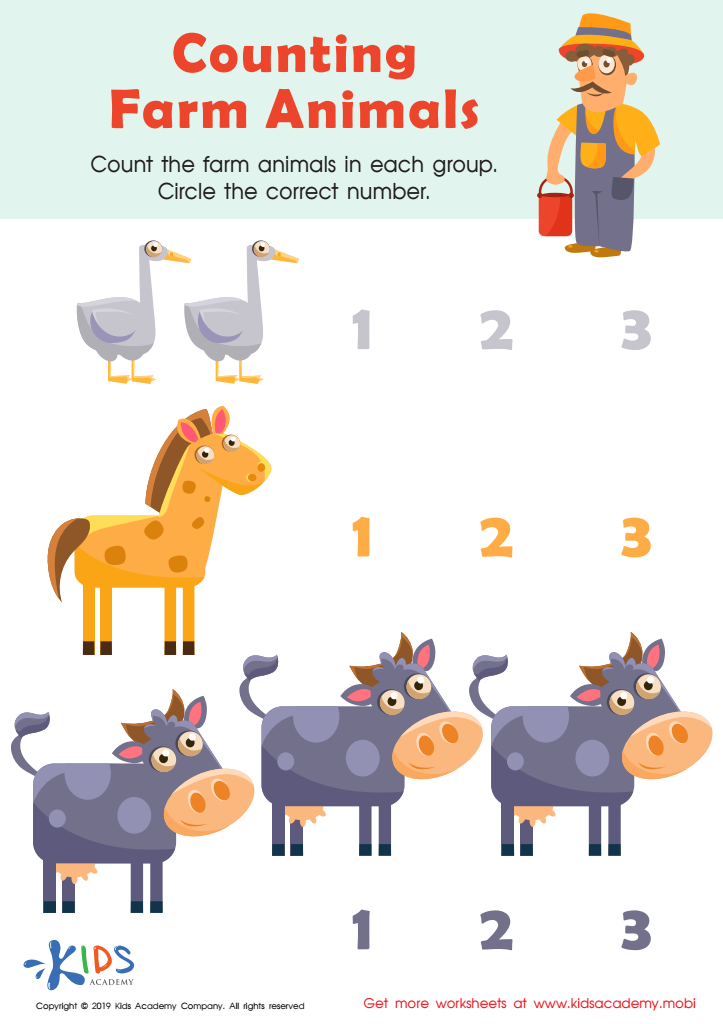
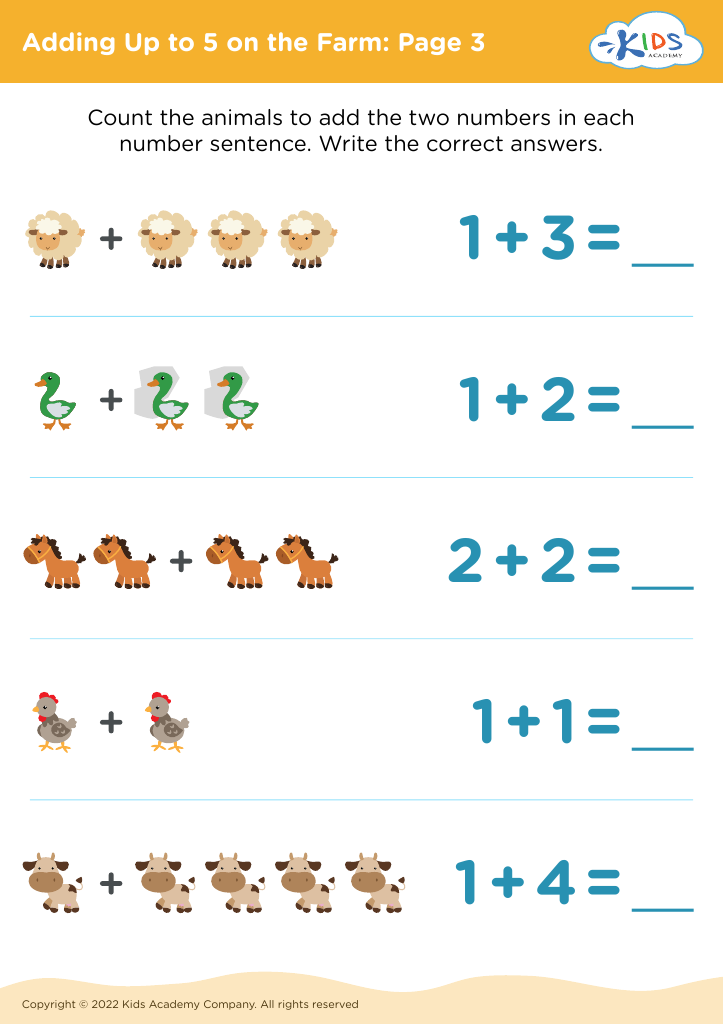
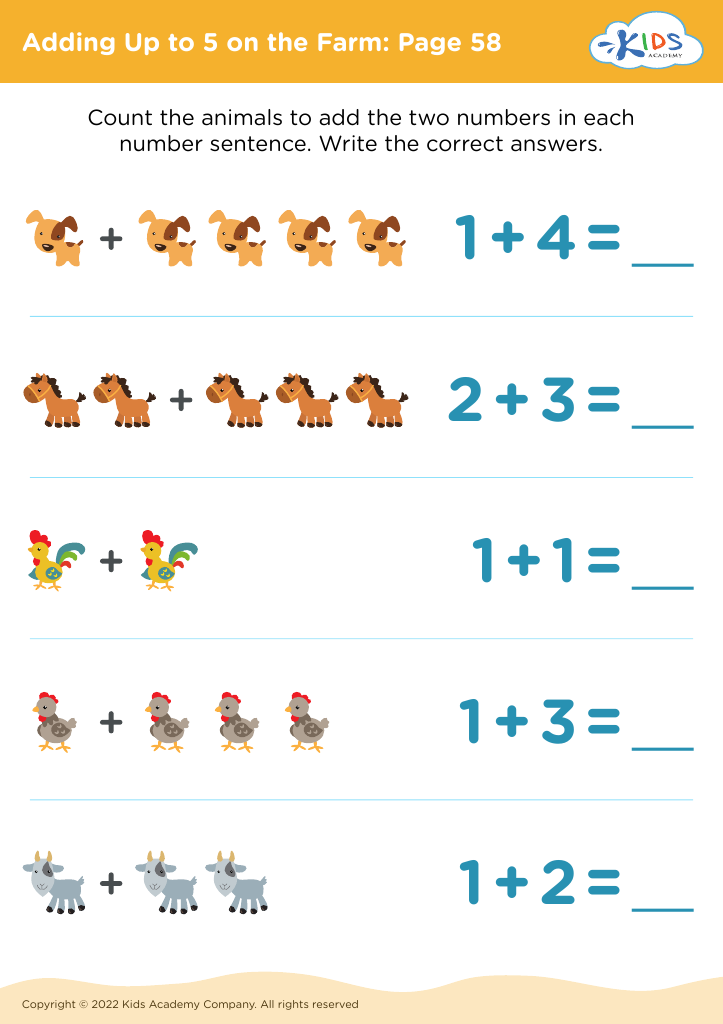
Counting Farm Animals Worksheet








Animal recognition is an essential component of early childhood education, serving multiple developmental purposes for pre-school aged children. Firstly, it nurtures cognitive skills by encouraging memory and recall abilities as children learn and identify different animals. This recognition process enhances their vocabulary as they are introduced to new words and concepts related to the animal kingdom.
Socially and emotionally, learning about animals fosters empathy and respect for living beings. When children recognize and understand the needs and characteristics of various animals, they develop compassion and a sense of empathy, which are foundational to forming healthy relationships with people and the world around them.
Physically, interactive activities like matching animal pictures or making animal sounds can improve fine motor skills and coordination. Moreover, animal recognition exercises can spark curiosity and foster a lifelong love for nature and science, essential for holistic development.
Beyond academics, early exposure to animal recognition supports experiential learning and critical thinking. It inspires questions about habitats, diets, and behaviors, laying the groundwork for inquiry-based learning. Consequently, parents and teachers investing in animal recognition activities are equipping children with fundamental academic, emotional, and physical skills that form a strong foundation for future learning and personal growth.








