Building vocabulary Worksheets for Ages 3-6
4 filtered results
-
From - To
Discover engaging Building Vocabulary Worksheets tailored for children aged 3-6! These interactive resources foster language development through fun activities that capture young learners' curiosity. Designed by educational experts, our worksheets include picture-word associations, matching games, and fill-in-the-blank exercises to enhance vocabulary skills. Each worksheet encourages creativity and comprehension, helping children express themselves with confidence. Ideal for homeschooling, preschool, or supplementary learning, these resources promote early literacy through play and exploration. Empower your child's communication skills and lay a solid foundation for future learning with our comprehensive collection of vocabulary-building worksheets. Start your adventure in language discovery today!
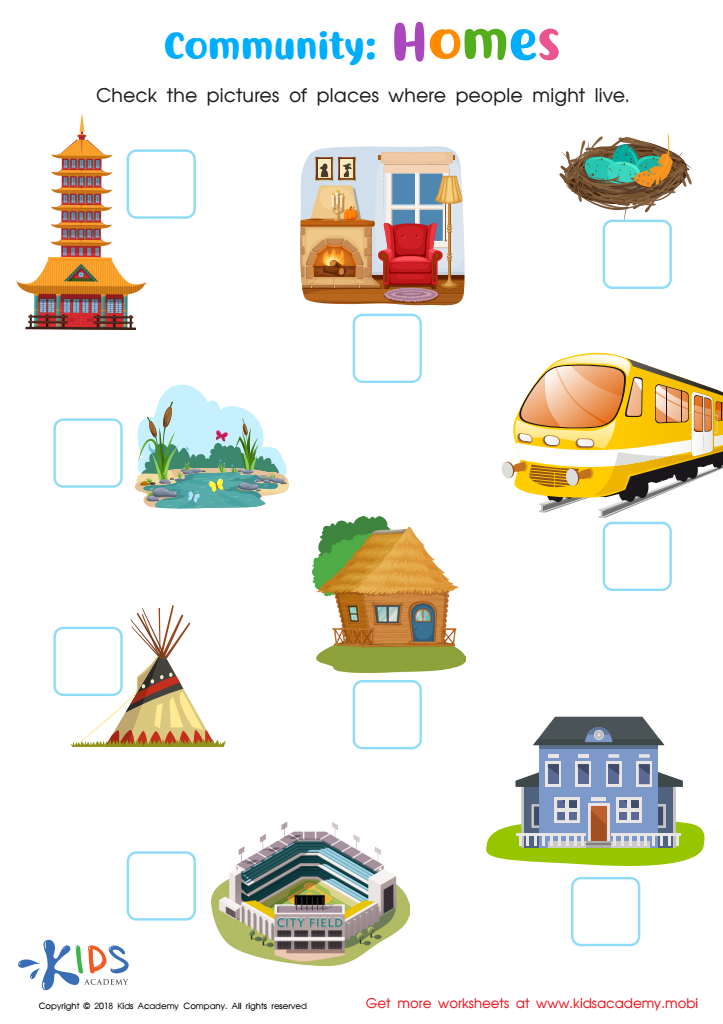
Community: Homes Worksheet
 Assign to My Students
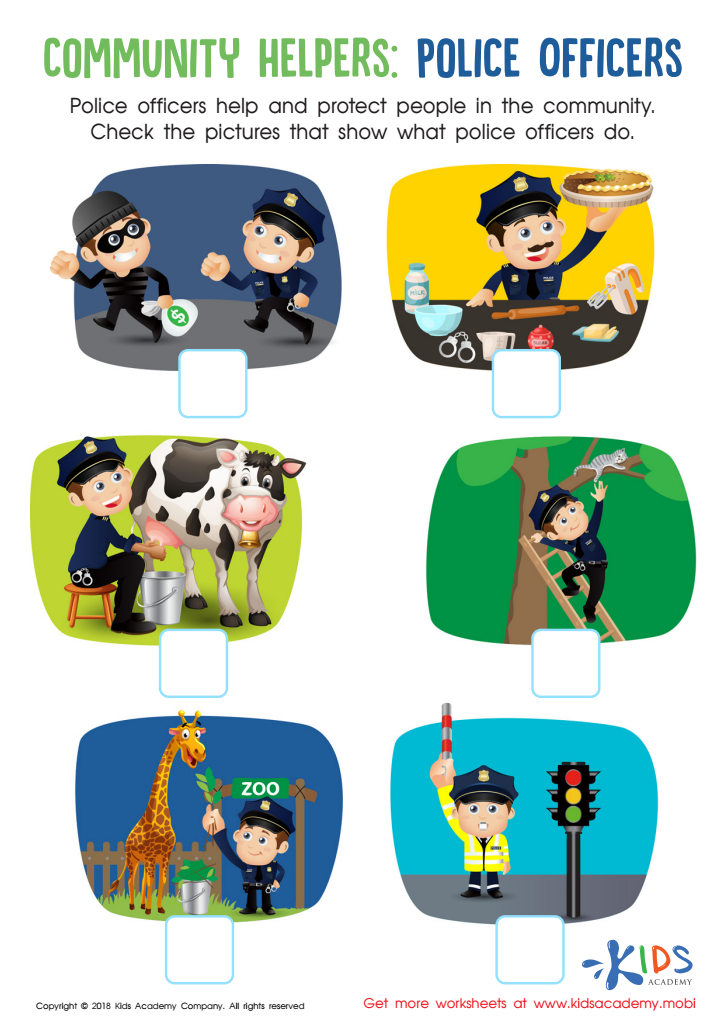
Police Officers Community Helpers Worksheet
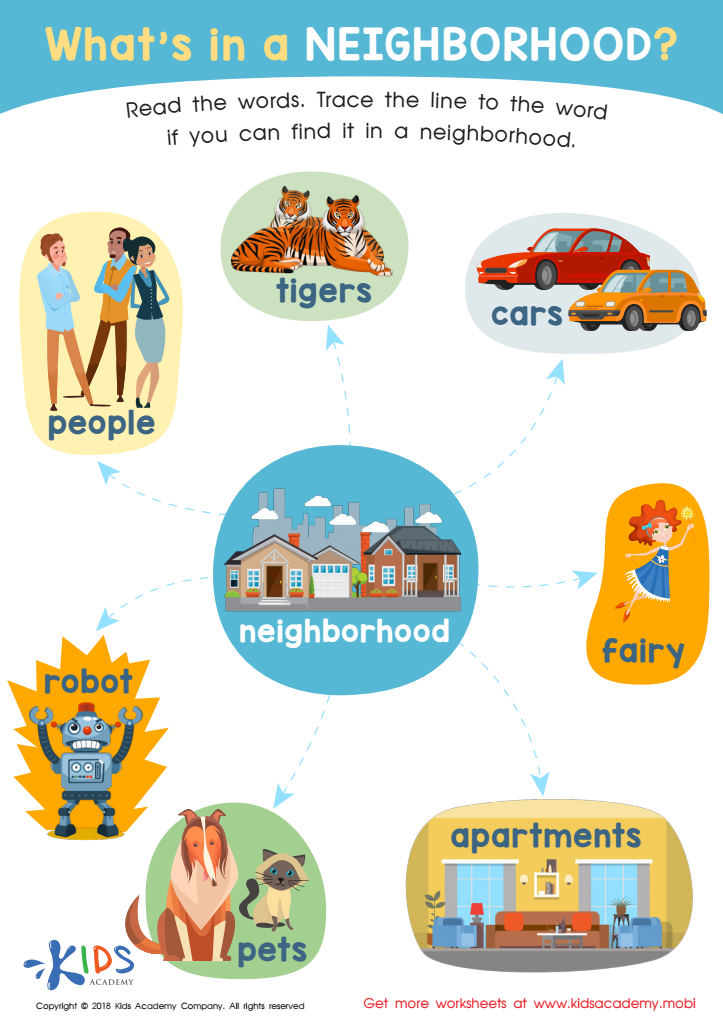
What's in a Neighborhood? Worksheet








Building vocabulary in children aged 3-6 is crucial for their overall development and future success. During these formative years, children are rapidly acquiring language skills, laying the foundation for communication, cognitive development, and literacy. A strong vocabulary enhances a child's ability to express themselves clearly, understand complex ideas, and engage with the world around them.
Parents and teachers play a vital role in nurturing vocabulary growth. Engaging children in conversations, reading aloud age-appropriate books, and introducing new words through play and everyday activities create rich language experiences. By fostering a love for words, adults help children become more confident and proficient readers and speakers, which is essential for academic achievement.
Moreover, a well-developed vocabulary supports critical thinking and problem-solving skills, helping children learn to navigate their environment more effectively. It also enhances social interactions, enabling them to build relationships with peers and adults.
Ultimately, investing time and effort in vocabulary building during these early years has long-lasting benefits, setting the stage for a lifetime of learning and success. Supporting language development is not just about words; it's about equipping children with the tools they need to thrive in school and beyond.








