Comparing quantities Worksheets for Ages 3-6
8 filtered results
-
From - To
Our "Comparing Quantities Worksheets for Ages 3-6" are designed to make learning fun and engaging for little learners. These printable worksheets help children develop critical early math skills by comparing numbers, sizes, and quantities. Through a variety of interactive exercises featuring colorful illustrations and playful themes, kids will learn to identify which groups have more, fewer, or an equal number of items. Tailored to suit toddlers and preschoolers, these worksheets foster important problem-solving abilities and pave the way for future mathematical success. Spark your child's curiosity and confidence in math with our fun and educational activities!
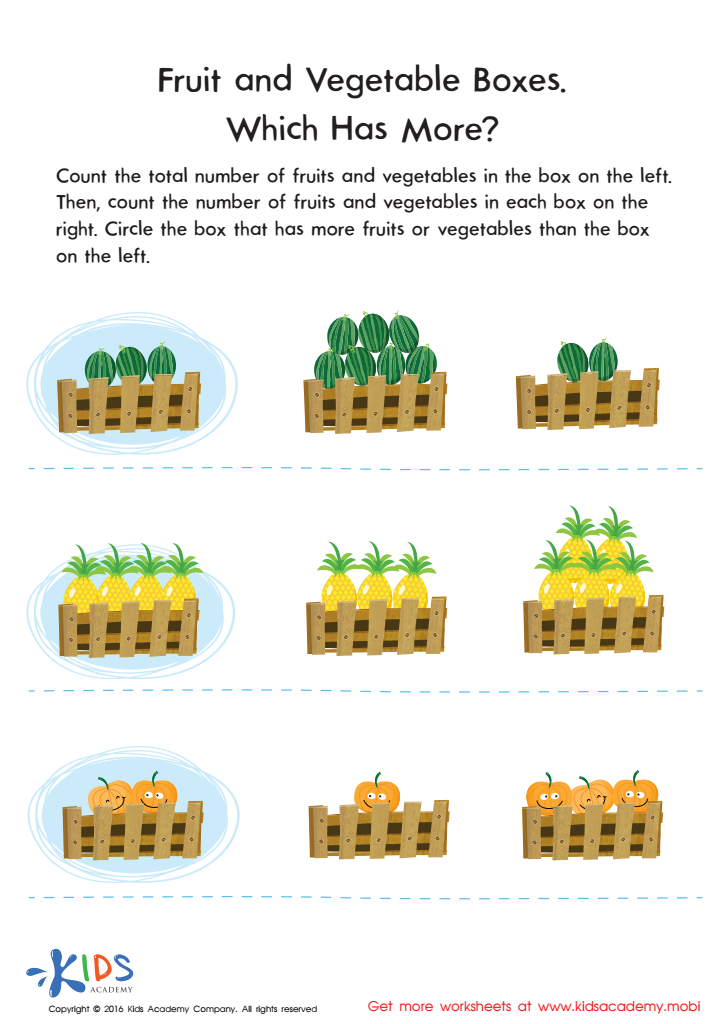
Which Has More? Size Worksheet
 Assign to My Students
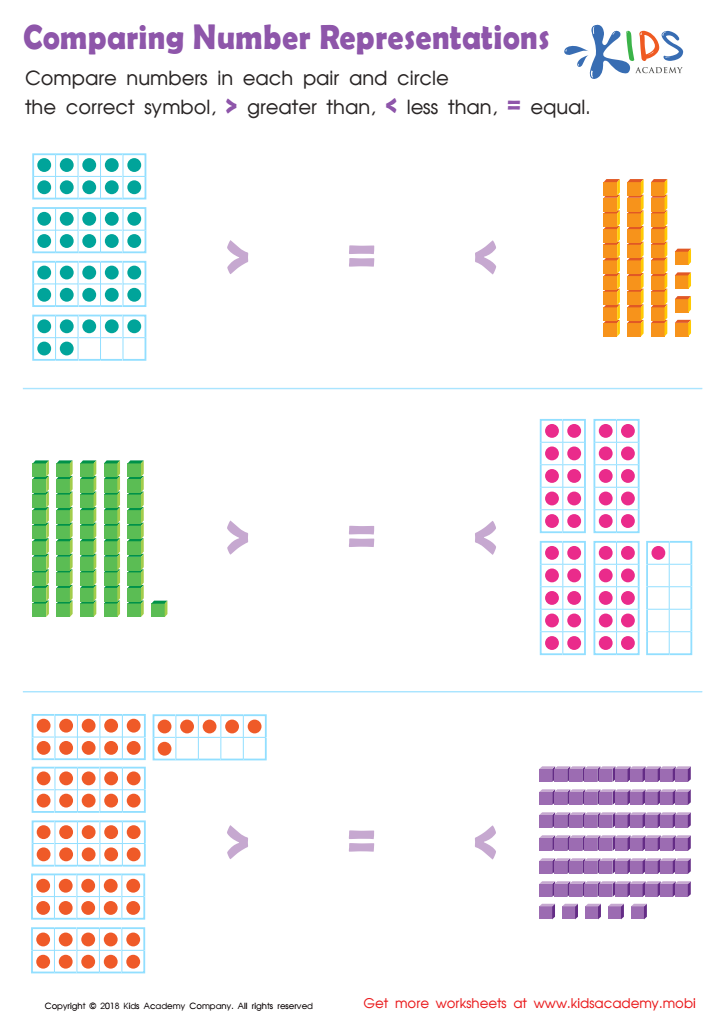
Comparing Number Representations Worksheet
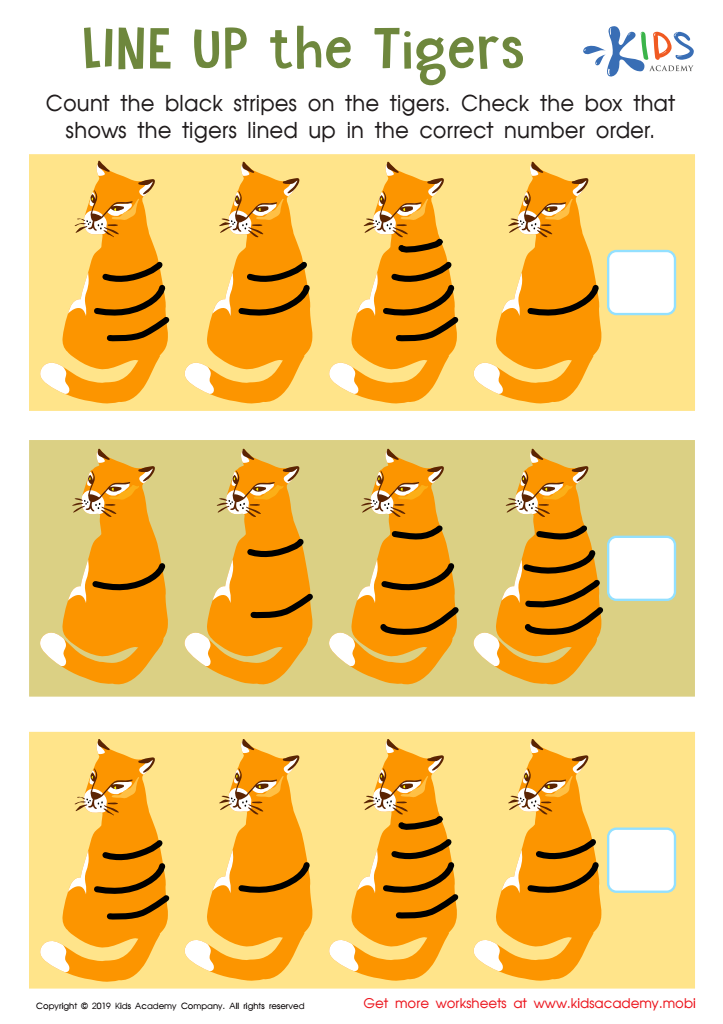
Line up the Tigers Worksheet
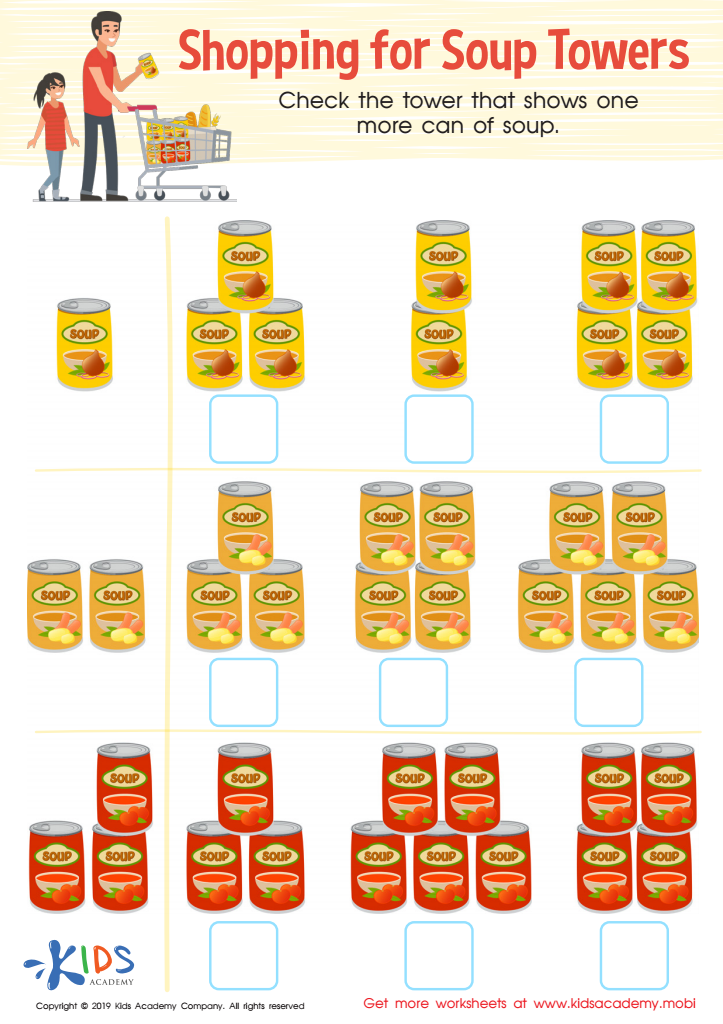
Soup Towers Worksheet
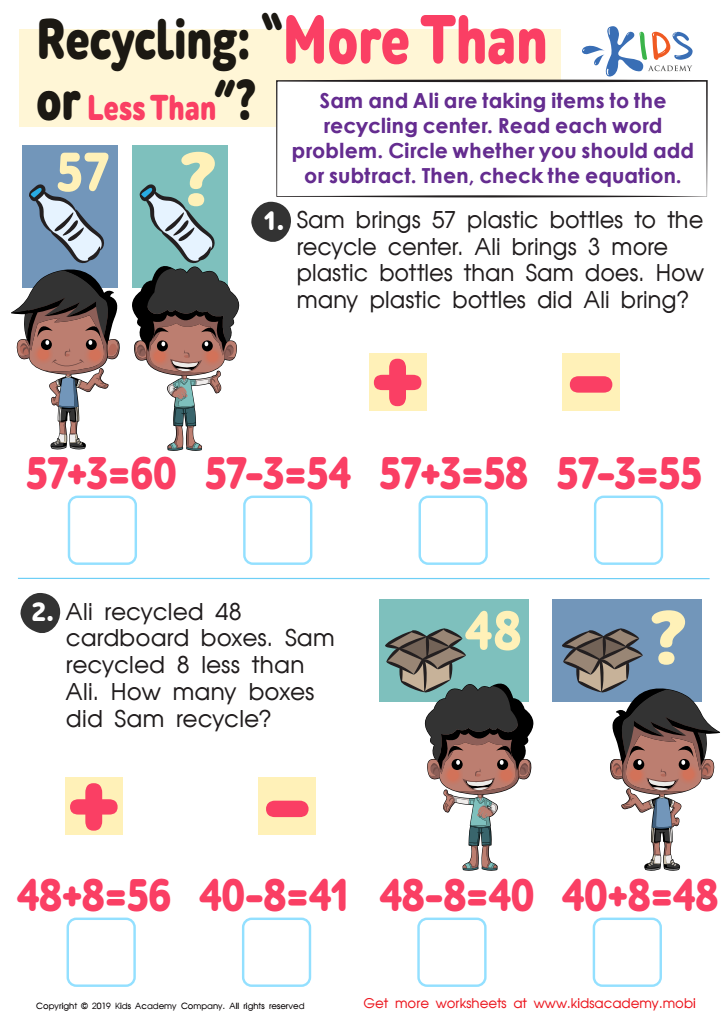
Recycling - More or Less Worksheet
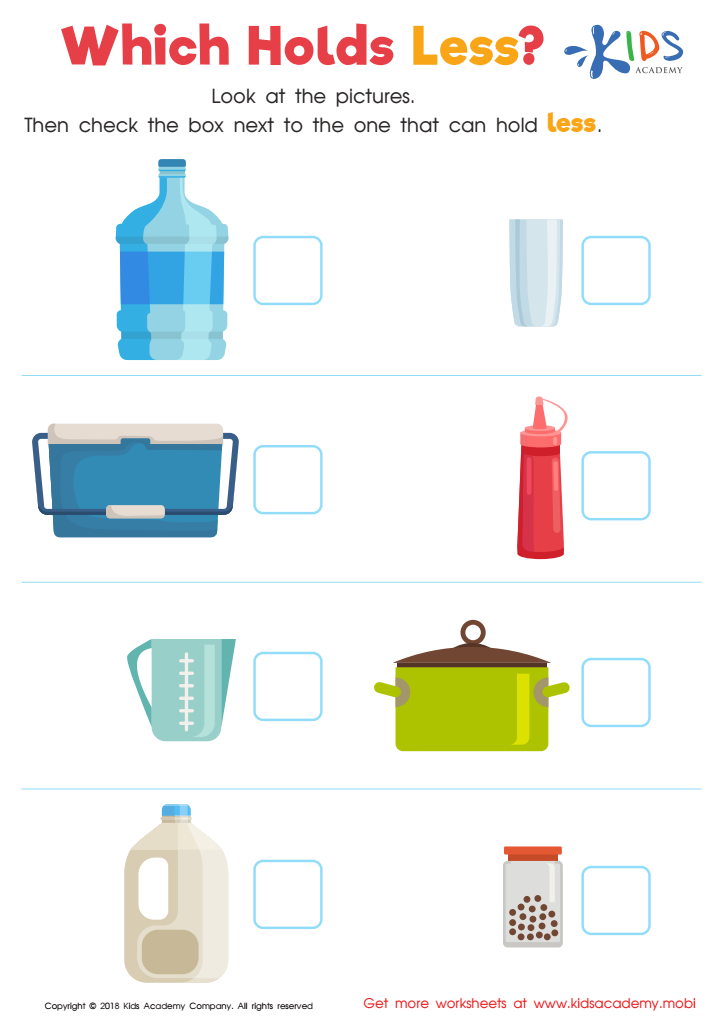
Which Holds Less? Worksheet






Parents and teachers should care about teaching young children (ages 3-6) to compare quantities because it forms the foundation for future mathematical understanding. Comparing quantities helps children grasp essential concepts such as more, less, equal, larger, and smaller, which are vital for their cognitive development and critical-thinking skills. This early exposure to mathematical vocabulary and reasoning lays the groundwork for more complex mathematical operations like addition, subtraction, and eventually, multiplication and division.
For example, when children compare quantities, they begin to understand the concept of numerical value and relationships between different sets of objects. This understanding not only boosts their numeracy skills but also enhances their problem-solving abilities and logical thinking. Moreover, it builds confidence as they find joy in discovering patterns and making connections through playful activities, like counting toys or comparing the number of apples in two baskets.
Additionally, early math skills predict later academic achievement. Children proficient in comparing quantities tend to perform better in school, not just in math but across other subjects as well. This is because mathematical reasoning improves their ability to think analytically, follow detailed instructions, and develop perseverance. Therefore, engaging young learners in activities that encourage comparing quantities is a crucial step in fostering a lifelong love for learning and academic success.








