Enhance counting skills Worksheets for Ages 3-6
6 filtered results
-
From - To
Boost your child's counting skills with our engaging worksheets designed for ages 3-6! Our curated collection offers a variety of fun and interactive activities that make learning to count a joyful experience. Each worksheet is thoughtfully crafted to encourage young learners to explore numbers through playful exercises such as counting objects, coloring, and number matching. Ideal for preschool and kindergarten settings, these resources help build a solid foundation in early mathematics. Whether at home or in the classroom, our enhance counting skills worksheets will make practice enjoyable while fostering confidence and proficiency in young mathematicians. Start counting the fun today!
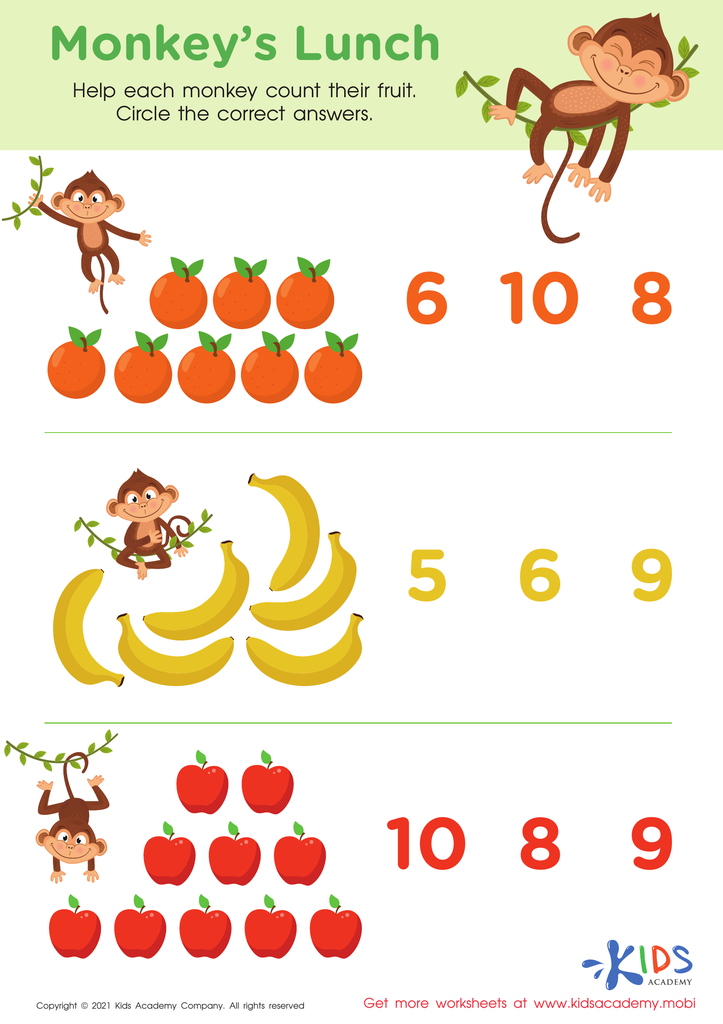
Monkey’s Lunch Worksheet
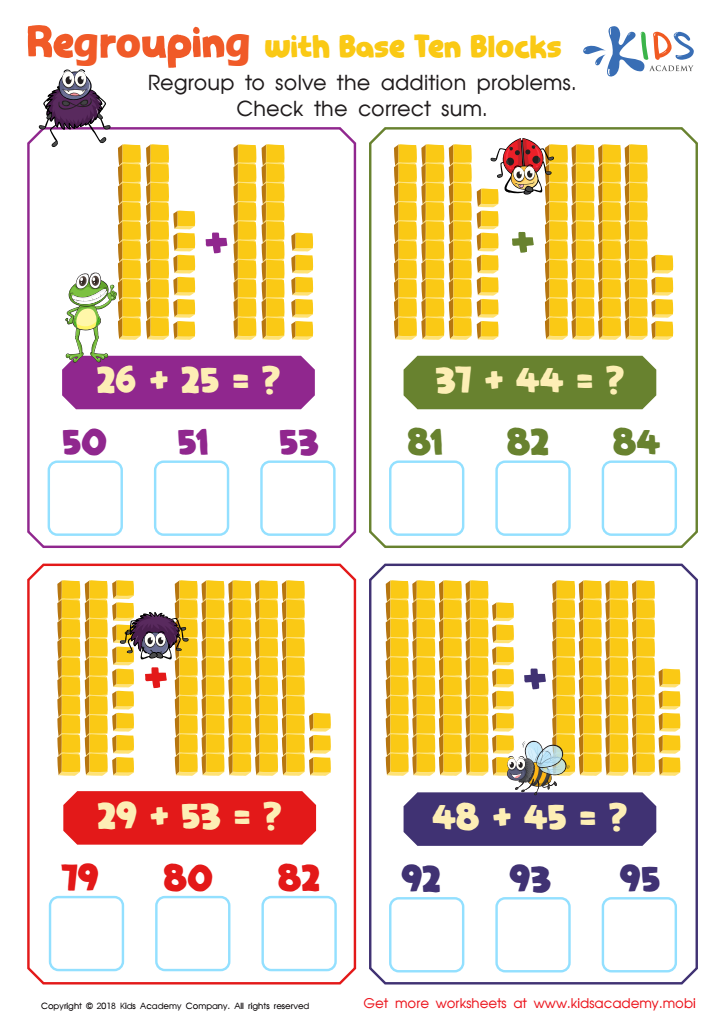
Regrouping With Base Ten Blocks Worksheet
 Assign to My Students
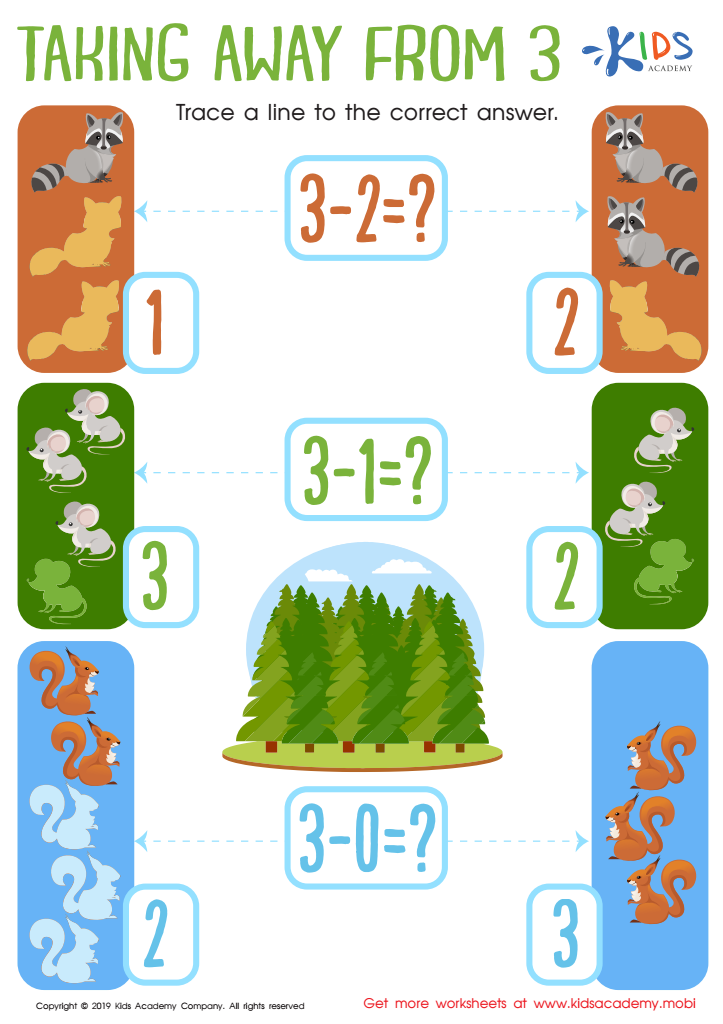
Taking Away From 3 Worksheet
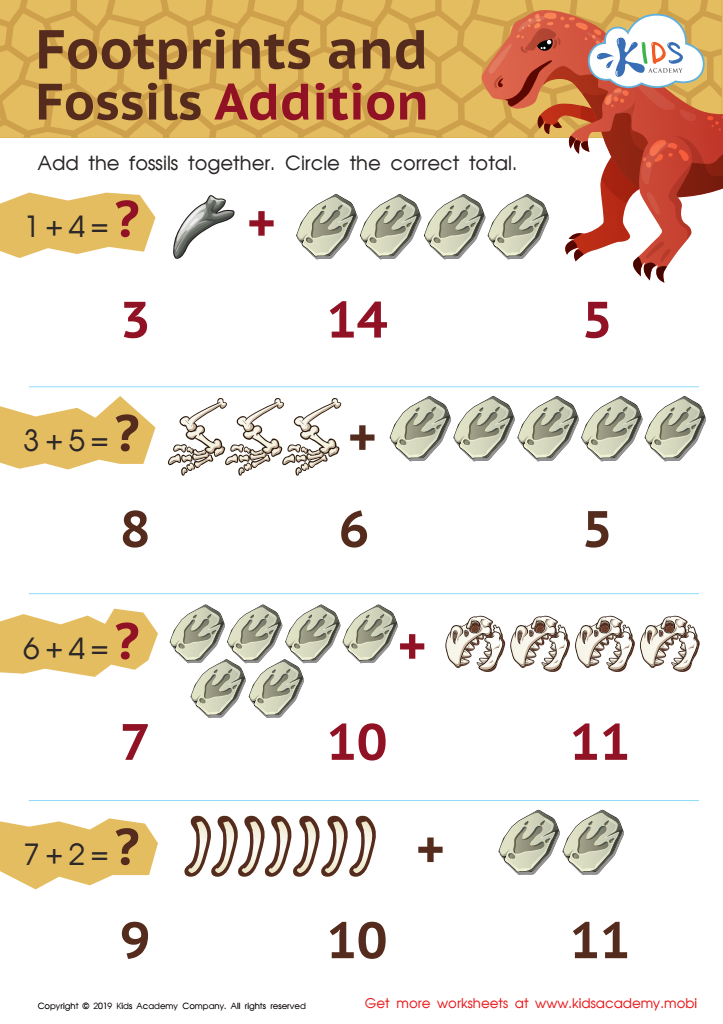
Footprints and Fossils Addition Worksheet


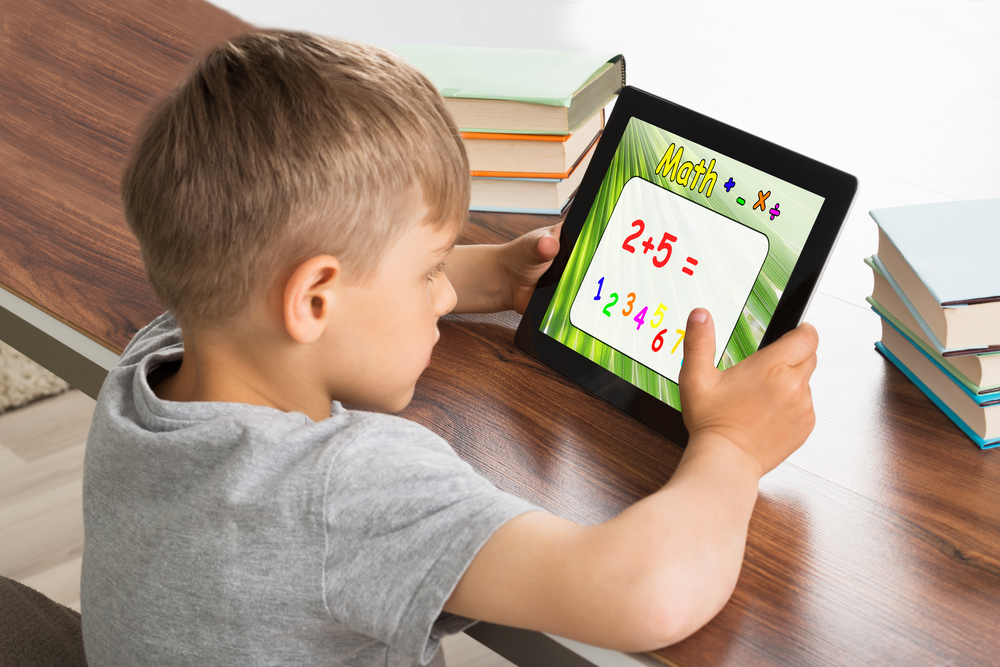





Enhancing counting skills in children aged 3-6 is crucial for their cognitive development and future mathematics success. During these formative years, children develop foundational skills that greatly influence their academic journey. By fostering counting skills early on, parents and teachers provide a strong base for mathematical understanding, helping children grasp concepts such as addition, subtraction, and early recognition of patterns.
Counting also helps children develop essential cognitive abilities, including memory, attention, and problem-solving skills. Engaging in counting activities—whether through songs, games, or hands-on experiences—encourages critical thinking and collaboration among peers, improving social skills as well.
Furthermore, counting supports language development. As children count objects, they learn new vocabulary, enhance their communication skills, and engage more effectively with their environment. This process initiates a love for learning and curiosity about numbers, which can evolve into a lifelong interest in mathematics and its applications.
Investing time and resources in enhancing counting skills not only prepares children for academic challenges, but also equips them with essential life skills. Ultimately, parents and teachers play an irreplaceable role in nurturing these early abilities, laying the groundwork for future learning and success in more advanced mathematical concepts.








