History knowledge Worksheets for Ages 3-6
4 filtered results
-
From - To
Discover our engaging History Knowledge Worksheets designed specifically for children ages 3-6. These printable resources introduce young learners to basic historical concepts, encouraging curiosity and a love for the past. Through age-appropriate activities such as matching historical figures, discussing important events, and exploring innovative ideas, children will develop critical thinking skills while having fun. Each worksheet fosters cognitive development and enhances vocabulary, making learning an enjoyable experience. Perfect for early childhood educators and parents alike, our worksheets provide a solid foundation in history, sparking conversations and a deeper understanding of the world. Start your child’s historical journey today with our vibrant resources!
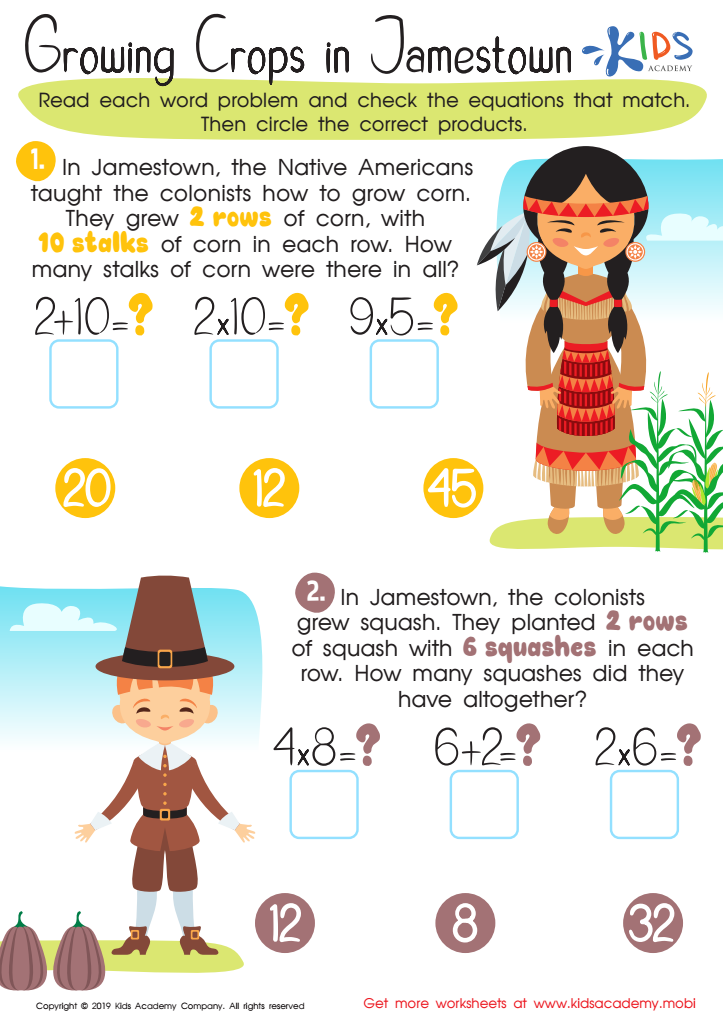
Growing Jamestown Worksheet
 Assign to My Students







Understanding history is essential for young children, even at the preschool age of 3-6 years. Early exposure to history introduces children to the concepts of time, chronology, and cultural diversity. It promotes a sense of identity and belonging as children learn about their own heritage and the broader world around them.
For parents and teachers, instilling a basic understanding of history fosters critical thinking skills. Discussing past events encourages children to ask questions, analyze information, and draw connections between their lives and historical narratives. This inquisitive mindset lays a strong foundation for future learning.
Additionally, history enhances children's social skills. Through stories about different cultures, time periods, and important figures, children cultivate empathy and understanding toward others. This can help foster an inclusive classroom environment where diversity is celebrated.
Furthermore, stories of resilience, cooperation, and human achievement can be incredibly inspiring for young minds, motivating them to strive for their own goals. Ultimately, integrating history into early education not only enriches children's learning experiences but also equips them with valuable life skills and perspectives they will carry with them throughout their educational journey and beyond. In this way, parents and teachers play a crucial role in shaping informed and compassionate future citizens.








