Interpreting data Worksheets for Ages 3-6
4 filtered results
-
From - To
Introduce your little learners to the exciting world of numbers with our "Interpreting Data Worksheets for Ages 3-6." These fun and engaging printables are tailor-made to build foundational skills in data interpretation, perfect for young minds aged 3-6. Our worksheets use colorful graphics and playful activities to teach children how to sort, count, and make sense of simple data sets. By interacting with visual aids like charts and graphs, kids develop early math skills and logical thinking. Foster curiosity and introduce your child to the concepts they need for a lifetime of learning. Discover, download, and start today!
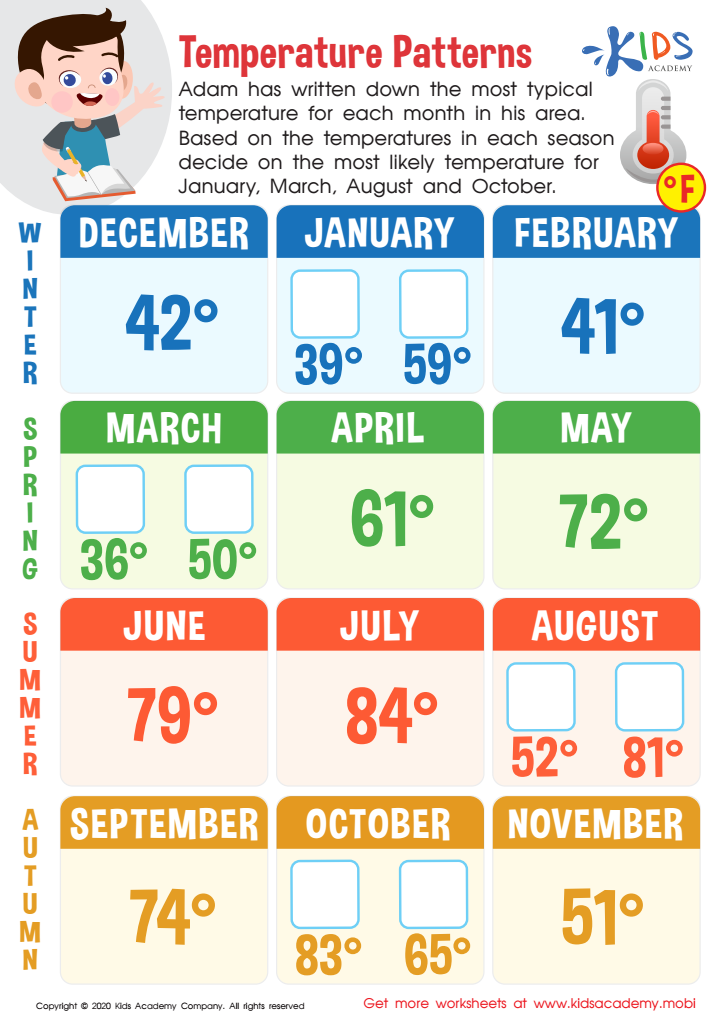
Temperature Patterns Worksheet
 Assign to My Students
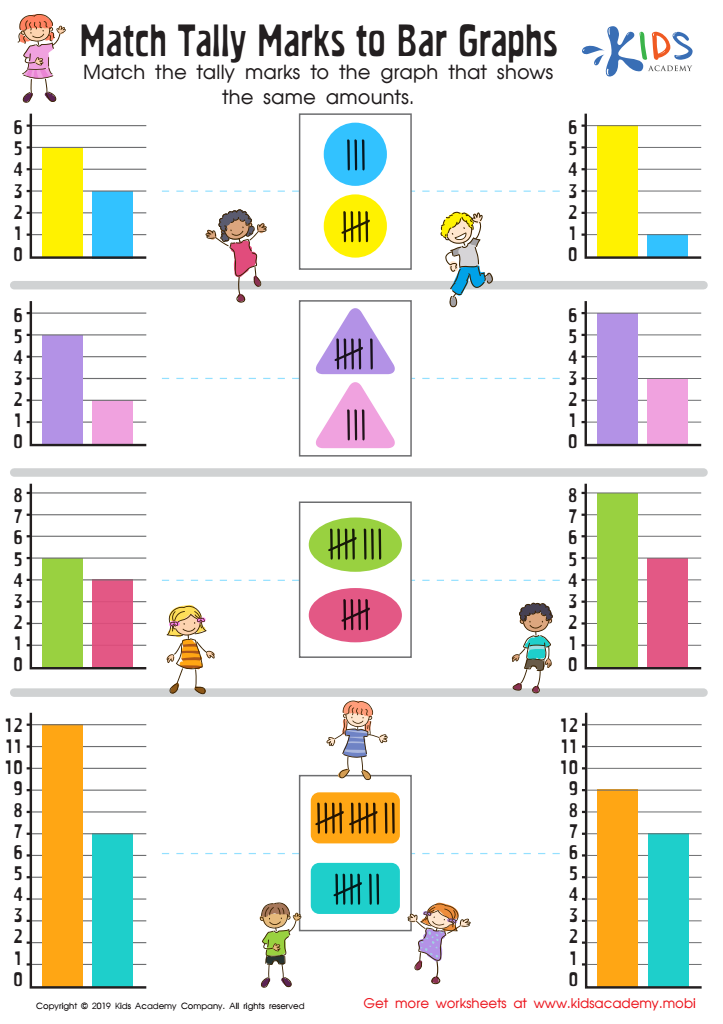
Match Tally Marks to Bar Graphs Worksheet
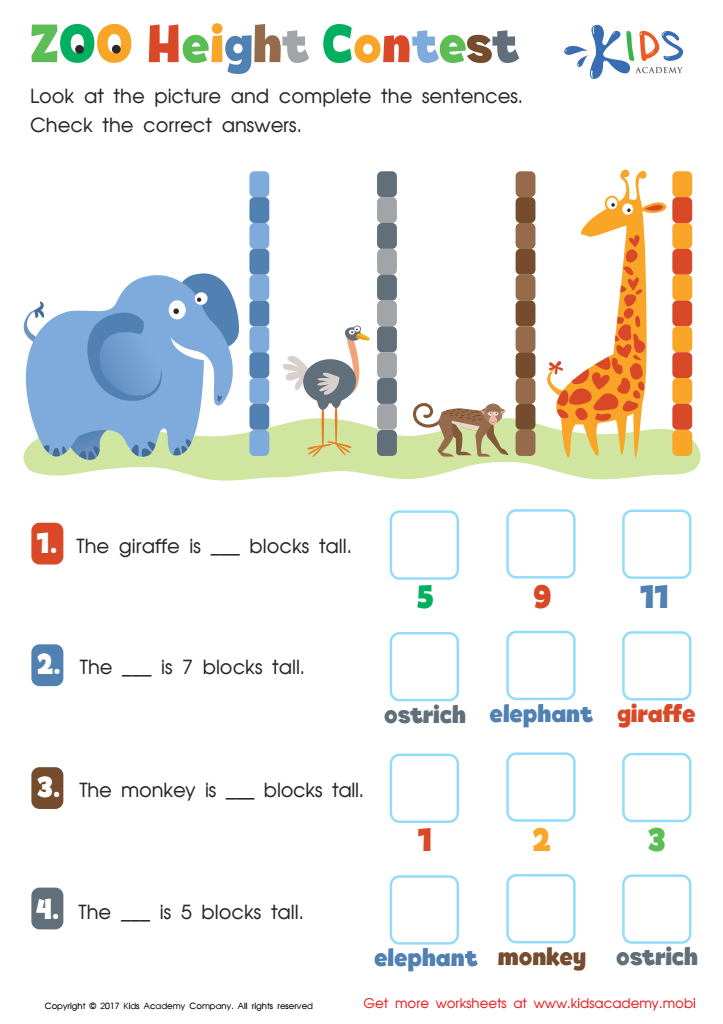
Zoo Height Contest Worksheet





Interpreting data for children aged 3-6 is vital for both parents and teachers because it provides unique insights into a child's developmental milestones and needs during these formative years. At this young age, holistic development—including cognitive, emotional, social, and physical growth—is crucial. By carefully analyzing data from observations, assessments, and interactions, adults can tailor educational approaches to support the child's unique growth pattern.
For parents, understanding these data helps them identify strengths and areas needing attention, ensuring their child receives appropriate interventions or enrichment activities crucial for balanced development. For instance, if data reveal delayed fine motor skills, parents can introduce more activities like drawing or using scissors that enhance these skills.
Teachers benefit similarly; data offers clues to each child's learning style and inclinations, aiding in customized lesson planning and classroom management strategies. For example, if a teacher observes that a child excels in verbal tasks but struggles with spatial concepts, they can adapt teaching methods to integrate both strengths and challenges, fostering a more inclusive and effective learning environment.
In essence, data interpretation equips guardians and educators with the knowledge to make informed decisions promoting each child’s lifelong love for learning and overall well-being. This proactive approach ensures that the early educational experiences lay a strong, balanced foundation for future academic and personal success.








