Money recognition Worksheets for Ages 3-6
6 filtered results
-
From - To
Our Money Recognition Worksheets for ages 3-6 offer a fun and interactive way for young children to learn about different coins and their values. Designed specifically for preschoolers and kindergarteners, these engaging activities help kids develop essential math and financial skills early on. Each worksheet features colorful images, simple exercises, and real-life scenarios to make learning about money exciting and relatable. Perfect for teachers, parents, and homeschoolers, these worksheets are an excellent resource to build a solid foundation in money recognition and mathematical comprehension, setting the stage for future financial literacy.
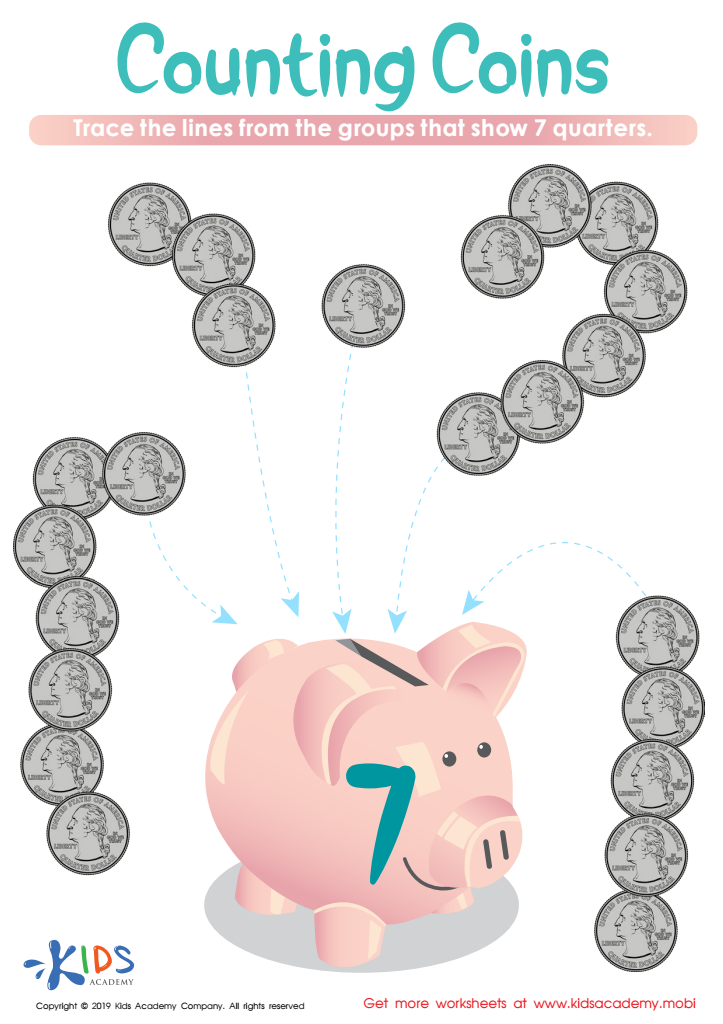
Counting Coins Worksheet
 Assign to My Students
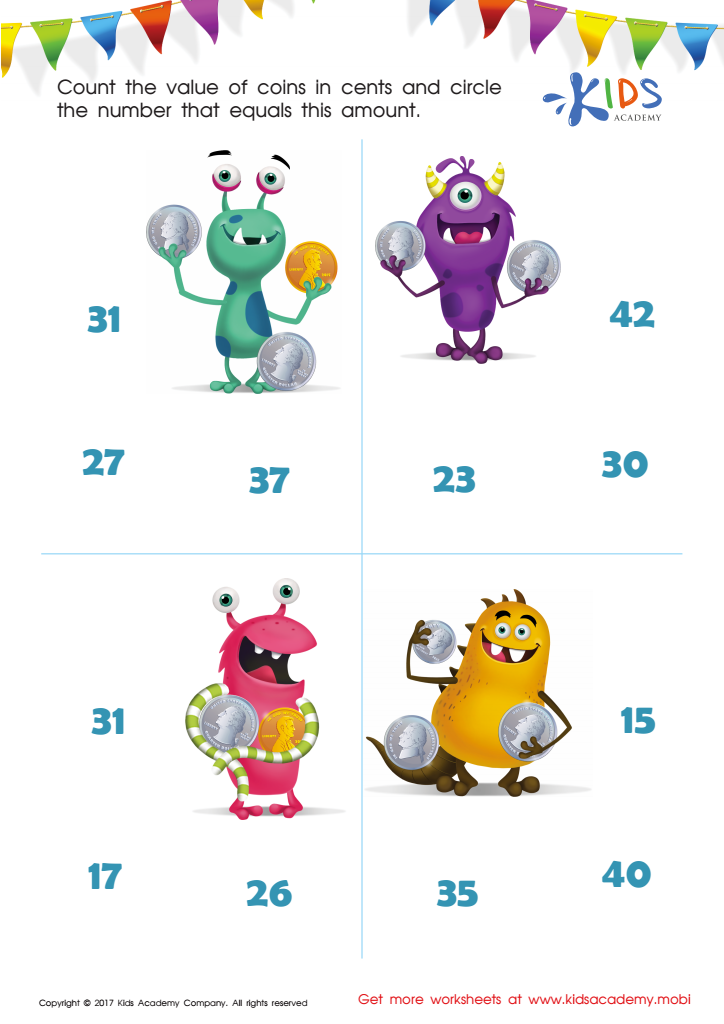
How Many Coins Money Worksheet
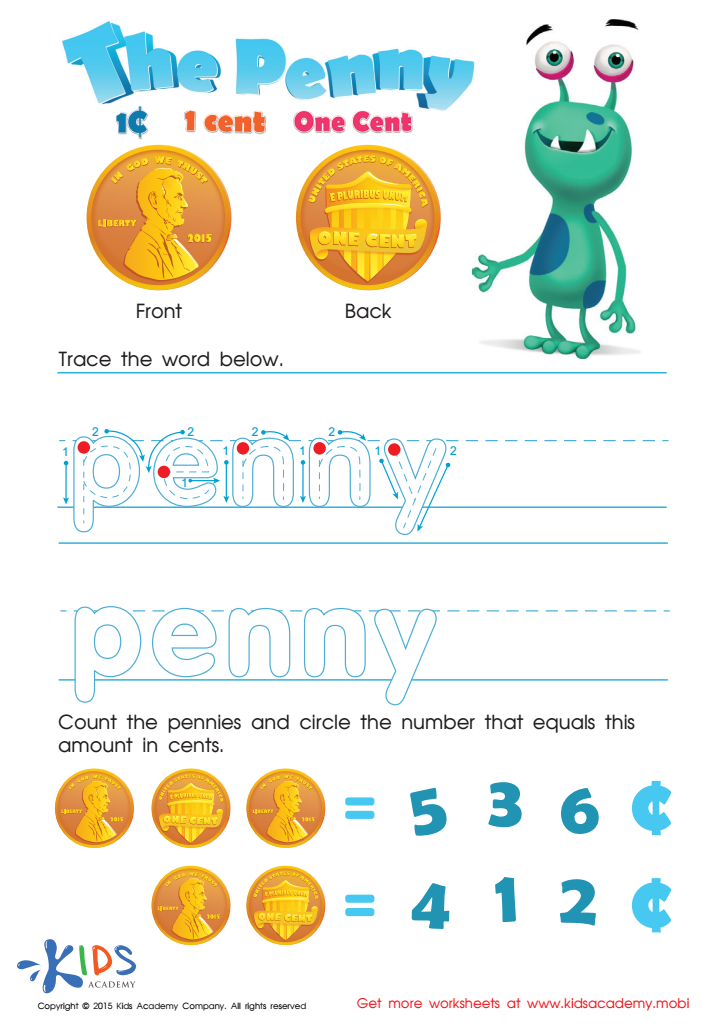
One Cent or the Penny Money Worksheet
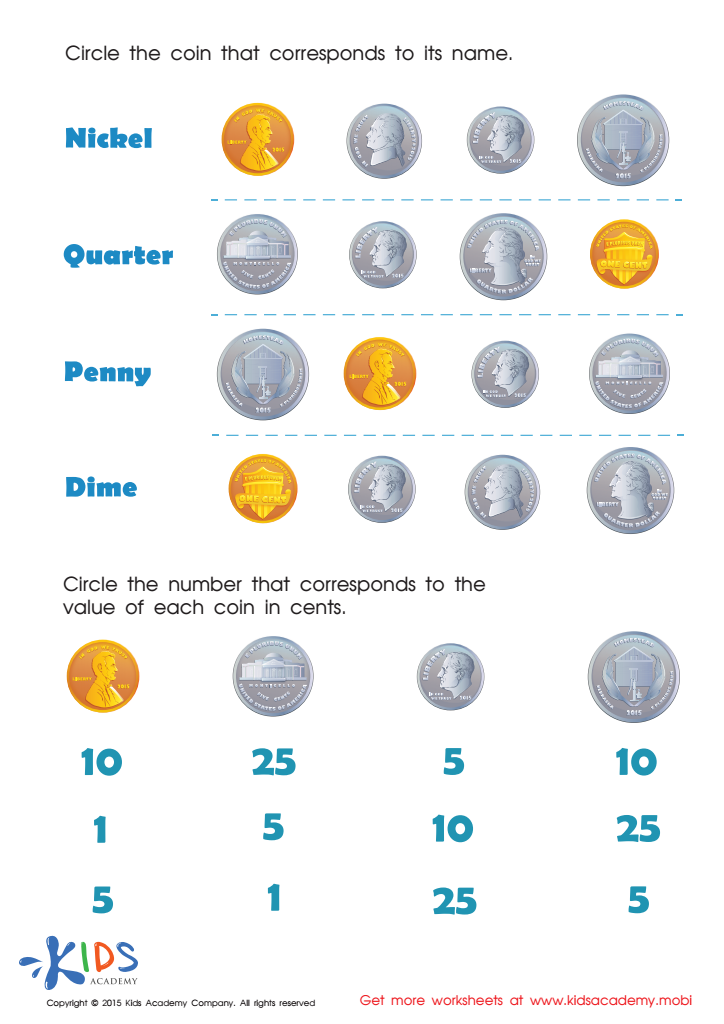
Coin Names and Values Money Worksheet
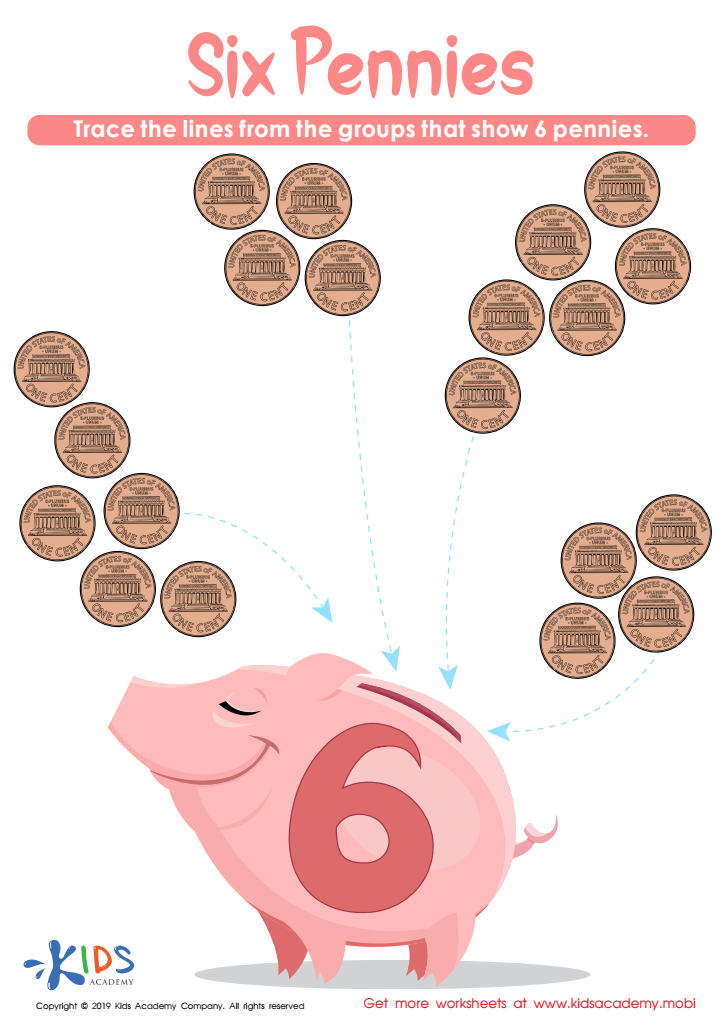
Six Pennies Worksheet
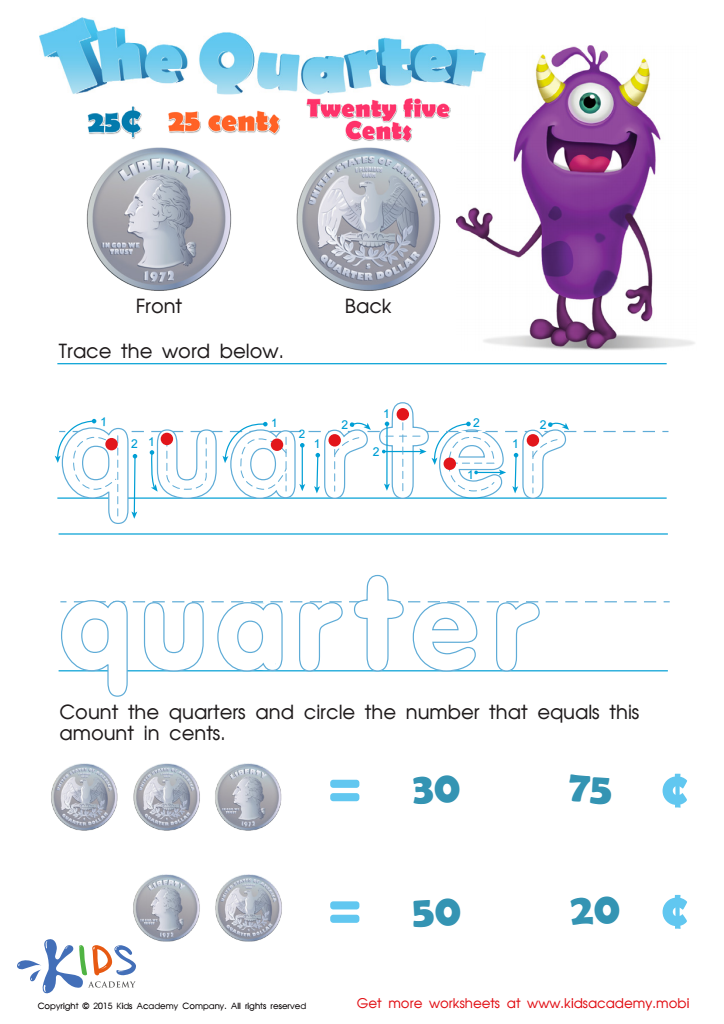
Twenty Five Cents or the Quarter Money Worksheet







Teaching money recognition to children aged 3-6 is a foundational aspect of developing their financial literacy and life skills. Understanding money early enables children to grasp basic math concepts such as counting, addition, and subtraction, which are crucial for their cognitive development. When parents and teachers introduce money recognition, it encourages children to recognize the value of different denominations, enhancing their numerical understanding and problem-solving abilities.
Moreover, introducing money concepts at an early age fosters an appreciation for financial responsibility. Kids begin to comprehend that money is a limited resource, teaching them about savings, budgeting, and the cost of goods. These practical skills are essential as they grow older and assume greater financial responsibilities.
Incorporating money recognition can also make learning more engaging and relevant. Children enjoy interactive activities such as playing store, where they use play money to "purchase" items, sharpening both their math skills and understanding of economic transactions. Additionally, early exposure to money can help bridge gaps in socioeconomic education, promoting equality by ensuring that all children, regardless of background, start with a fundamental knowledge of money's role in everyday life.
In summary, early money recognition is crucial for developing essential math skills, fostering financial responsibility, and enhancing overall cognitive and social development. It prepares children for future financial decisions, contributing to their success and independence.








