Time recognition Worksheets for Ages 3-6
3 filtered results
-
From - To
Discover our engaging "Time Recognition Worksheets for Ages 3-6," designed to help young learners grasp the concept of time in a fun and interactive way. These worksheets feature colorful illustrations and easy-to-follow activities, making it ideal for preschool and kindergarten children. From identifying clock numbers to understanding daily routines, our resources cater to various learning styles, promoting critical thinking and cognitive skills. Parents and educators will find these printable worksheets a valuable tool for enhancing time-telling skills in a playful manner. Explore the exciting world of time with Kids Academy and watch your kids develop essential skills for lifelong learning!
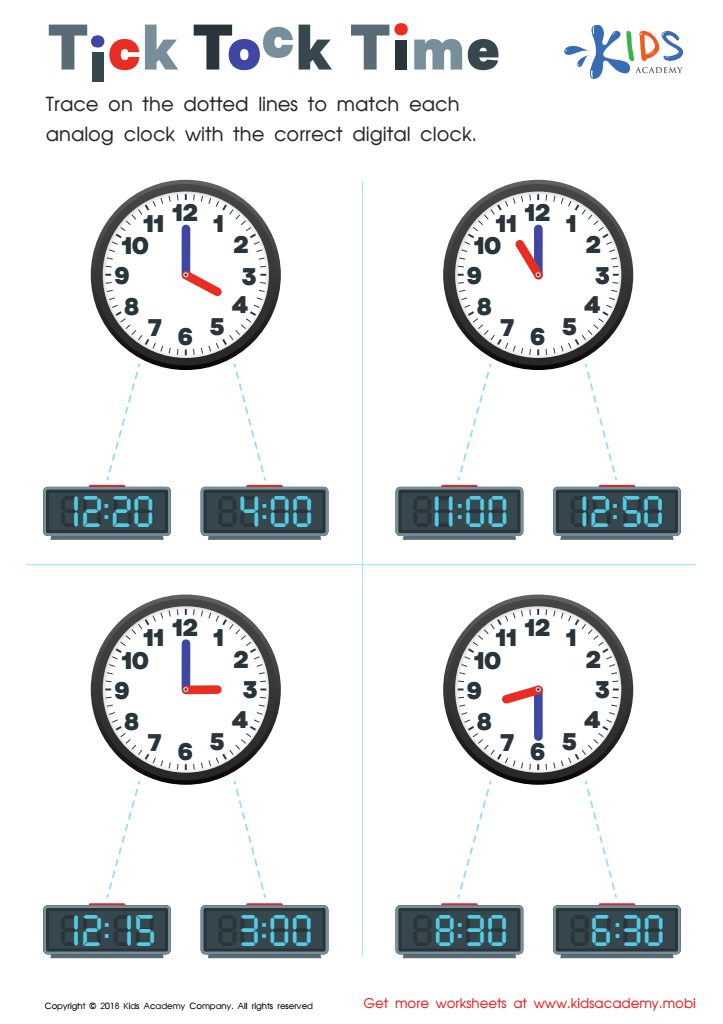
Tick Tock Time Worksheet
 Assign to My Students
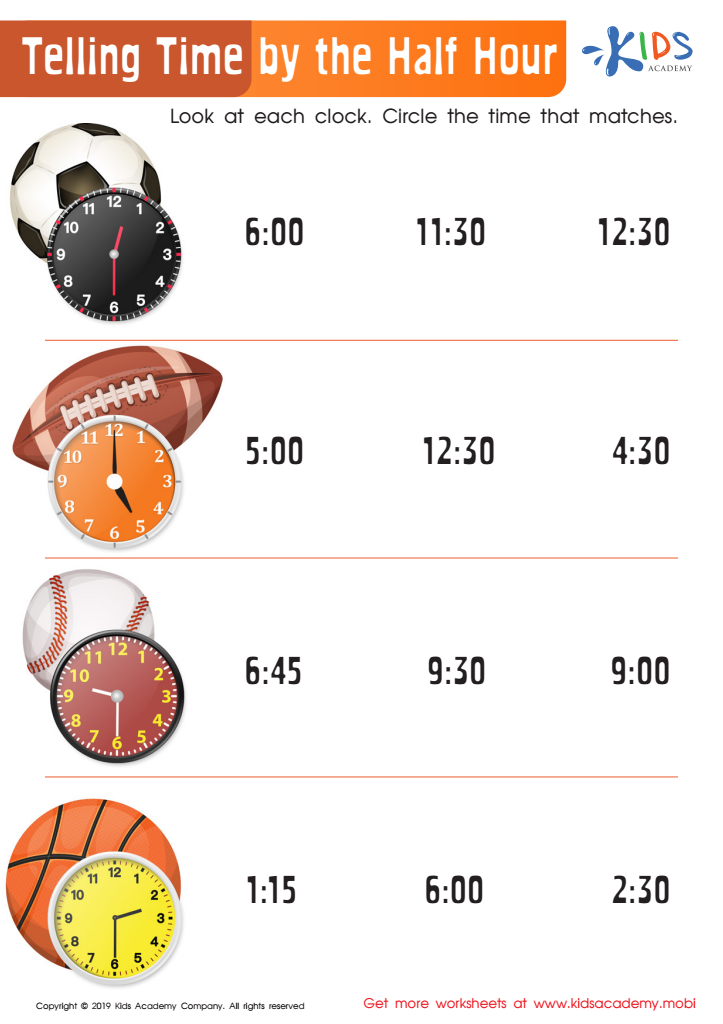
Telling Time by the Half Hour Worksheet
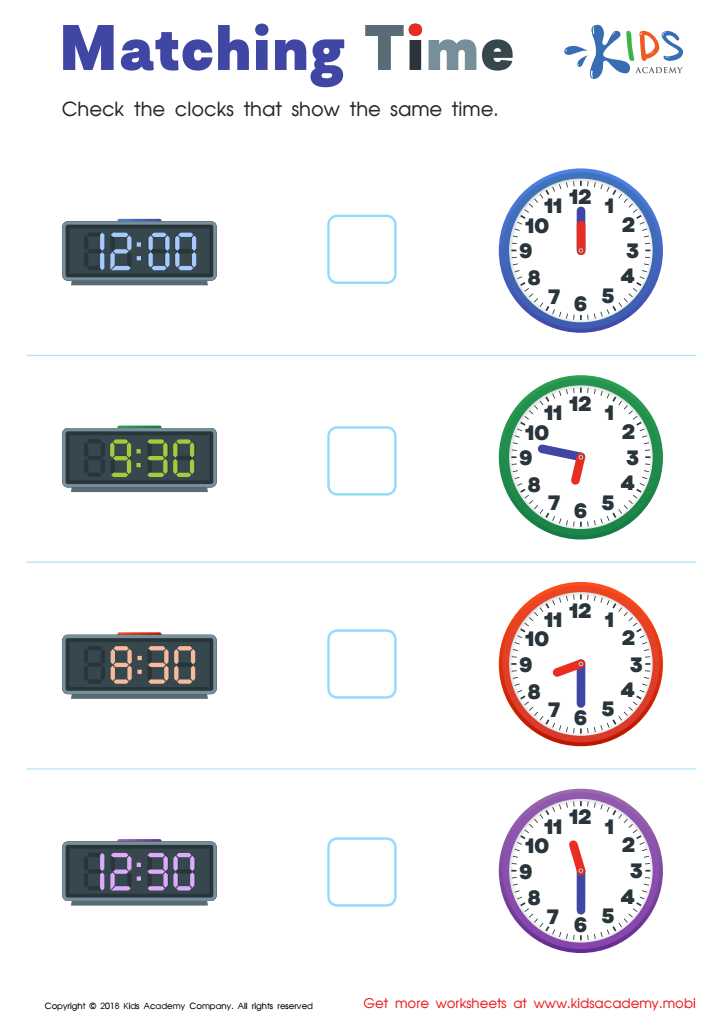
Matching Time Worksheet





.jpg)


Time recognition is a crucial skill for children aged 3 to 6, as it lays the foundation for important cognitive and life skills. During this developmental stage, children begin to make sense of their daily routines and the world around them. Recognizing time helps children understand sequences, patterns, and the concept of past, present, and future. This awareness can enhance their organizational abilities and decision-making skills.
For parents and teachers, fostering time recognition means reinforcing structure and predictability in children's lives, which can lead to greater confidence and independence. By understanding how long activities take or when certain events occur, children can better navigate their daily experiences, such as knowing when it’s time for play, meals, or rest.
Additionally, time recognition promotes social skills as children learn to respect others' time, follow schedules, and engage in cooperative activities. It nurtures early mathematical concepts, such as counting and sequences, which are vital for later academic success. Encouraging time recognition during these formative years can significantly impact a child's overall development, making it essential for parents and educators to prioritize this skill in their teaching and caregiving practices.








