Understanding constellations Worksheets for Ages 3-6
3 filtered results
-
From - To
Discover the wonders of the night sky with our "Understanding Constellations Worksheets" tailored for ages 3-6. These engaging and educational printables are designed to introduce young learners to the stars and patterns that form constellations. Featuring fun activities, such as connect-the-dots and coloring pages, our worksheets make learning about the cosmos an exciting adventure. Perfect for parents and educators, these resources nurture curiosity, enhance early learning skills, and spark a lifelong interest in astronomy. Start your child’s journey through the stars with our expertly crafted constellation worksheets!
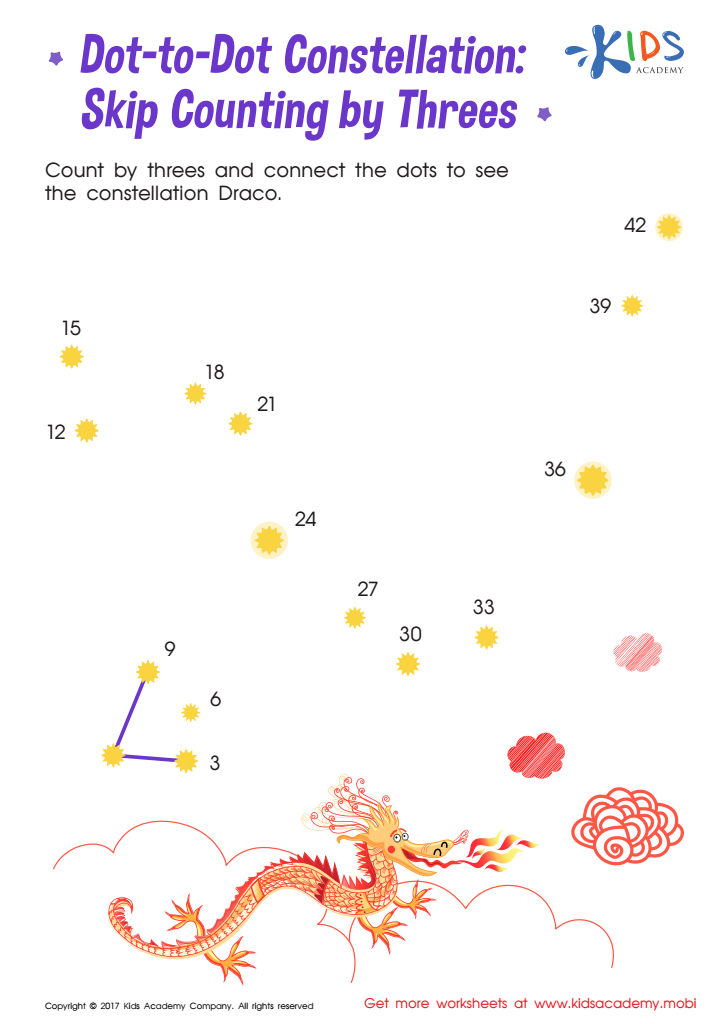
 Assign to My Students
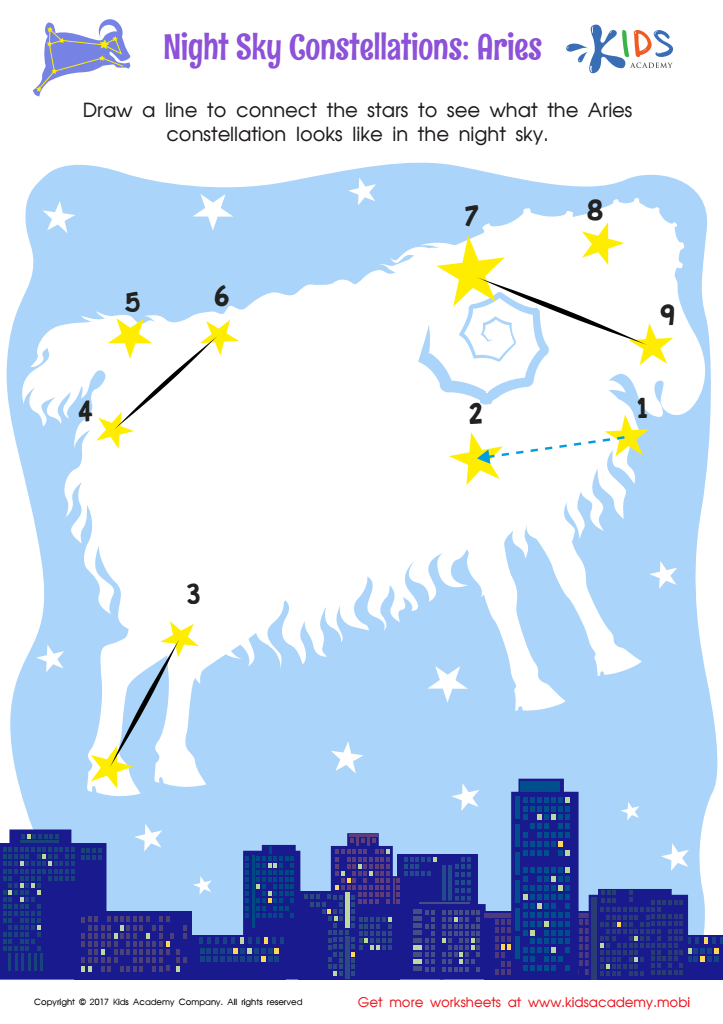
Night Sky Constellations: Aries Worksheet
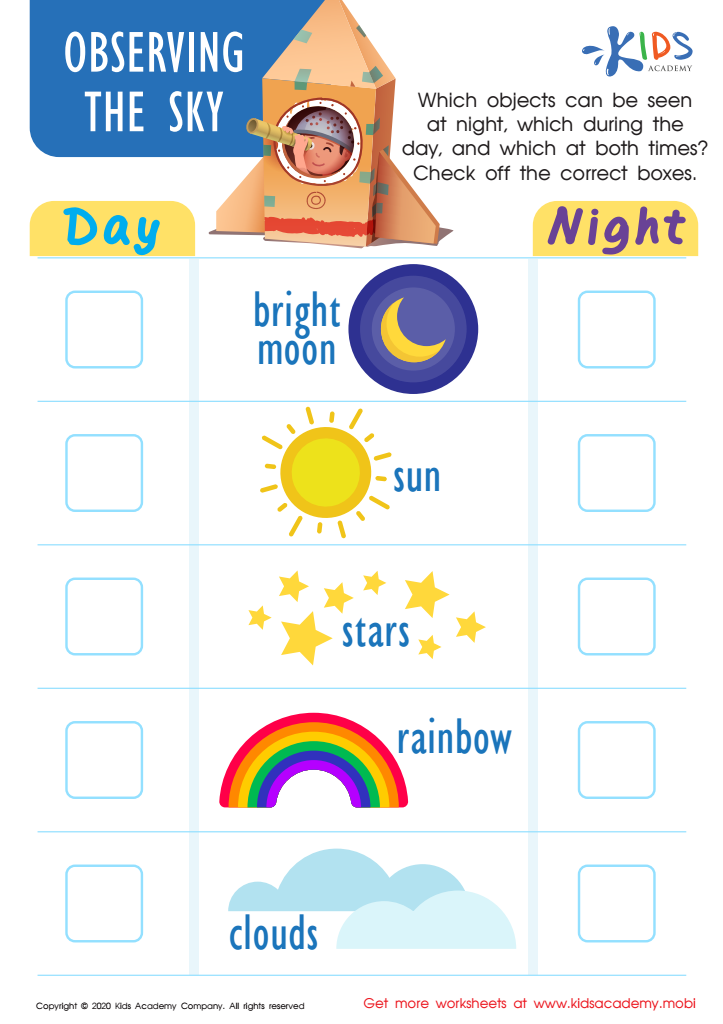
Observing the Sky Worksheet


.jpg)





Understanding constellations can offer young children numerous benefits that go beyond star-gazing. At the ages of 3-6, kids are naturally curious and have a strong sense of imagination, which can be stimulated by learning about constellations. Parents and teachers should care about constellations because they spark an early interest in science and nature, helping build a foundation for STEM (science, technology, engineering, mathematics) education.
Introducing kids to constellations aids in cognitive development. It helps improve their memory and pattern recognition by associating star patterns with mythological characters or animals. This early exposure to storytelling and mythology also enriches their language skills and cultural knowledge.
In addition, learning about constellations encourages outdoor activities. Stargazing can create quality bonding moments between parents, teachers, and children. It fosters a love for nature and can make kids more observational and mindful of their surroundings.
Finally, understanding constellations cultivates curiosity and inspires a sense of wonder about the universe. It teaches patience and fosters a long-term interest in learning. By guiding children through the night sky, adults instill a sense of exploration and inquisitiveness, traits that are valuable throughout the child's education and life.








