
Understanding equivalence Worksheets for Ages 3-6
3 filtered results
Difficulty Level
Grade
Age
-
From - To
Subject
Activity
Standards
Introduce your child to the concept of equivalence with our "Understanding Equivalence Worksheets for Ages 3-6" from Kids Academy. These engaging, age-appropriate worksheets are designed to help young learners grasp the foundational principles of equality and balance in mathematics. Through colorful illustrations and simple exercises, children will develop critical thinking skills and learn to recognize when two amounts or values are the same. Perfect for early learners, our resources make learning fun and interactive, paving the way for future math success. Download and print our worksheets today to give your child a head start in their educational journey!
Favorites
With answer key
Interactive
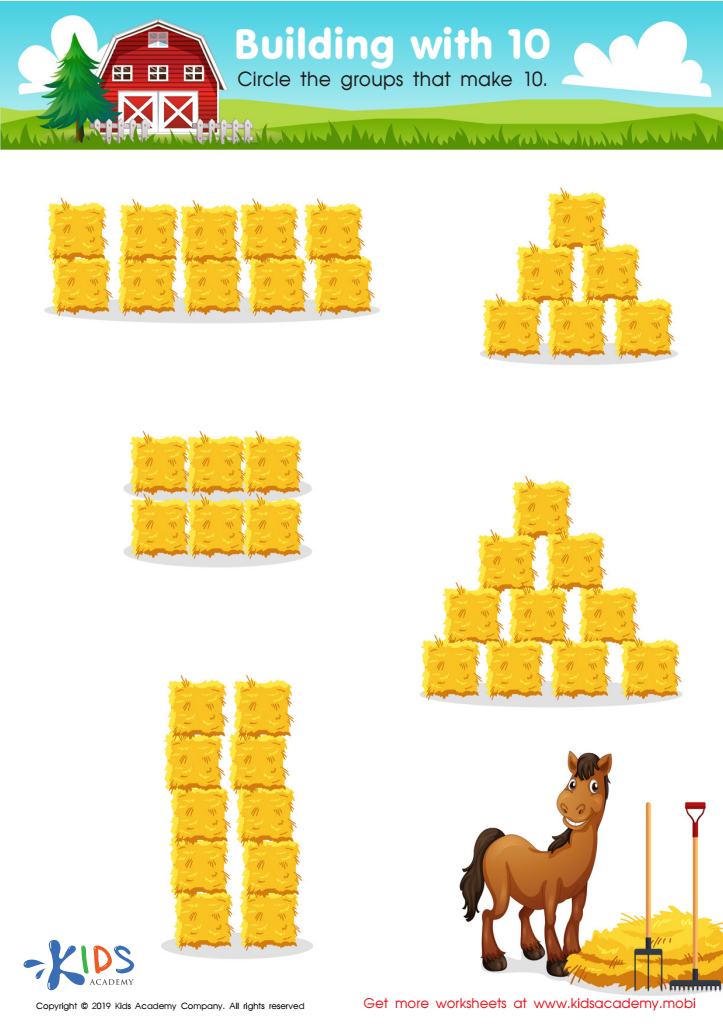
Building with 10 Worksheet
Counting numbers can be simple with this worksheet: Ask your kids to count the stacks of objects, ensure accuracy with your help, then circle the ones of ten. With practice and guidance, your children will soon become counting pros!
 Assign to My Students
Building with 10 Worksheet
Worksheet
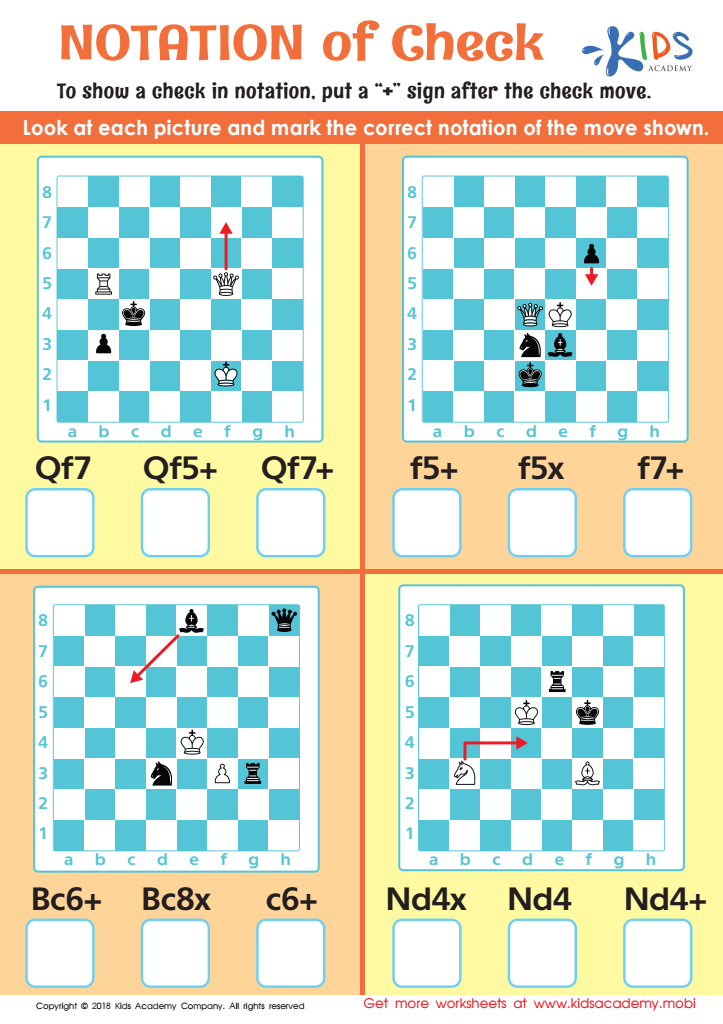
Notation of Check Worksheet
Chess is an addictive game! Once you know the basics of check and checkmate, you'll be hooked! Teach your little one to make check notation with this free PDF worksheet. They can use downloadable practice to look at each picture and mark the correct notation, strengthening their problem-solving skills while they learn to play - and win - this fun game!
Notation of Check Worksheet
Worksheet
Join Kids Academy for Free
Who is primarily going to use this learning content?






Understanding equivalence is a foundational concept in early childhood education crucial for children ages 3-6. It sets the stage for more complex mathematical thinking as children grow. Equivalence refers to the idea that different groups of objects or quantities can be equal to one another, even if they appear different. For instance, understanding that 2 apples are equivalent to 2 oranges helps children grasp that numbers represent quantities, not just objects.
When children comprehend equivalence, they develop key cognitive skills such as logical reasoning, problem-solving, and comparison. This builds a robust groundwork for understanding more advanced math concepts like addition, subtraction, and even algebra in later years.
Moreover, recognizing equivalence enhances vocabulary and language skills through discussions about similarities and differences, aiding overall academic development. It also fosters social skills as children learn to express their thoughts and understand others' viewpoints during shared learning activities.
Encouraging children to explore and understand equivalence from an early age promotes a positive attitude towards math by making it relatable and accessible. It helps them see the relevance of math in everyday life, thereby boosting their confidence and curiosity. Therefore, parents and teachers should actively integrate concepts of equivalence into everyday play and learning activities to give children a solid start in their educational journey.








