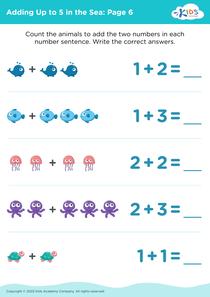
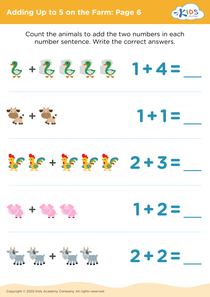
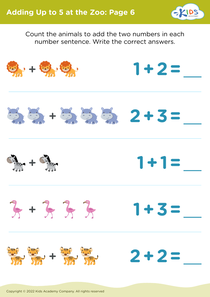
Animal recognition Adding in the Forest Worksheets for Ages 3-6
15 filtered results
-
From - To
Introducing "Animal Recognition: Adding in the Forest" Worksheets designed for children ages 3-6! This engaging educational resource combines math and nature, helping young learners practice basic addition while recognizing various forest animals. Each worksheet presents vibrant illustrations and interactive activities that make learning both fun and effective. Children will count and add adorable woodland creatures, enhancing their counting, addition, and animal identification skills. Perfect for preschool and kindergarten, these worksheets provide an interactive way to boost early math proficiency and foster a love for wildlife. Ideal for at-home learning or classroom use!
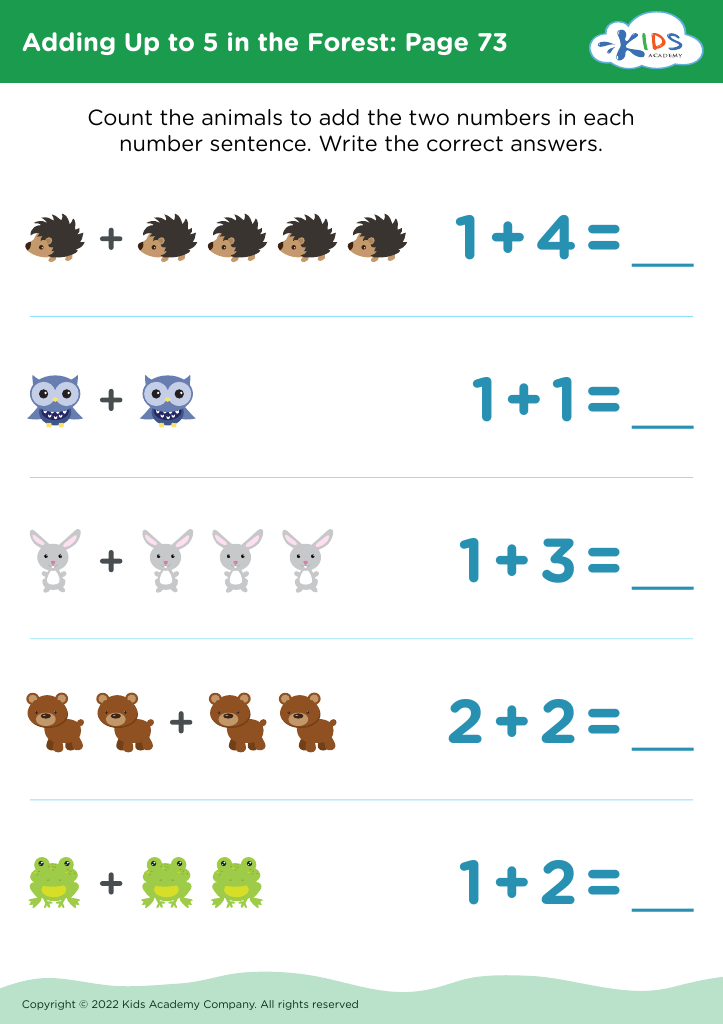
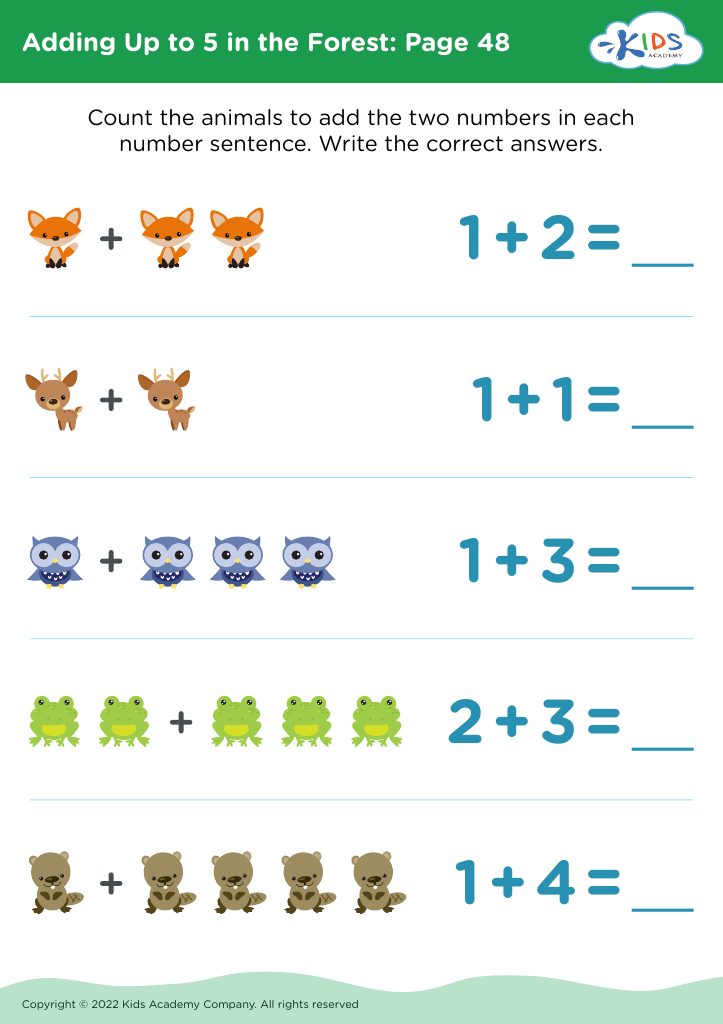
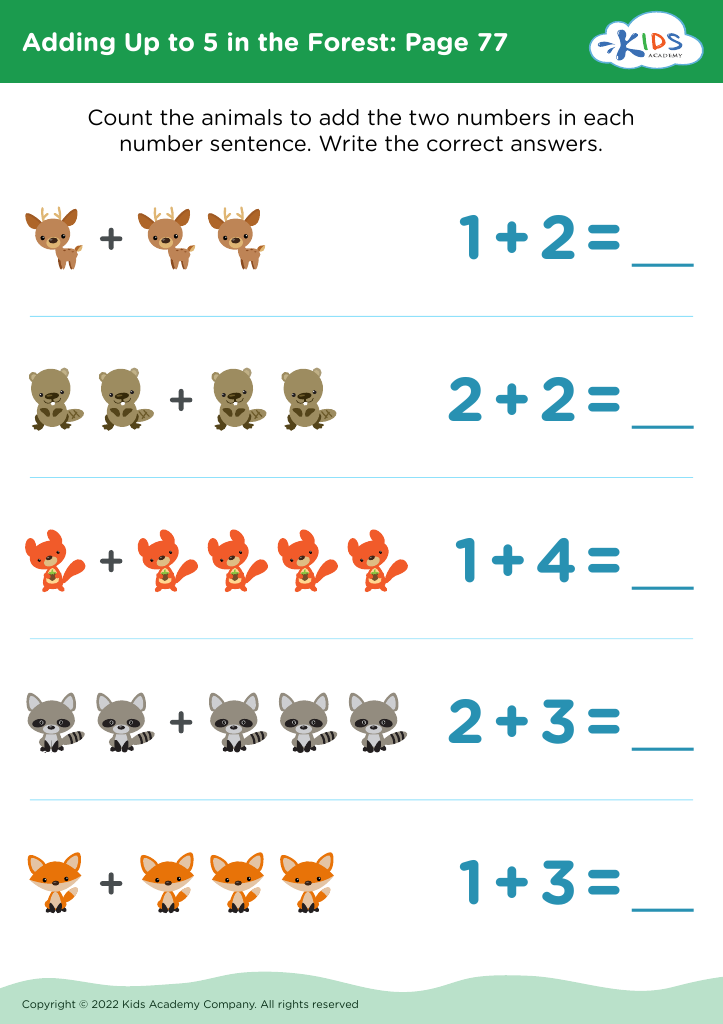
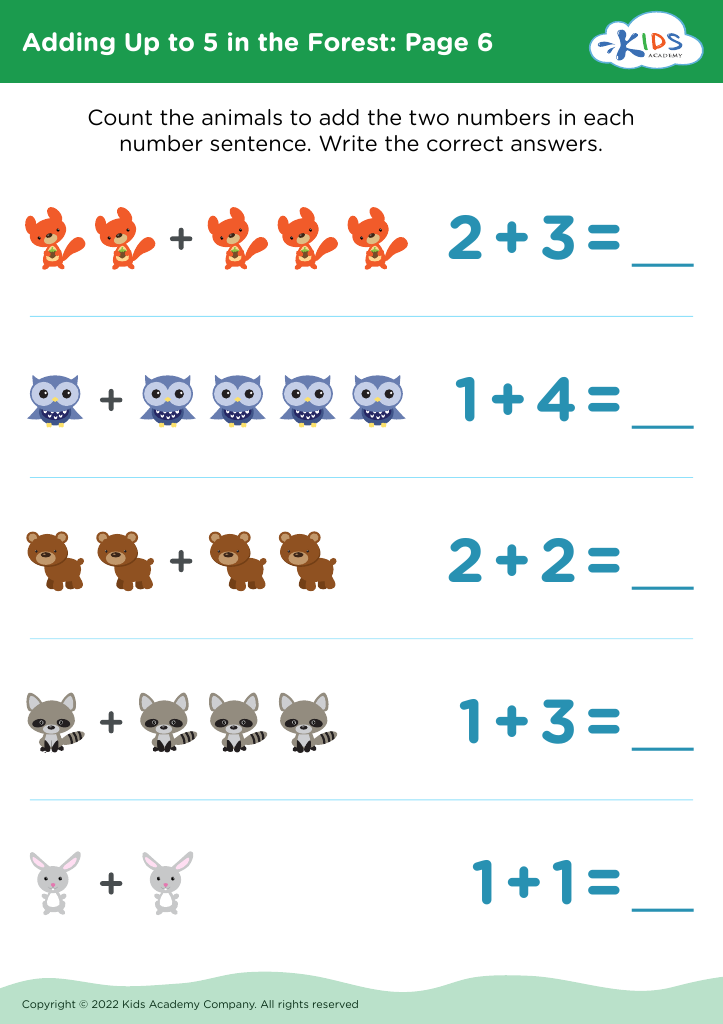
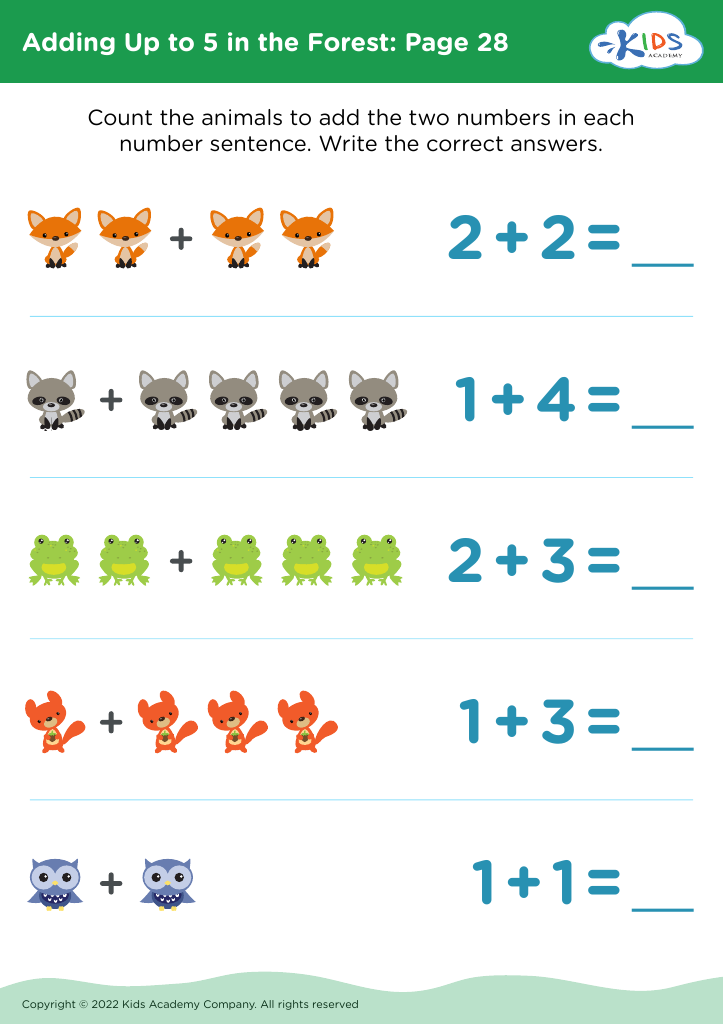
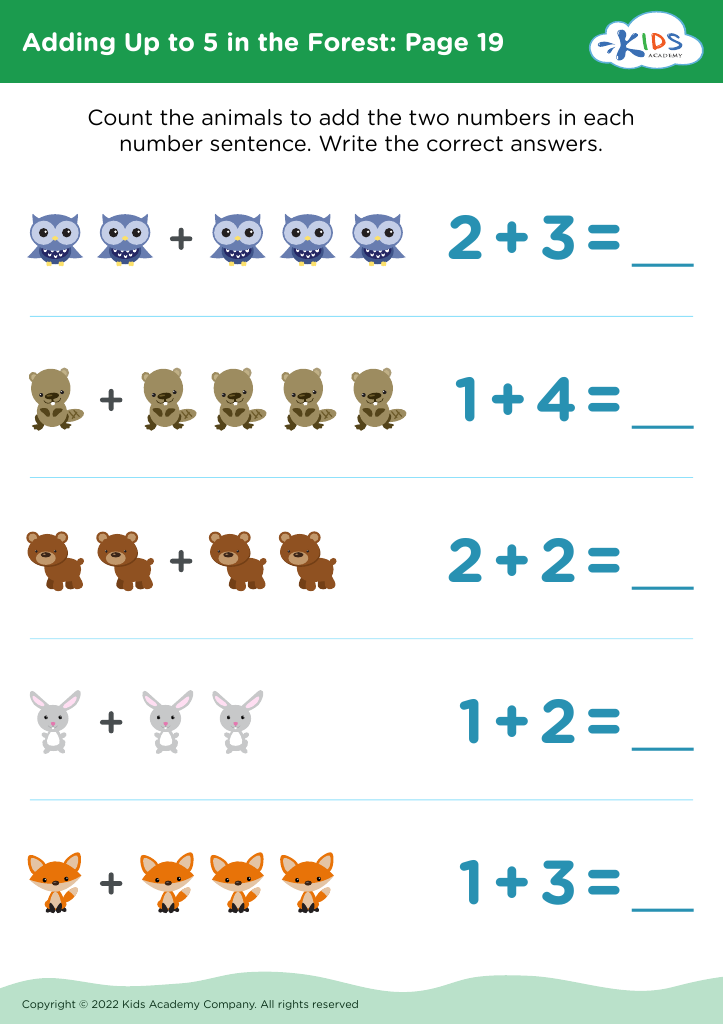
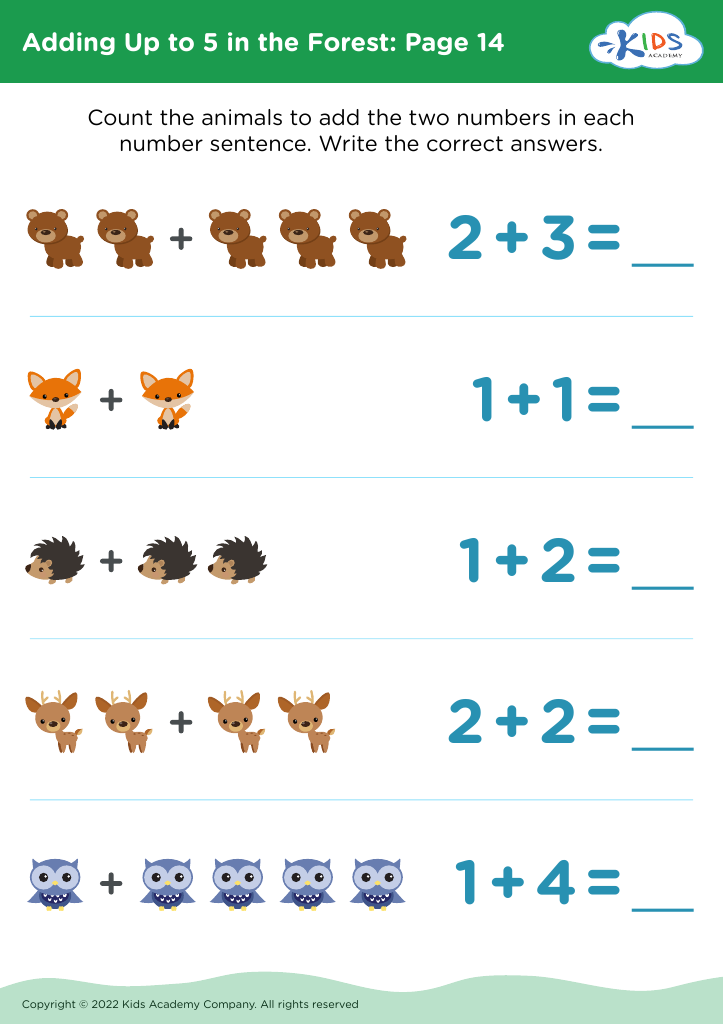
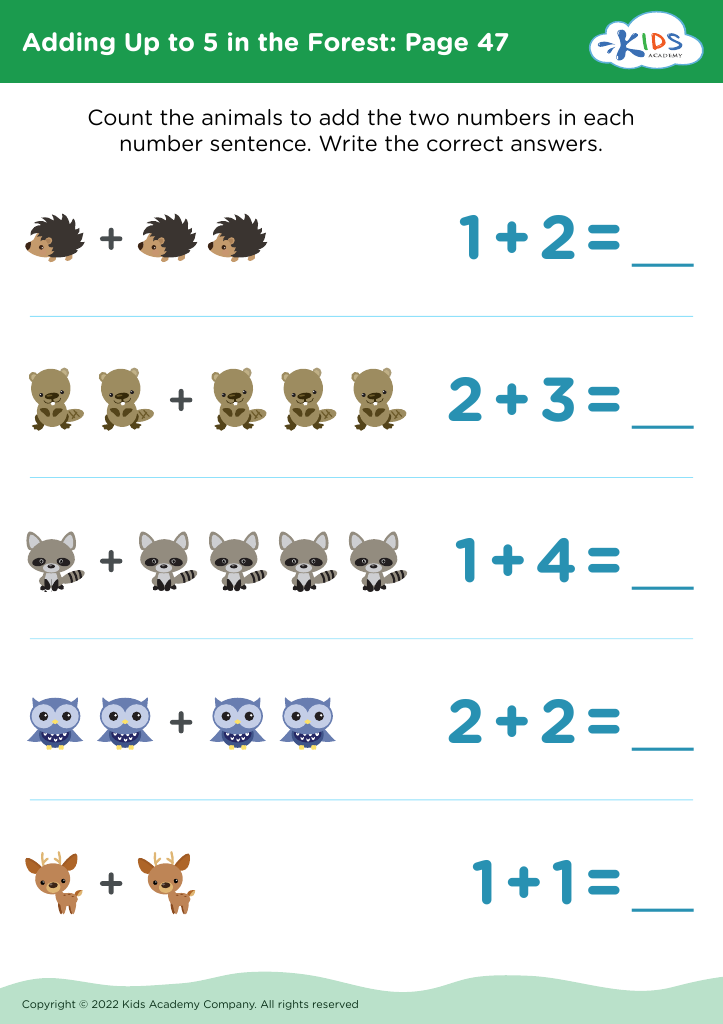
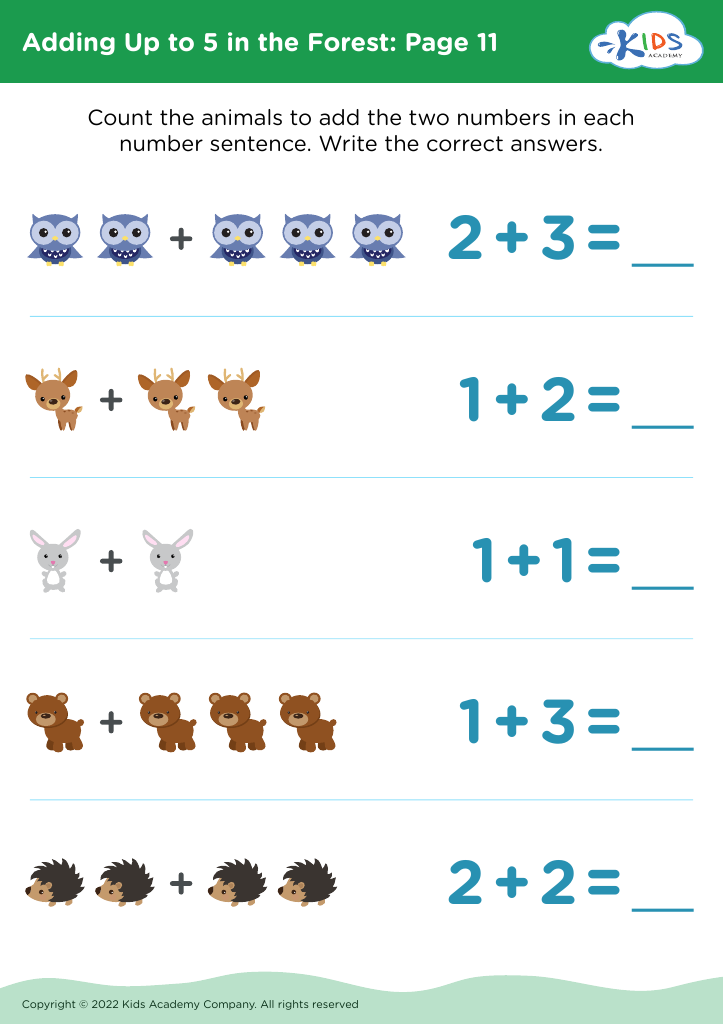
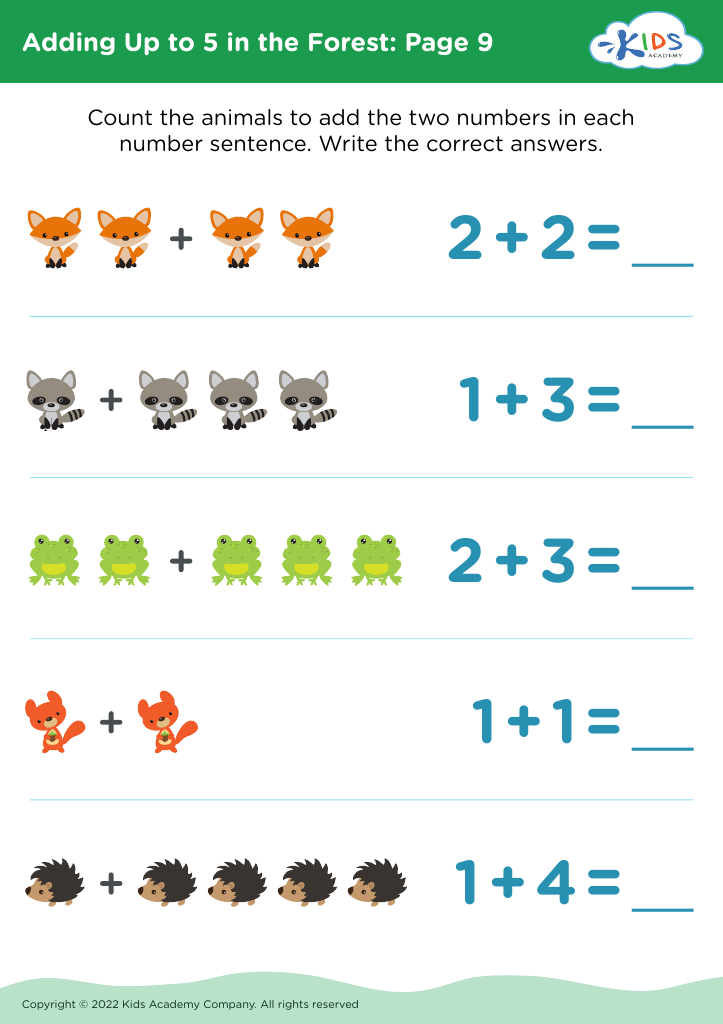
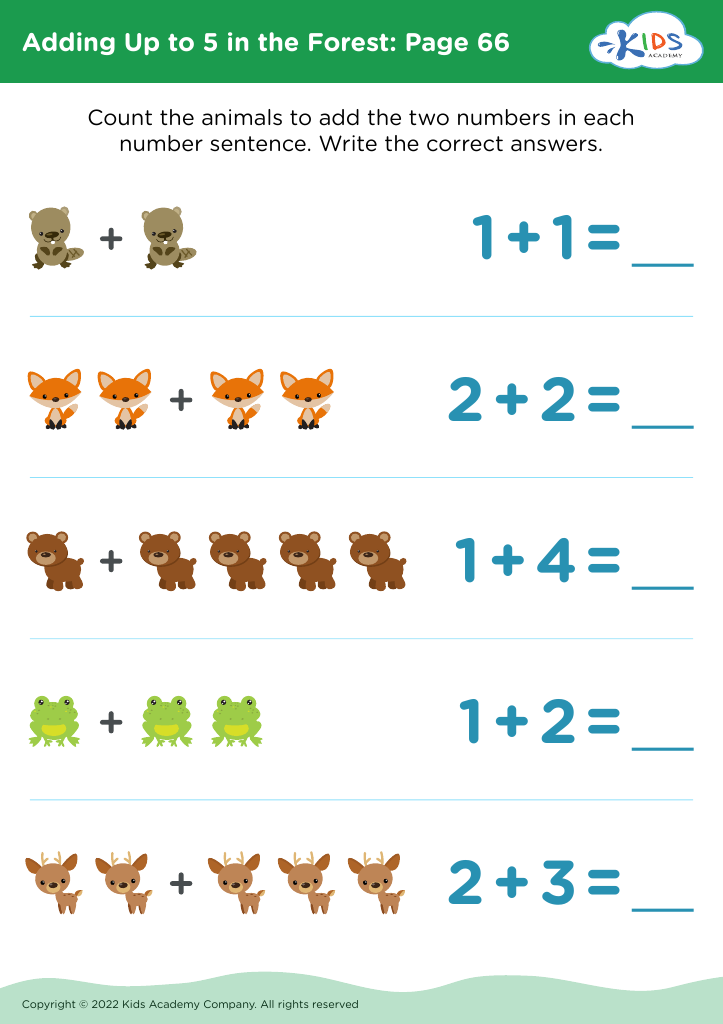
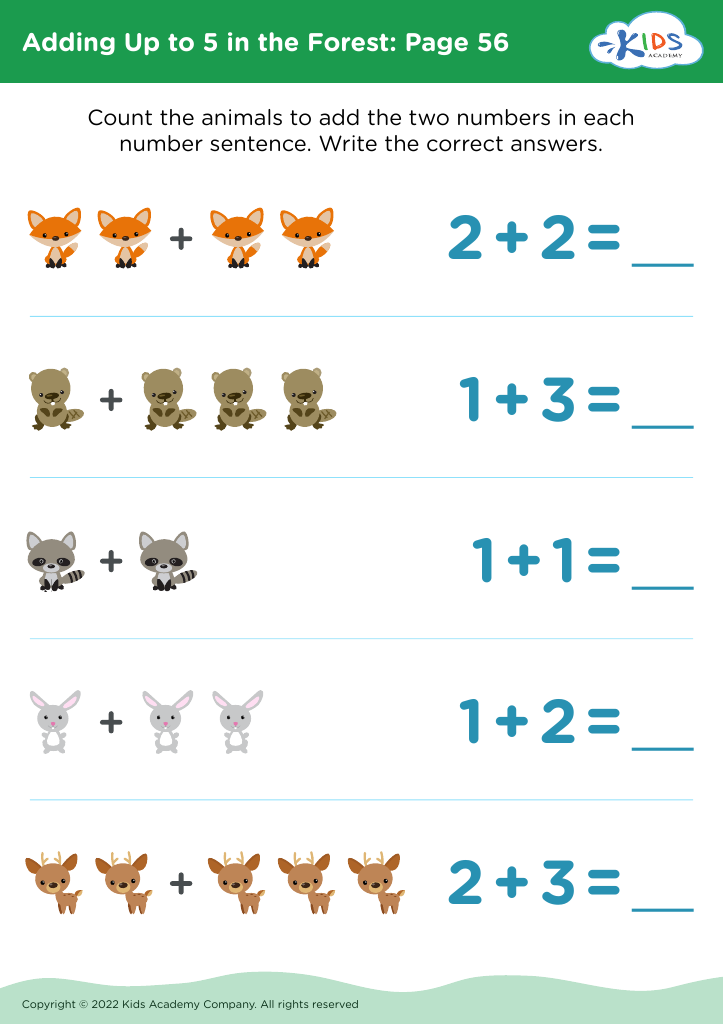
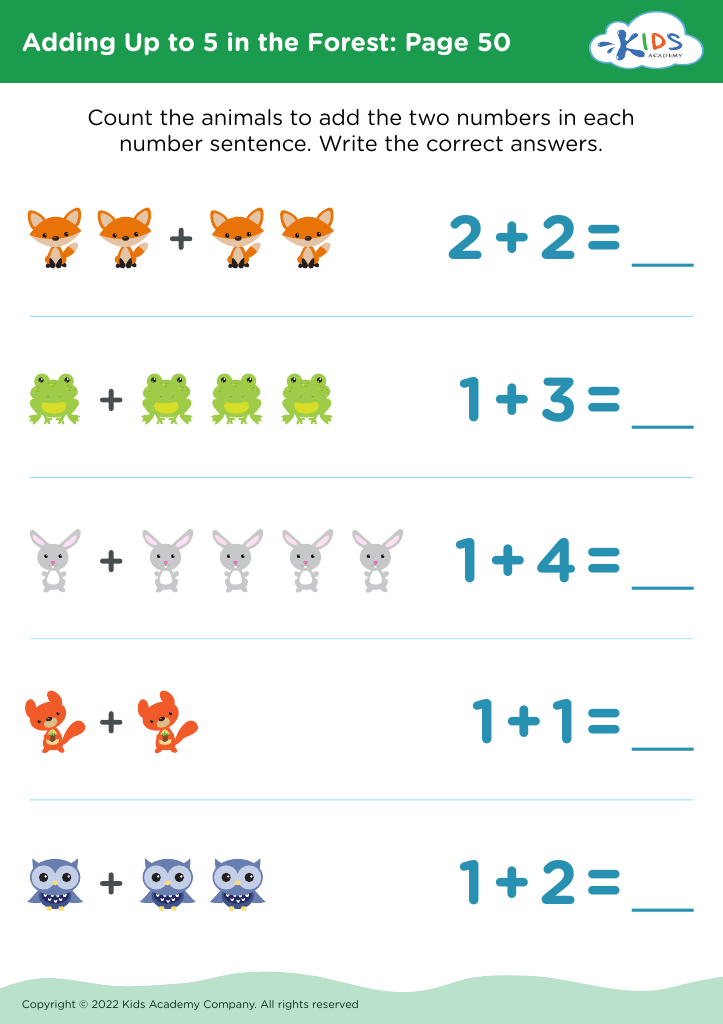
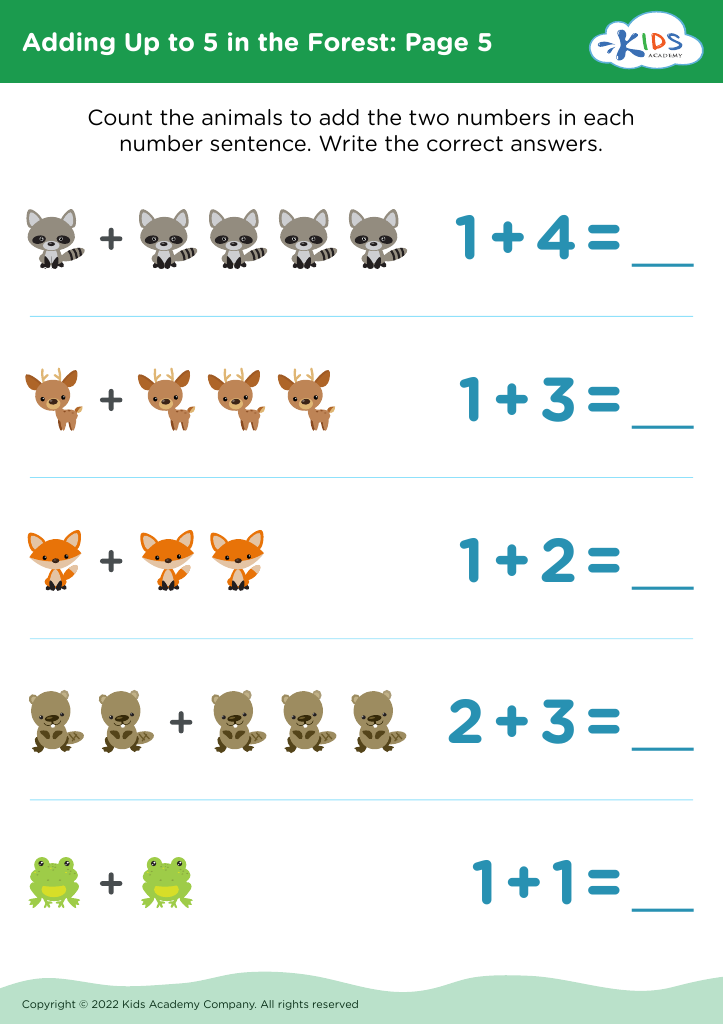
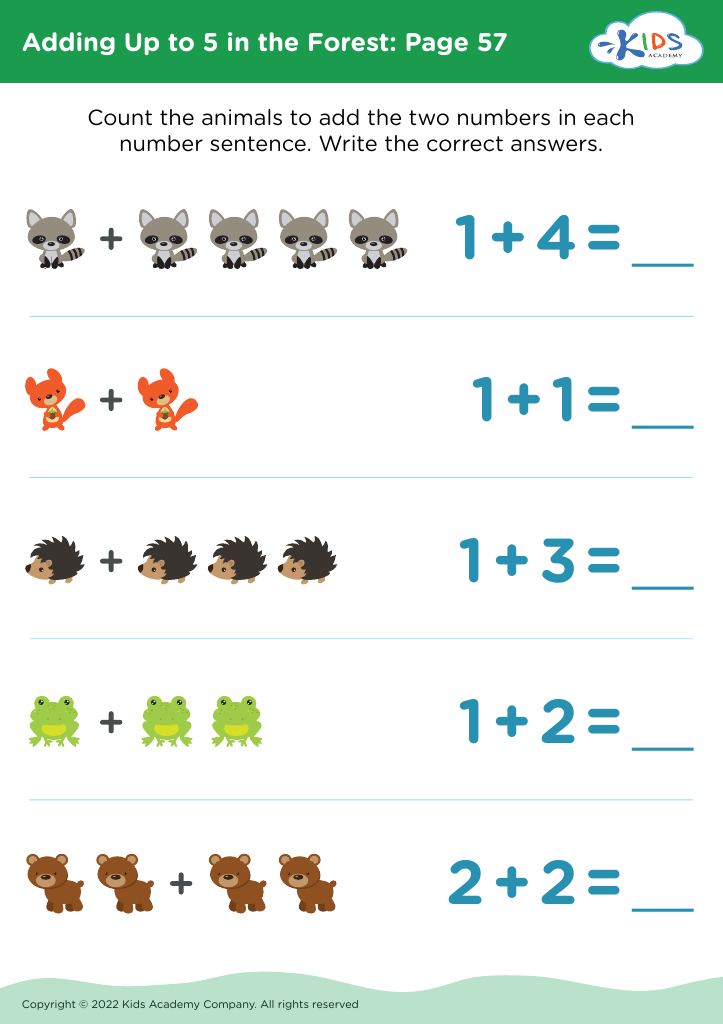



Parents and teachers should care about animal recognition and numeracy activities in the forest for children aged 3-6 because these experiences foster crucial developmental skills. Firstly, recognizing different animals in a forest setting captivates children's natural curiosity and enhances their observational skills. It opens their eyes to the diversity of the natural world, nurturing a love for nature and an understanding of biodiversity. Knowing various animals also builds their vocabulary and enhances cognitive development.
Moreover, integrating numeracy such as counting or adding animals they see reinforces early math skills in a playful and engaging manner. This active, hands-on approach makes abstract concepts more concrete for young children, leading to better retention and understanding. Additionally, being in the forest allows children to use their senses and fine motor skills, such as touching textures or listening to sounds, enriching their sensory and motor development.
These outdoor activities also promote physical health. Running, jumping, and exploring nature require physical prowess, improving their strength and coordination. Social skills are enhanced as well, as young children often engage in group exploration, negotiation, and communication during these activities. Importantly, these positive and fun experiences can lead to a lifelong appreciation for learning and the environment.
In sum, such multifaceted forest experiences support a child’s holistic growth—cognitively, physically, emotionally, and socially—laying a strong foundation for lifelong learning.