Nature appreciation Adding in the Forest Worksheets for Ages 3-6
5 filtered results
-
From - To
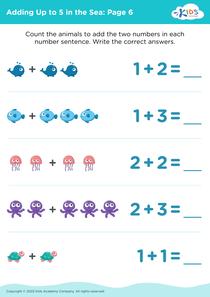
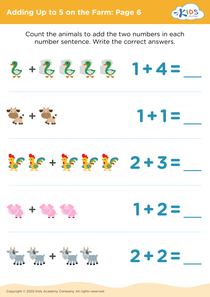
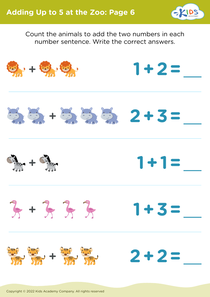
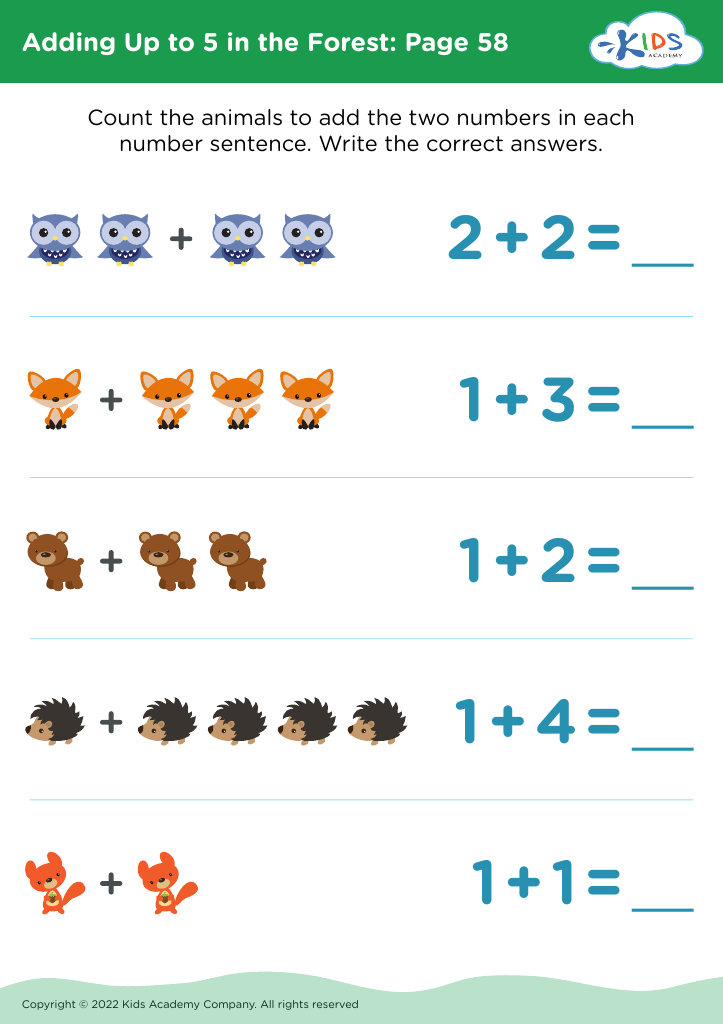
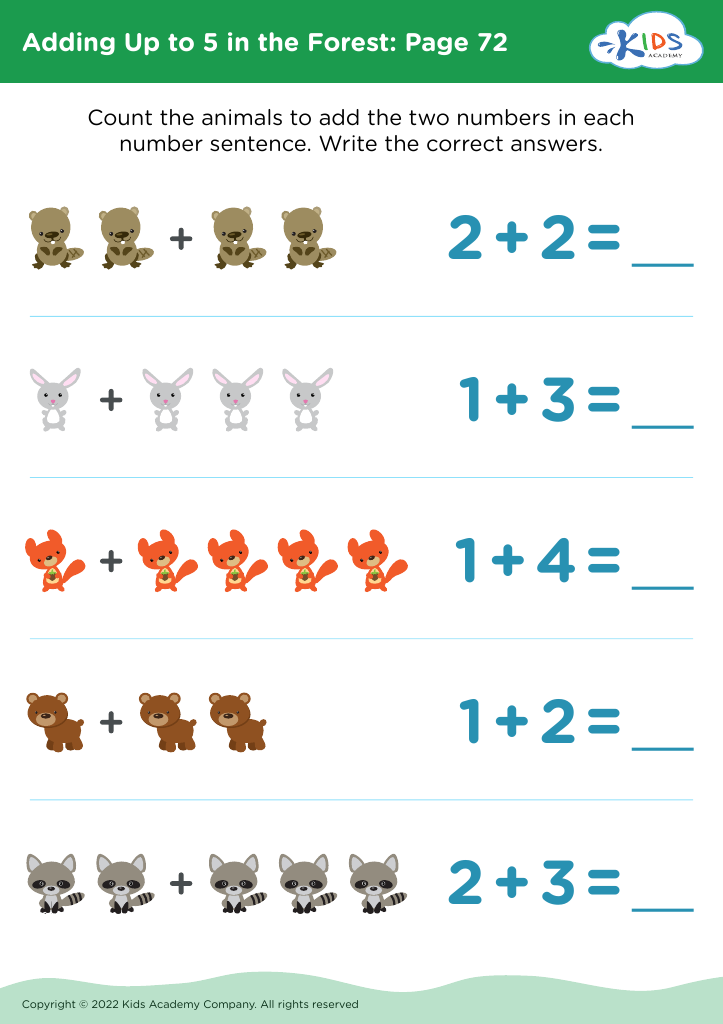
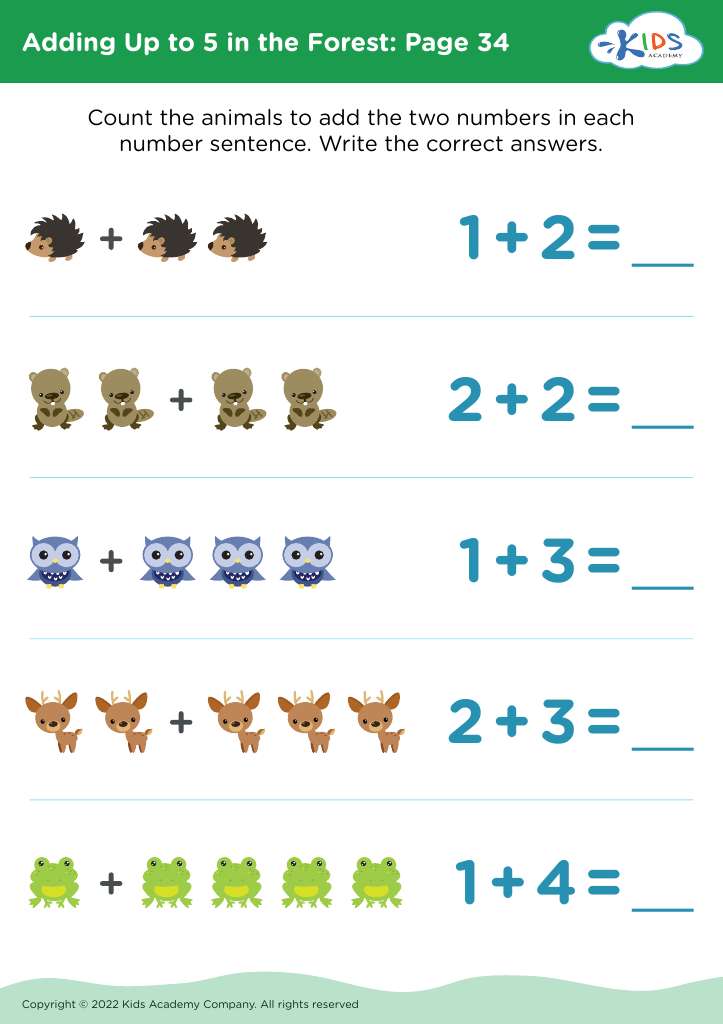
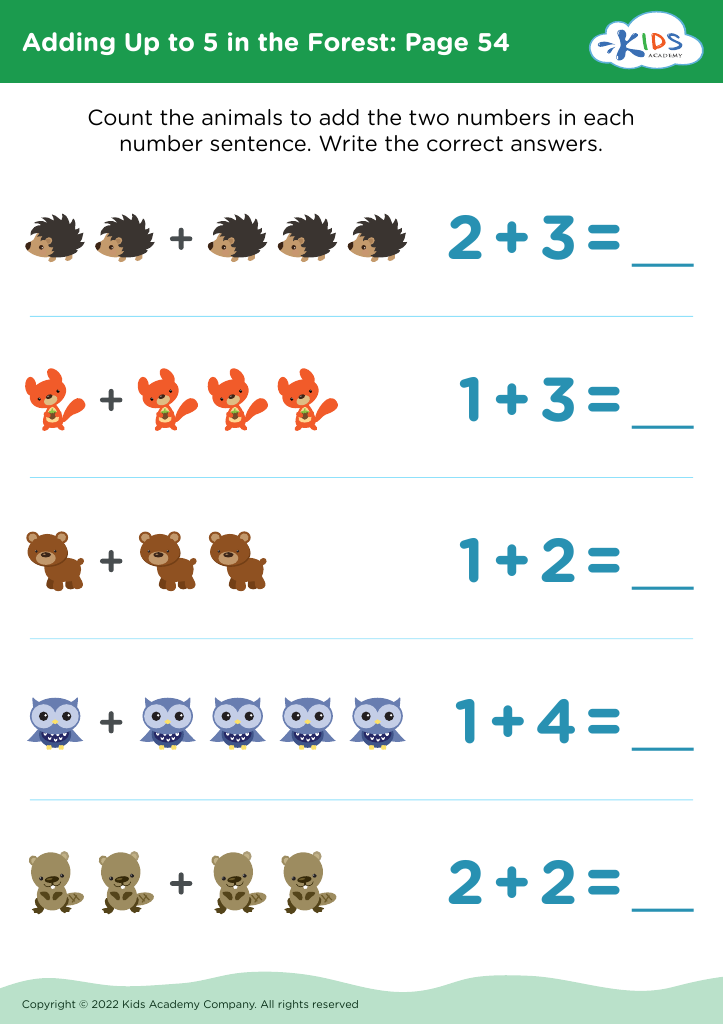
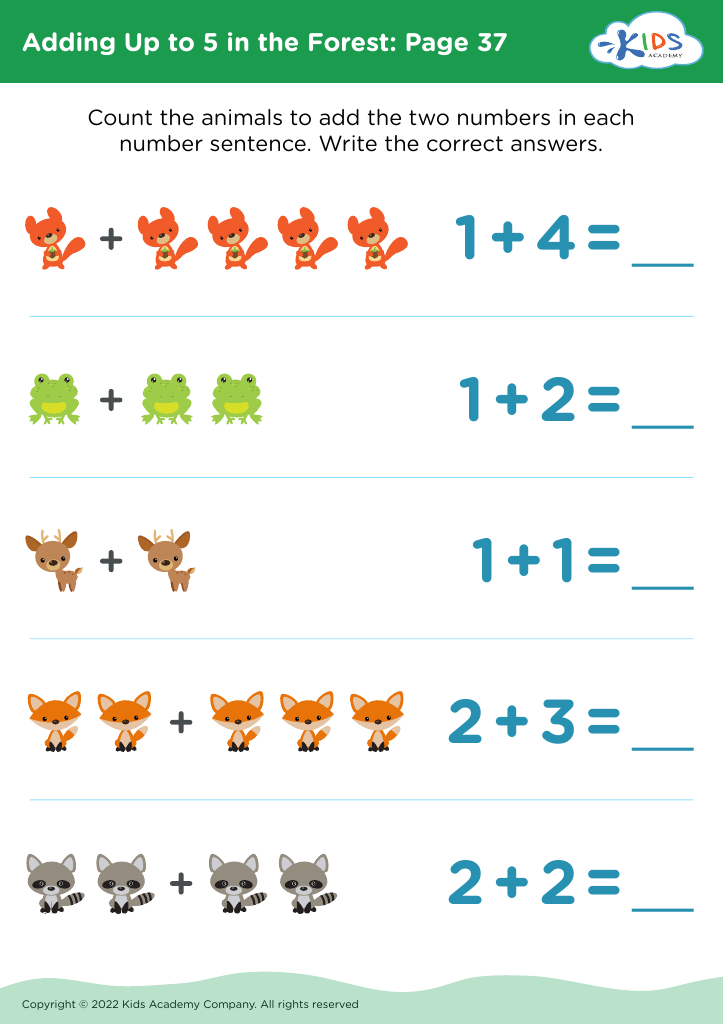
Introducing our "Nature Appreciation: Adding in the Forest" worksheets, specially designed for children ages 3-6. These engaging printables seamlessly combine early math skills with an appreciation for nature. As children practice addition, they journey through whimsical forest scenes, encountering friendly animals and lush landscapes. Each worksheet transforms math exercises into exciting outdoor adventures, fostering both cognitive development and a love for the natural world. Perfect for home or classroom use, "Adding in the Forest" builds foundational math skills while inspiring young minds to explore and cherish the great outdoors. Download now to blend learning with nature-inspired fun!



Introducing children aged 3-6 to nature appreciation through activities in the forest is incredibly beneficial for their overall development. At this tender age, young minds are naturally curious, and fostering a connection with nature enhances their cognitive, emotional, and physical growth. Parents and teachers play a crucial role in guiding this formative experience.
Firstly, direct interaction with forest environments provides sensory-rich experiences that stimulate children's curiosity and imagination. Moving through different terrains, smelling the earthy scents, and listening to the sounds of wildlife all contribute to developing sensory awareness and vocabulary. The myriad of colors, shapes, and patterns in nature enhances their visual-spatial skills and creativity.
Secondly, being in nature promotes physical fitness. Children engage in activities like hiking, climbing, and exploring, which develop their motor skills, strength, and coordination. The natural setting itself boosts their mental and emotional well-being. Studies have shown that exposure to nature reduces stress and increases happiness in children, creating a foundation for lifelong mental health.
Furthermore, early exposure to nature nurtures environmental stewardship. By appreciating the wonders of the forest, children learn the importance of conserving natural spaces and understanding ecosystems. This sense of responsibility towards the environment fosters empathy and morals that extend into other areas of their lives.
In conclusion, parents and teachers should prioritize nature appreciation activities in the forest for young children. It not only supports holistic development but also instills a lifelong passion for the natural world, which is crucial in today’s nature-deficit society.