Problem Solving Adding in the Forest Worksheets for Ages 3-6
3 filtered results
-
From - To
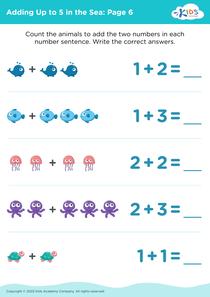
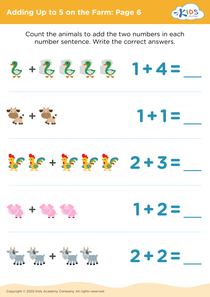
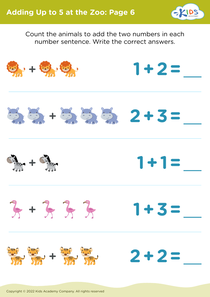
Introduce young learners to the enchanting world of math with our "Adding in the Forest" worksheets designed for ages 3-6. These engaging printables combine the magic of the forest with essential problem-solving skills. Kids will embark on fun adventures featuring woodland creatures while practicing basic addition. Each worksheet is packed with visually appealing activities that foster critical thinking, numerical understanding, and a love for learning. Perfect for preschool and kindergarten, these resources make math exploration delightful and effective. Give your little ones the tools they need to solve problems confidently and enjoyably with our forest-themed worksheets.
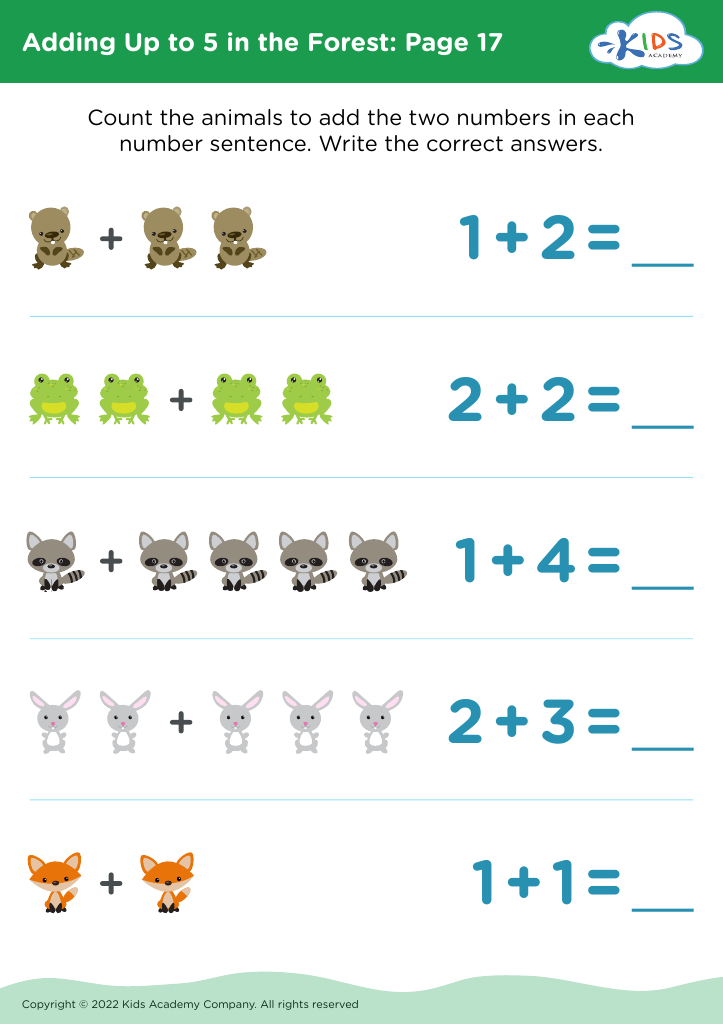
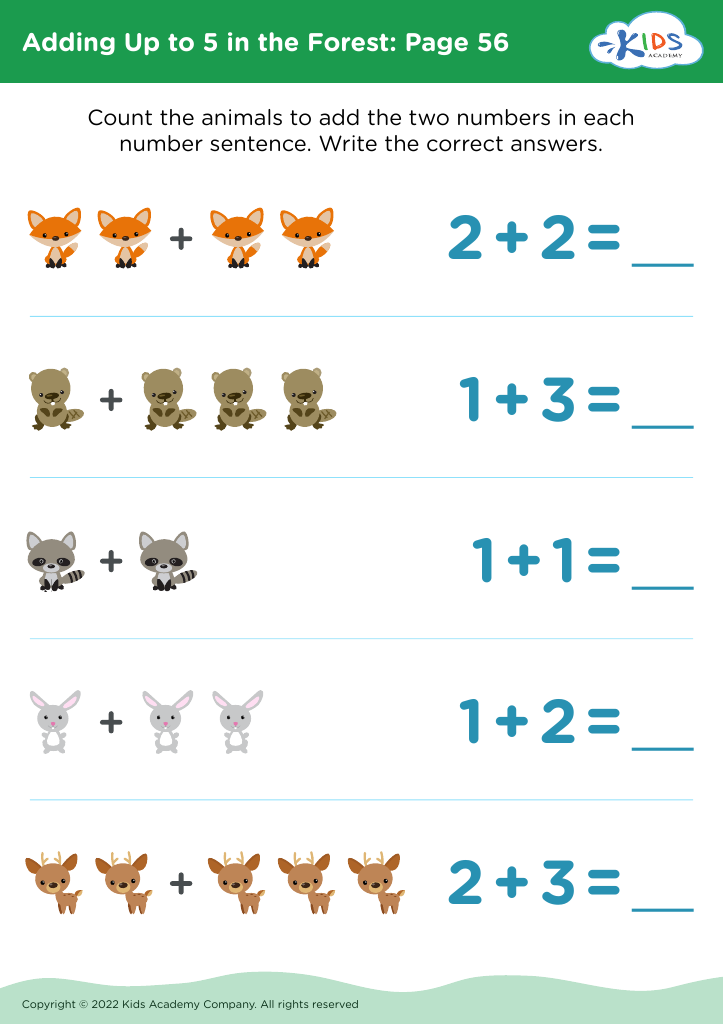
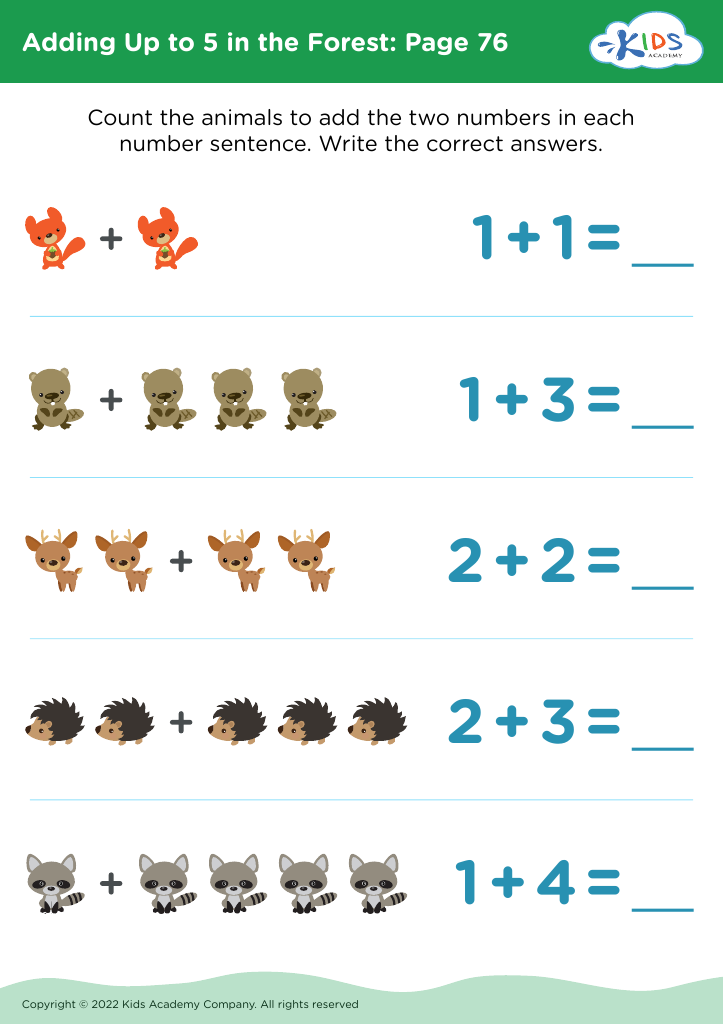



Parents and teachers should deeply care about incorporating problem-solving activities like "Adding in the Forest" for children aged 3-6 because it fosters critical cognitive and analytical skills during their formative years. At this early stage, children are establishing the groundwork for all future learning. Engaging them in problem-solving activities teaches them to approach problems methodically and think critically, abilities they will use throughout their lives.
"Adding in the Forest" benefits young learners by blending numeracy skills with imaginative play, making learning both effective and enjoyable. When children count animals or add objects in a forest setting, they aren't just learning numbers; they are also developing a sense of curiosity and wonder about the world around them. This contextual learning deepens their understanding and retention of basic math concepts.
Additionally, these activities boost children's confidence as they master new skills. Success in problem-solving builds self-esteem and encourages a love for learning. By nurturing these competencies early on, teachers and parents set the stage for academic success and a lifelong ability to navigate and solve complex problems. Crucially, it cultivates patience, persistence, and the satisfaction of overcoming challenges, all of which are invaluable in everyday life.
In summary, problem-solving activities like "Adding in the Forest" are essential in early education, laying a strong foundation for later academic achievement and personal growth.