Understanding Quantities Adding in the Forest Worksheets for Ages 3-6
6 filtered results
-
From - To
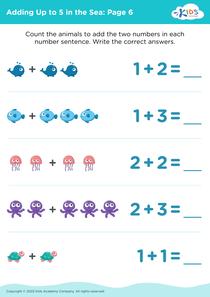
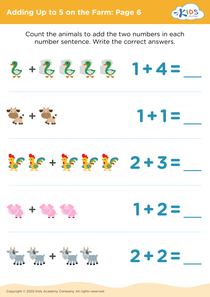
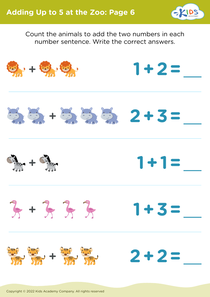
"Understanding Quantities Adding in the Forest Worksheets for Ages 3-6" offer young learners a fun and interactive way to grasp basic addition. Set in a whimsical forest filled with charming animals, these worksheets help children visually understand quantities and simple addition concepts. Through engaging exercises featuring familiar forest scenes, kids develop crucial math skills while enjoying the learning process. Ideal for both classroom and at-home use, these worksheets are designed to enhance cognitive development and numeracy skills through play, making math enjoyable and accessible for young minds. Encourage your child’s love for learning with our uniquely themed addition worksheets!
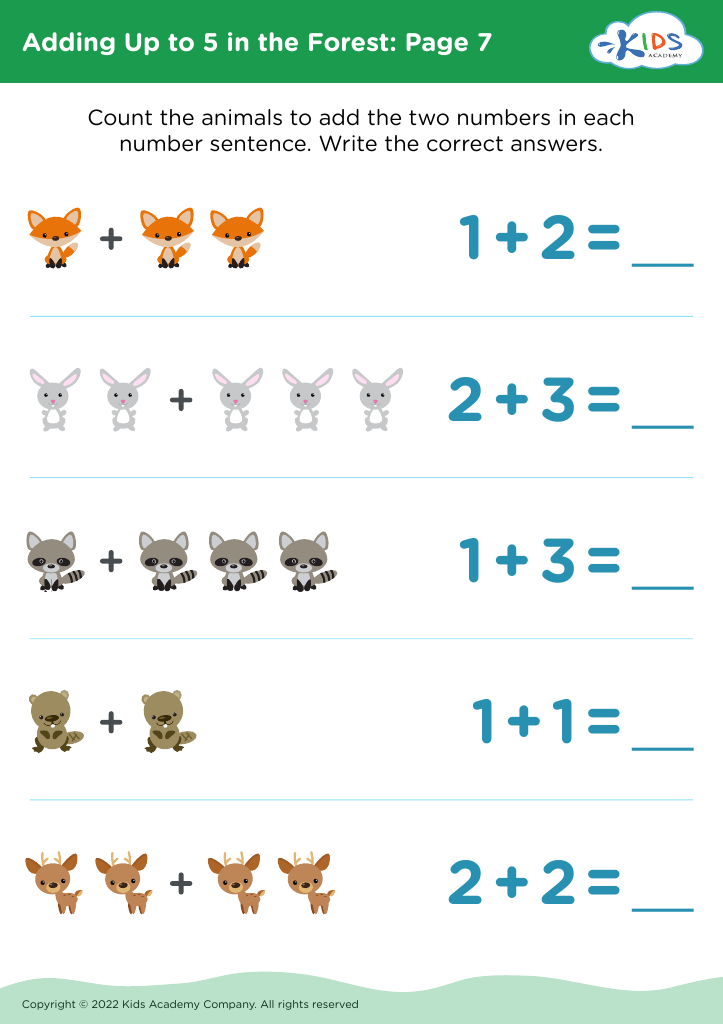
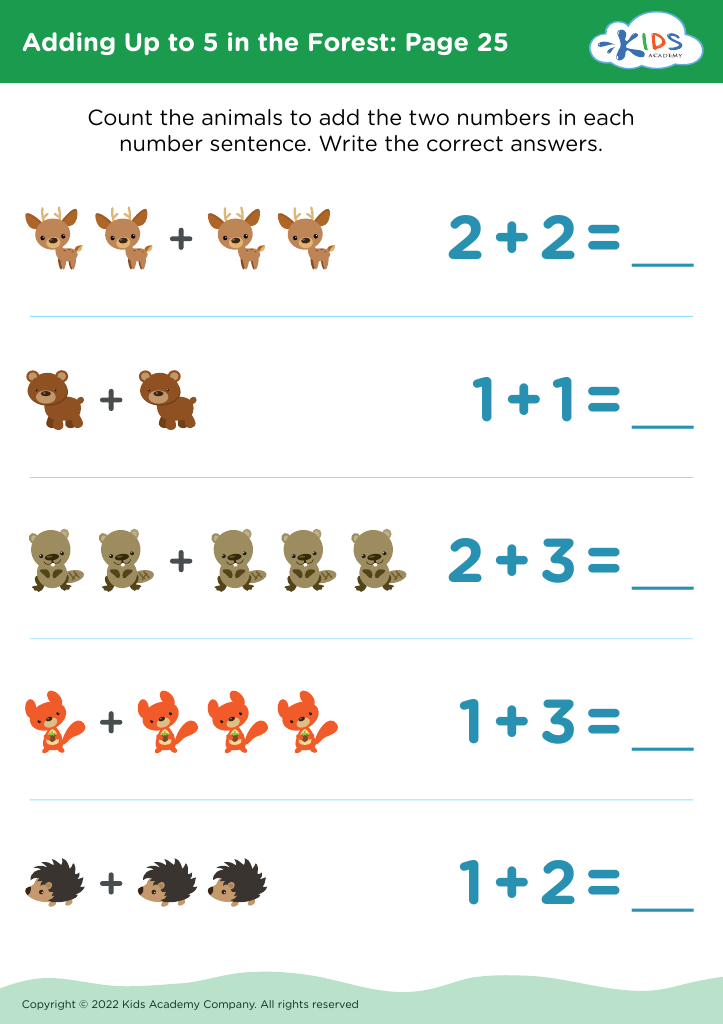
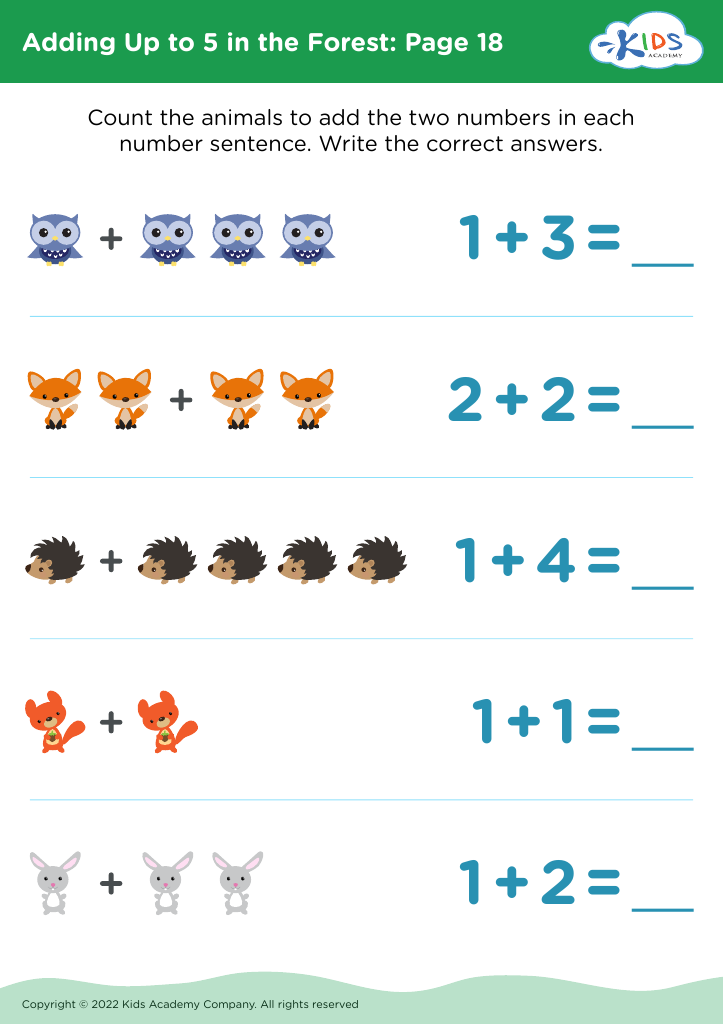
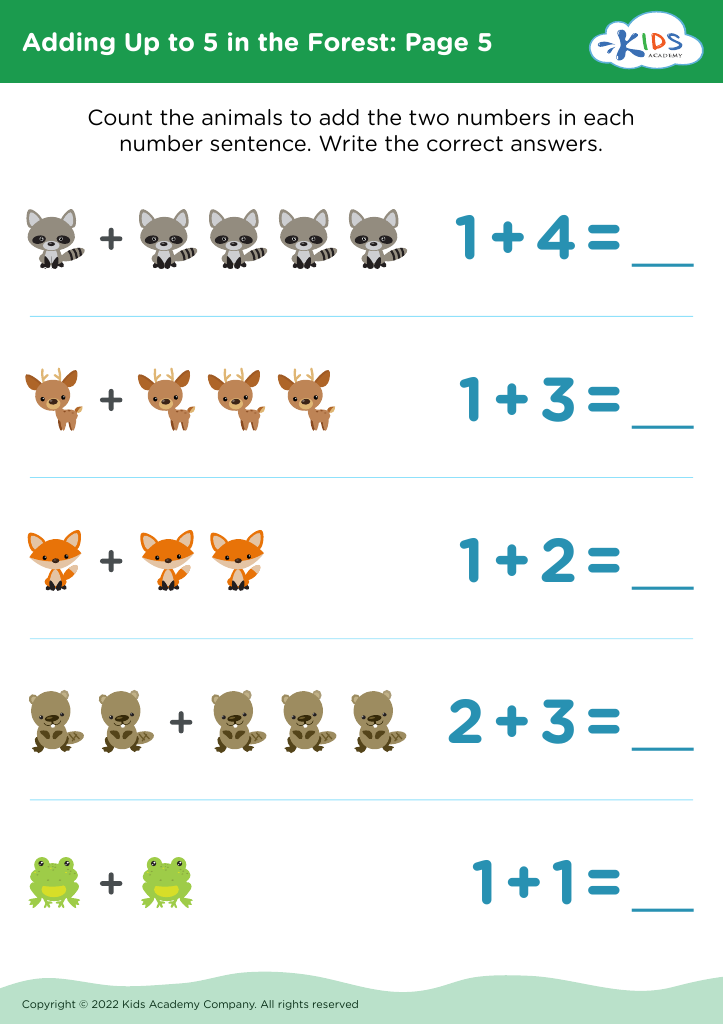
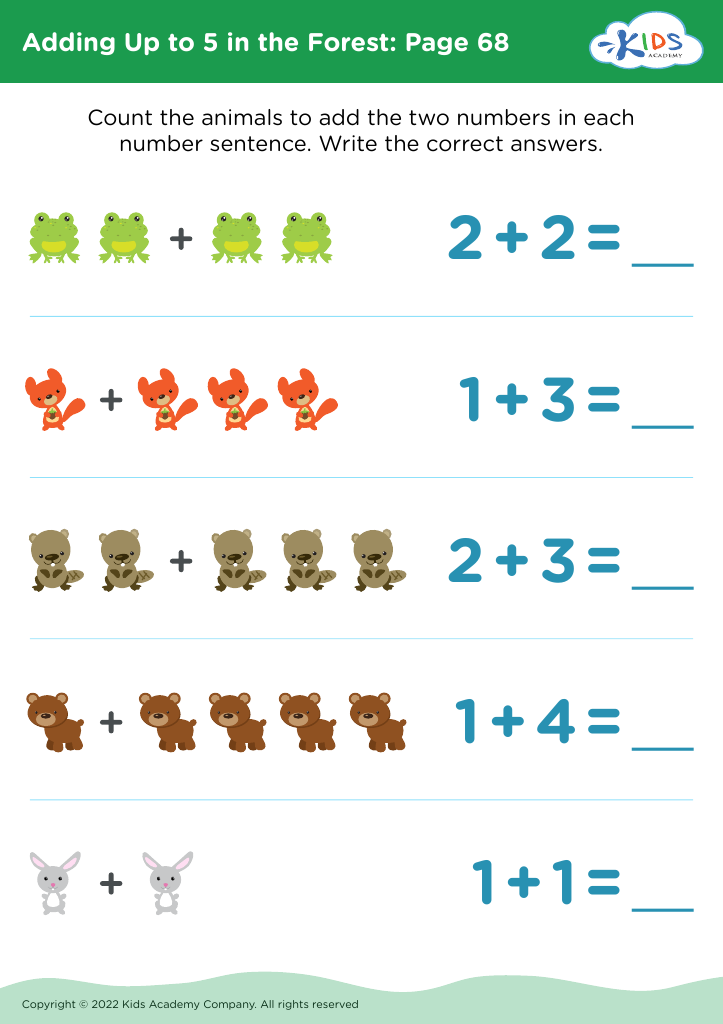
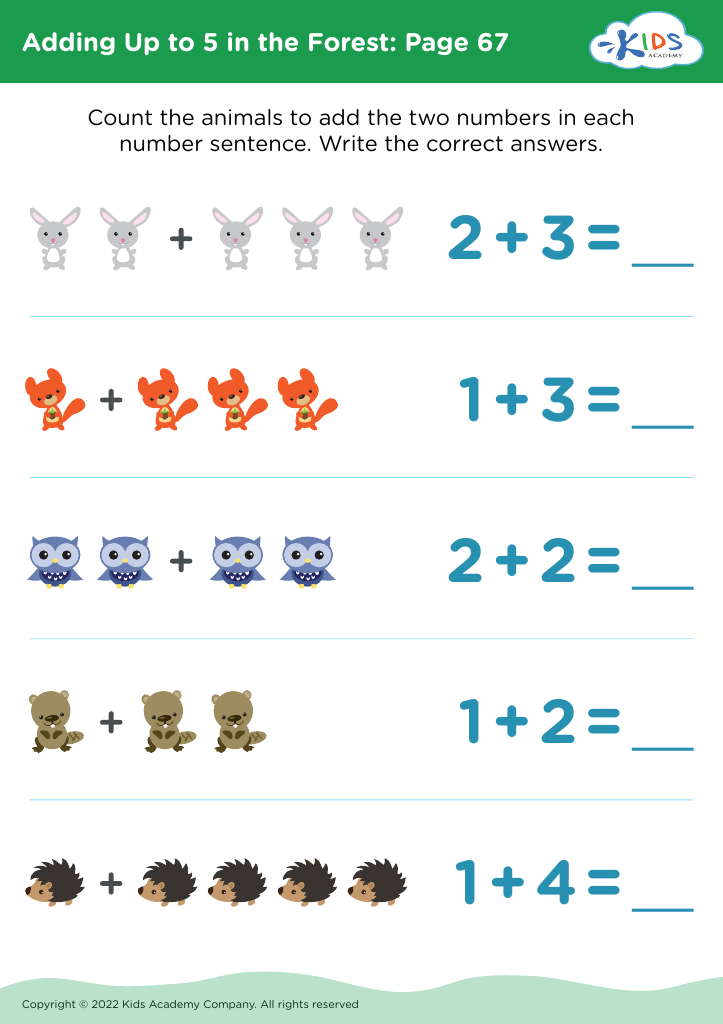



Parents and teachers should care about "Understanding Quantities Adding in the Forest" for children ages 3-6 because early mathematical education plays a crucial role in cognitive development. By integrating math concepts such as adding quantities within a natural and engaging setting, young children start to build foundational numeracy skills in a fun, relatable way. Learning math early fosters problem-solving abilities, critical thinking, and the skills necessary for more complex math tasks later in life.
Incorporating these lessons in an appealing context like "the forest" helps to spark curiosity and makes learning memorable. Additionally, outdoor and theme-based education encourages children to relate learned concepts to the real world. For example, counting different animals or plants introduces children to math and environmental science simultaneously.
This early intervention supports the development of fine motor skills, patterns recognition, and social interaction through group activities and discussions. Teachers and parents who emphasize this method can use it to accommodate varying learning styles, ensuring that each child receives a well-rounded and complete learning experience during formative years. Cultivating a love for learning at a young age sets the stage for lifelong educational enthusiasm and academic success.