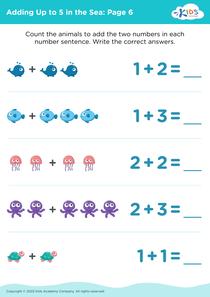
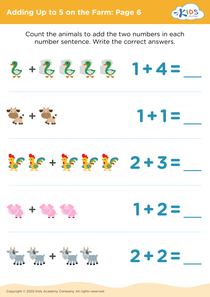
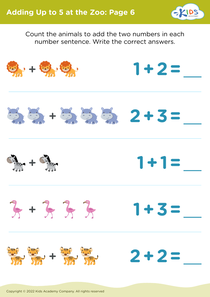
Visual Learning Adding in the Forest Worksheets for Ages 3-6
12 filtered results
-
From - To
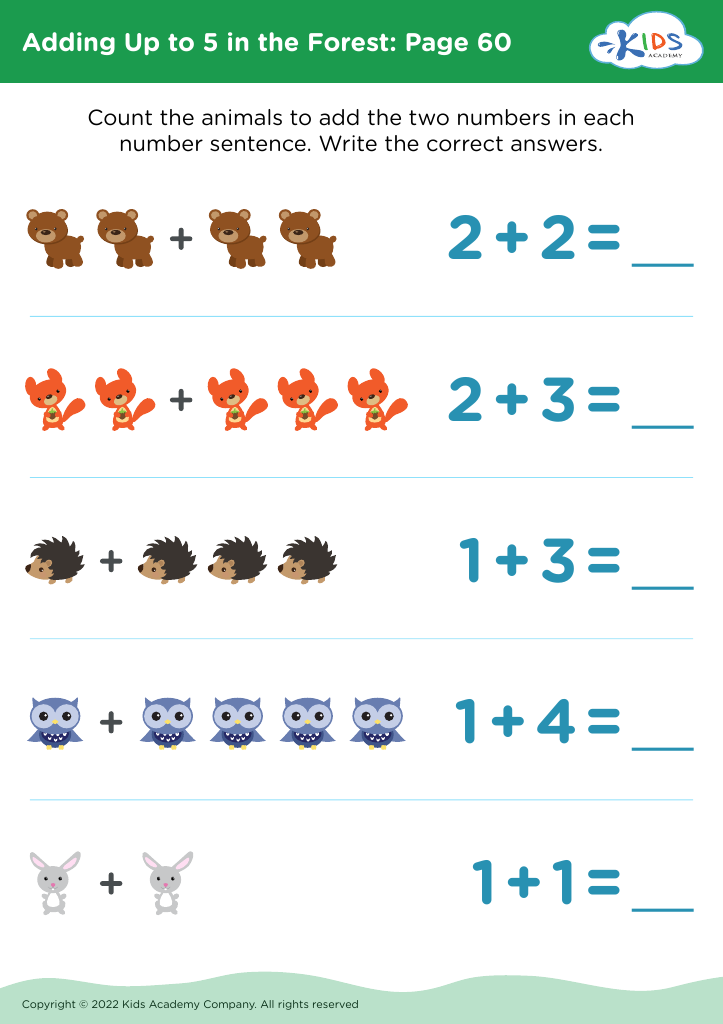
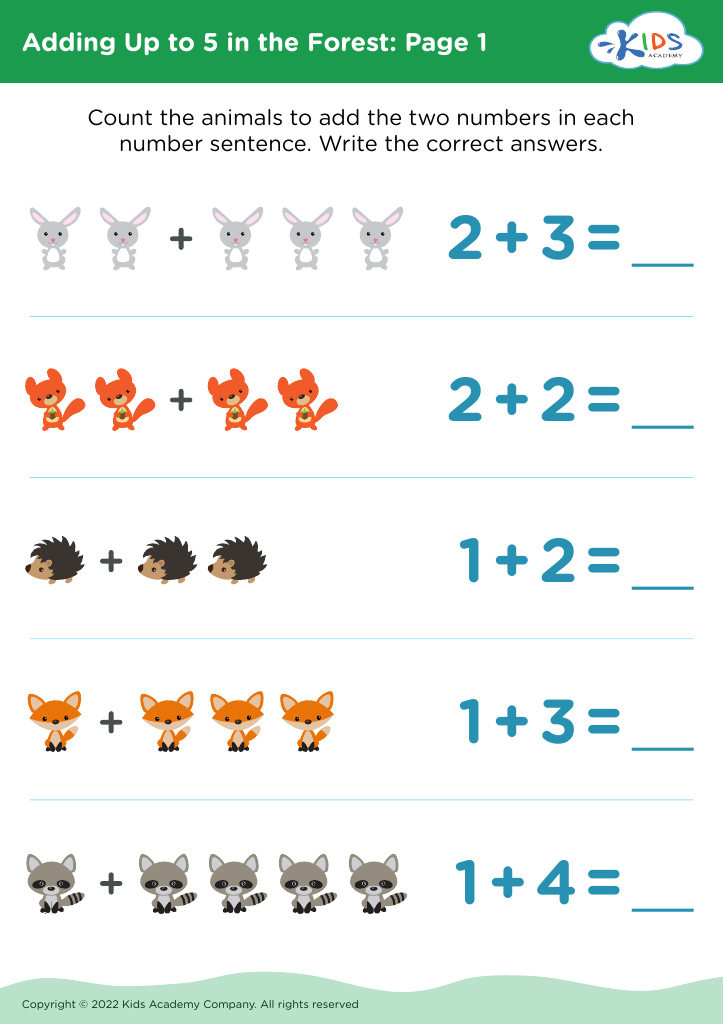
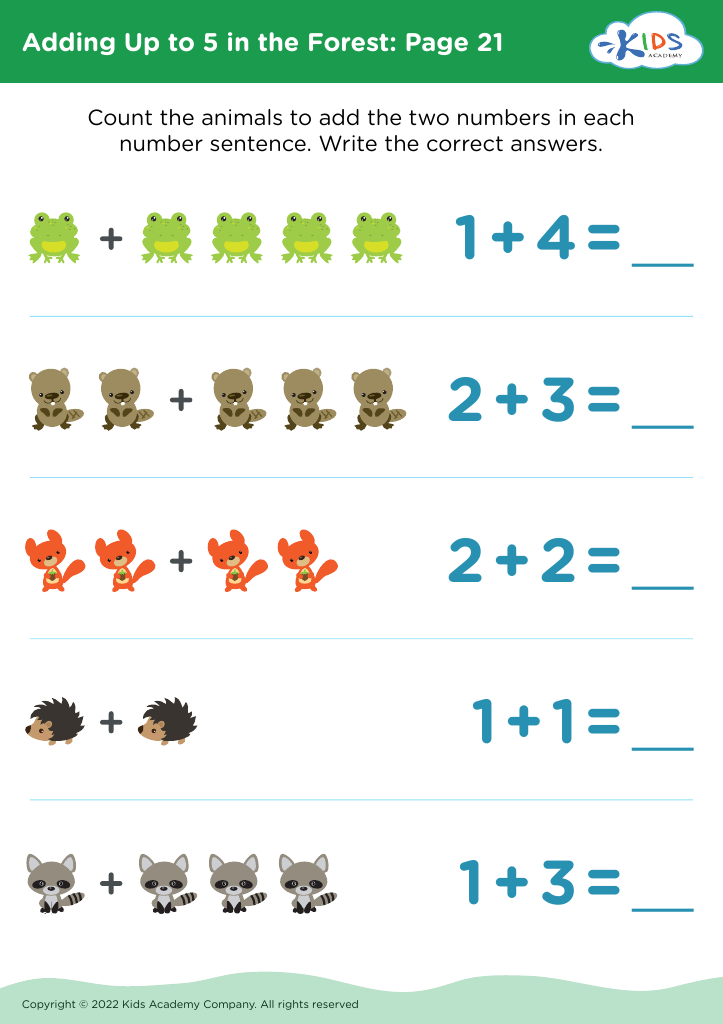
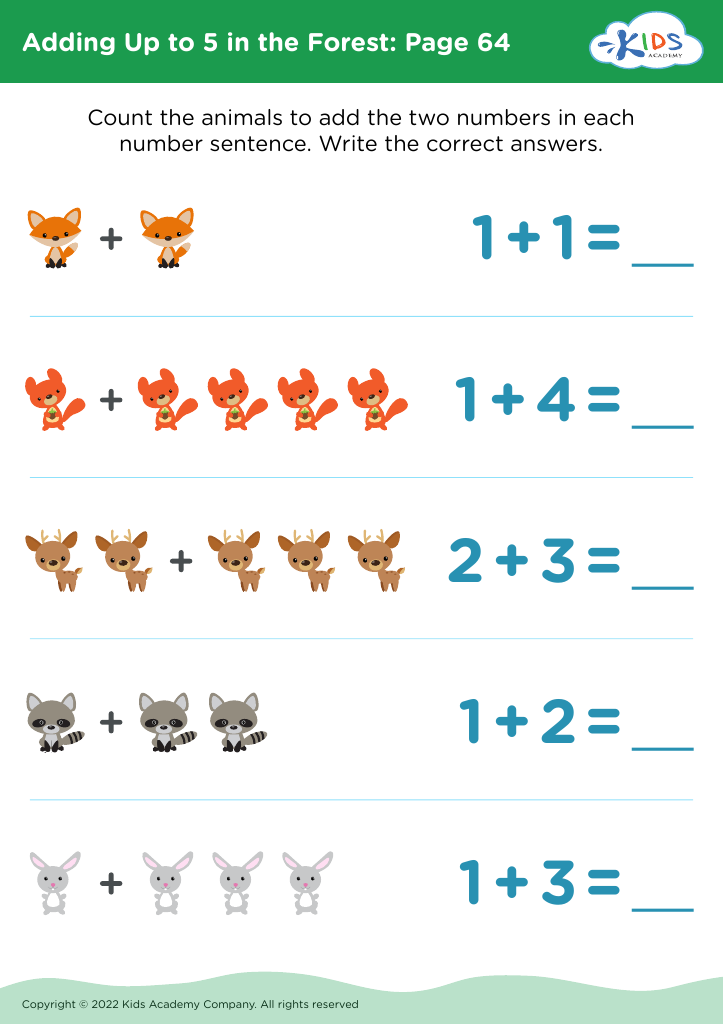
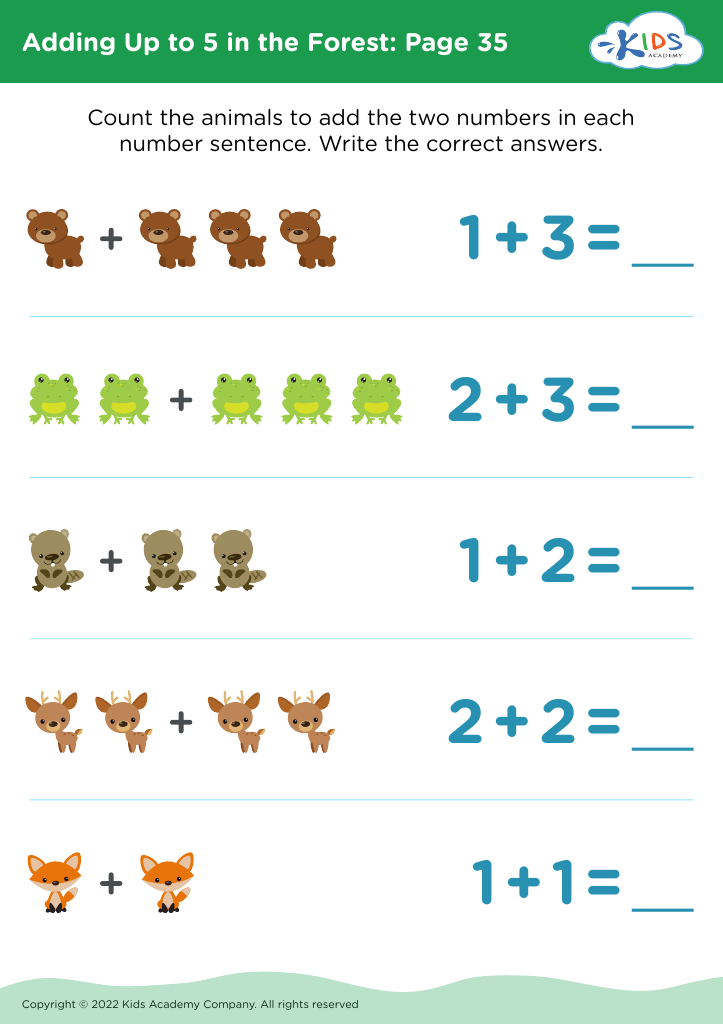
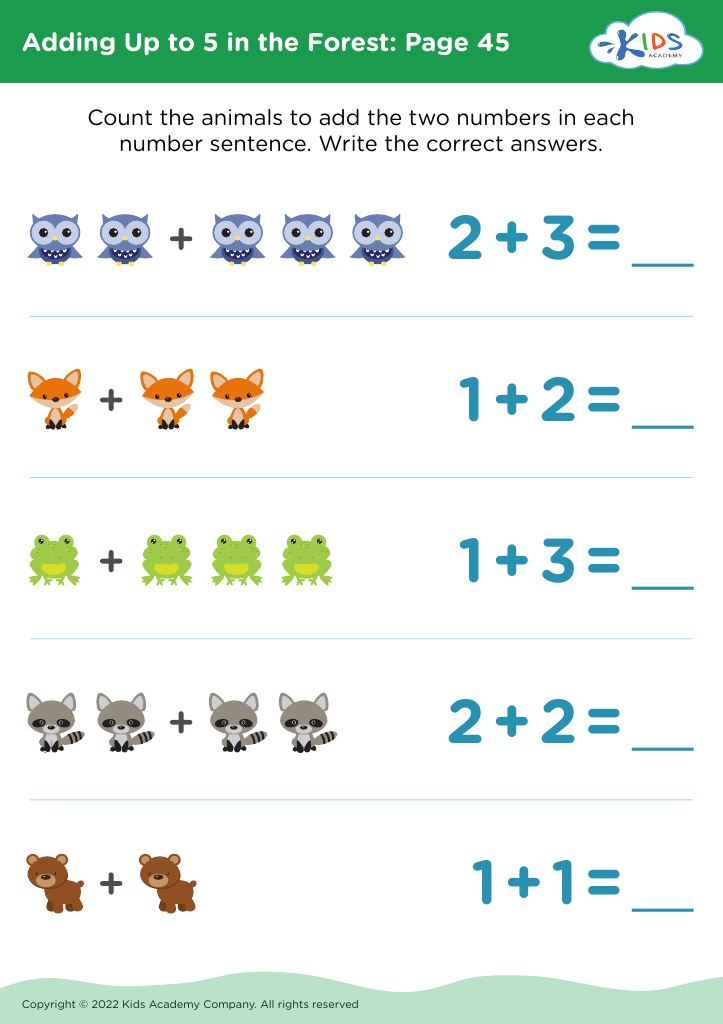
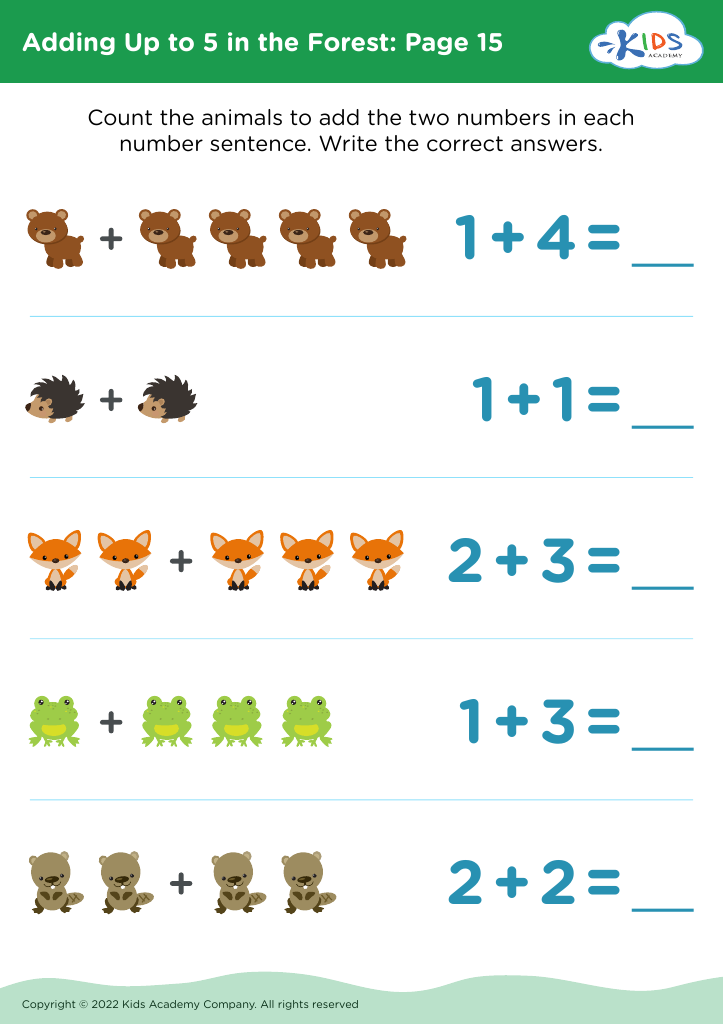
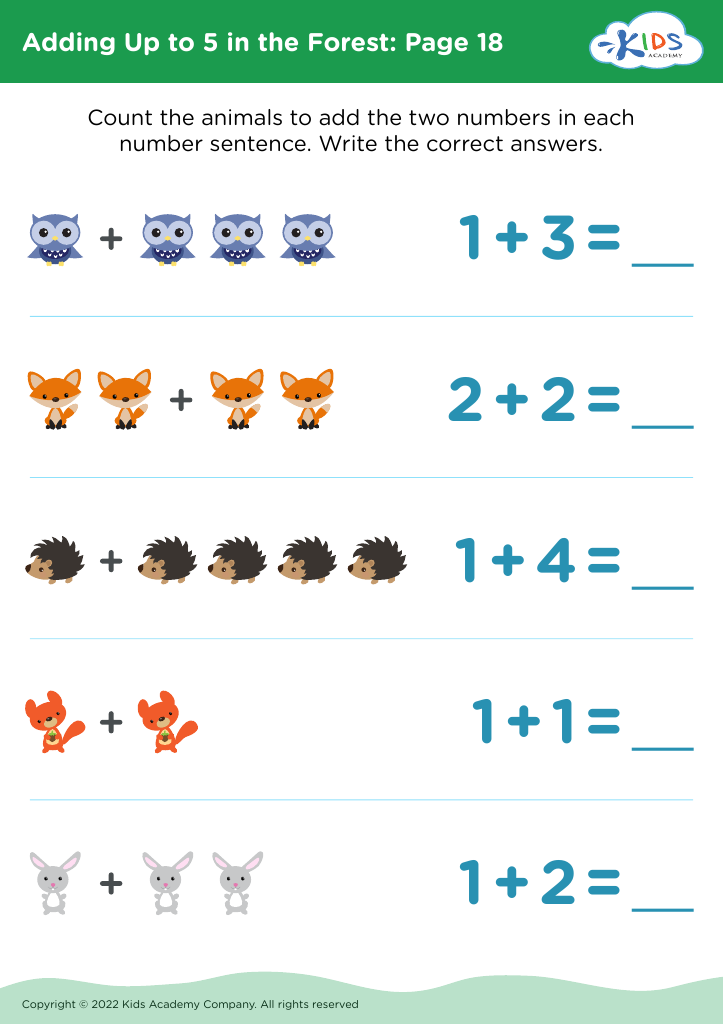
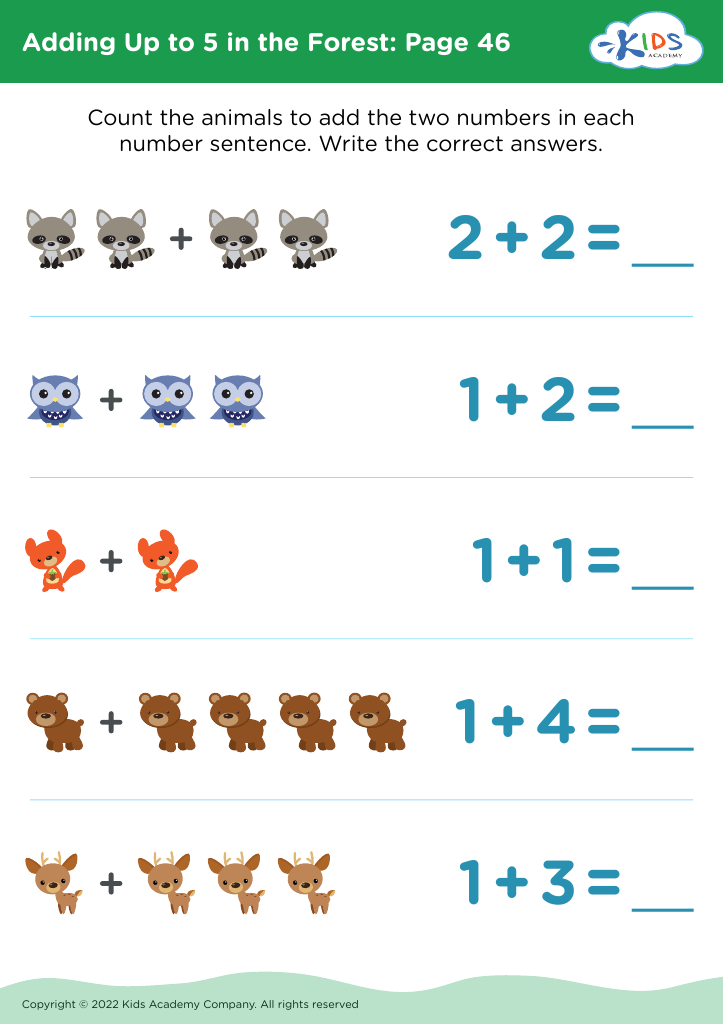
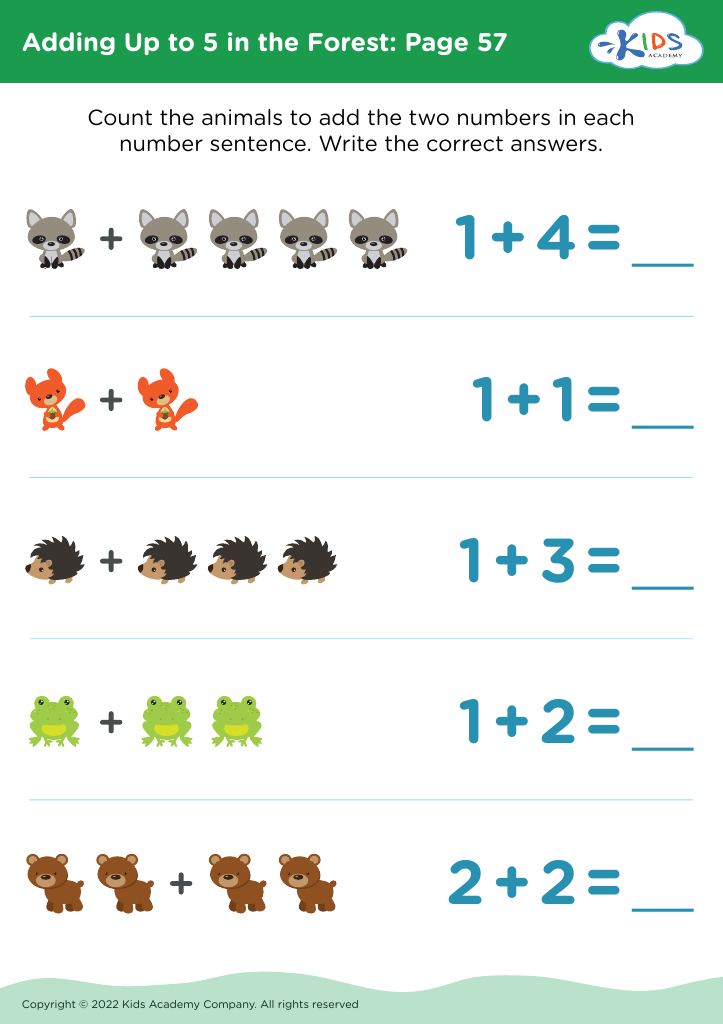
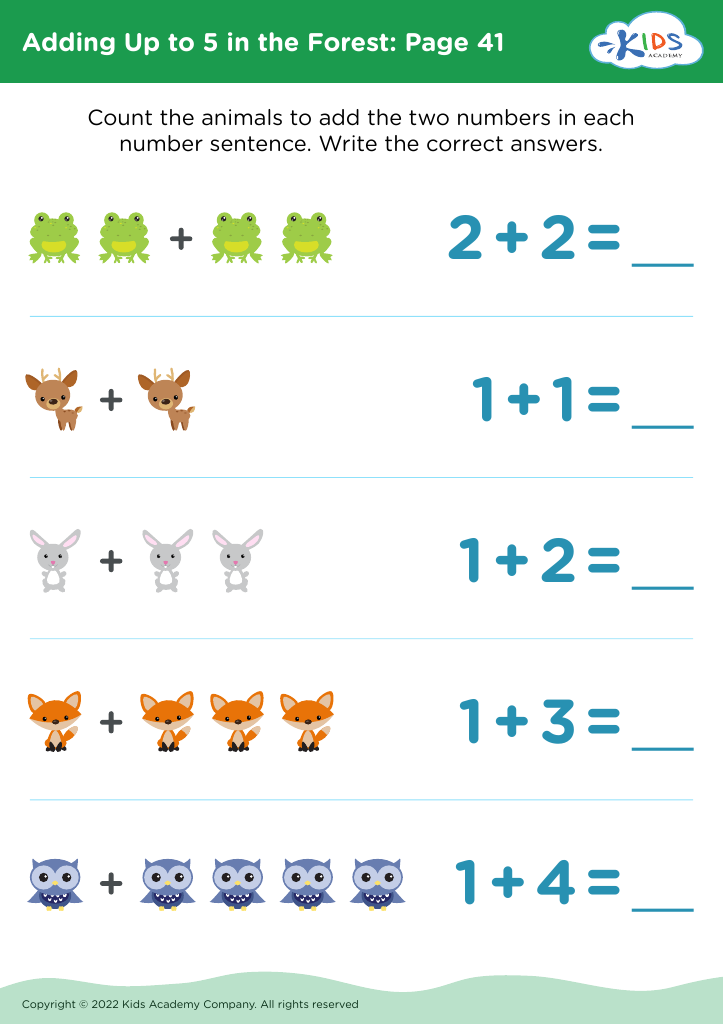
Discover our engaging Visual Learning Adding in the Forest Worksheets designed for children ages 3-6! These interactive resources enable young learners to explore basic addition concepts through vibrant forest-themed illustrations. Each worksheet nurtures visual skills while helping children practice counting and simple addition by pairing fun images with relevant numbers. This hands-on approach not only enhances mathematical understanding but also fosters a love for learning. Perfect for teachers and homeschooling parents, our worksheets support early childhood education and promote cognitive development. Dive into the enchanting world of numbers in the forest, and watch your child flourish with essential math skills!
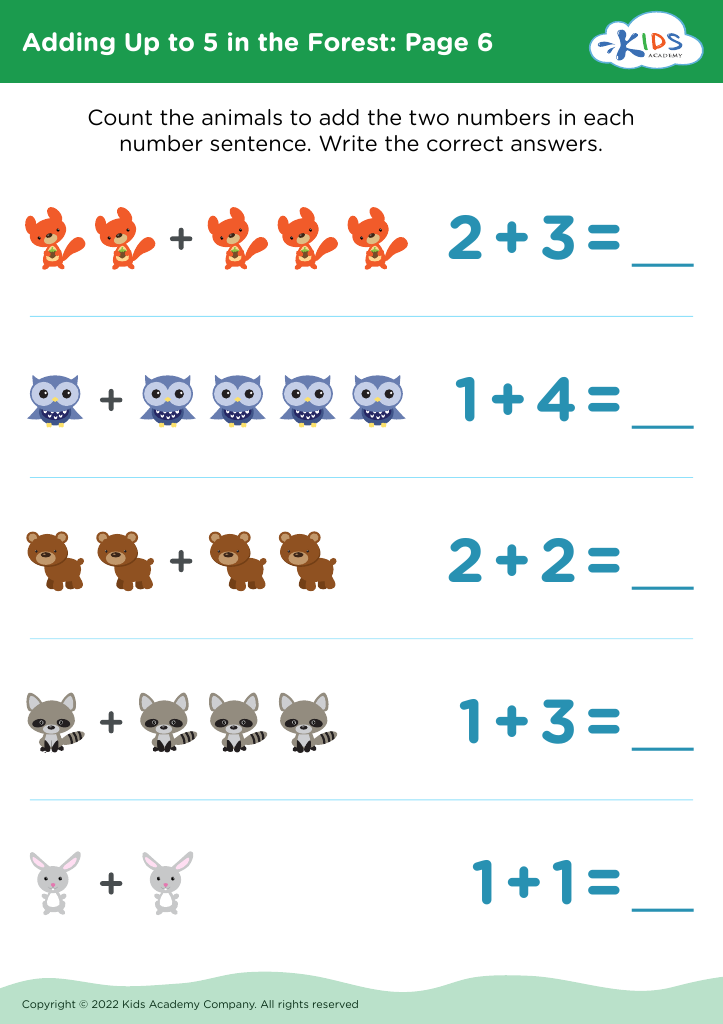



Visual learning is a vital approach for children aged 3-6, particularly in settings like Forest Schools. At this developmental stage, children are naturally curious and learn best through engaging, hands-on experiences. Incorporating visual learning techniques in a forest environment captivates their attention and enhances comprehension, making it easier for them to process information.
Forest settings stimulate multiple senses, allowing children to observe, explore, and interact with nature. This type of experiential learning fosters creativity and critical thinking, as they visually connect concepts with the natural world. For instance, identifying plant colors, shapes, and textures enhances their vocabulary and understanding of their environment.
Furthermore, visual learning promotes cooperation and teamwork among peers. When participating in group activities, children learn to communicate ideas visually, fostering social skills and emotional intelligence. Teachers and parents who support visual learning in forest settings nurture curiosity and instill a lifelong love of learning.
By prioritizing their child's engagement with visual learning in nature, caregivers empower them to become active participants in their education, laying a strong foundation for future academic success. Embracing these experiences can create memorable and transformative opportunities for holistic development in young learners.