Filters

90 filtered results

Clear all filters
Favorites
With answer key
Interactive

90 filtered results

Difficulty Level

Grade


Check out this FREE Trial Lesson on Adding Up to 5 for age 3-6!

Sorting Objects into 3 Categories

Favorites
With answer key
Interactive
  • 3-6
  • Animal recognition
  • Adding Up to 5
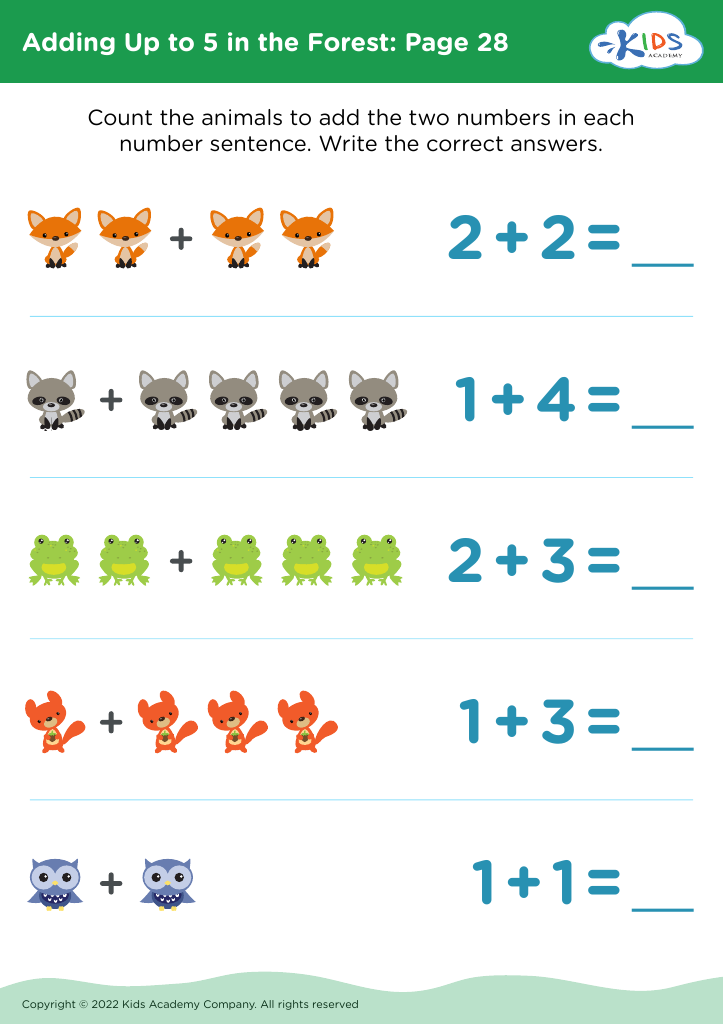
Adding Up to 5 in the Forest: Page 28
Worksheet
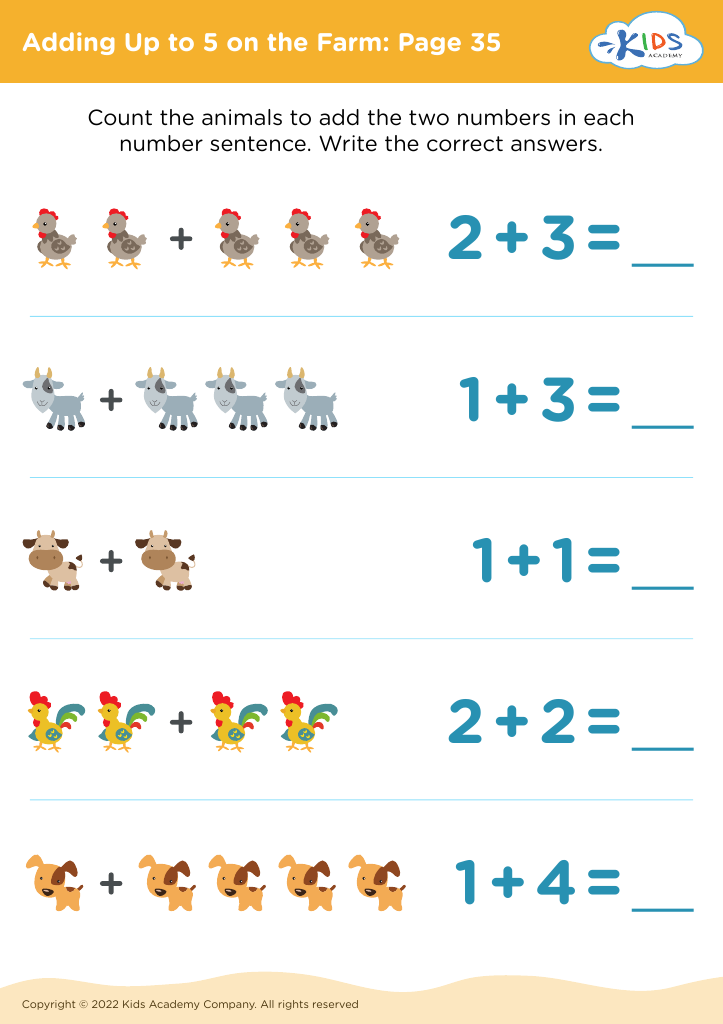
Adding Up to 5 on the Farm: Page 35
Worksheet
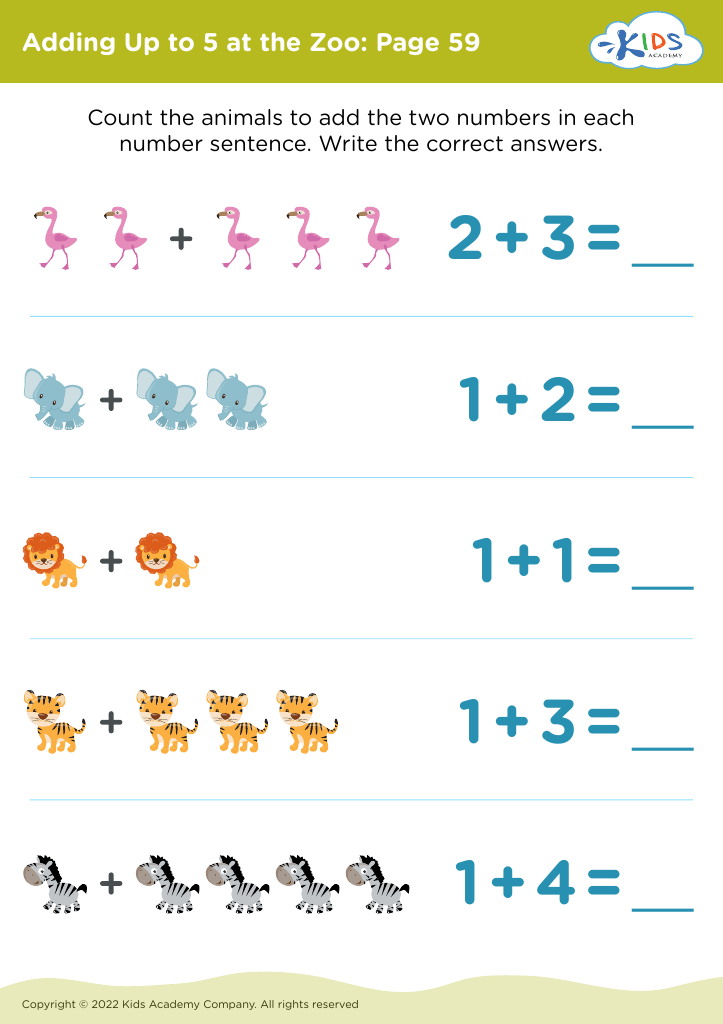
Adding Up to 5 at the Zoo: Page 59
Worksheet
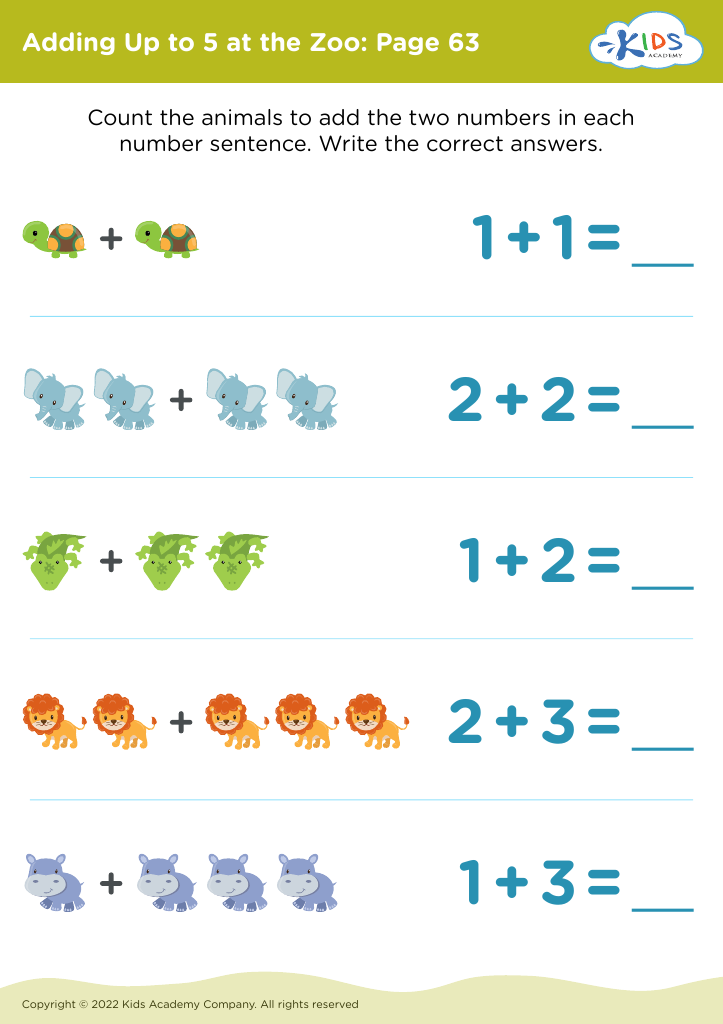
Adding Up to 5 at the Zoo: Page 63
Worksheet
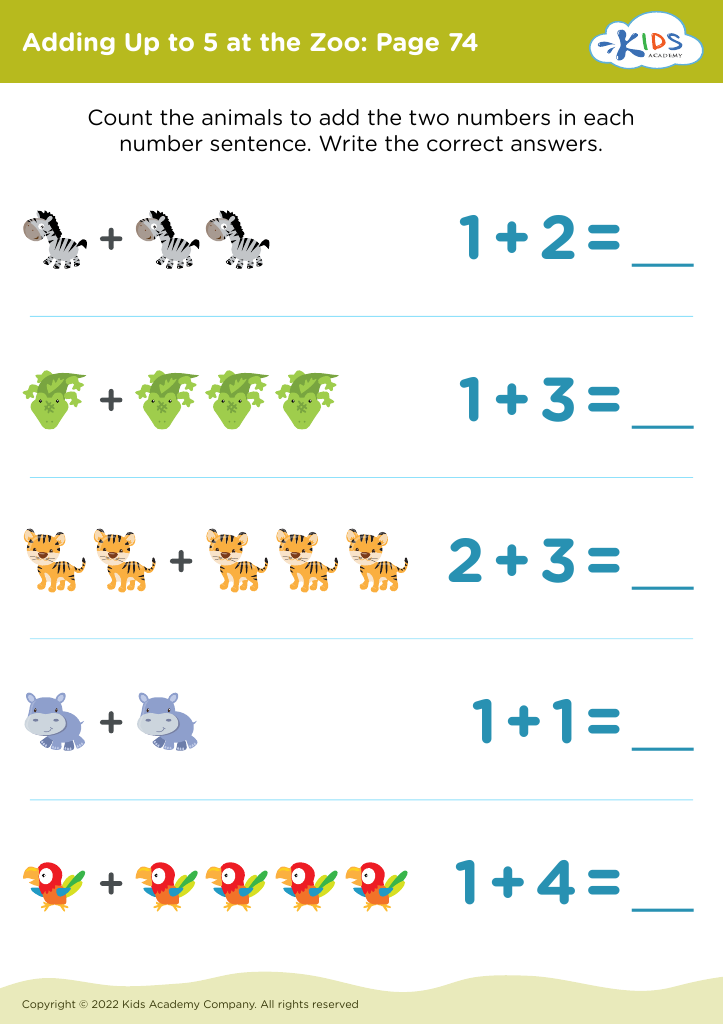
Adding Up to 5 at the Zoo: Page 74
Worksheet
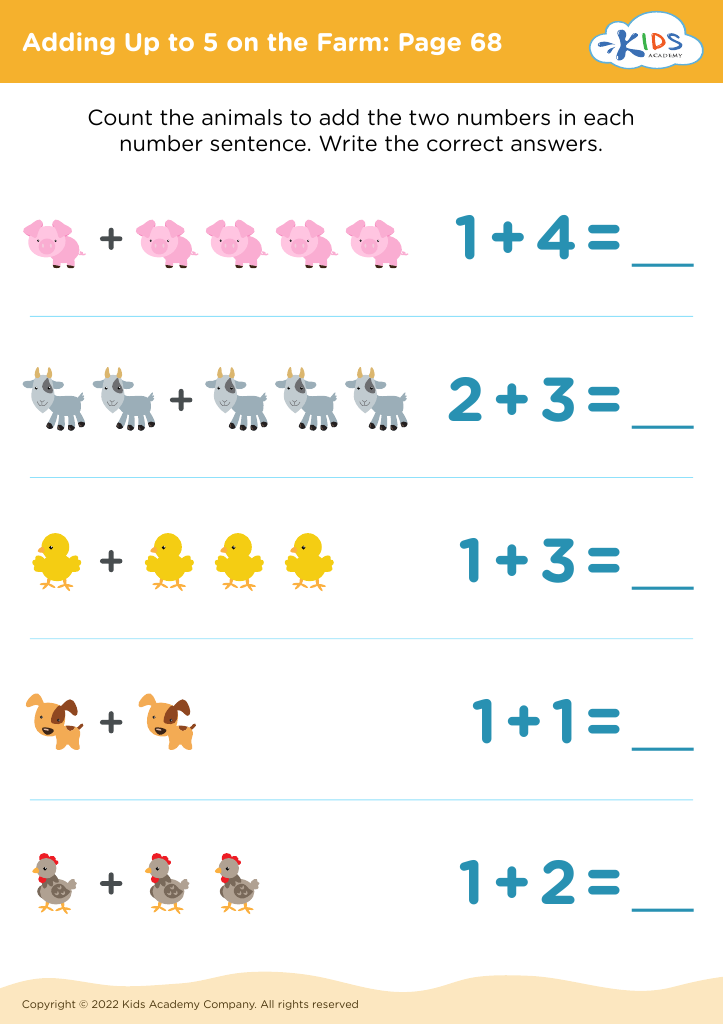
Adding Up to 5 on the Farm: Page 68
Worksheet
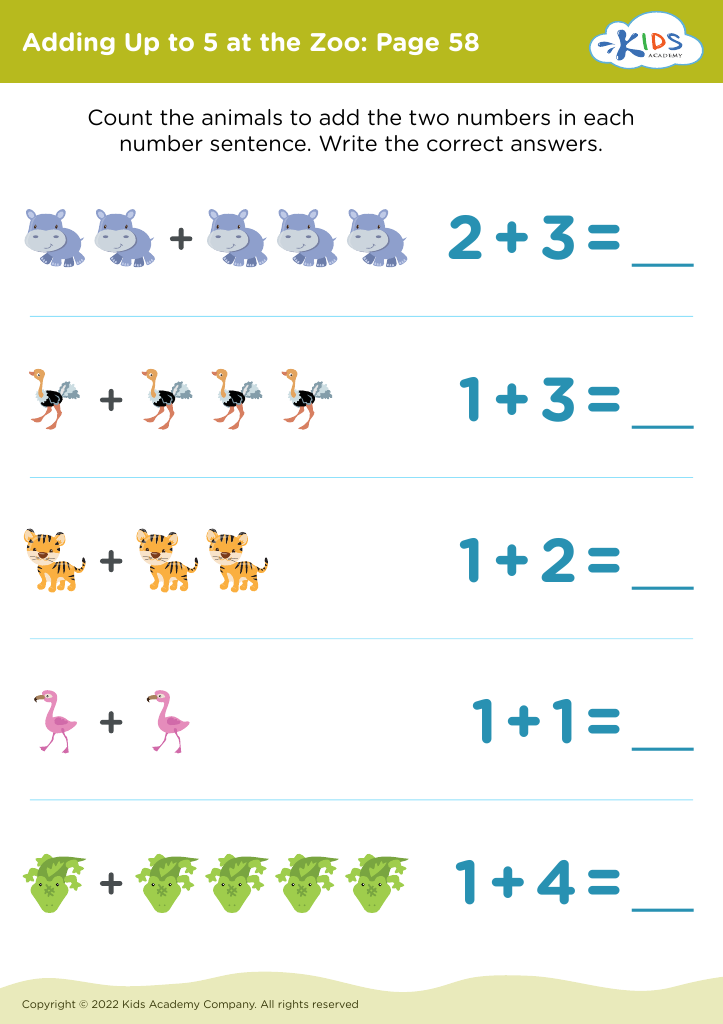
Adding Up to 5 at the Zoo: Page 58
Worksheet
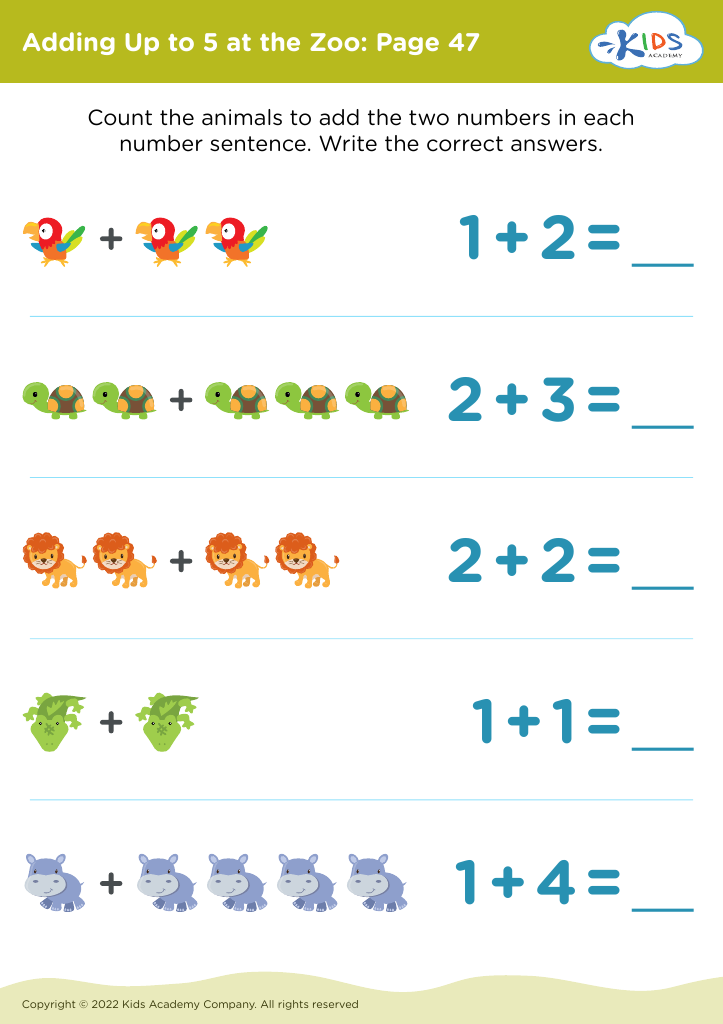
Adding Up to 5 at the Zoo: Page 47
Worksheet
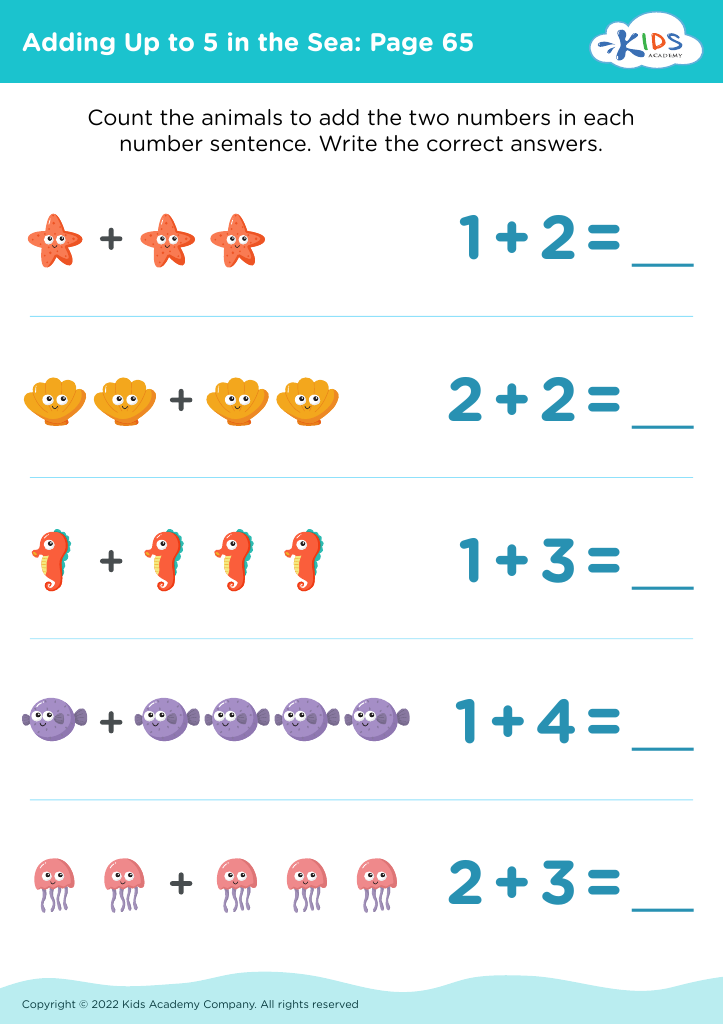
Adding Up to 5 in the Sea: Page 65
Worksheet
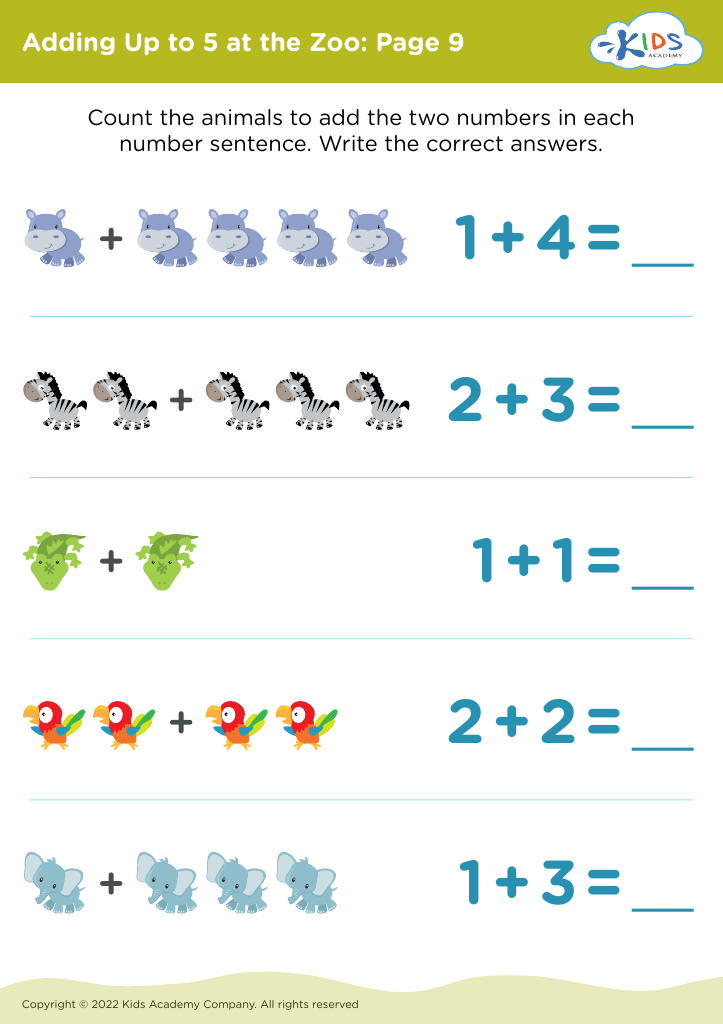
Adding Up to 5 at the Zoo: Page 9

Adding Up to 5 at the Zoo: Page 9

Adding Up to 5 at the Zoo: Page 9
Worksheet
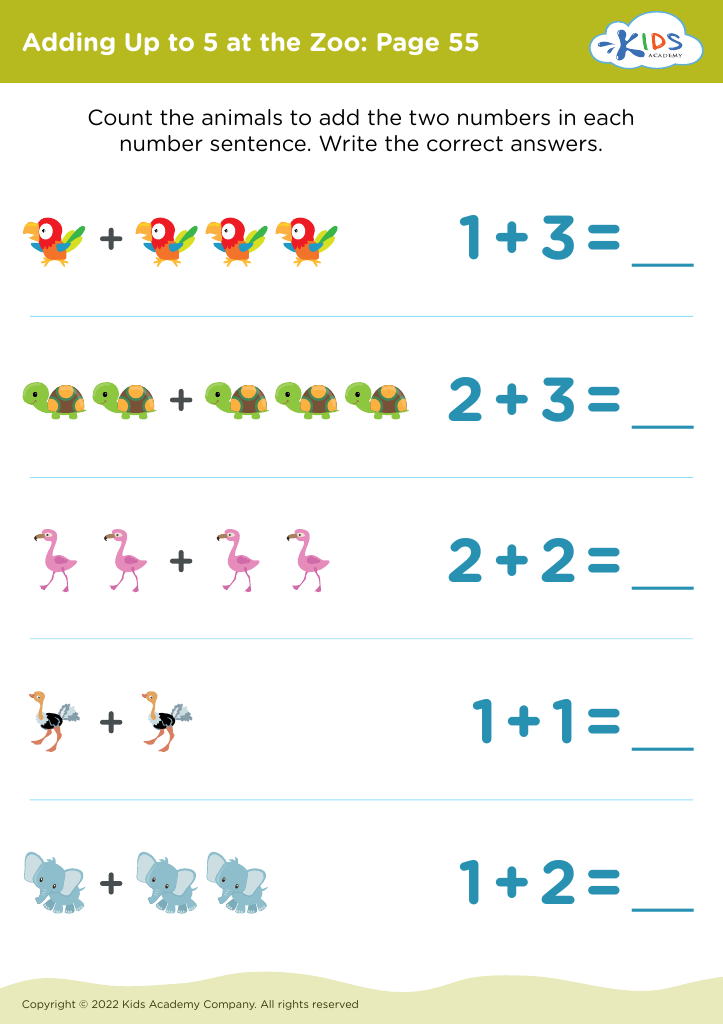
Adding Up to 5 at the Zoo: Page 55
Worksheet
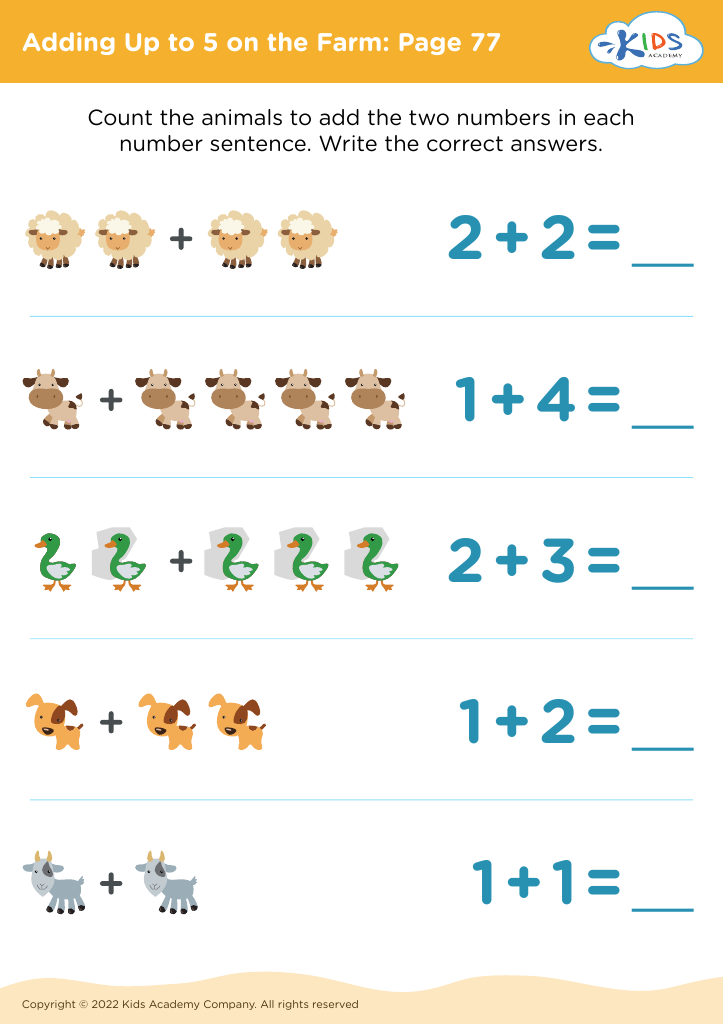
Adding Up to 5 on the Farm: Page 77
Worksheet
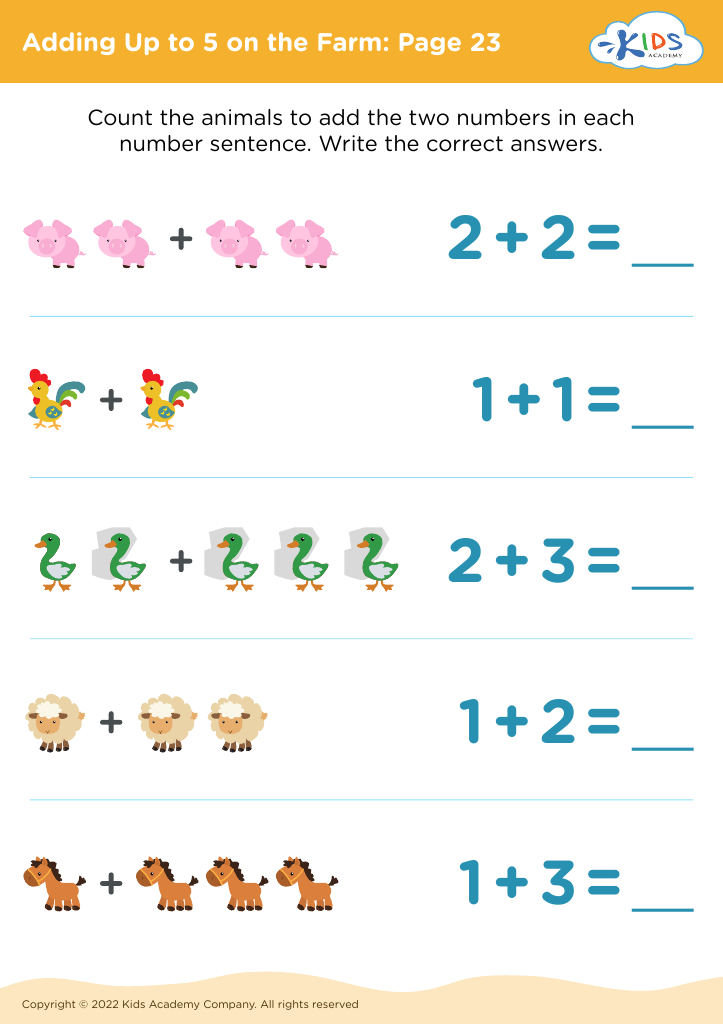
Adding Up to 5 on the Farm: Page 23
Worksheet
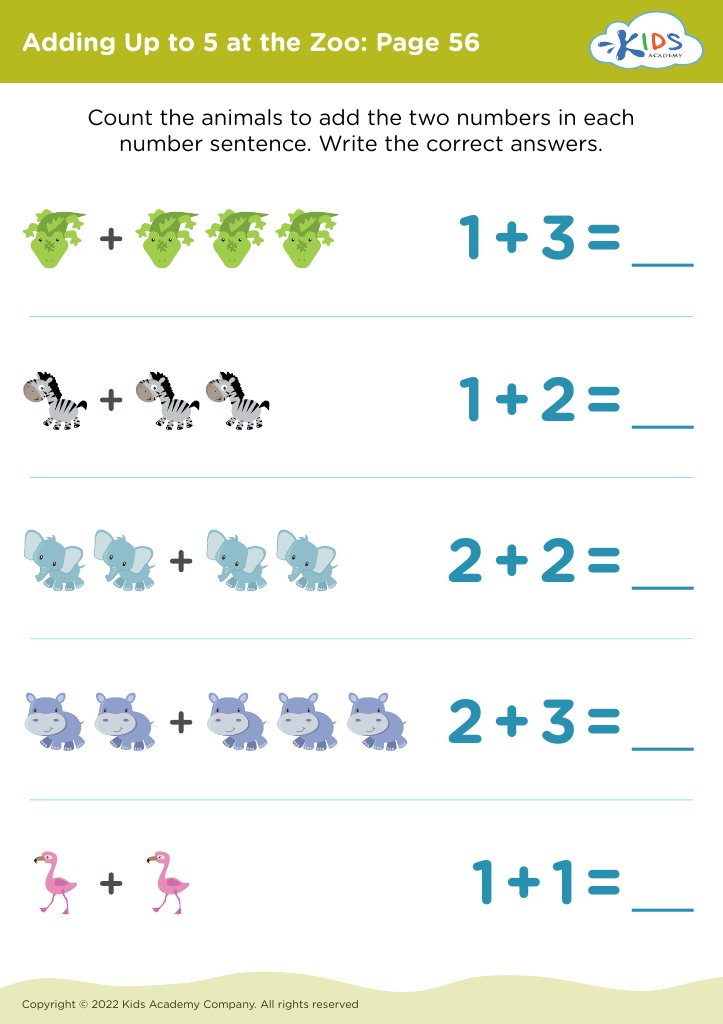
Adding Up to 5 at the Zoo: Page 56
Worksheet
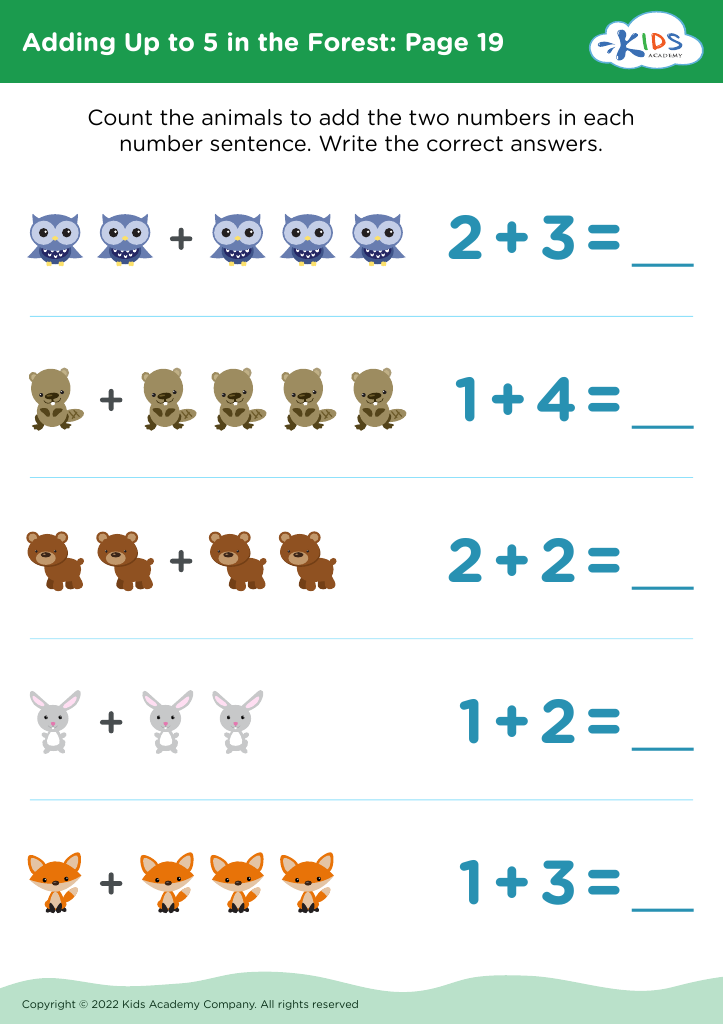
Adding Up to 5 in the Forest: Page 19
Worksheet
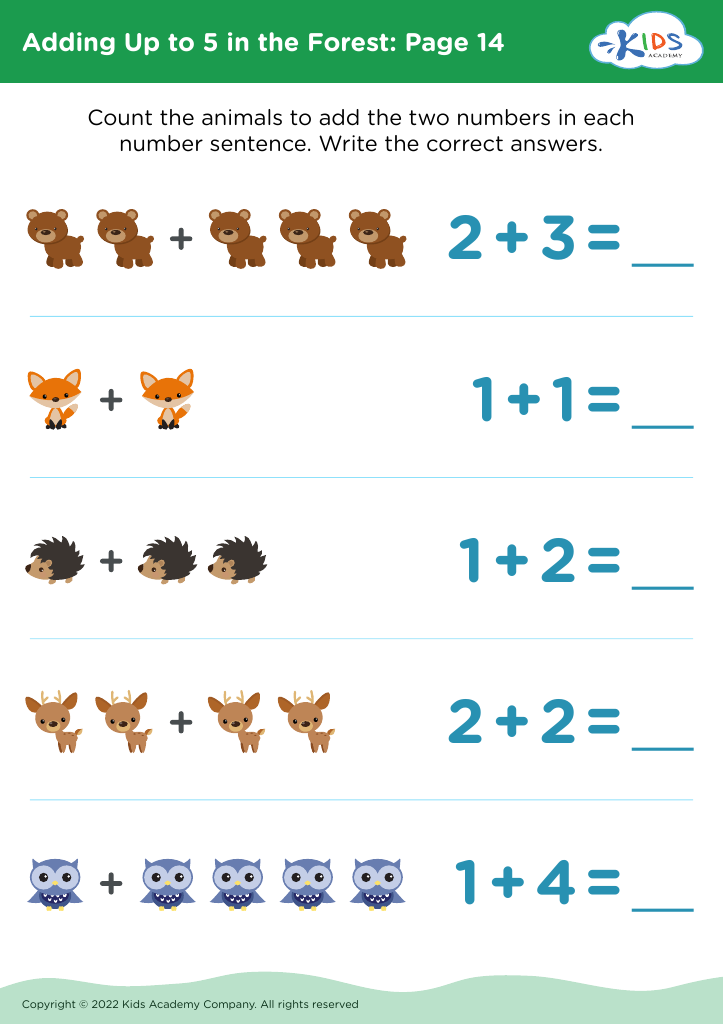
Adding Up to 5 in the Forest: Page 14
Worksheet
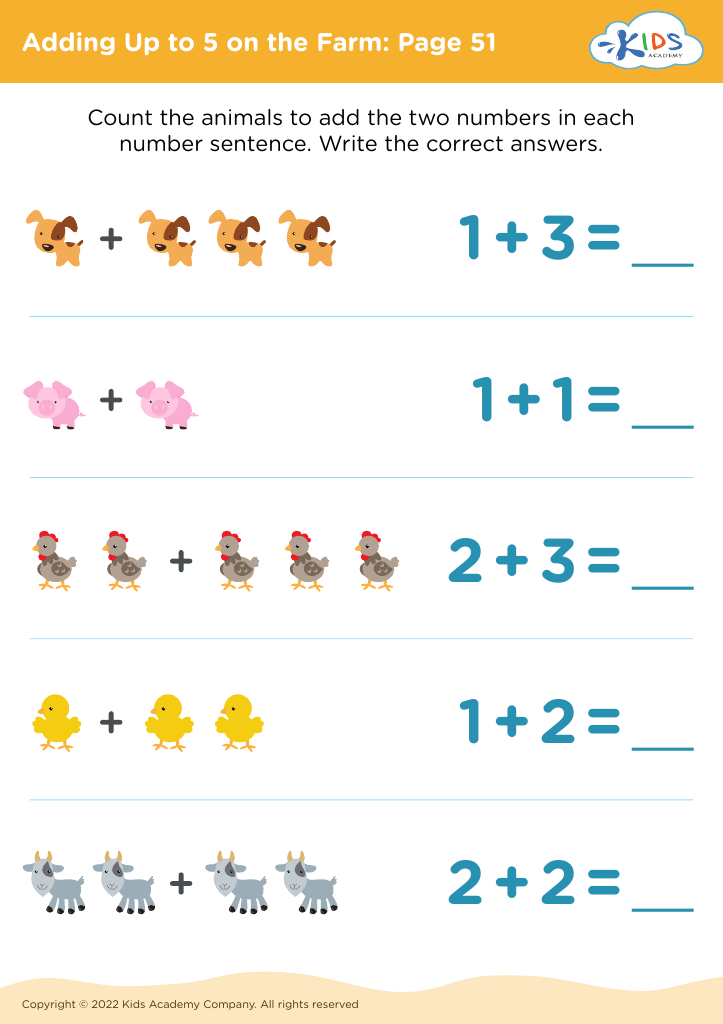
Adding Up to 5 on the Farm: Page 51
Worksheet
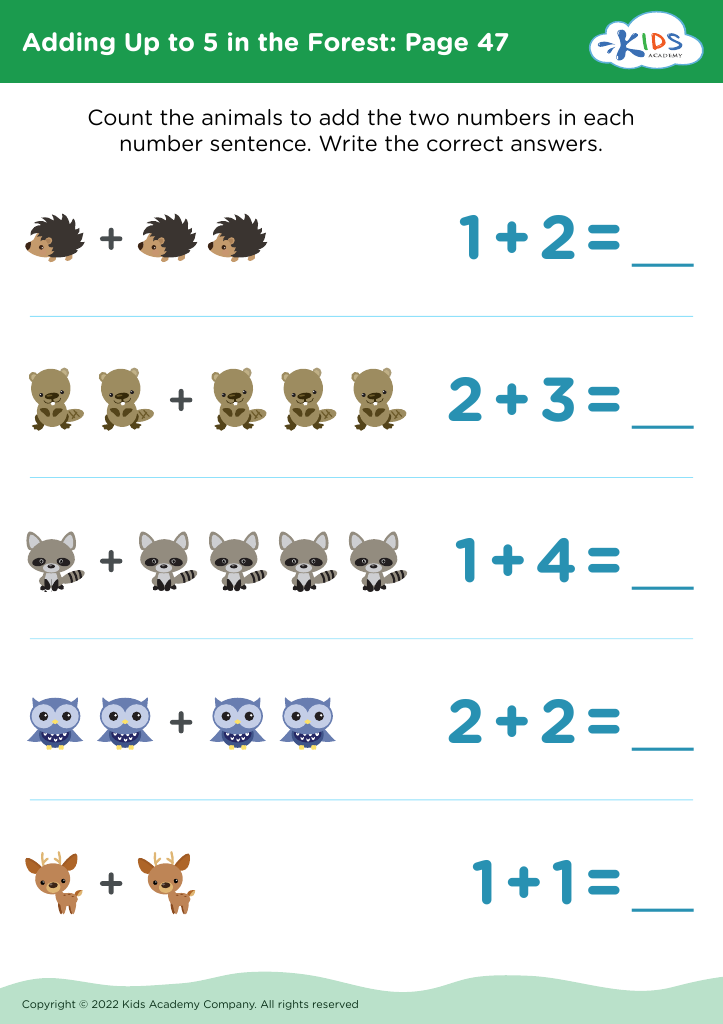
Adding Up to 5 in the Forest: Page 47
Worksheet
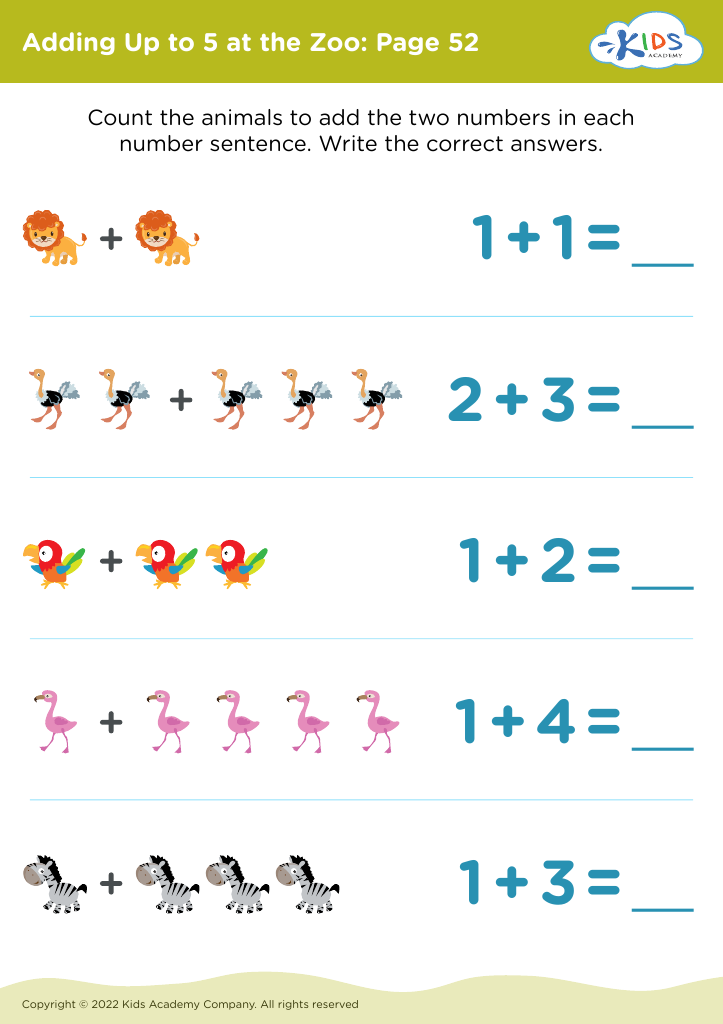
Adding Up to 5 at the Zoo: Page 52
Worksheet
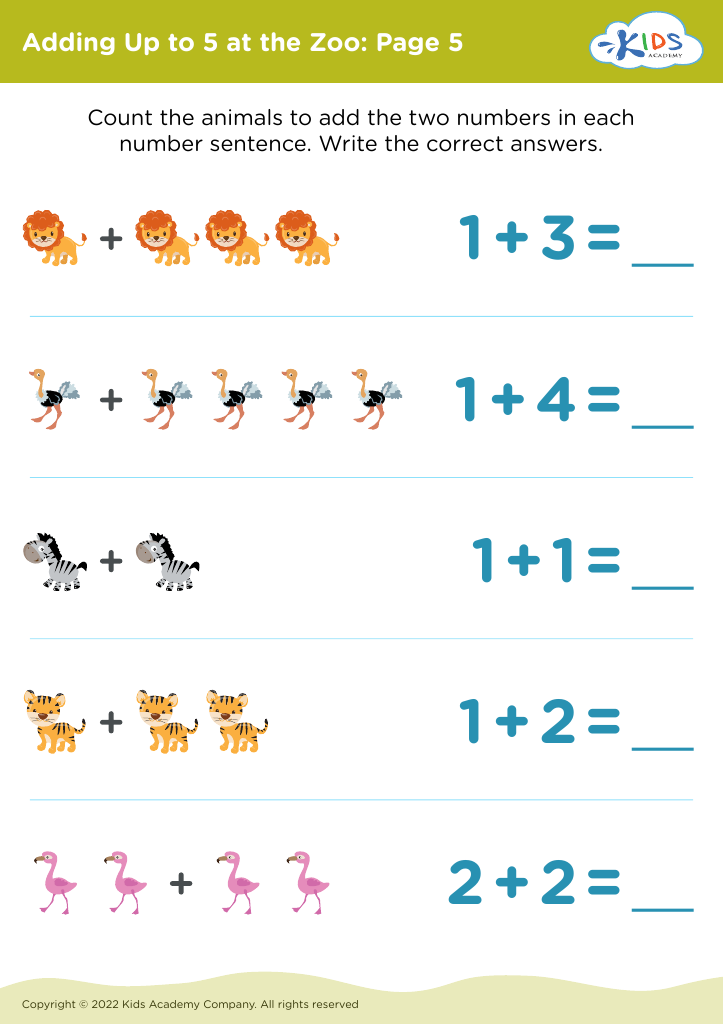
Adding Up to 5 at the Zoo: Page 5

Adding Up to 5 at the Zoo: Page 5

Adding Up to 5 at the Zoo: Page 5
Worksheet
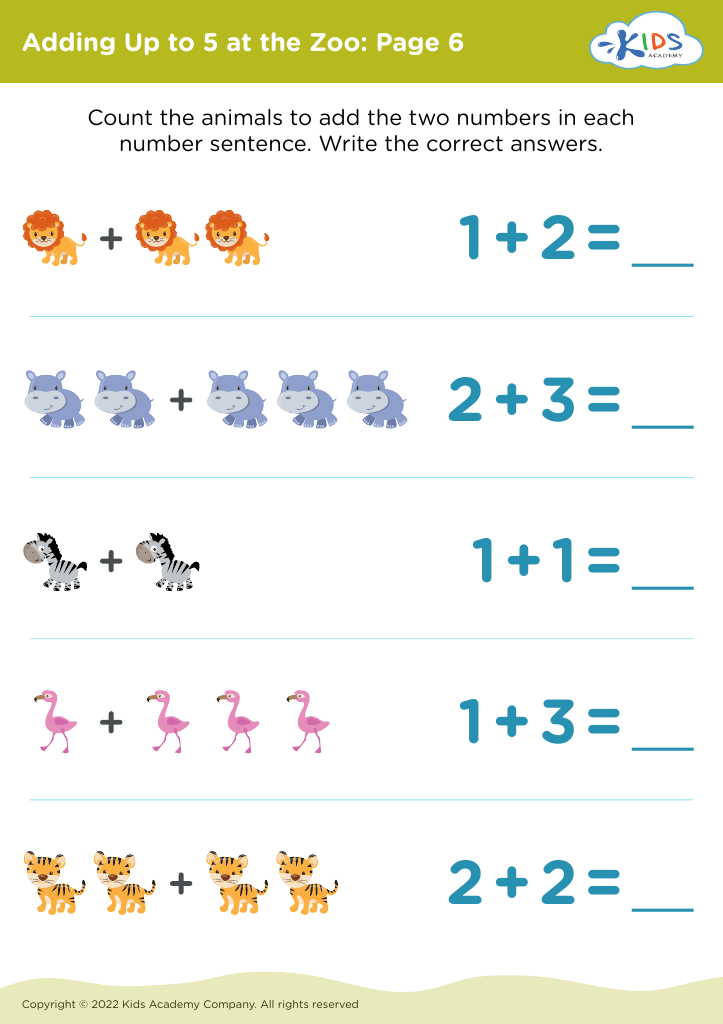
Adding Up to 5 at the Zoo: Page 6

Adding Up to 5 at the Zoo: Page 6

Adding Up to 5 at the Zoo: Page 6
Worksheet
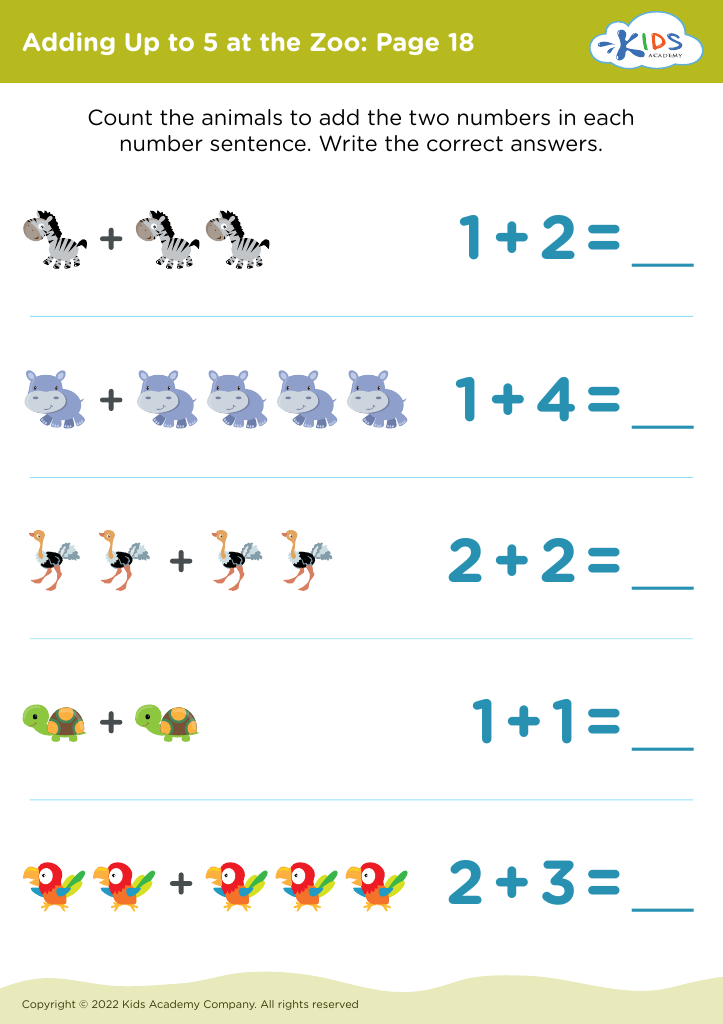
Adding Up to 5 at the Zoo: Page 18
Worksheet
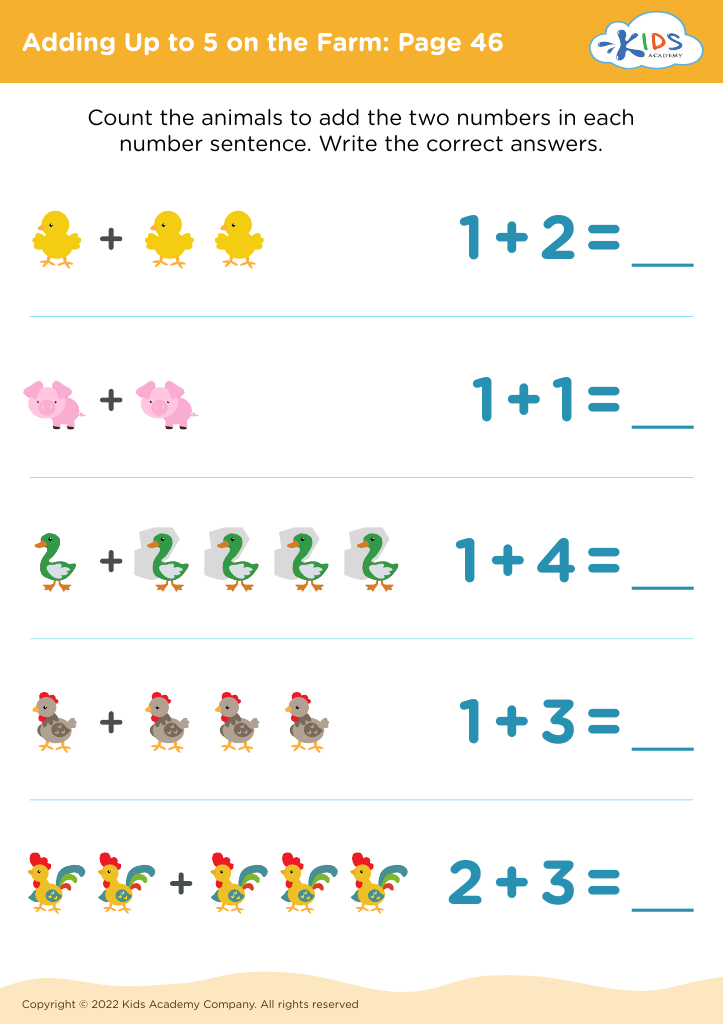
Adding Up to 5 on the Farm: Page 46
Worksheet
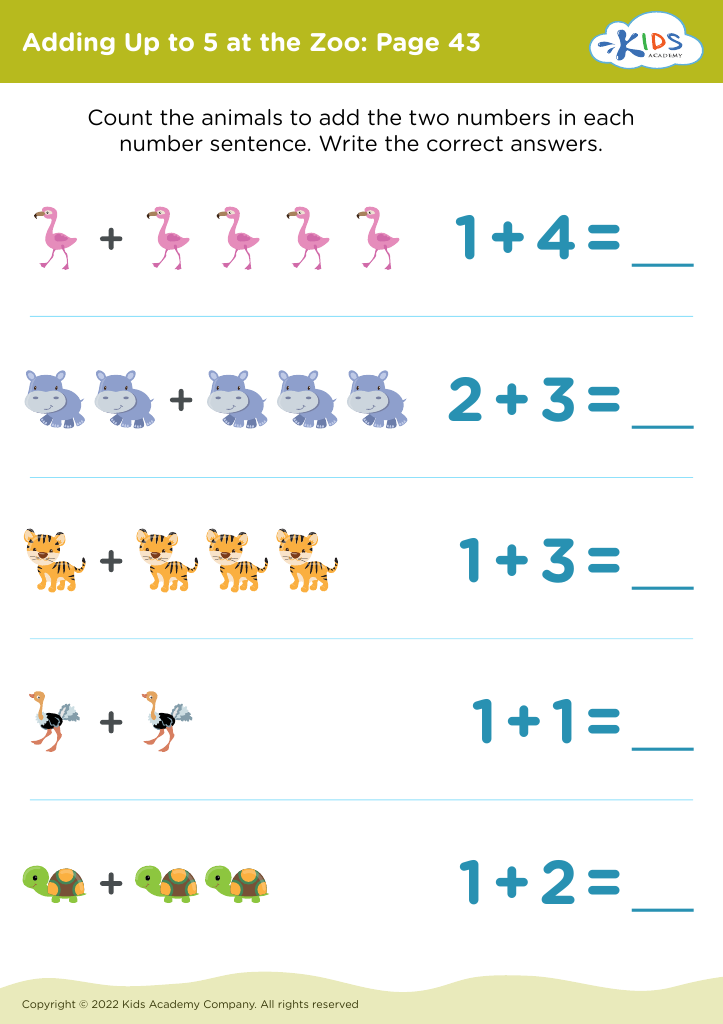
Adding Up to 5 at the Zoo: Page 43
Worksheet


Understanding animal recognition and basic addition for children aged 3-6 is vital for their cognitive and social development. By integrating animal recognition into math activities, parents and teachers can create a fun and engaging learning environment that enhances a child's ability to identify animals and reinforces their ability to grasp foundational math concepts.

Recognizing animals familiarizes children with the natural world, teaching them essential vocabulary and promoting curiosity about their environment. This blend of learning contexts fosters critical thinking and connects them to broader themes like biodiversity and conservation. Furthermore, using animals in math activities—such as counting or adding animal figures—helps make abstract concepts tangible and relatable, laying the groundwork for more complex mathematical skills in the future.

Moreover, interactive and playful approaches—like animal-themed games and storybooks—stimulate children’s imaginations, making learning enjoyable and memorable. This dual focus not only boosts their academic skills but also their social abilities, as they collaborate with peers during activities. Ultimately, nurturing these early skills supports children's emotional and intellectual growth, fostering lifelong learning habits and curiosity. It encourages a wholesome educational space where math and science come alive through the joys of nature.