Understanding number values Adding Up to 5 Worksheets for Ages 3-6
3 filtered results
-
From - To
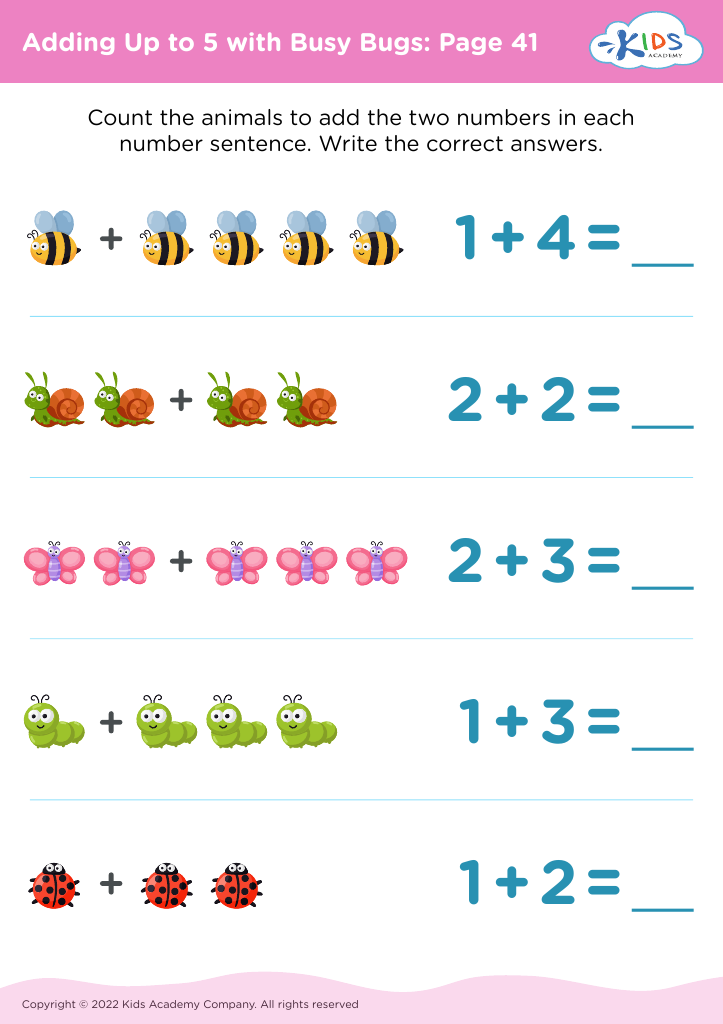
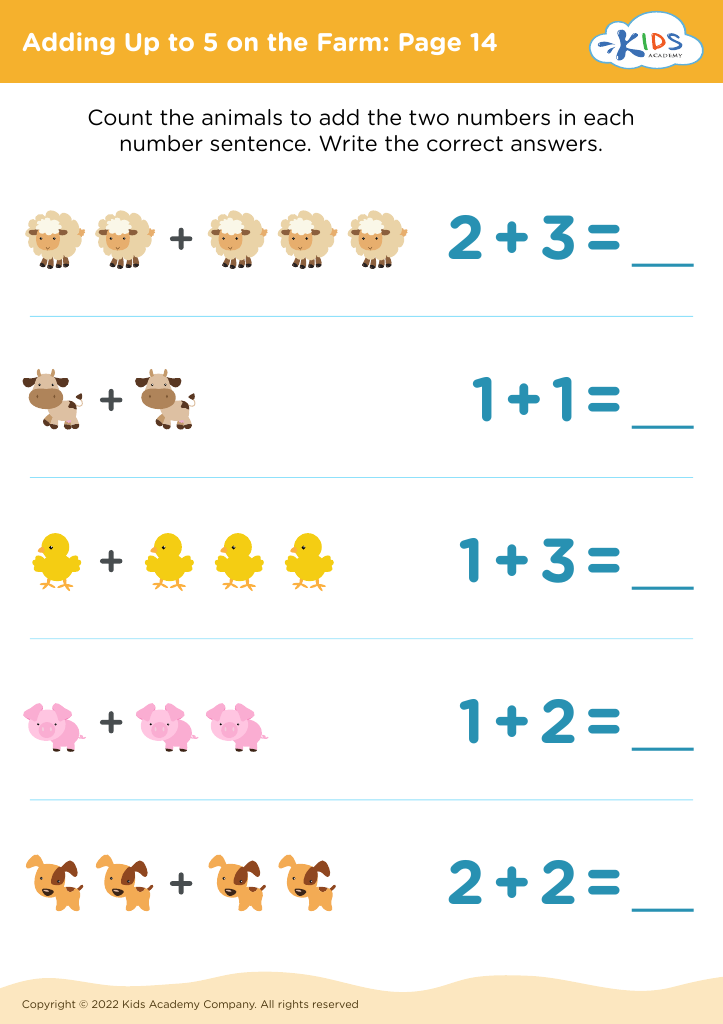
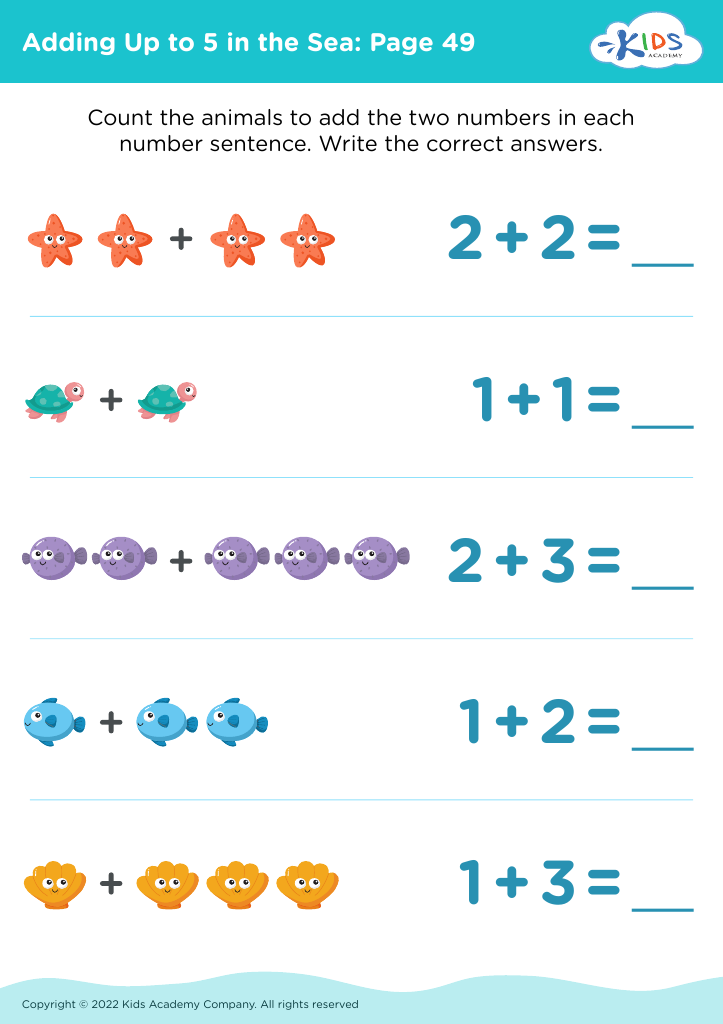
Explore our "Understanding Number Values: Adding Up to 5 Worksheets" designed for ages 3-6! These engaging, interactive worksheets introduce young learners to fundamental math concepts by helping them recognize and manipulate numbers. Children will practice counting, addition, and understanding number values in a playful and insightful way. Each worksheet creates opportunities for hands-on learning, fostering math skills through fun activities. Perfect for classroom use or at-home practice, these resources enable children to build a solid mathematical foundation. Help your little ones gain confidence in their number skills while preparing them for further math learning! Get started today!






%20(1).jpg)

Understanding number values and the concept of adding up to 5 is crucial for young children, particularly those aged 3-6. This foundational skill lays the groundwork for future mathematical learning and cognitive development. At this tender age, children are naturally curious and eager to explore their environment, making it the perfect time to introduce such concepts.
First, mastering number values enhances a child’s ability to recognize and manipulate numbers, fostering number sense that is vital for later arithmetic tasks. When children understand the idea of adding numbers to achieve a total of 5, they develop essential skills in counting, comparing, and problem-solving.
Second, this knowledge promotes critical thinking as kids learn to combine numbers creatively. Activities such as counting objects or using visual aids like fingers or counters enable hands-on learning, making the concepts more memorable.
Moreover, these skills are vital for overall academic success. As mathematics becomes increasingly complex in later grades, a solid grasp of basic operations helps children approach challenges with confidence. Finally, involving parents and teachers in the process nurtures a supportive learning environment, encouraging a positive attitude toward math exploration that can last a lifetime.








