Understanding numbers Adding Up to 5 Worksheets for Ages 3-6
3 filtered results
-
From - To
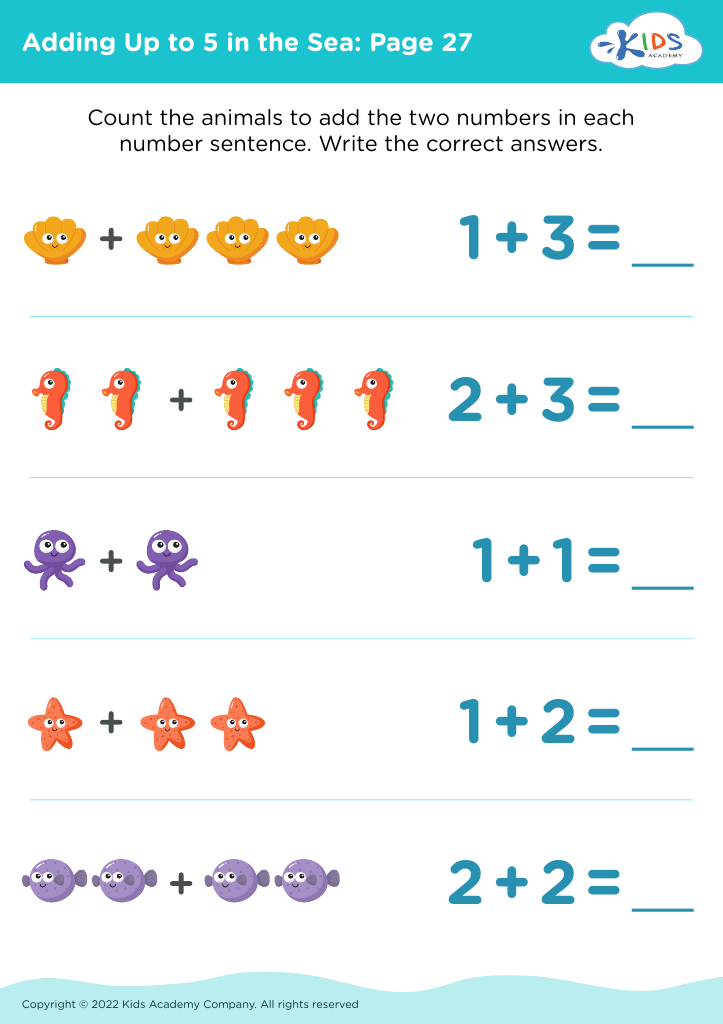
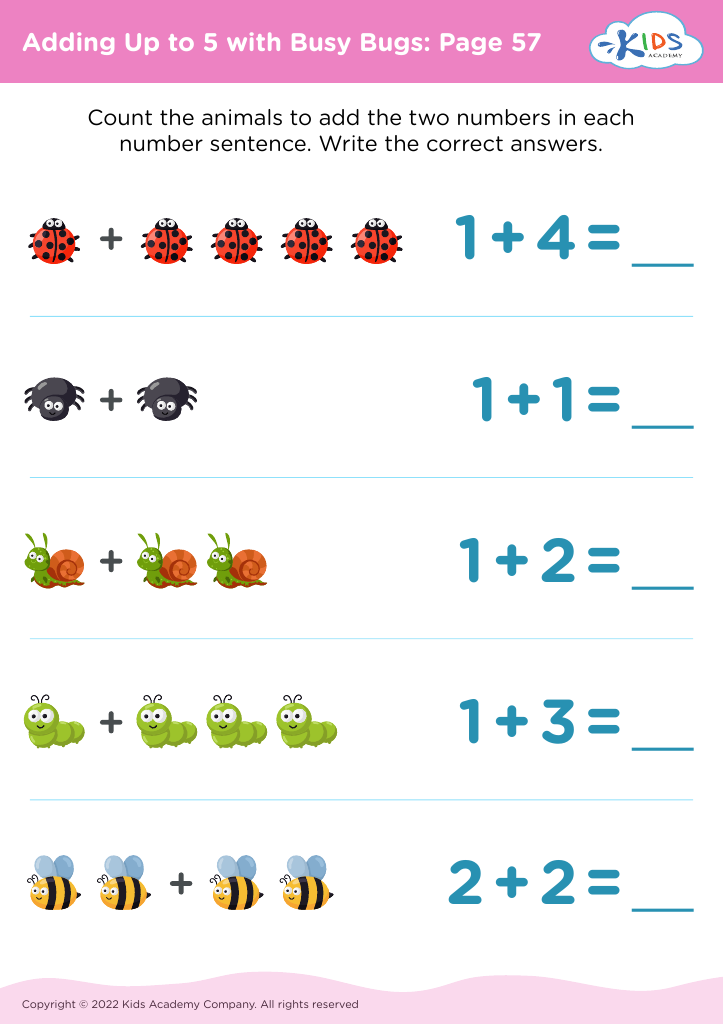
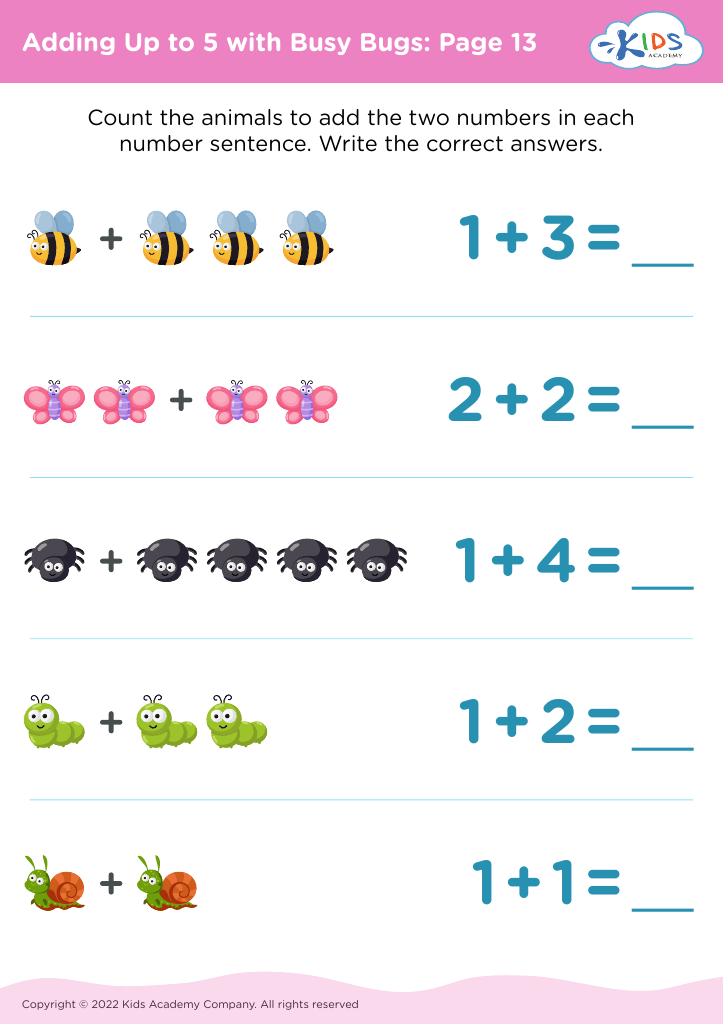
Discover our "Understanding Numbers Adding Up to 5 Worksheets," designed for children aged 3-6 to enhance their early math skills. These engaging resources introduce young learners to the fundamentals of addition in a fun and interactive way. Crafted with bright illustrations and age-appropriate exercises, the worksheets encourage children to explore numbers, recognize patterns, and solve addition problems up to 5. Ideal for parents and educators alike, these printable activities support learning at home or in the classroom, ensuring every child builds a strong math foundation. Foster a love for numbers and boost confidence with these exciting worksheets today!




%20(1).jpg)


.jpg)
Understanding numbers and the concept of addition, especially when it comes to adding up to 5, is crucial for children aged 3-6 for several reasons. At this early age, children are developing foundational mathematical skills that will serve as building blocks for more complex concepts later on. Mastery of counting, number recognition, and basic addition promotes cognitive development and problem-solving abilities.
Engaging with numbers up to 5 also supports language development and enhances communication skills. By interacting with parents or teachers while exploring these concepts, children learn to express their thoughts and reasoning, which fosters confidence in their abilities.
Additionally, this foundational knowledge lays the groundwork for critical thinking. When children practice adding different combinations that equal 5 (like 1+4 or 2+3), they start to recognize patterns and develop a sense of number sense, which is essential in daily life and future math education.
Moreover, collaborating through games and interactive activities makes learning enjoyable and relatable, contributing to a positive attitude towards mathematics as they grow. Thus, understanding how numbers add up to 5 is not only about math; it's about holistic development, social interactions, and paving the way for lifelong learning.








