Underwater animal identification Adding Up to 5 Worksheets for Ages 3-6
3 filtered results
-
From - To
Explore the vibrant world of underwater animals with our "Underwater Animal Identification" worksheets! Designed specifically for children ages 3-6, these engaging worksheets combine early math skills with colorful aquatic themes. Young learners will delight in identifying various marine creatures while practicing addition skills up to five. Each worksheet promotes critical thinking, enhances number recognition, and encourages creative exploration through the captivating underwater setting. With easy-to-follow instructions, these materials support early childhood development in both mathematics and science, making learning both fun and educational. Dive into this aquatic adventure and watch your child’s skills blossom with each completed worksheet!
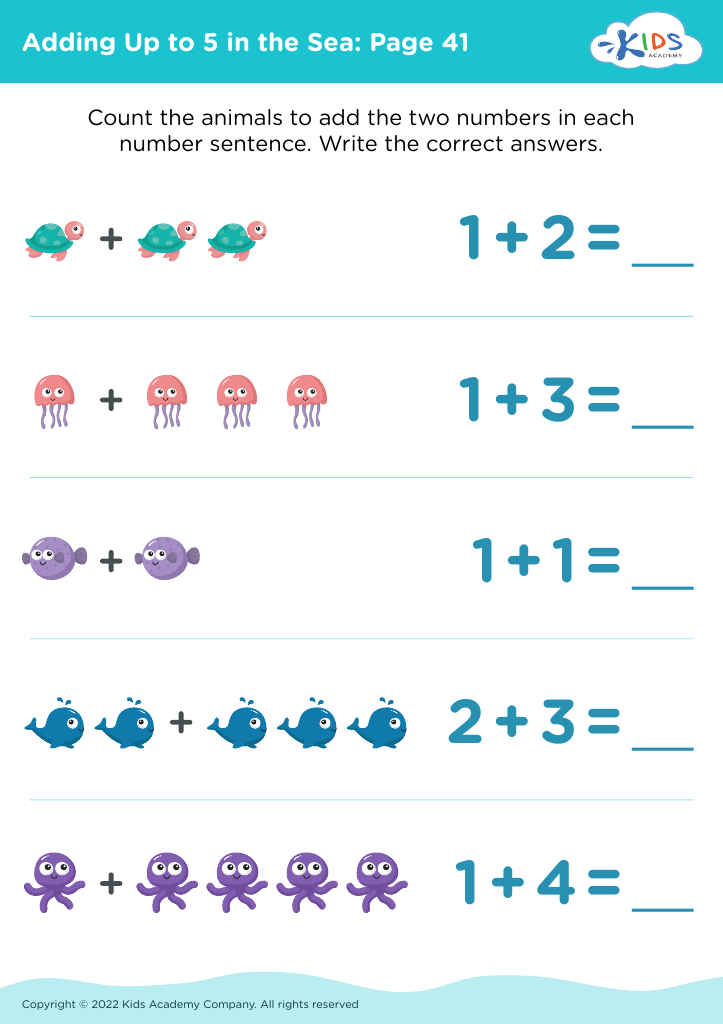
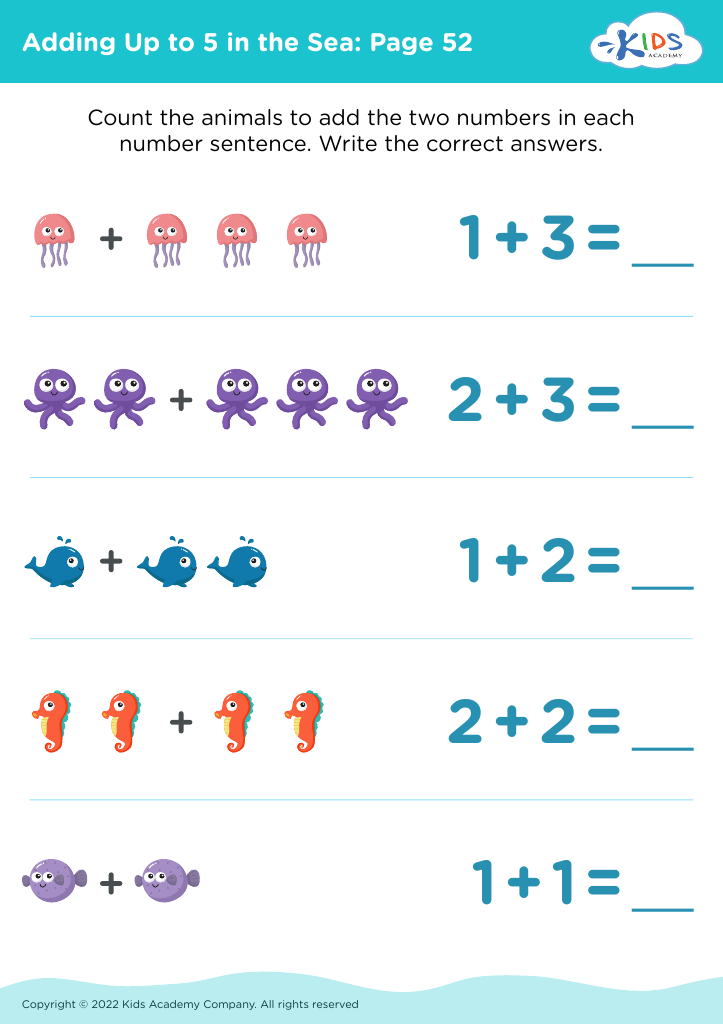
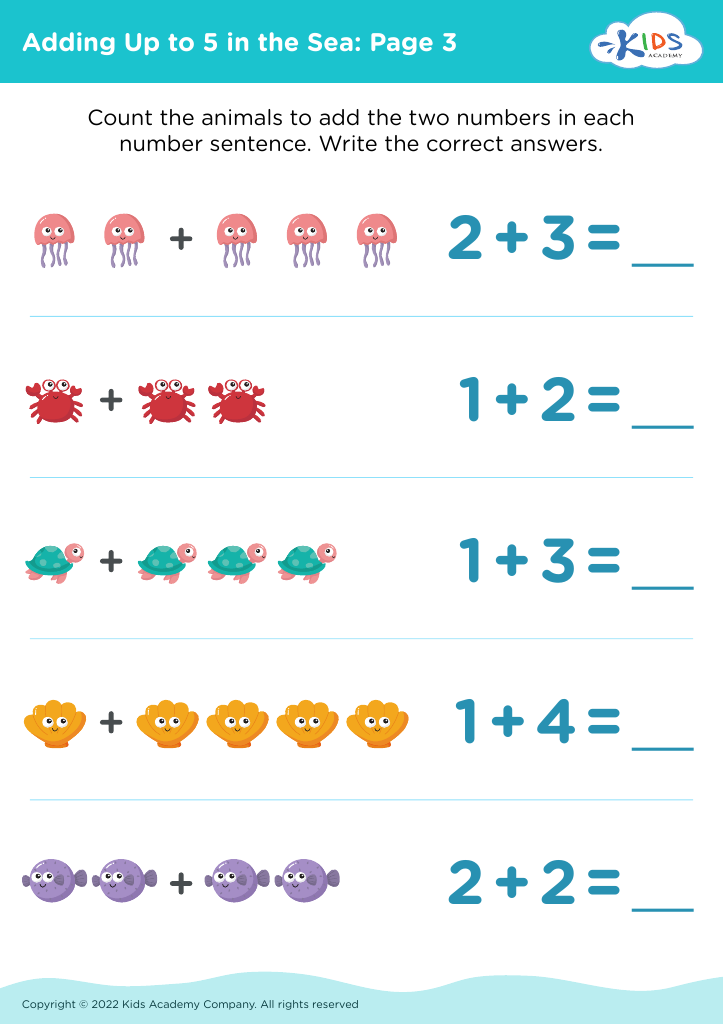








Parents and teachers should care about underwater animal identification and addition for children aged 3-6 because these activities promote essential cognitive and behavioral skills that lay the foundation for learning.
Firstly, identifying underwater animals fosters curiosity about marine life, encouraging a sense of stewardship towards the environment. Children learn to recognize different species, understanding their habitats and importance in our ecosystem.
Additionally, engaging in activities that involve counting and basic addition now helps enhance numeracy skills in a playful context. The process of adding up the number of identified animals introduces early math concepts and reinforces counting, developing a child’s problem-solving abilities essential for later stages of education.
Moreover, these activities aid in improving language skills as children learn the names of various aquatic animals, contributing to their vocabulary growth.
Utilizing vivid pictures or toys can create an interactive learning experience, capturing children’s attention.
Combined, underwater animal identification and simple addition create a rich, multidisciplinary approach that nurtures intellectual development, creative thinking, and appreciation for nature. Ultimately, fostering these early learning experiences prepares children for lifelong engagement with both mathematics and environmental stewardship.








