Visual Perception Skills Adding Up to 5 Worksheets for Ages 3-6
4 filtered results
-
From - To
Enhance your child's early math abilities with our "Visual Perception Skills Adding Up to 5 Worksheets" designed for ages 3-6. These engaging worksheets focus on developing visual perception skills, which are essential for recognizing numbers and understanding basic math concepts. Through fun and interactive exercises, children practice addition up to 5 while honing their ability to identify shapes, patterns, and quantities. Ideal for homeschooling or supplementing classroom learning, these resources foster critical thinking and promote numeracy in a playful way. Equip your little ones with the foundational skills they need to succeed in math in an enjoyable, supportive environment!
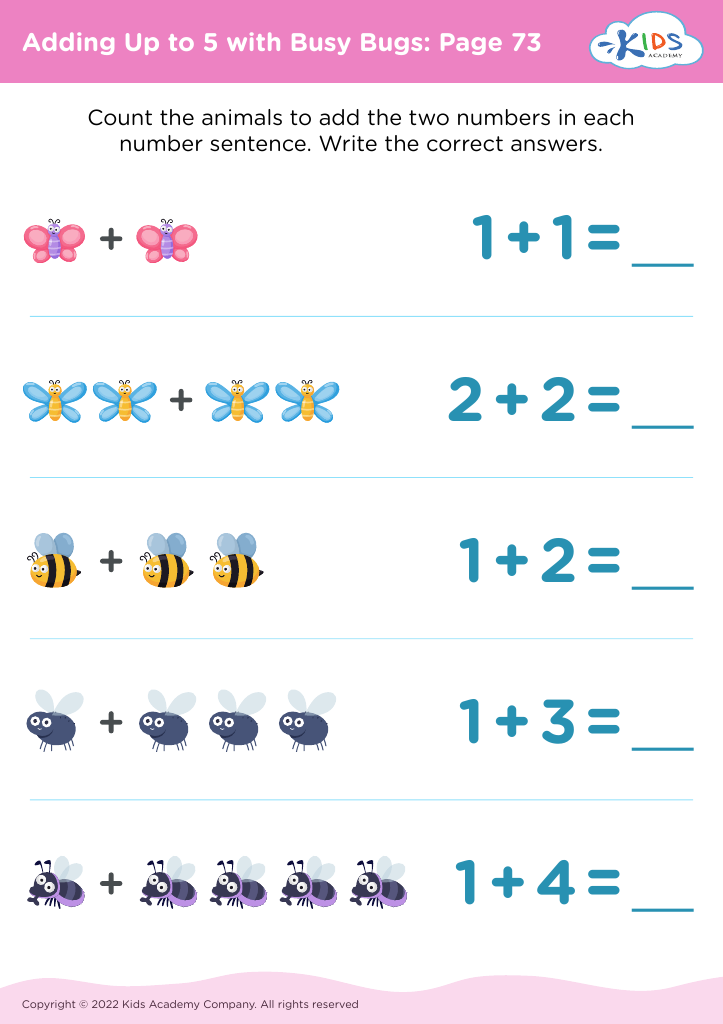
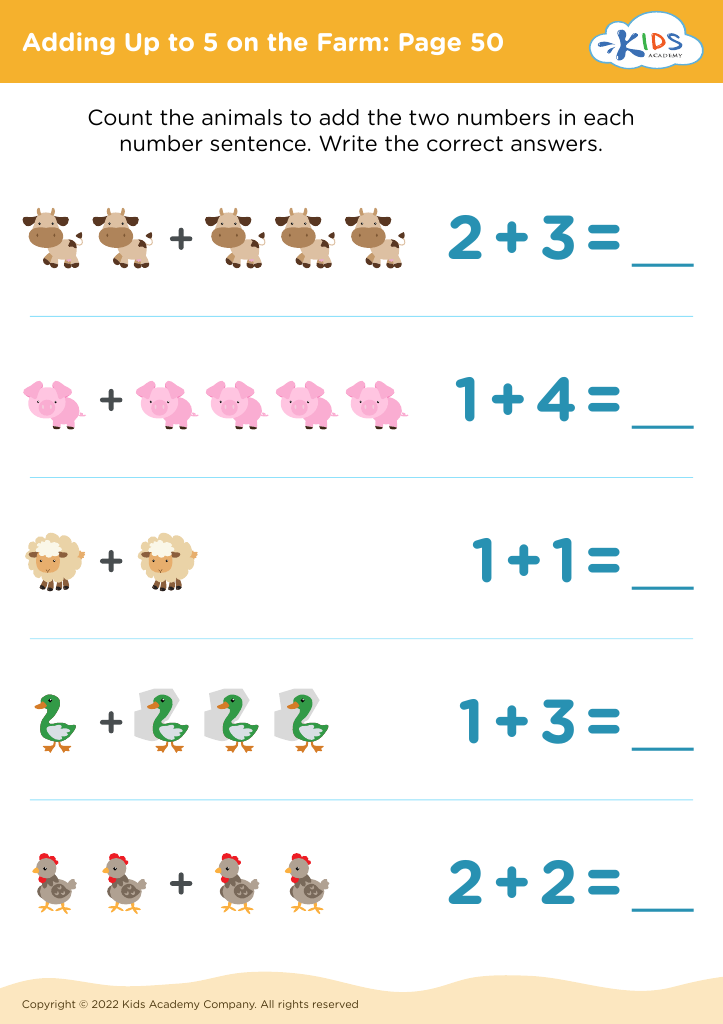
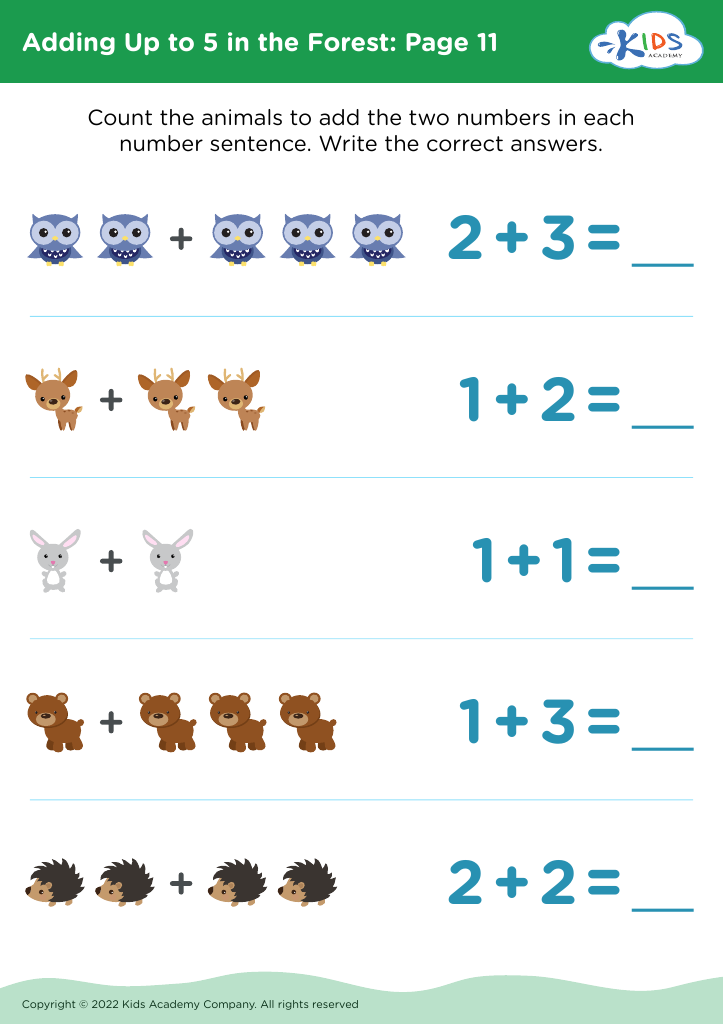
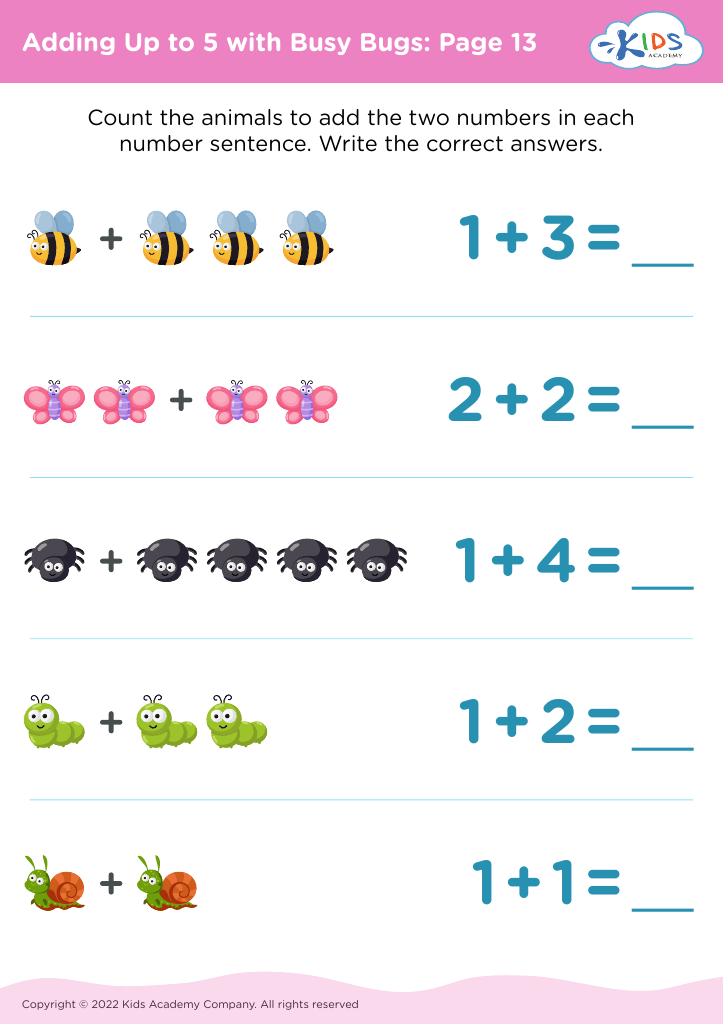





%20(1).jpg)


Visual perception skills are crucial for children aged 3-6 as they form the foundation for early learning and developmental growth. Understanding and manipulating quantities up to 5 involve not only numerical comprehension but also the ability to visually discern patterns, shapes, and relationships, which are components of visual perception. As young children explore numbers and basic arithmetic, strong visual perception skills help them recognize and differentiate between quantities, enabling them to effectively count, add, and subtract.
Parents and teachers should prioritize the enhancement of these skills, as they directly influence academic readiness and confidence in math. Early mastery of visual perception aids in later cognitive development, reducing frustration during math activities and fostering a love for learning. Engaging in activities that develop these skills—such as puzzles, counting games, or visual sorting activities—encourages not just mathematical thinking but also boosts fine motor skills and spatial reasoning.
Moreover, children's ability to visualize and manipulate numbers aids in understanding mathematical concepts, problem-solving, and critical thinking. Therefore, fostering visual perception skills in young learners is essential for cultivating a robust foundation for their lifelong learning journey, while also equipping them to succeed academically in the future.








