Understanding numbers Addition & Subtraction Worksheets for Ages 3-6
4 filtered results
-
From - To
Welcome to our "Understanding Numbers: Addition & Subtraction Worksheets" designed for ages 3-6! These engaging worksheets help young learners grasp fundamental math concepts through colorful activities and hands-on exercises. Children can practice counting, addition, and subtraction in a fun way, building essential skills while enhancing their confidence. Each worksheet is tailored to suit various learning styles, ensuring that every child can succeed. Ideal for home or classroom use, these resources offer a perfect blend of education and entertainment, making math enjoyable. Start your child’s journey into the world of numbers with our interactive worksheets today!
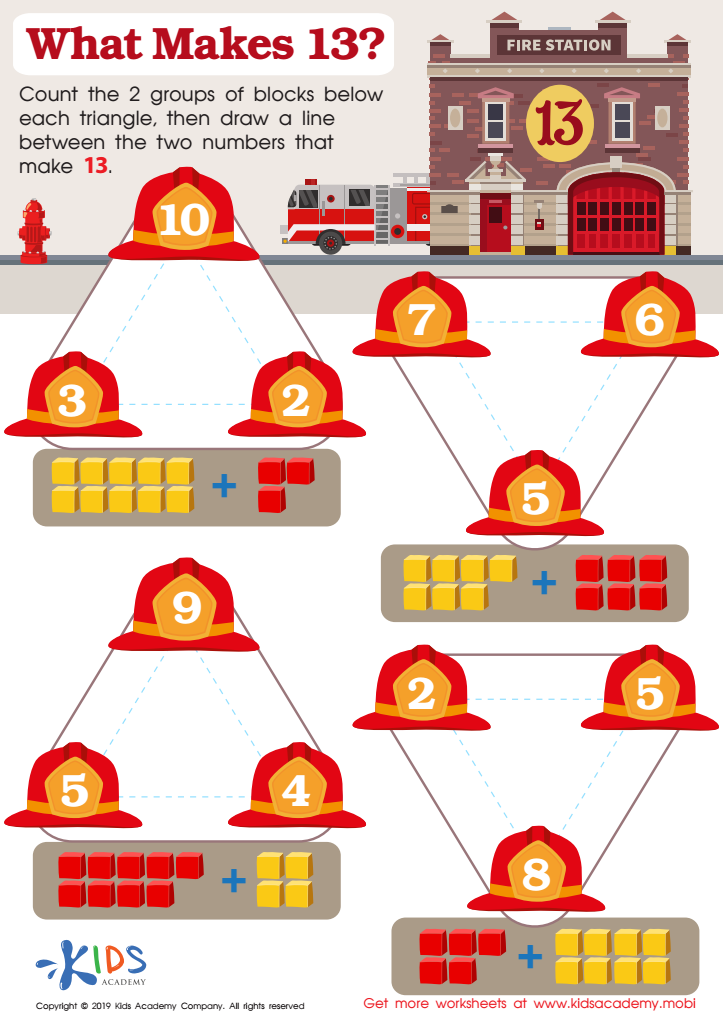
What Makes 13 Worksheet
 Assign to My Students








Understanding numbers, especially addition and subtraction, is crucial for children aged 3-6 as it lays the foundation for future mathematical learning. During these formative years, children develop basic numeracy skills that are essential for everyday problem-solving and critical thinking. When parents and teachers prioritize these skills, they empower young learners to understand concepts like quantity, pattern recognition, and number relationships.
Developing a strong grasp of addition and subtraction sets the stage for more complex mathematical concepts in later grades, helping prevent learning gaps. Engaging in activities that incorporate these skills enhances cognitive development, fine motor skills, and language enrichment. Moreover, mastering such fundamental operations boosts children's confidence in their abilities, fostering a positive relationship with mathematics.
Additionally, early exposure to math helps children see its relevance in lfe, enhancing their ability to navigate real-world situations, such as budgeting money or measuring ingredients. Parents and teachers play a vital role in creating a supportive environment where math learning is approached with fun, games, and practical applications. By fostering early mathematical understanding, we equip children with essential skills that will benefit them academically and socially throughout their lives.








