Basic Math Skills Addition Worksheets for Ages 3-6 - Page 2
28 filtered results
-
From - To
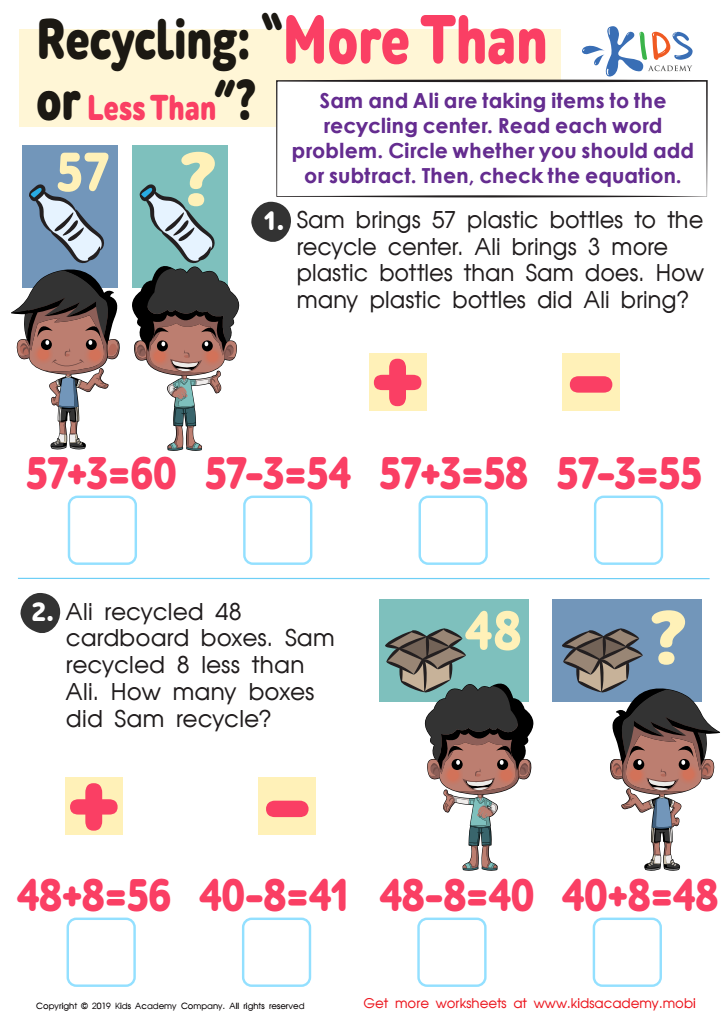
Recycling - More or Less Worksheet
 Assign to My Students







.jpg)
Basic math skills, particularly in addition, form the foundation for a child's future academic success and cognitive development. For children aged 3-6, these early numeracy skills enhance their problem-solving abilities and critical thinking. As they engage with addition, they gain an understanding of quantities, patterns, and relationships, which not only boosts their mathematical skills but also benefits other subjects, such as science and literacy.
Moreover, mastering basic addition provides children with confidence in their abilities and fosters a positive attitude toward learning. It prepares them for more complex mathematical concepts they will encounter in later grades. Engaging with addition also helps enhance fine motor skills and encourages social interaction when taught in groups or through play.
Additionally, developing math skills during these formative years is vital as it correlates with future academic achievement. Parents and teachers should encourage a playful and supportive environment where addition can be introduced through games, songs, and everyday activities. By nurturing these skills early on, adults can empower children to develop a lifelong love for learning and an appreciation for the world of mathematics.








