Fine Motor Skills (coloring) Addition Worksheets for Ages 3-6
3 filtered results
-
From - To
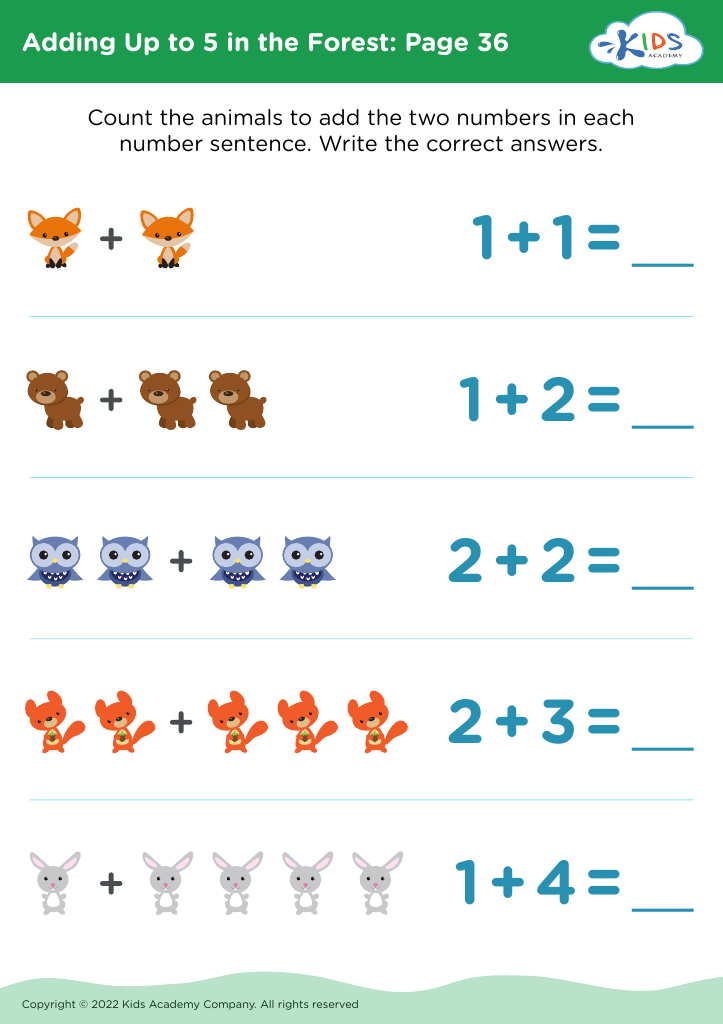
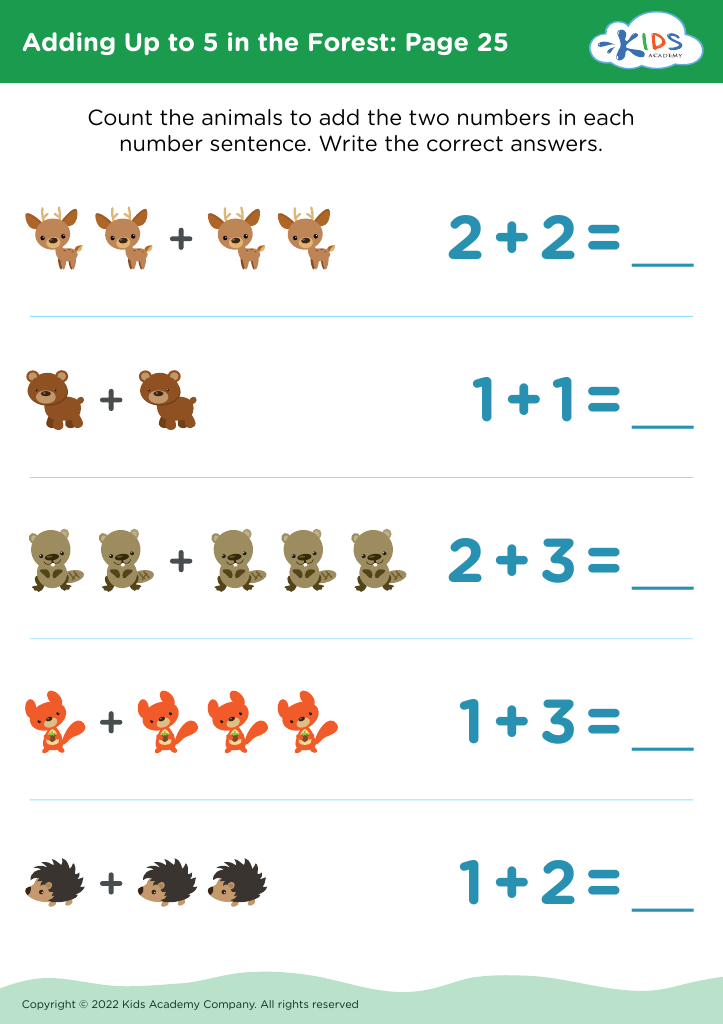
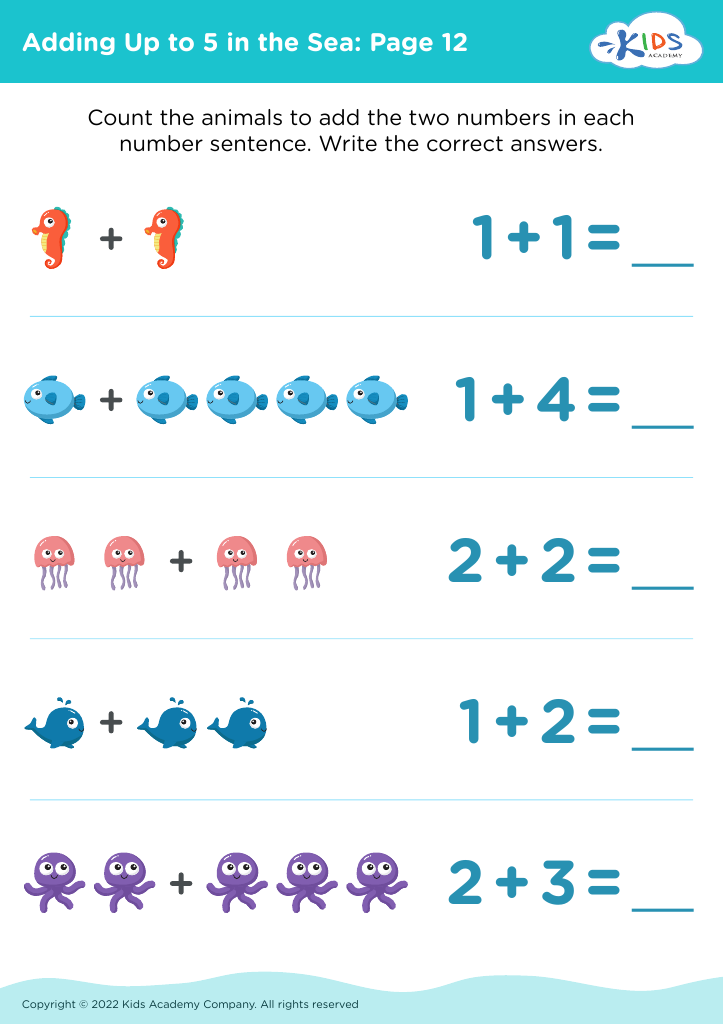
Unlock your child's potential with our "Fine Motor Skills (Coloring) Addition Worksheets" designed specifically for ages 3-6! These engaging worksheets combine the joy of coloring with early math skills, teaching children to understand addition while enhancing their fine motor development. As kids color delightful illustrations, they'll improve their hand-eye coordination and dexterity, essential for writing and everyday tasks. Each worksheet offers age-appropriate addition problems, making learning fun and interactive. Perfect for parents and educators, our resources support hands-on learning and foster creativity. Equip your child with foundational math skills and fine motor abilities while they explore the colorful world of numbers!








Fine motor skills, particularly skills developed through activities like coloring, are crucial for children aged 3-6. During these formative years, children are refining the small muscles in their hands and fingers, which are essential for numerous daily tasks. Engaging in coloring not only helps children grasp and maneuver writing tools but also enhances hand-eye coordination and dexterity.
Parents and teachers should care about fine motor skill development because these skills are foundational for later academic success. Strong fine motor skills enable children to handle writing instruments properly, which affects their ability to write legibly and express their thoughts clearly. Furthermore, engaging in creative activities like coloring fuels cognitive development by enhancing focus, allowing children to practice decision-making, and encouraging self-expression.
In addition to academic benefits, improving fine motor skills through coloring can be a positive outlet for emotions and a means to build self-esteem as children take pride in their creative work. Moreover, fostering an environment where children can practice these skills promotes independence and prepares them for everyday tasks, from buttoning clothes to using utensils. Therefore, prioritizing fine motor skill development is essential for holistic child growth during these critical early years.








