
Following instructions Addition Worksheets for Ages 3-6
5 filtered results
Difficulty Level
Grade
Age
-
From - To
Subject
Activity
Standards
Engage your little learners with our "Following Instructions Addition Worksheets for Ages 3-6." These worksheets are designed to build foundational math skills while promoting attentive listening and direction-following. Perfect for young kids, these activities use fun visuals, easy-to-understand instructions, and hands-on exercises to make learning addition enjoyable and effective. Ideal for home or classroom use, they help children develop crucial early learning skills and confidence in math through clear, step-by-step guidance. Enhance your child's educational journey with our expertly crafted, age-appropriate addition worksheets today!
Favorites
With answer key
Interactive
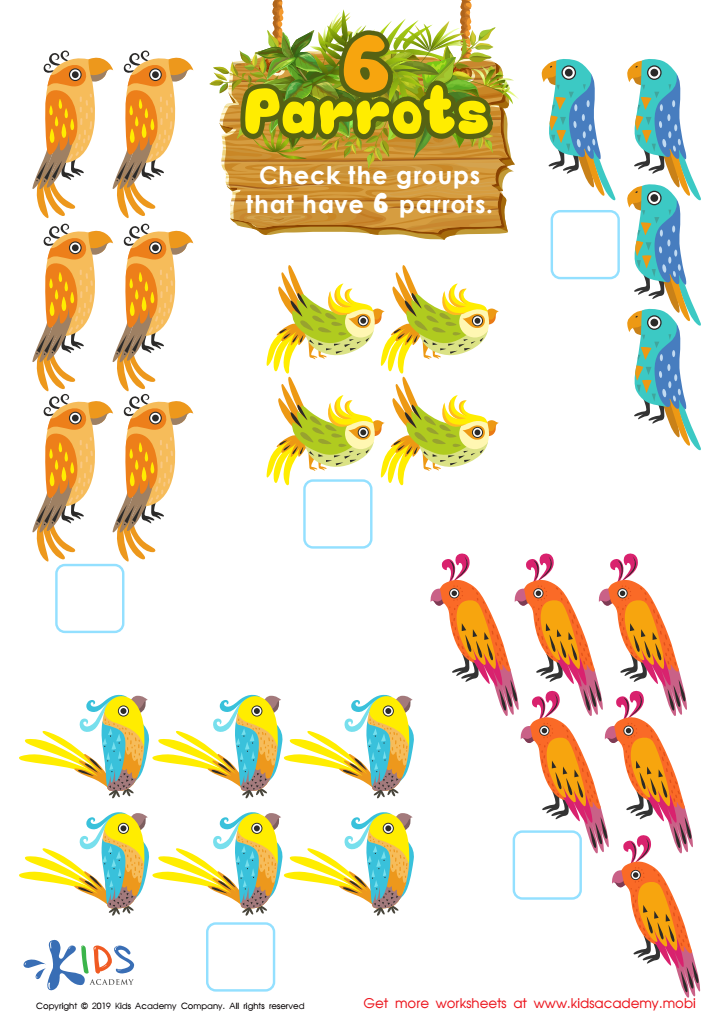
6 Parrots Worksheet
Love parrots? Here's a free worksheet to help your children practice counting to six with colorful parrot representations! Kids will adore counting the parrots and checking off groups of six - and it won't even feel like math! Just a fun way to make some new and exciting friends.
 Assign to My Students
6 Parrots Worksheet
Worksheet
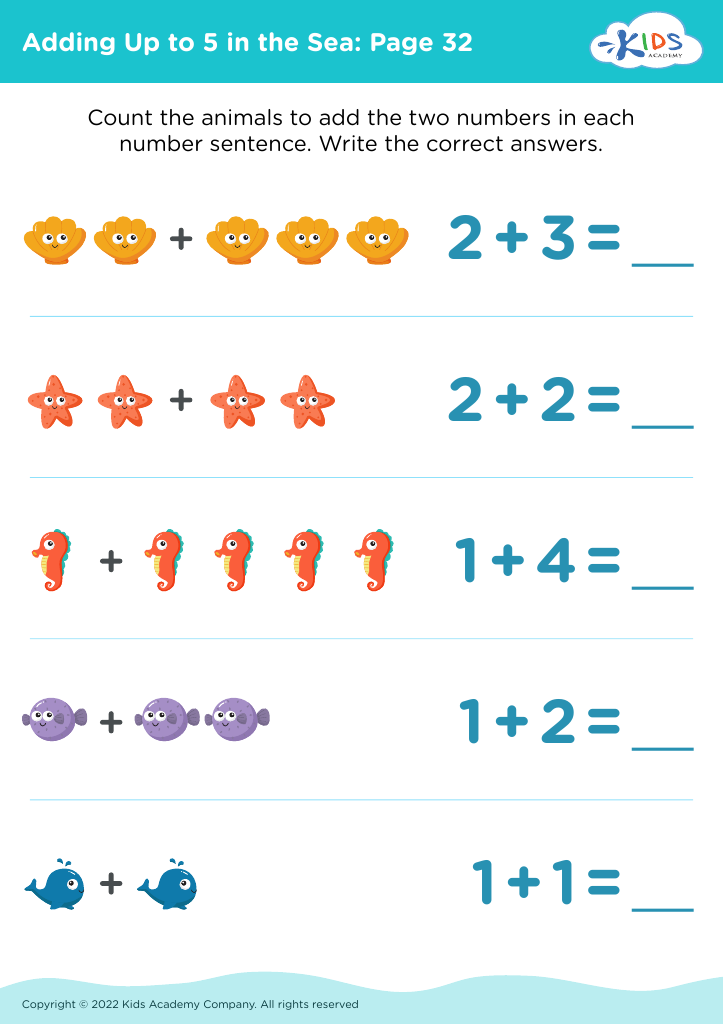
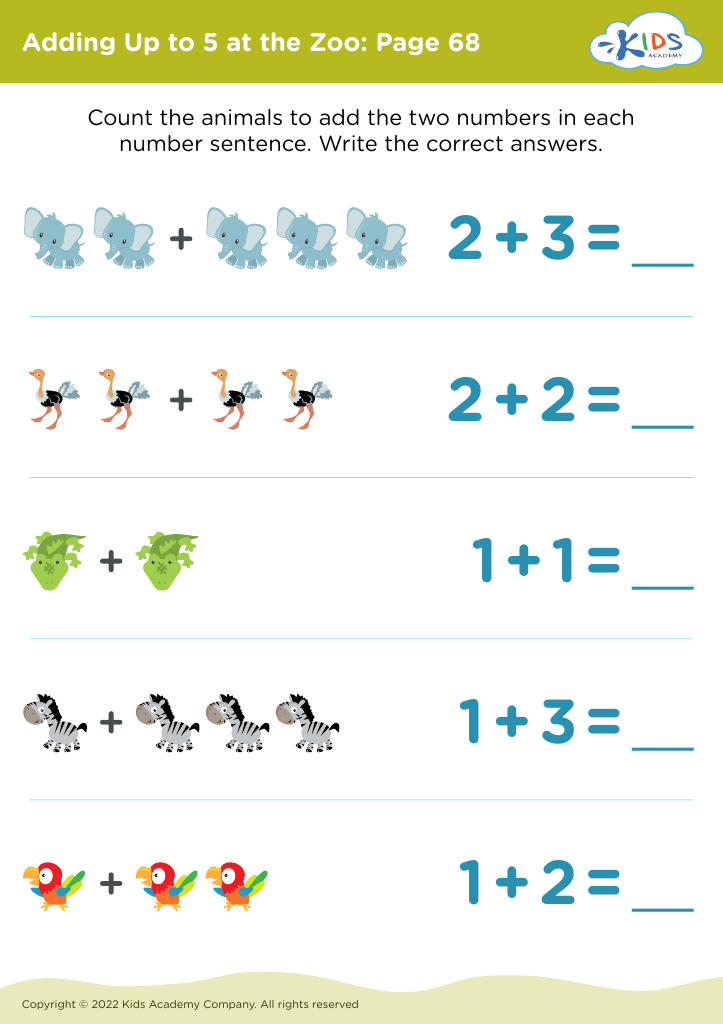
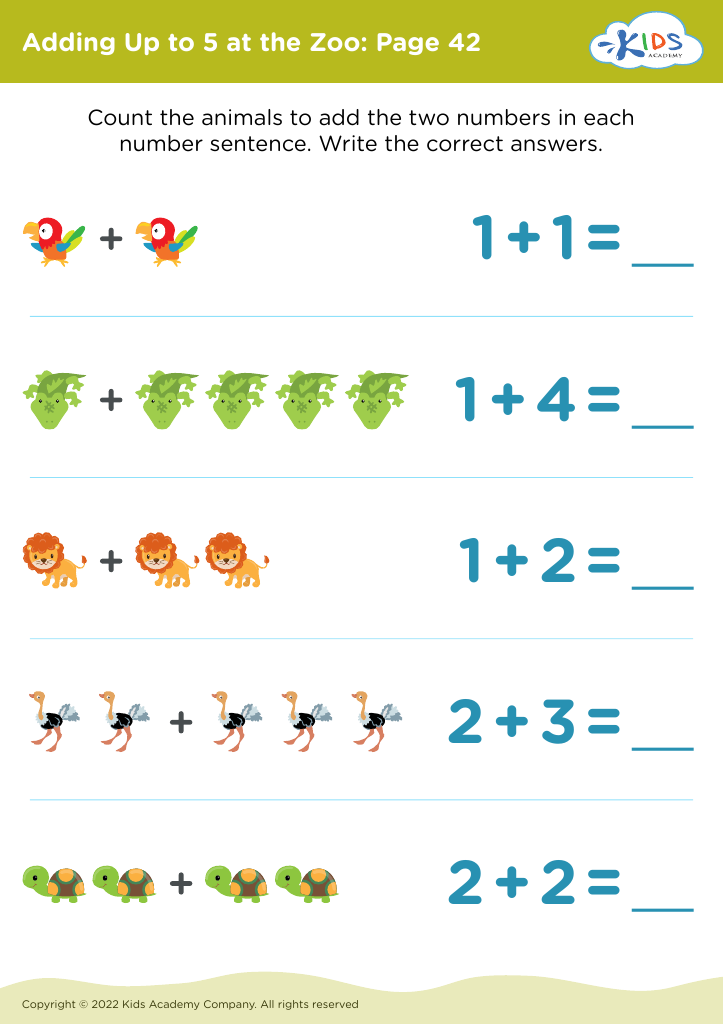
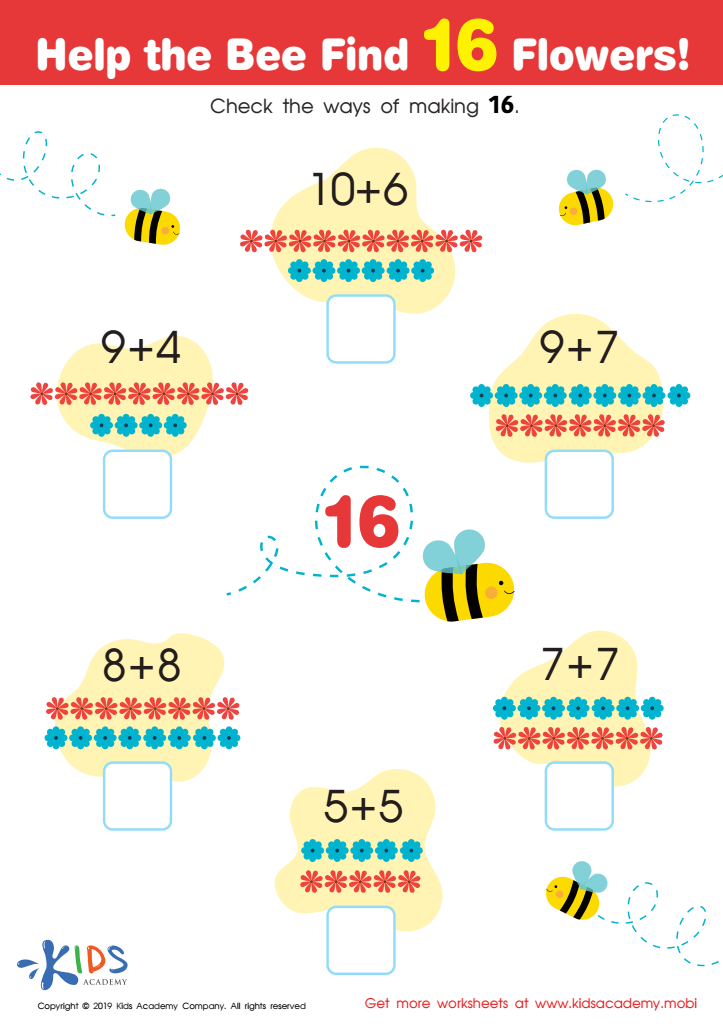
Help the Bee Find 16 Flowers Worksheet
Ask your students to count as high as they can. Show them that different numbers can equal the same figure with examples like 2+2=4 and 3+1=4. Ask for more examples, then help the bees find 16 flowers by checking the ways of making 16.
Help the Bee Find 16 Flowers Worksheet
Worksheet
Join Kids Academy for Free
Who is primarily going to use this learning content?







.jpg)
Parents and teachers play a crucial role in the early development of children, especially in imparting foundational skills like following instructions and basic addition for ages 3 to 6. These formative years are when children develop cognitive abilities, including memory, attention, and reasoning—all critical for later academic success. Teaching them to follow instructions enhances their listening skills, compliance, and understanding of sequential events, laying the groundwork for complex tasks in the future.
Additionally, basic addition fosters numerical literacy. At this age, children learn through play and tangible experiences. Introducing them to simple arithmetic concepts using everyday objects helps build their mathematical intuition. Understanding addition is more than just learning to count; it involves grasping the concept of sum and combining quantities which is fundamental for mastering higher-level math.
Moreover, integrating these skills into daily activities promotes a well-rounded development. It encourages children to approach tasks methodically, builds problem-solving abilities, and supports their logical thinking. Early successes in following instructions and grasping addition give children a sense of achievement and build confidence. In turn, this positive reinforcement and foundational skill set make them better prepared for the structured learning environments they'll encounter in school. Therefore, caring about these aspects significantly influences their long-term educational trajectory and personal growth.








