Nature appreciation Addition Worksheets for Ages 3-6
5 filtered results
-
From - To
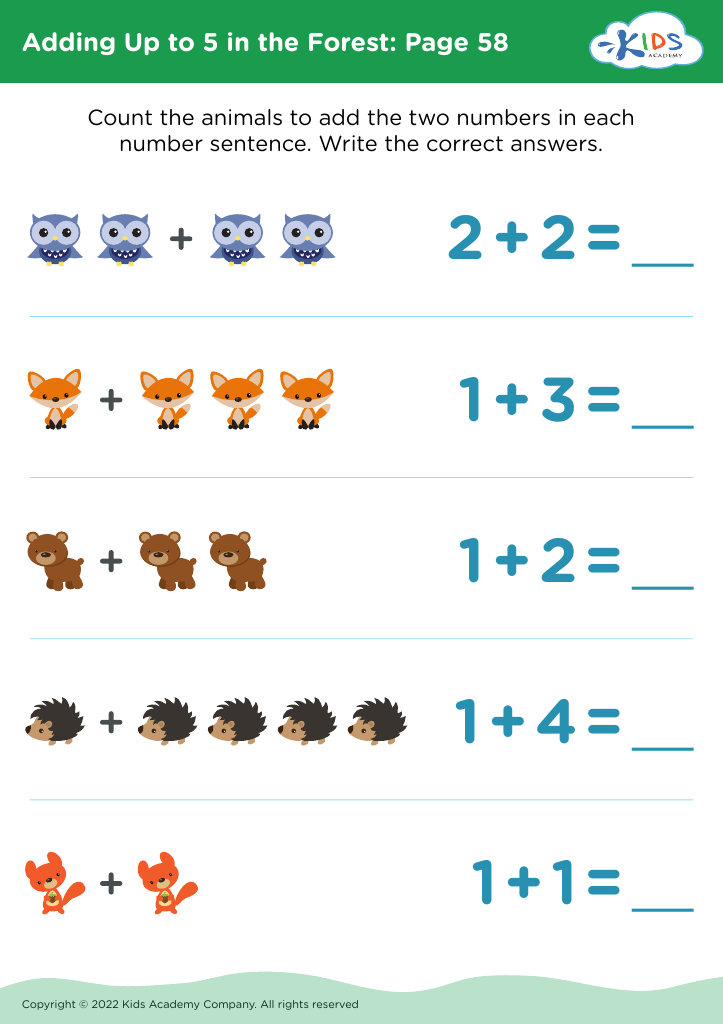
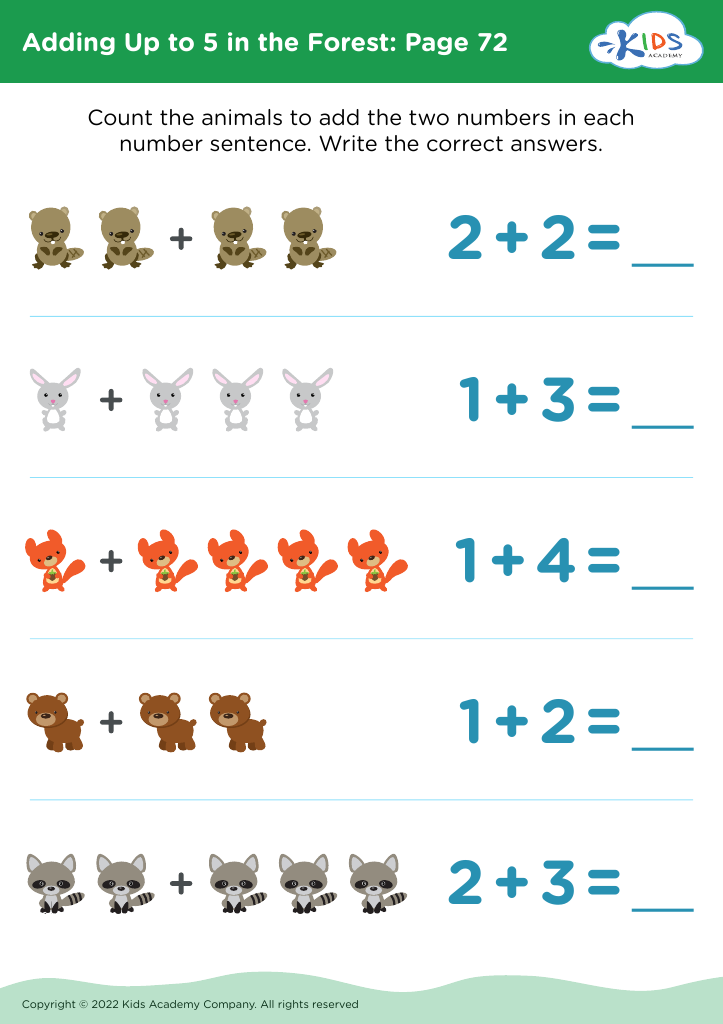
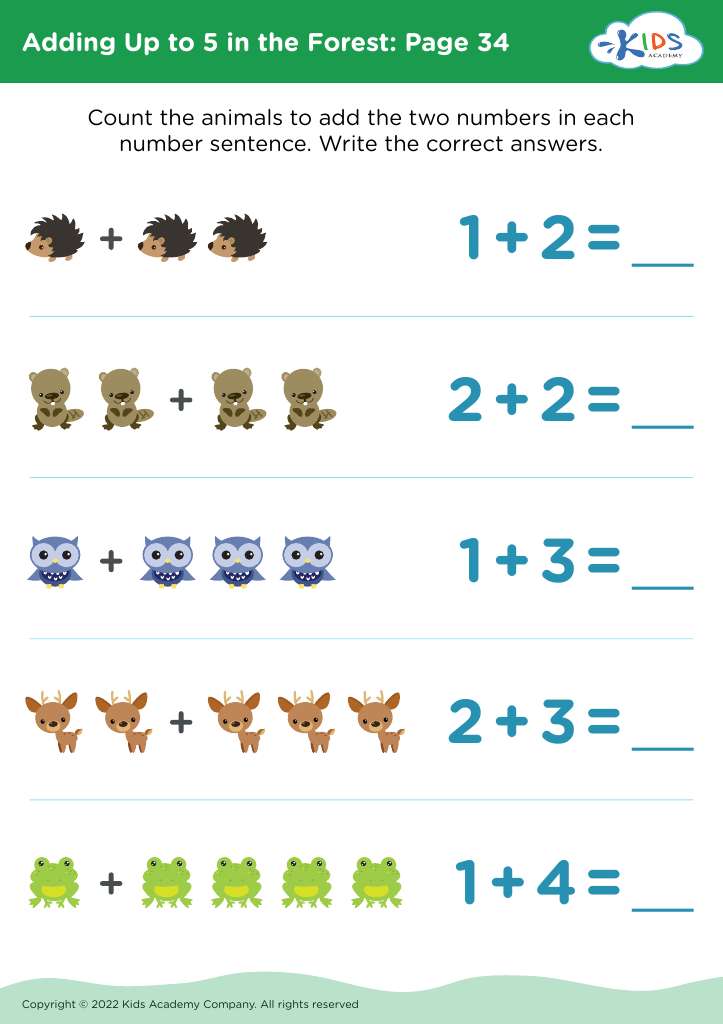
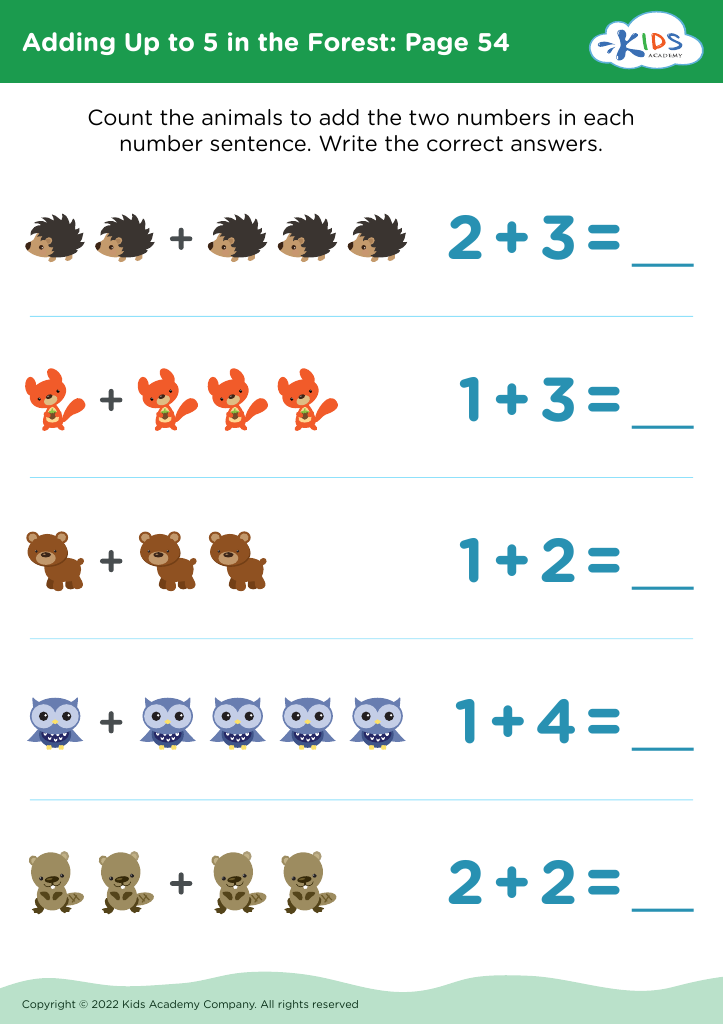
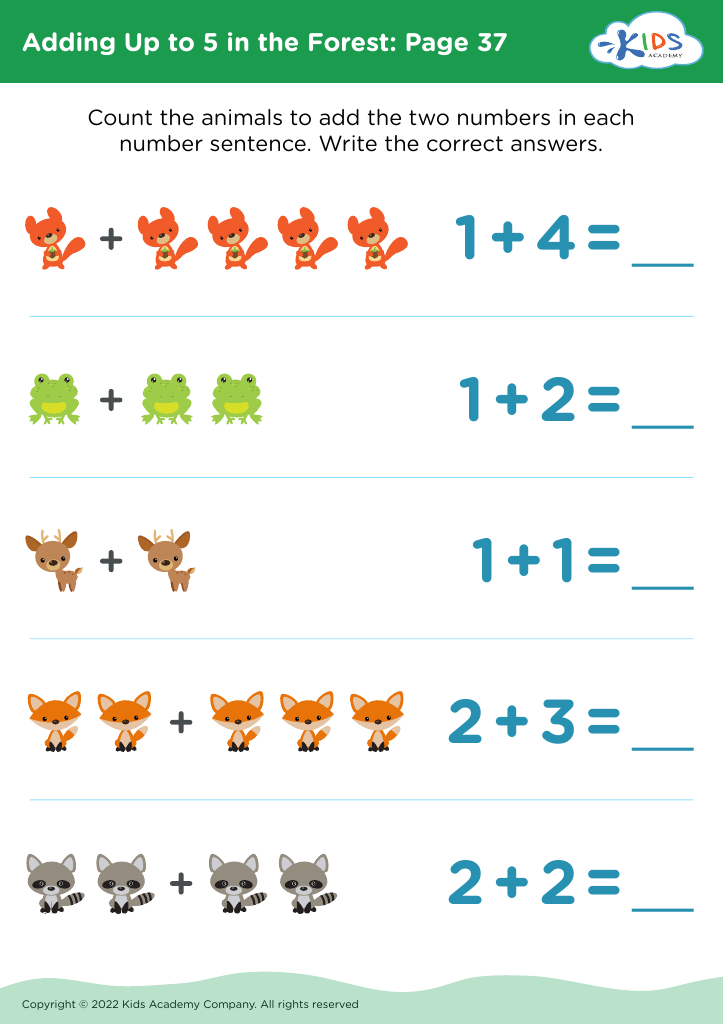
Enhance your child’s early math skills with our Nature Appreciation Addition Worksheets for ages 3-6. Designed to engage young learners, these fun and colorful worksheets combine educational content with the beauty of nature. Children will learn basic addition through delightful images of animals, plants, and outdoor scenes, making math relatable and enjoyable. Each worksheet encourages children to connect with the natural world while developing essential math skills. Perfect for parents and educators, our printable resources promote active learning, critical thinking, and a love for nature. Get your child started on their math journey today with these engaging and educational worksheets!








Nature appreciation is crucial for children aged 3-6 as it lays the foundation for lifelong environmental stewards and nurtures their overall development. Engaging with nature helps children form a deeper connection to the environment, fostering empathy and respect for living things. In these formative years, children are naturally curious, and exposure to nature through outdoor play and exploration nourishes that curiosity, enhancing cognitive skills like observation and critical thinking.
Additionally, experiencing nature supports emotional well-being. It encourages imaginative play, reduces stress, and promotes a sense of wonder, all of which contribute to healthy emotional development. Physical activities that occur outdoors improve motor skills and coordination, supporting physical health.
Moreover, nature appreciation aligns with early learning standards, enhancing important competencies such as social skills through collaborative play and communication. When parents and educators actively promote outdoor activities, they create opportunities for children to learn about ecosystems, biodiversity, and the importance of environmental conservation. These experiences not only enrich their educational journey but also influence positive attitudes toward nature as they grow.
Incorporating nature appreciation into daily activities helps cultivate responsible, compassionate, and inquisitive citizens ready to take on environmental challenges in the future.








