Understanding number value Addition Worksheets for Ages 3-6
3 filtered results
-
From - To
Unlock your child's mathematical potential with our "Understanding Number Value" Addition Worksheets, designed specifically for ages 3-6. These engaging worksheets help young learners grasp the concept of numbers and their values, laying a strong foundation for future math skills. Through colorful visuals and interactive exercises, children will explore simple addition problems, reinforcing their understanding of quantities. Our fun activities promote critical thinking and boost confidence as they practice adding and comparing numbers. Perfect for at-home or classroom use, these worksheets make learning math enjoyable! Start your child's journey towards numerical fluency today and watch them thrive in their mathematical endeavors.
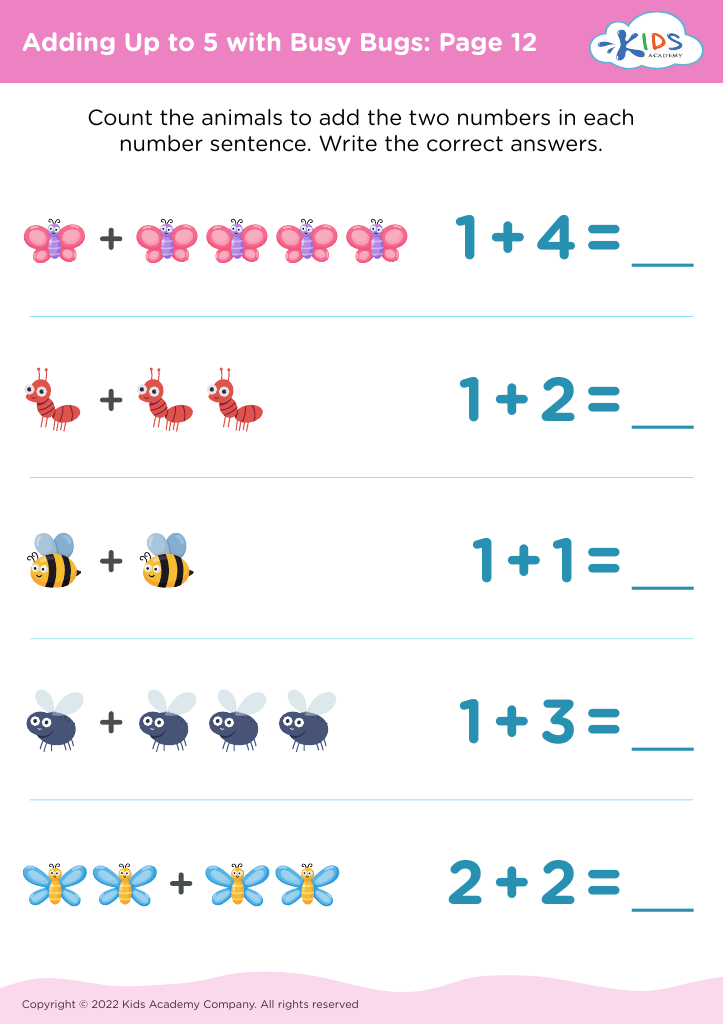
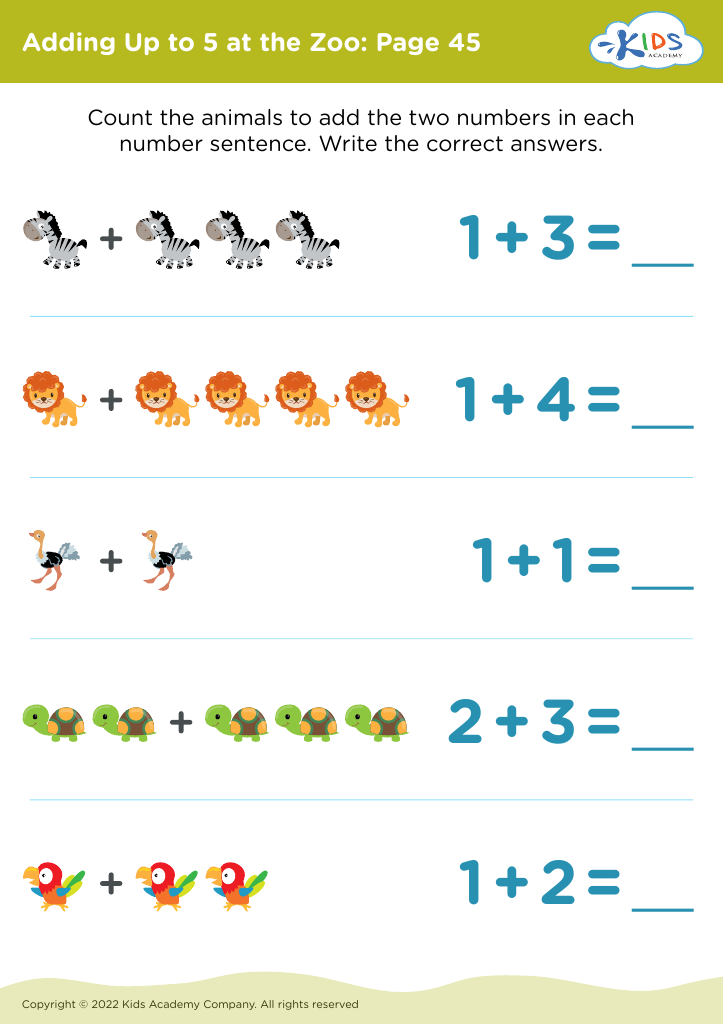
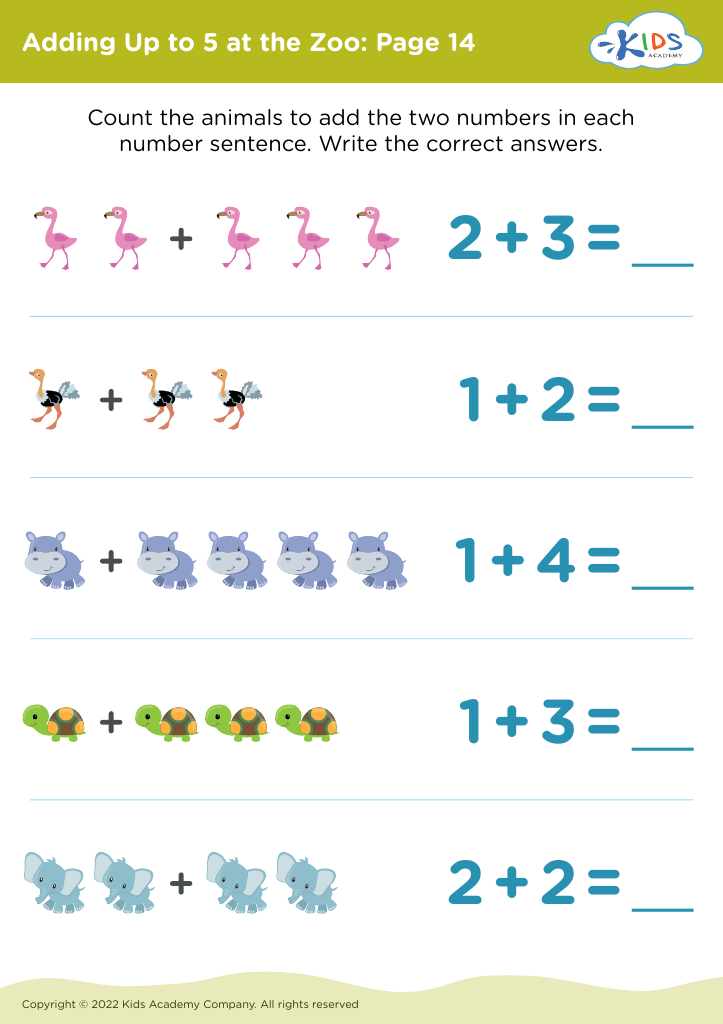








Understanding number value and basic addition is crucial for children aged 3-6 because it lays the foundation for their future math skills and cognitive development. At this early stage, children are naturally curious and eager to learn, making it the perfect time to introduce them to concepts of quantity and addition.
Learning number value helps children recognize the importance of numbers in everyday life, fostering their ability to compare, quantify, and organize information. Additionally, introducing addition in a fun, engaging way—through games, puzzles, and interactive activities—enhances their problem-solving skills and develops critical thinking.
This foundational knowledge not only boosts children's mathematical competence but also plays a role in their overall academic success. As they grasp basic addition, they gain confidence, which can encourage them to tackle more complex topics in later years.
Teachers and parents play a vital role in this process by providing opportunities for practice and exploration. By emphasizing understanding over rote memorization, we help children connect numbers to real-world contexts, making math relevant and enjoyable. Ultimately, investing time and effort in teaching number value and addition fosters a positive attitude towards learning and sets the stage for lifelong success in mathematics.








