Understanding numeracy Addition Worksheets for Ages 3-6
4 filtered results
-
From - To
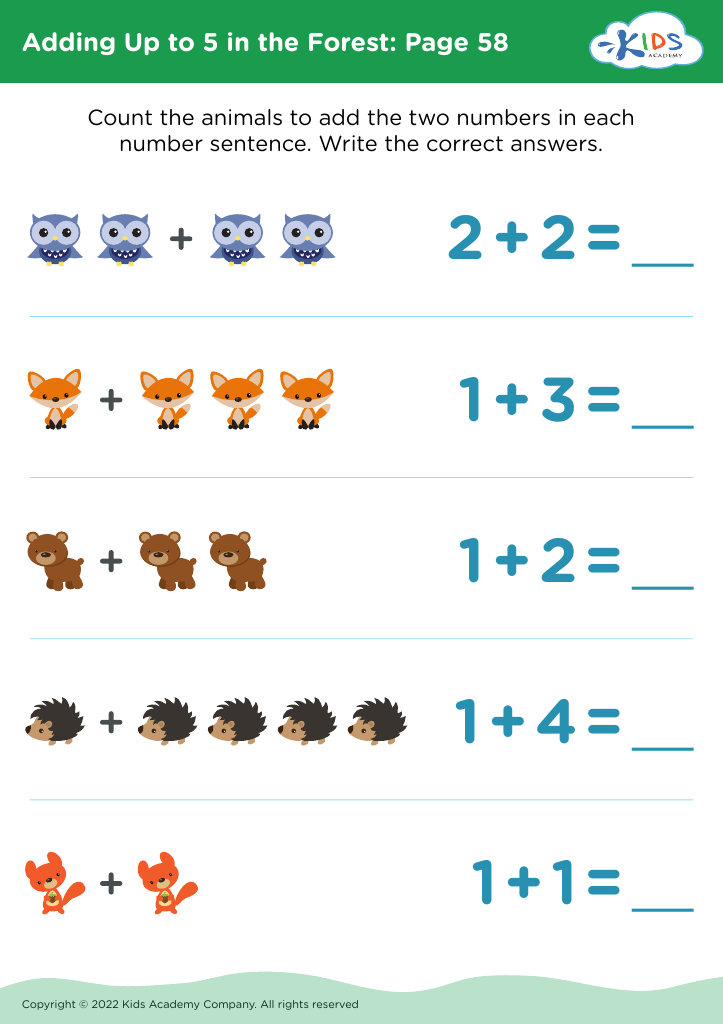
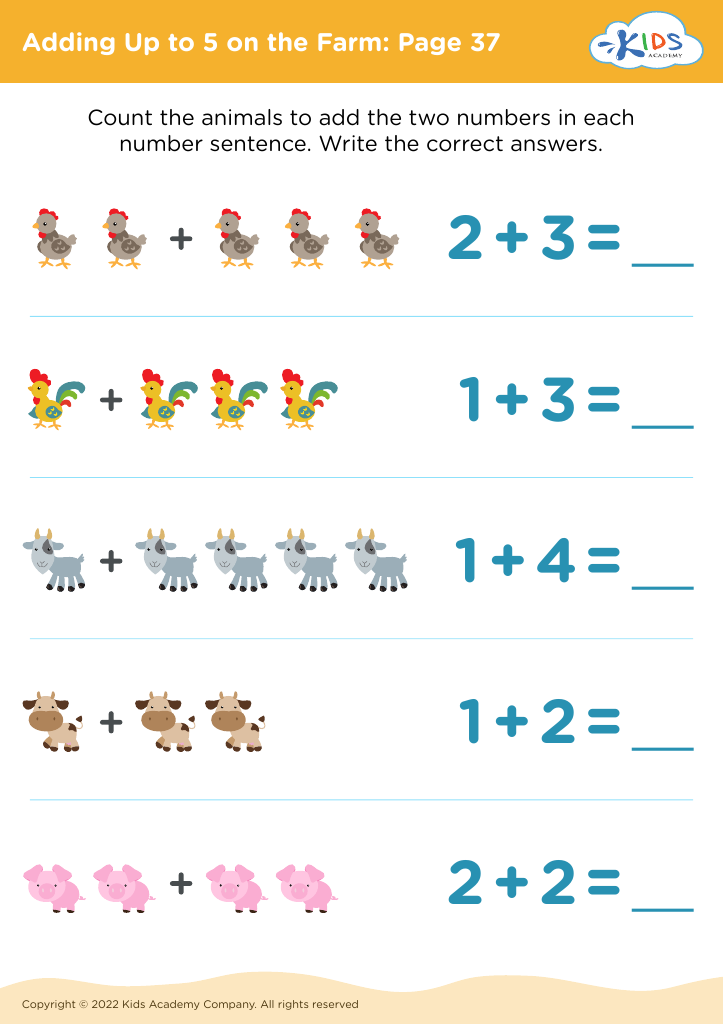
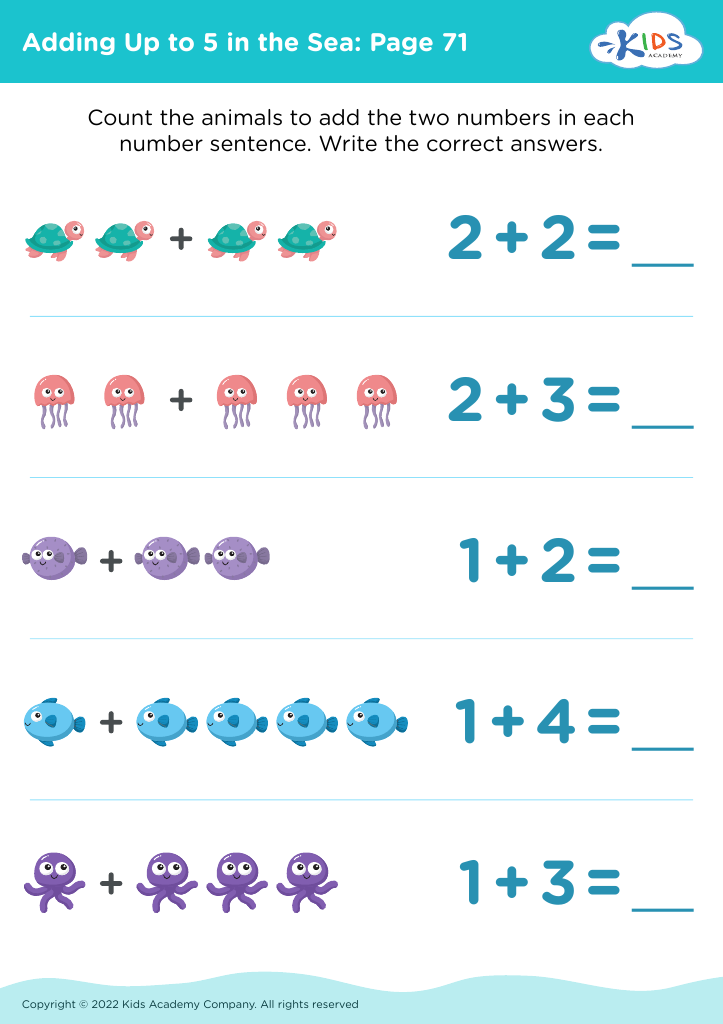
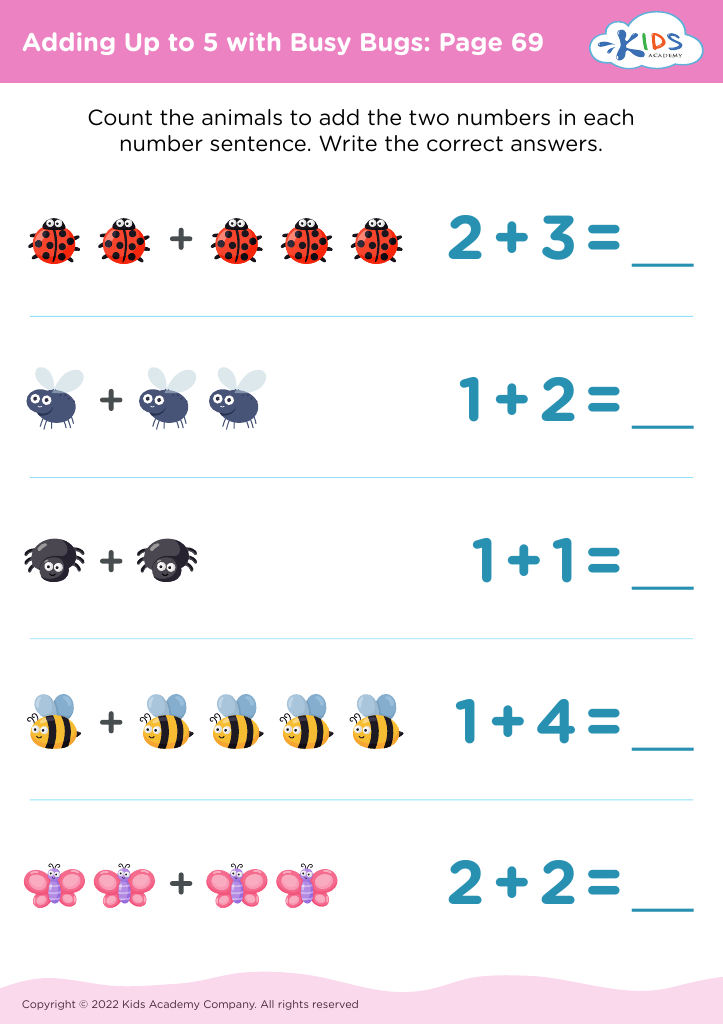
Discover our engaging "Understanding Numeracy Addition Worksheets for Ages 3-6," designed to build fundamental math skills in young learners. These worksheets from Kids Academy offer interactive and fun ways for children to grasp basic addition concepts. Through colorful and age-appropriate activities, kids practice counting, adding, and enhancing their problem-solving skills. Ideal for preschoolers and kindergarteners, these printables foster early numeracy and promote a lifelong love of math. Explore our collection to support your child's educational journey and ensure they develop a strong arithmetic foundation. Start your child on the path to numeracy success today!





.jpg)


Understanding addition is a foundational skill in numeracy, particularly crucial for children aged 3-6. This early grasp on addition prepares young minds for more complex mathematical concepts and problem-solving skills in the future. For parents and teachers, fostering a strong understanding of addition during early childhood is critical for several reasons.
Firstly, strong numeracy skills correlate with overall academic success. Children who grasp addition early tend to perform better in math and other subjects throughout their schooling. This is because addition is not merely about summing numbers; it lays the groundwork for understanding patterns, making estimations, and developing logical thinking.
Secondly, understanding addition boosts children's confidence and reduces math anxiety from an early age. When children feel competent with basic operations like addition, they are more likely to tackle new challenges with a positive attitude, leading to a more enjoyable and enriching learning experience.
Lastly, early numeracy skills, including addition, are important in everyday life. They help children in making sense of their world by, for example, counting objects, sharing toys equally, or understanding simple transactions. This practical knowledge empowers them and nurtures independence.
Parents and teachers play a crucial role in introducing and nurturing these skills through engaging, playful, and practical activities, setting strong foundations for lifelong learning and problem-solving abilities.








