Money recognition Money Worksheets for Ages 3-6
5 filtered results
-
From - To
Introduce your little ones to the exciting world of money recognition with our specially designed Money Worksheets for Ages 3-6! Perfect for early learners, these engaging worksheets help children identify and understand different coins and bills. Our resources foster essential counting skills and promote financial literacy through fun activities. Each worksheet combines visuals and interactive elements to keep young minds engaged while learning. Whether at home or in the classroom, these worksheets provide a solid foundation in money recognition, helping kids build confidence in their math skills. Explore the joy of learning about money with Kids Academy today!
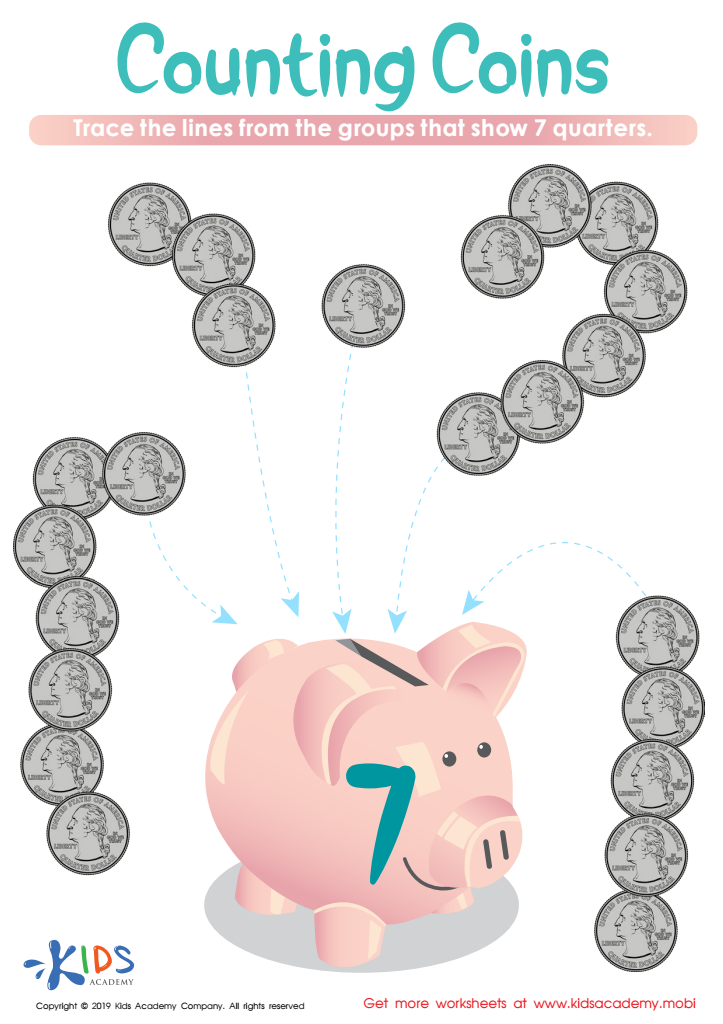
Counting Coins Worksheet
 Assign to My Students
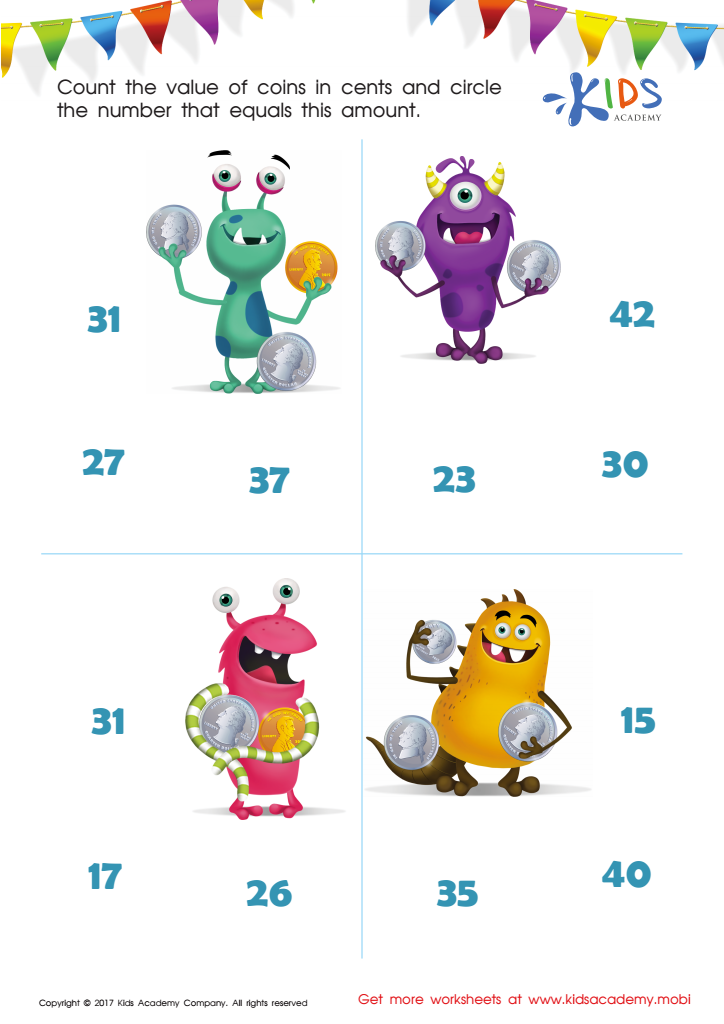
How Many Coins Money Worksheet
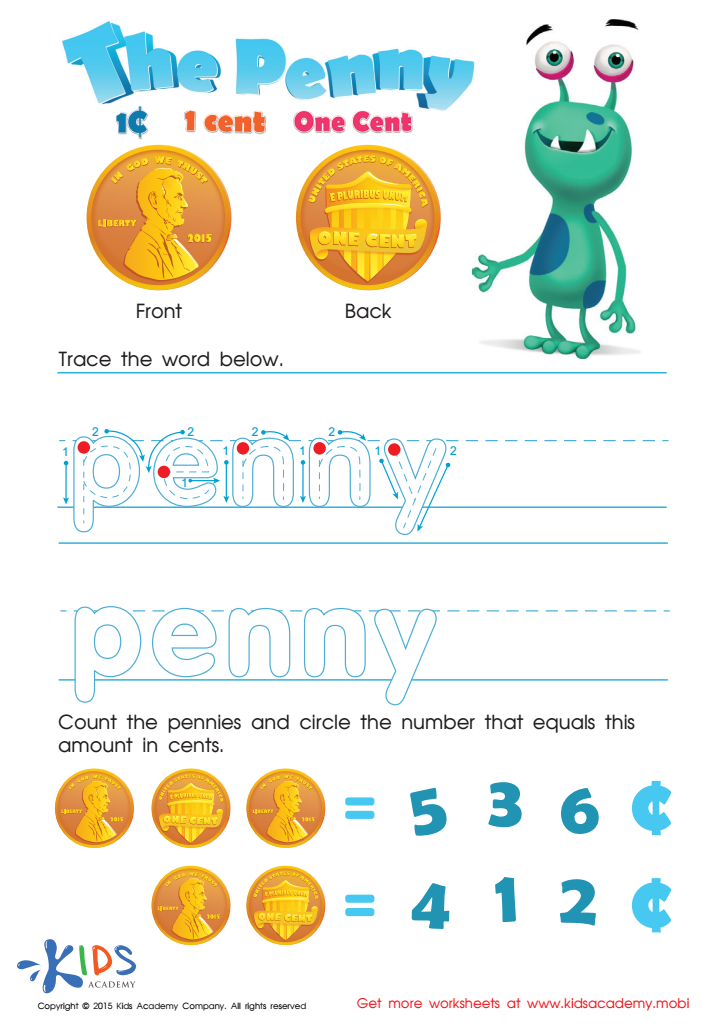
One Cent or the Penny Money Worksheet
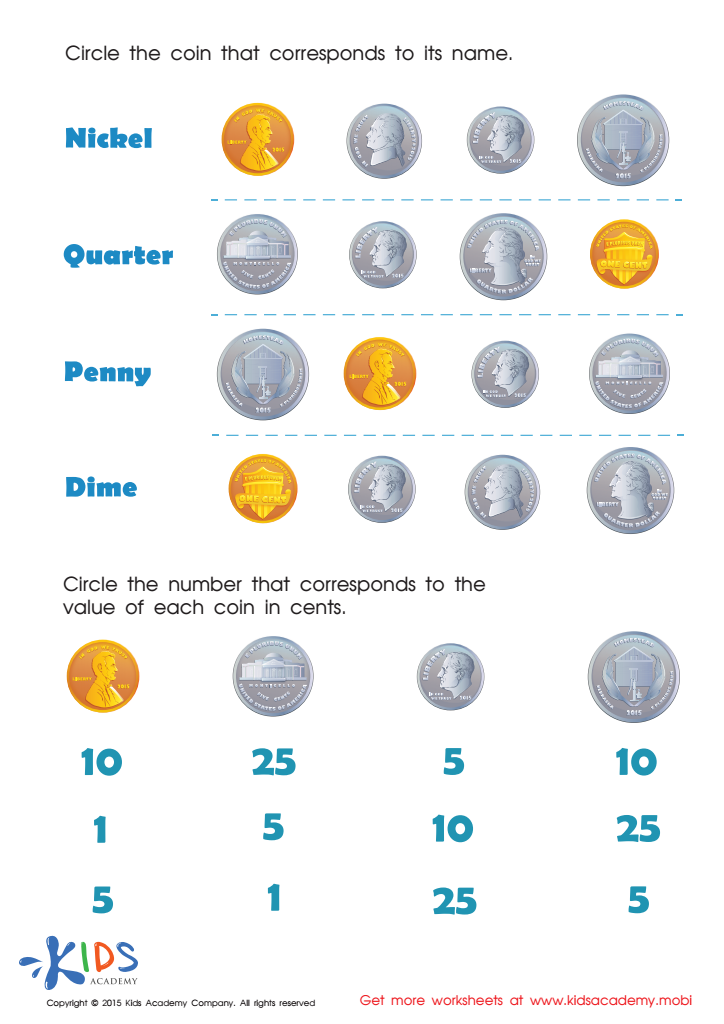
Coin Names and Values Money Worksheet
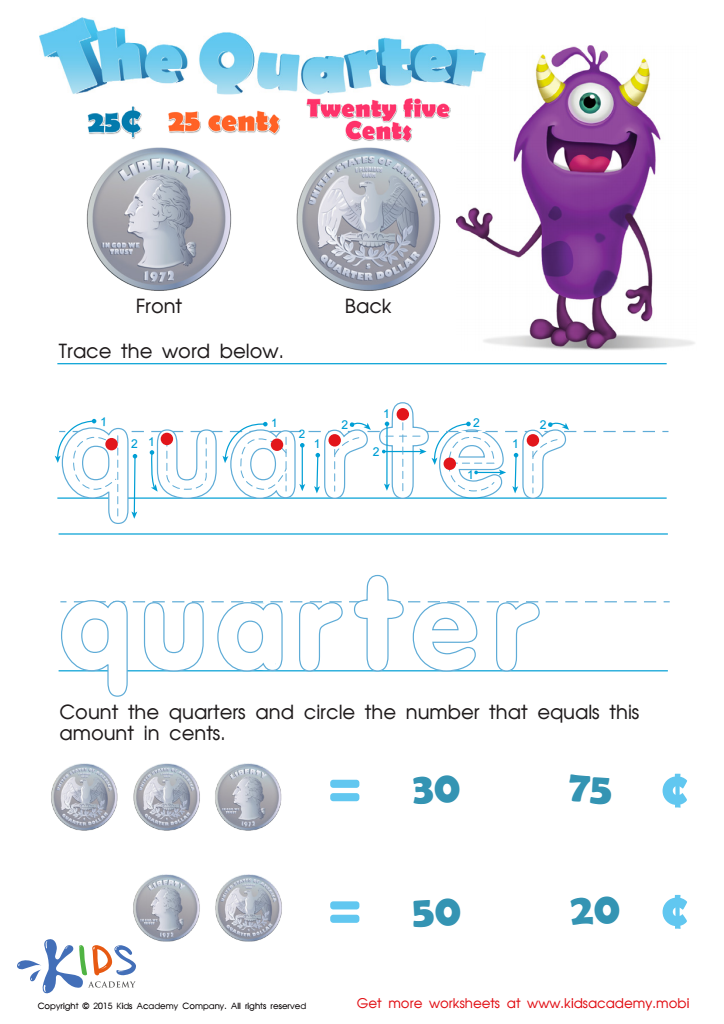
Twenty Five Cents or the Quarter Money Worksheet








Money recognition is a crucial skill for children ages 3-6, and parents and teachers should prioritize it for several reasons. At this age, children are naturally curious and eager to learn about the world around them. Introducing money helps lay the foundation for their understanding of value, exchange, and the economic system.
Firstly, recognizing different denominations of money enhances cognitive development. It encourages kids to categorize, compare, and understand mathematical concepts such as addition and subtraction. For instance, learning to identify coins aids in developing early counting skills, which are vital for later math proficiency.
Moreover, money recognition fosters financial literacy, equipping children with the knowledge they need to navigate financial decisions as they grow older. Children learn about saving, spending, and the concept of earning through chores or allowance, instilling positive financial habits early on.
Socially, money serves as an opportunity for interaction. Whether playing store or engaging in discussions about purchases, it promotes communication skills and gives children practical experiences in community transactions.
By prioritizing money recognition, parents and teachers are preparing children not only for future financial responsibility but also for problem-solving and critical thinking skills essential throughout life.








