
Classification skills Math Worksheets for Ages 3-6
3 filtered results
Difficulty Level
Grade
Age
-
From - To
Subject
Activity
Standards
Discover engaging Classification Skills Math Worksheets designed for children ages 3-6! These interactive worksheets help young learners develop essential sorting and categorization skills, fostering early math concepts through fun, hands-on activities. With colorful visuals and age-appropriate challenges, children will learn to identify similarities and differences, classify objects, and understand grouping principles. Our educational resources support various learning styles, making it easy for parents and educators to enhance children's cognitive abilities. Perfect for home or classroom use, these printable worksheets encourage playful learning, helping preschool and kindergarten students build a strong foundation in math while having fun. Start their mathematical journey today!
Favorites
With answer key
Interactive
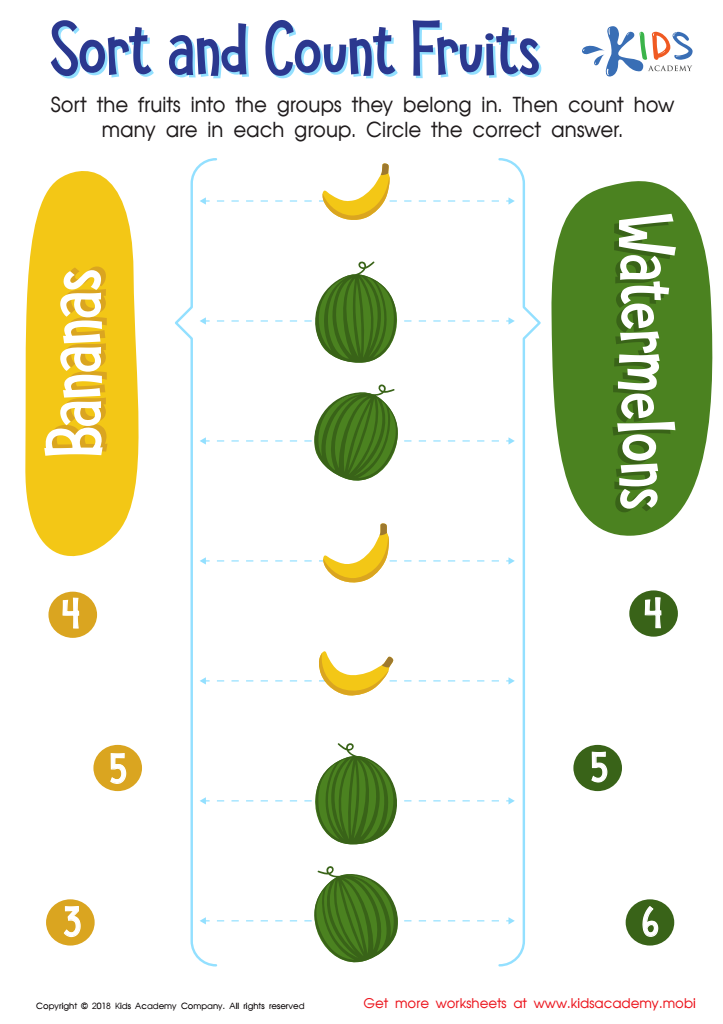
Sort and Count Fruits Worksheet
Allow your children to hone their critical thinking and number reasoning skills with this free worksheet. They'll sort, count, and trace fruits while learning basic number sense. A fun, delicious learning experience with familiar pictures they'll love.
 Assign to My Students
Sort and Count Fruits Worksheet
Worksheet
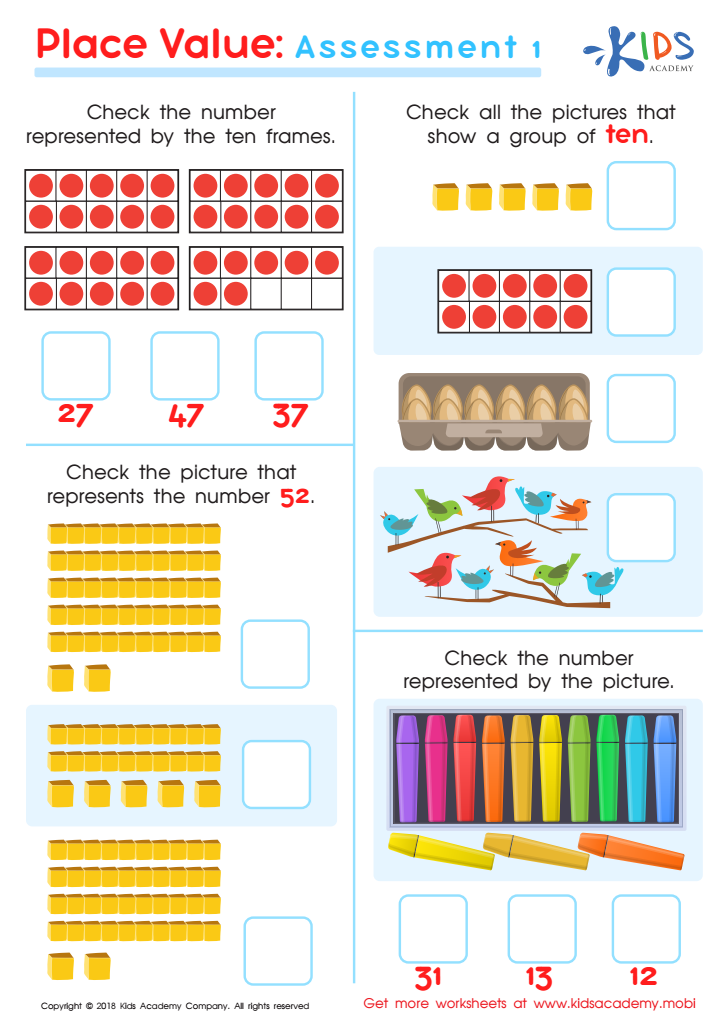
Place Value: Assessment 1 Worksheet
Assess your child's place value and number representation with this PDF worksheet. It lets them count and compare numbers and practice chiseling numbers into groups of ten. It's a great way to identify any concepts that need to be reinforced.
Place Value: Assessment 1 Worksheet
Worksheet
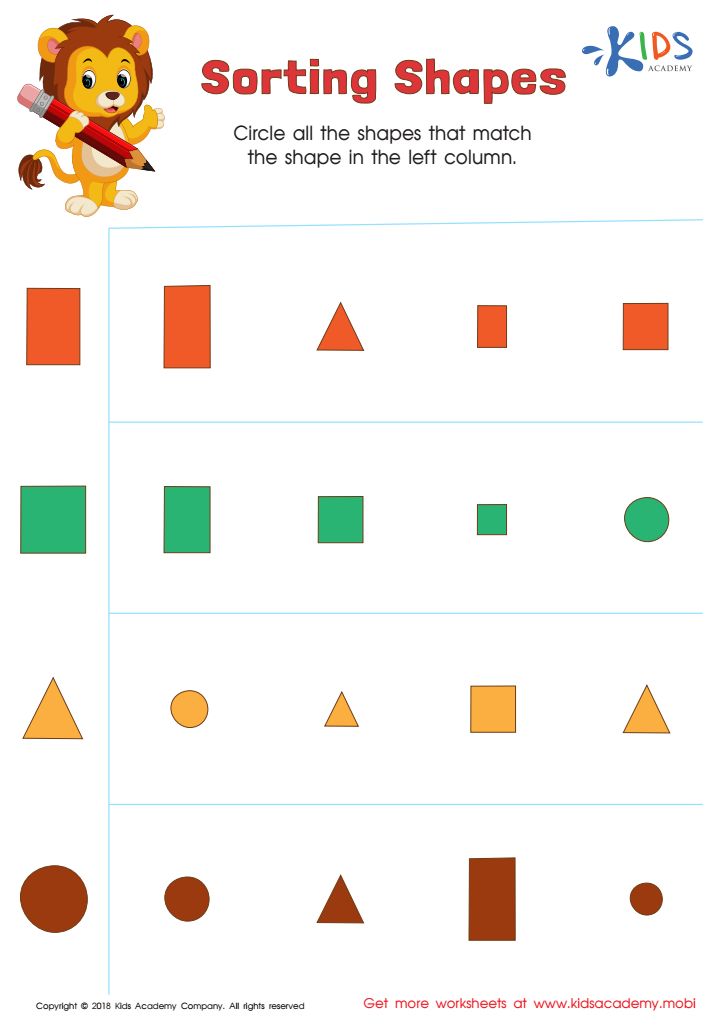
Sorting Shapes - Part 2 Worksheet
Tired of dull worksheets? Look no further than Kids Academy's colorful shape-sorting worksheet! It's perfect for challenging your toddler's problem-solving skills. Print the free PDF page and let your child practice the basics of geometry. Have them work down the left column, circling the shapes on the right that match. It's a great way to form a strong foundation in early learning.
Sorting Shapes - Part 2 Worksheet
Worksheet
Join Kids Academy for Free
Who is primarily going to use this learning content?





.jpg)


Classification skills are foundational in early childhood education, specifically in mathematics for children aged 3-6. These skills involve sorting and categorizing objects based on similarities and differences, which enhance critical cognitive and cognitive processing abilities. Parents and teachers should care deeply about fostering these skills because they lay the groundwork for more complex mathematical concepts later on, such as addition, subtraction, and logical reasoning.
When children engage in classification activities, they learn to recognize patterns, make comparisons, and develop problem-solving abilities. These skills are vital not only in math but also in daily life, as they promote organization, planning, and the ability to articulate thoughts clearly. For instance, organizing toys or sorting snacks helps children understand quantity, size, and characteristics, which motivates them to explore further mathematical ideas.
Additionally, classification supports language development. Children are encouraged to use descriptive language and expand their vocabulary as they explain their sorting choices. Building classification skills early enhances academic readiness and instills a love for learning. By investing time in activities that promote these skills, parents and teachers can cultivate well-rounded, capable learners prepared for future educational challenges.








