Developing observational skills Math Worksheets for Ages 3-6
3 filtered results
-
From - To
Enhance your child's learning experience with our "Developing Observational Skills Math Worksheets for Ages 3-6"! These thoughtfully crafted worksheets are designed to boost young learners' attention to detail and analytical thinking. Children will engage in fun activities that encourage them to observe, compare, and distinguish various mathematical concepts. Through activities like pattern recognition, shape identification, and number comparisons, little scholars will build a strong foundation for future math skills. Ideal for homeschool settings, preschool, or as supplementary resources, our worksheets make learning math enjoyable and interactive. Empower your child's educational journey while fostering essential observational skills today!
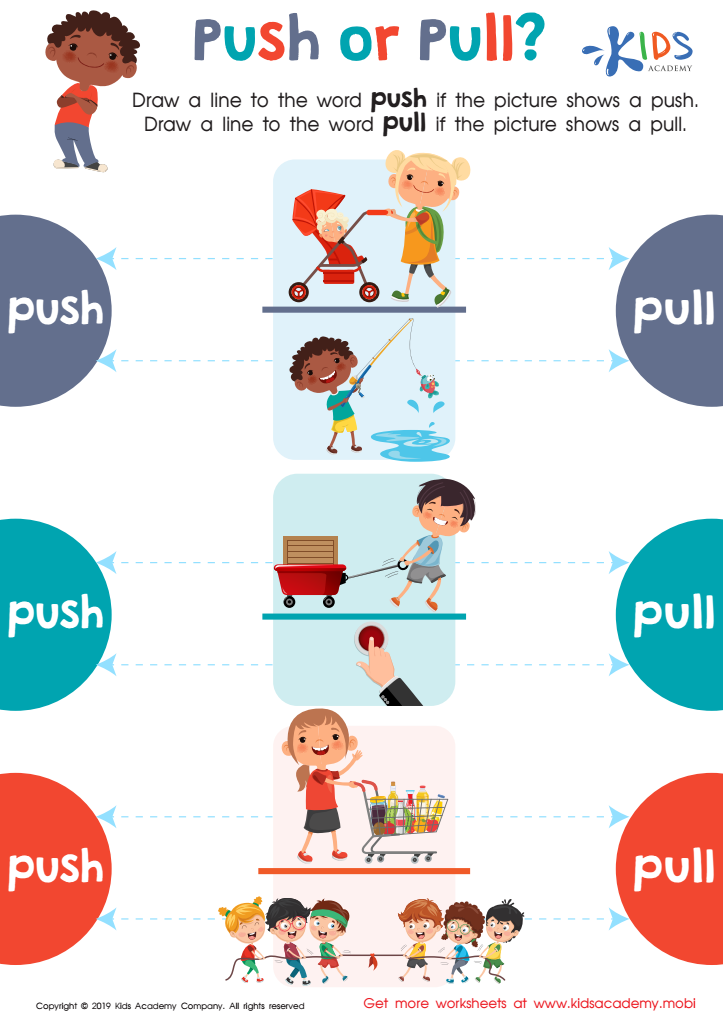
Push or Pull? Worksheet
 Assign to My Students
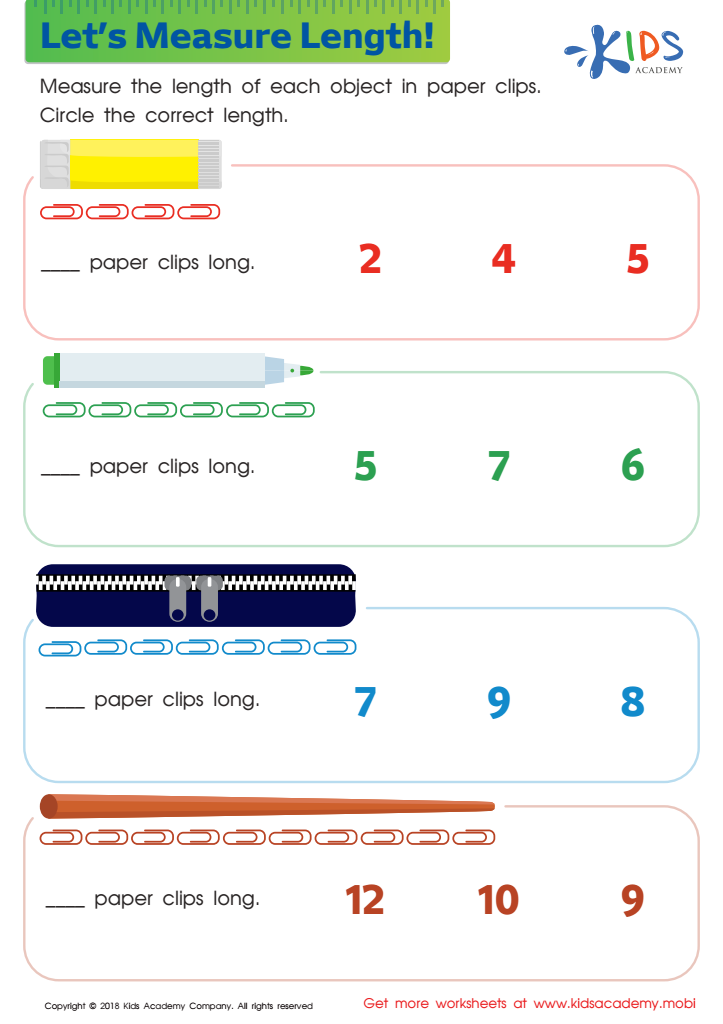
Lets Measure Length Worksheet
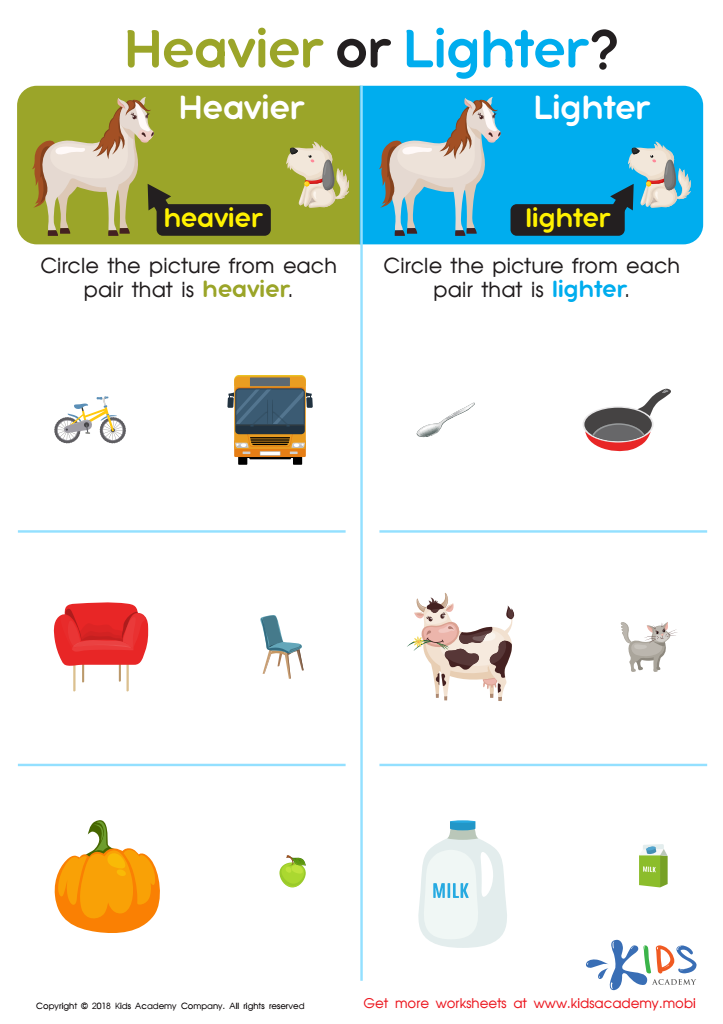
Heavier or Lighter? Worksheet







Developing observational skills in math for children aged 3-6 is crucial for their cognitive and social development. At this stage, children learn best through exploration and interaction with their environment. Observational skills empower them to recognize patterns, shapes, and quantities, forming the foundation for more complex mathematical concepts later on.
When parents and teachers cultivate these skills, they encourage critical thinking and problem-solving. By observing and discussing everyday mathematical experiences—like counting apples during snack time or identifying shapes in nature—children connect mathematical concepts with real-world scenarios, enhancing their understanding.
Additionally, strong observational skills can significantly boost a child's confidence. As they identify and manipulate objects, they develop not only their math skills but also their communication and social interaction. Sharing their findings with peers or adults fosters collaborative learning experiences.
Moreover, focused observational mathematics can help identify areas where a child might need additional support, allowing for early intervention in case of learning challenges. Ultimately, investing time in developing observational skills in math equips young learners with essential tools that will benefit them academically and socially throughout their lives. Therefore, it’s important for parents and teachers to prioritize this area of development in early childhood education.








