Counting skills Numbers 11–20 Worksheets for Ages 3-6
5 filtered results
Difficulty Level
Grade
Age
-
From - To
Subject
Activity
Standards
Introducing our "Counting Skills Numbers 11–20 Worksheets," specially designed for kids aged 3 to 6. These fun and educational printables help young learners build a strong foundation in counting and number recognition. Through engaging activities, such as counting objects, tracing numbers, and matching exercises, children will gain confidence in their math skills. Parents and teachers will appreciate the clear instructions and colorful designs that make learning enjoyable and effective. Perfect for preschool and kindergarten, these worksheets are an excellent tool to support early math education. Download now to enhance your child’s counting skills and make learning numbers 11–20 a joy!
Favorites
With answer key
Interactive
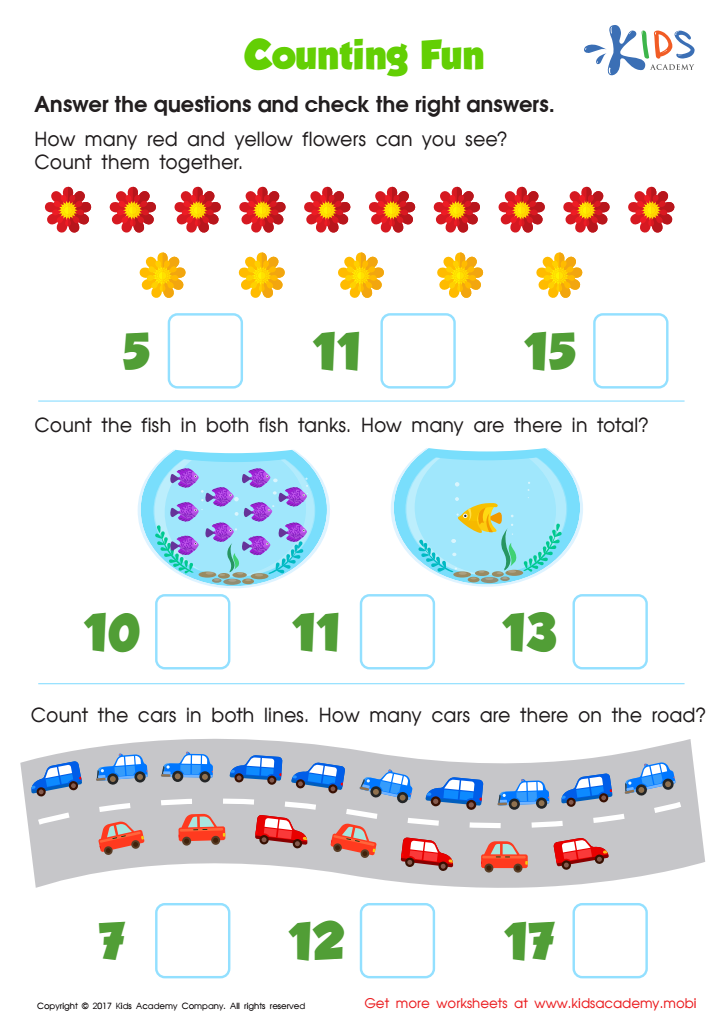
Counting Fun Worksheet
Math and fun can go hand-in-hand with this free PDF worksheet! Bright, colourful illustrations will activate your child's brain, as they count the red and yellow flowers. How many can you see? Count together and write down the total. Make learning and counting fun for your little ones!
 Assign to My Students
Counting Fun Worksheet
Worksheet
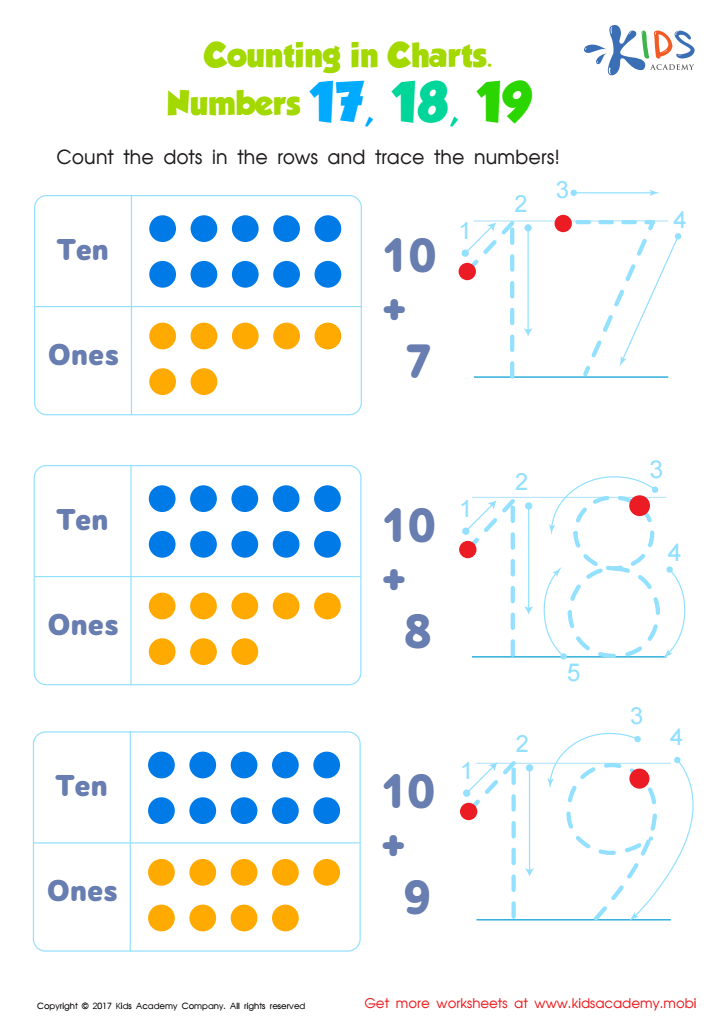
Kindergarten Number Tracing: Counting in Charts Worksheet
Little learners can find big numbers tricky! Help them practice counting and build early math skills, like place value and addition, with this kindergarten number tracing PDF worksheet. Count the dots to solve the problem and trace each answer!
Kindergarten Number Tracing: Counting in Charts Worksheet
Worksheet
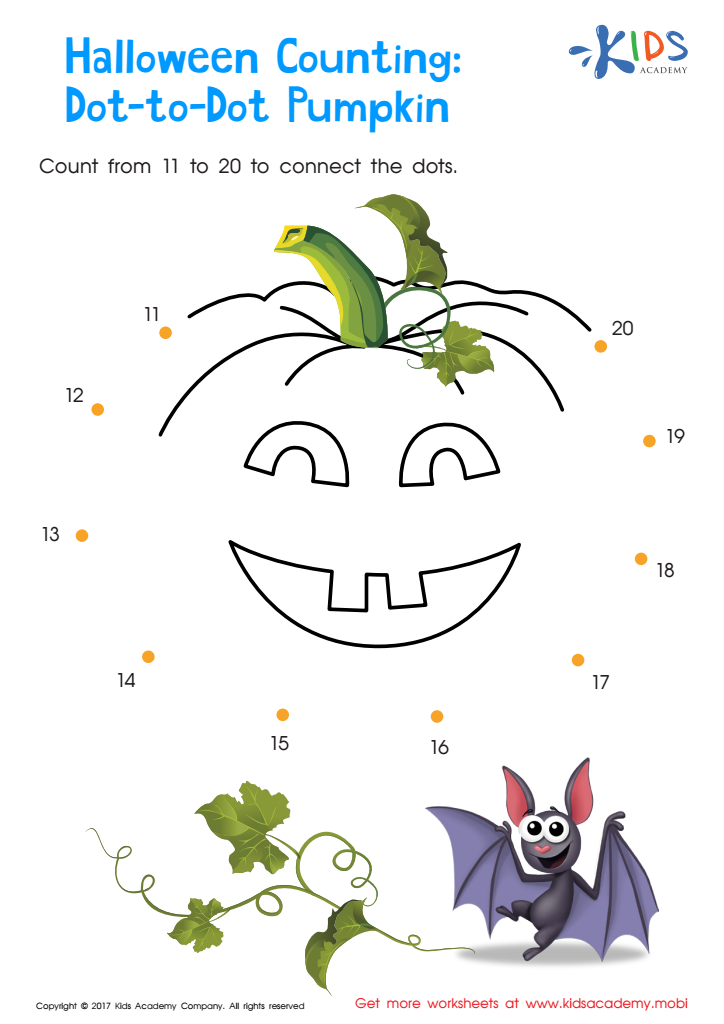
Ordering 11–20: Halloween Counting Worksheet
No matter the time of year, help your child get ready for Halloween with this worksheet. They'll practice counting from 11 to 20, recognizing numbers, and using a pencil to draw. By connecting the dots, they'll create a pumpkin picture, while unknowingly strengthening their early math skills. Print it today for an educational and fun experience!
Ordering 11–20: Halloween Counting Worksheet
Worksheet
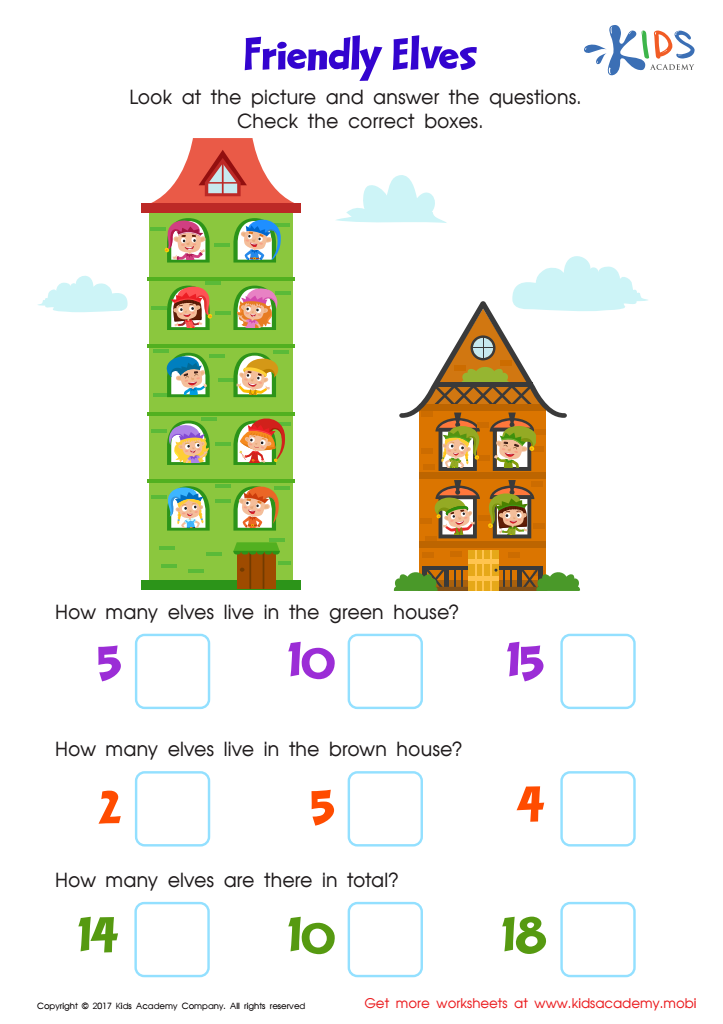
Place Value: Friendly Elves Worksheet
This fun worksheet teaches kids to count elves, answer questions about houses, and practice math! Look at the picture and count the elves in each house. How many are in the green and brown house? Tick the correct answer boxes. Perfect for young learners!
Place Value: Friendly Elves Worksheet
Worksheet
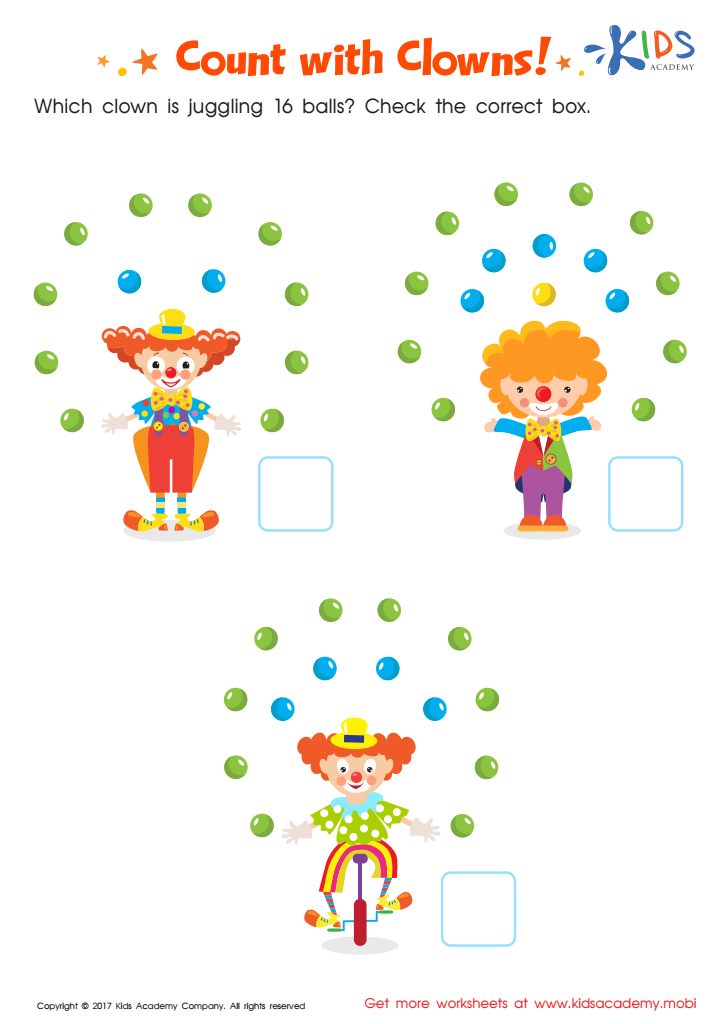
Count with Clowns Worksheet
Math may not be a laughing matter, but this worksheet sure is! Download the PDF and get ready to count balls with the clowns! Your child will have a blast and learn how to count at the same time. It's an easy, fun way to practice math!
Count with Clowns Worksheet
Worksheet
Join Kids Academy for Free
Who is primarily going to use this learning content?



Counting skills, especially for numbers 11–20, are crucial in building a strong mathematical foundation for children aged 3-6. During this developmental stage, kids are rapidly honing their cognitive abilities, and understanding the number sequence beyond ten significantly enhances their numerical fluency.
Firstly, mastering the numbers 11-20 lays the groundwork for future arithmetic. These formative years are critical for grasping basic concepts that will support more complex skills like addition, subtraction, and place value understanding. When children can confidently count to 20, they not only learn numbers but also begin to grasp the concept of quantity and the positional value of digits within a number.
Moreover, early counting promotes language development and memory skills. As children practice counting, they are also developing their ability to verbally articulate numbers, which supports broader communication skills. Additionally, sequential counting aids in memory retention and enhances concentration, which are vital learning skills across all subjects.
Socially and emotionally, successfully learning to count can boost a child’s confidence and foster a positive attitude toward learning. Parents and teachers observing and supporting this milestone are encouraging perseverance and setting the stage for continued curiosity and a love for learning. Therefore, engaging children in counting activities tailored to numbers 11-20 is integral to their overall educational development.