Logical thinking development Word Problems Worksheets for Ages 3-6
3 filtered results
-
From - To
Enhance your child's logical thinking skills with our engaging Word Problems Worksheets designed for ages 3-6. These worksheets are carefully crafted to promote critical thinking and problem-solving abilities through fun, age-appropriate challenges. Each worksheet presents relatable scenarios that encourage young learners to analyze information, evaluate options, and find solutions. As children work through these problems, they will develop important cognitive skills while enjoying the learning process. Our resources are perfect for both parents and educators looking to nurture a strong foundation in logical reasoning. Discover the joy of learning and watch your child's confidence soar with our interactive worksheets!
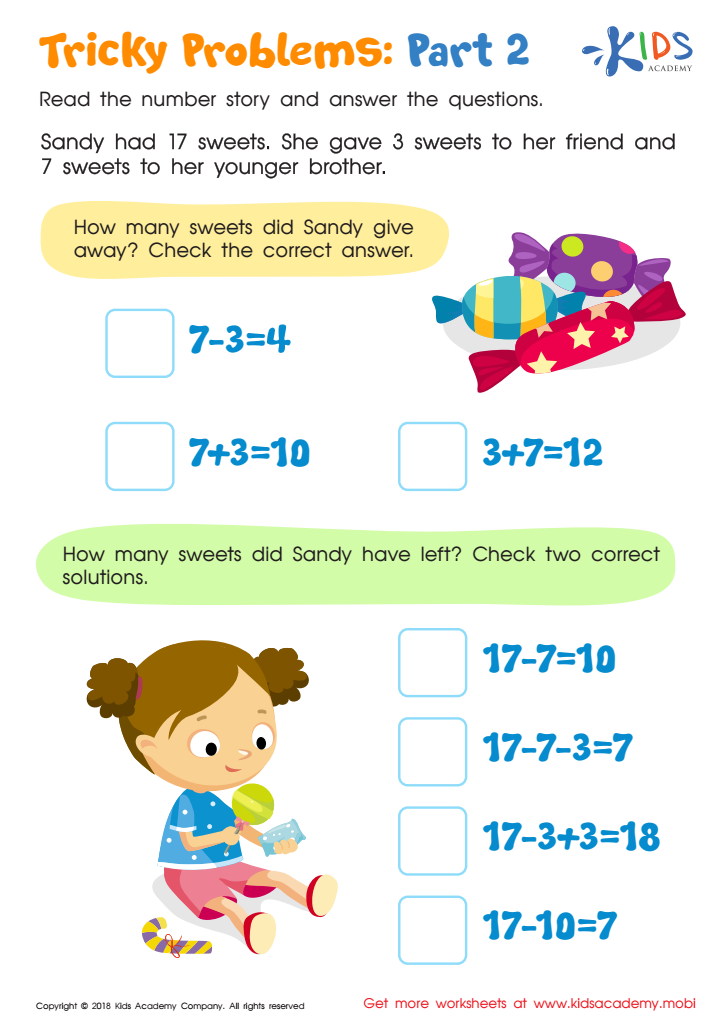
Tricky Problems Worksheet: Part 2
 Assign to My Students
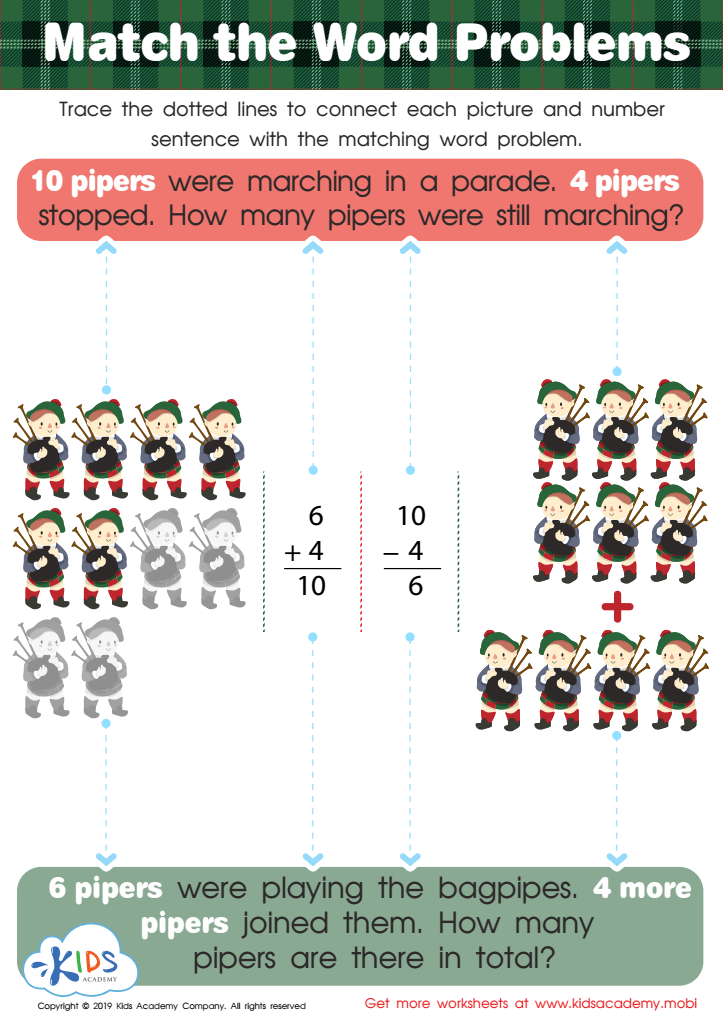
Match the Word Problems Worksheet
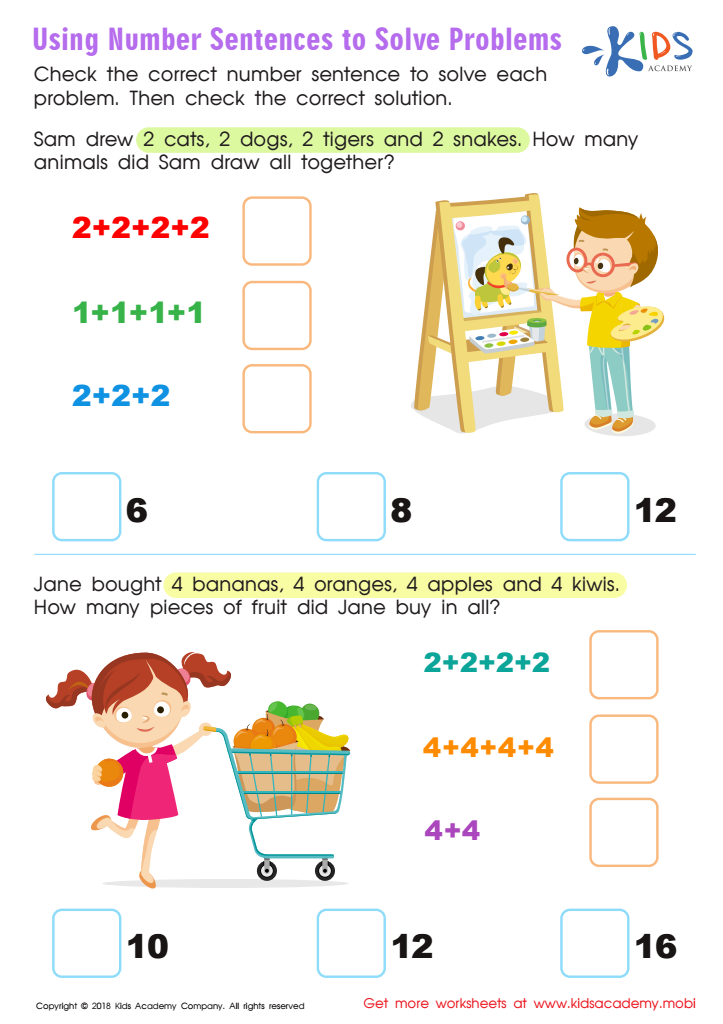
Using Number Sentences to Solve Problems Worksheet





.jpg)


Logical thinking development through word problems is crucial for young children as it lays a foundation for critical skills they will use throughout their lives. For children ages 3-6, engaging with word problems helps them make connections between words, numbers, and real-world scenarios, enhancing both comprehension and reasoning abilities.
Parents and teachers should care about this type of cognitive activity because it encourages children to think creatively and analytically. By solving word problems, children learn to identify relevant information, make comparisons, and draw conclusions. These skills are not only fundamental in math but also cross-disciplinary, boosting capabilities in reading and science.
Furthermore, word problems promote language development. As children read and interpret problems, they expand their vocabulary and improve their communication skills. Encouraging discussion around word problems nurtures social interaction, allowing children to articulate their thinking processes.
Moreover, logical thinking fosters persistence and resilience. As children navigate challenges presented in word problems, they learn the value of problem-solving and the satisfaction of overcoming obstacles. By supporting this development, parents and teachers prepare children not just for academic success, but for life skills that will serve them well beyond the classroom.








