Problem-solving abilities Word Problems Worksheets for Ages 3-6
4 filtered results
-
From - To
Unlock your child’s potential with our "Problem-Solving Abilities Word Problems Worksheets" designed for ages 3-6. These engaging activities nurture critical thinking and enhance cognitive skills, providing a solid foundation in math problem-solving. Each worksheet presents fun, relatable scenarios that encourage young learners to apply logic, analyze situations, and find solutions. Perfect for preschool and kindergarten levels, our expertly crafted worksheets pave the way for a lifelong love for learning. Foster your child’s confidence and curiosity as they master essential problem-solving abilities with this tailored educational tool. Start your learning journey with us today!
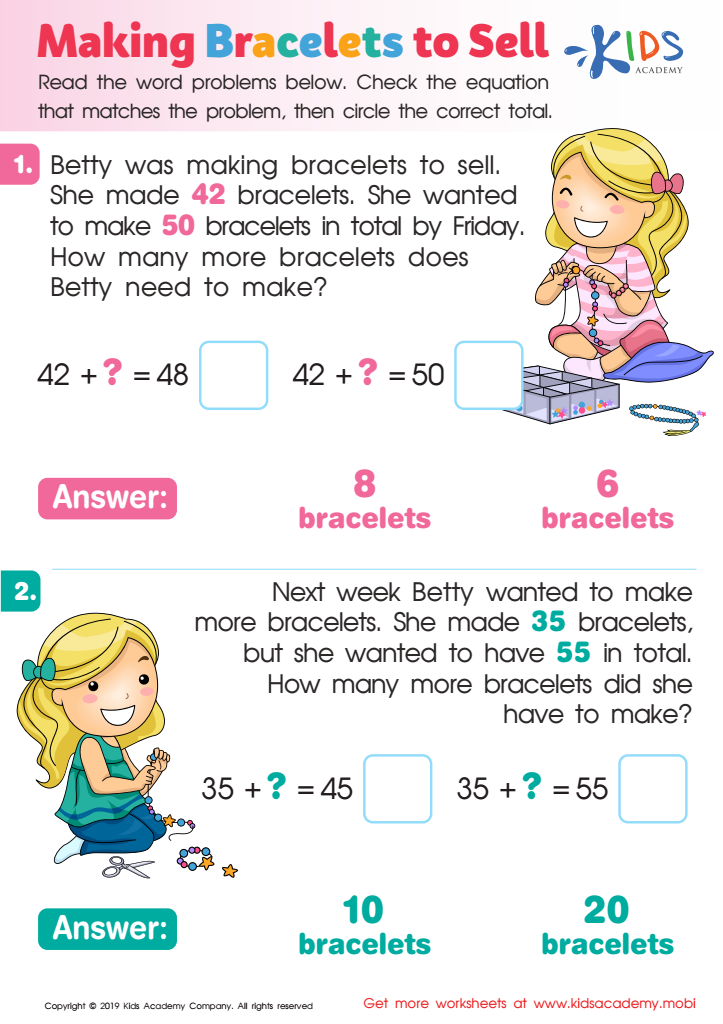
Making Bracelets to Sell Worksheet
 Assign to My Students
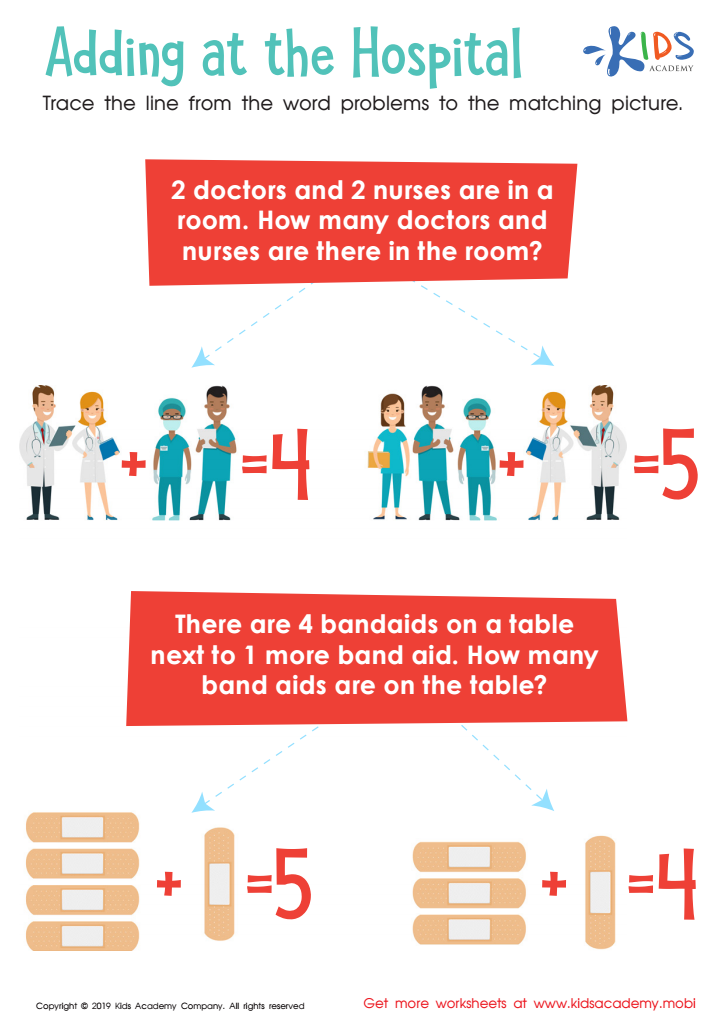
Adding at the Hospital Worksheet
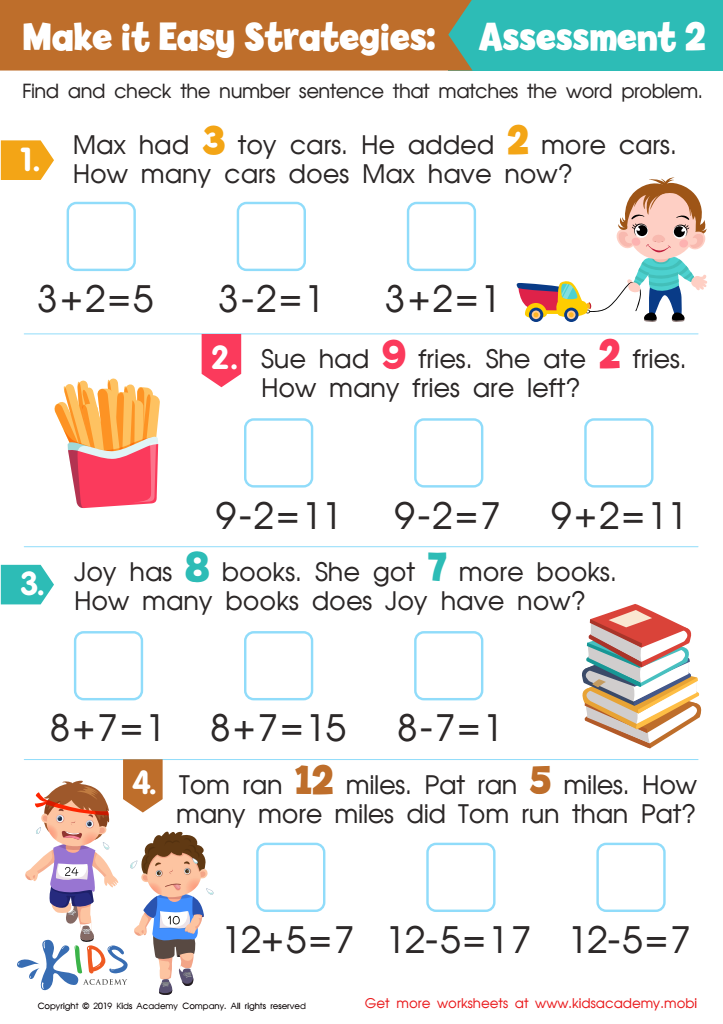
Make it Easy Strategies: Assessment 2 Worksheet
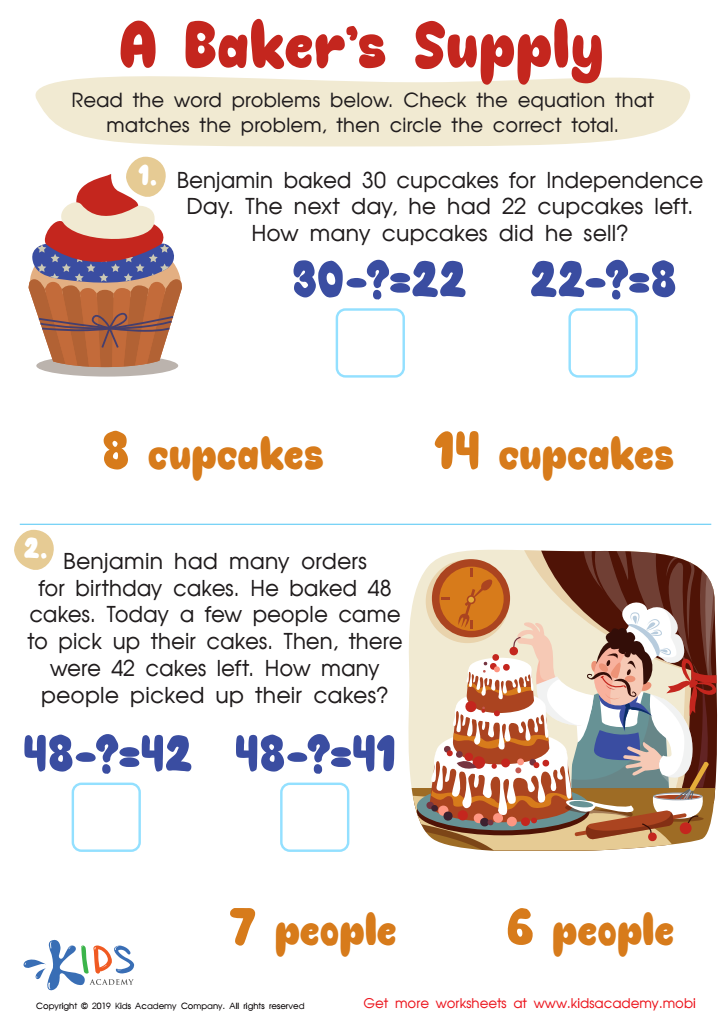
A Baker's Supply Worksheet








Problem-solving abilities, especially through word problems, are crucial for children aged 3-6 as they lay the foundation for future academic and personal success. At this formative stage, children's brains are highly receptive to new information and developing critical cognitive skills. Engaging in word problems helps enhance their analytical thinking, allowing young learners to approach situations with a structured and logical mindset. This contributes not only to their mathematical proficiency but also strengthens their language and comprehension skills.
Word problems simulate real-life scenarios, making math relevant and practical. They encourage kids to think about numbers and operations in meaningful contexts, rather than just abstract symbols. Furthermore, successfully navigating word problems instills a sense of achievement and boosts confidence, which motivates further learning and curiosity.
Parents and teachers should seize this golden period of rapid growth to nurture problem-solving abilities. The social aspect of solving problems together fosters teamwork and communication skills, vital for collaborative environments both in and outside the classroom. These early experiences with problem-solving create a resilient mindset, teaching children that challenges can be overcome with persistence and creative thinking. Investing time and effort into developing these abilities can set children on a path toward lifelong learning and adaptability.








