Animal knowledge Reading Non-Fiction Worksheets for Ages 3-6
3 filtered results
-
From - To
Discover our engaging "Animal Knowledge Reading Non-Fiction Worksheets for Ages 3-6" designed to spark curiosity and foster a love for reading. These printable worksheets combine fun facts and interactive activities to help young children learn about different animals, their habitats, and behaviors. Perfectly tailored for early learners, each worksheet promotes reading comprehension, vocabulary development, and critical thinking skills. Ideal for preschool and kindergarten students, our resources offer a captivating way to introduce non-fiction content, making learning about animals an exciting adventure. Download now and watch your little ones embark on an educational journey through the animal kingdom!
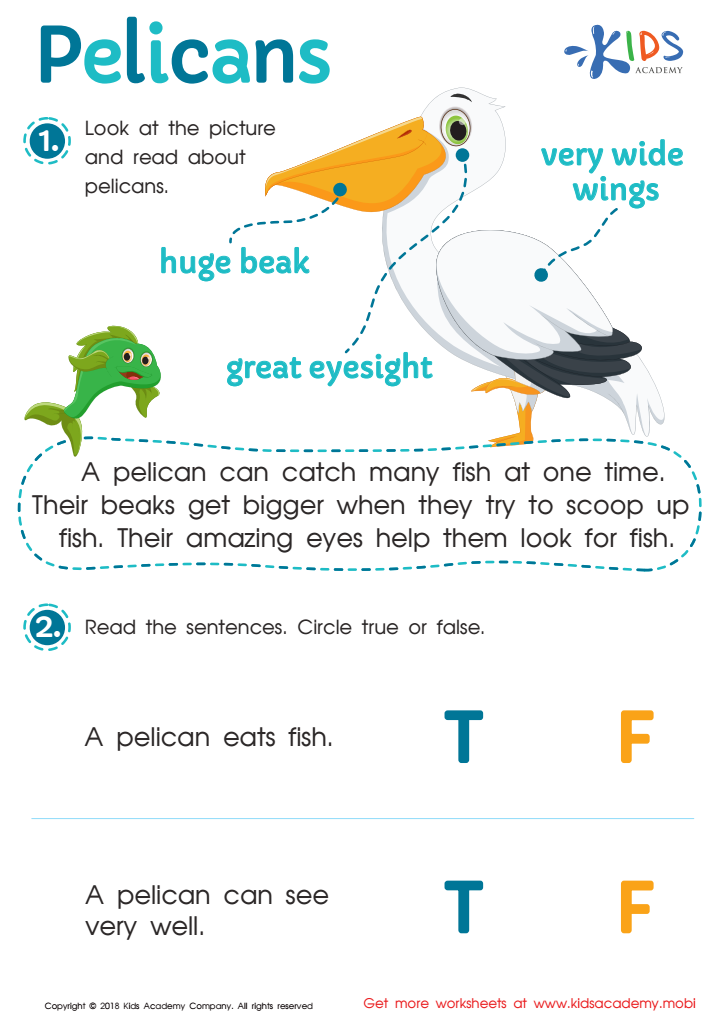
Pelicans Worksheet
 Assign to My Students
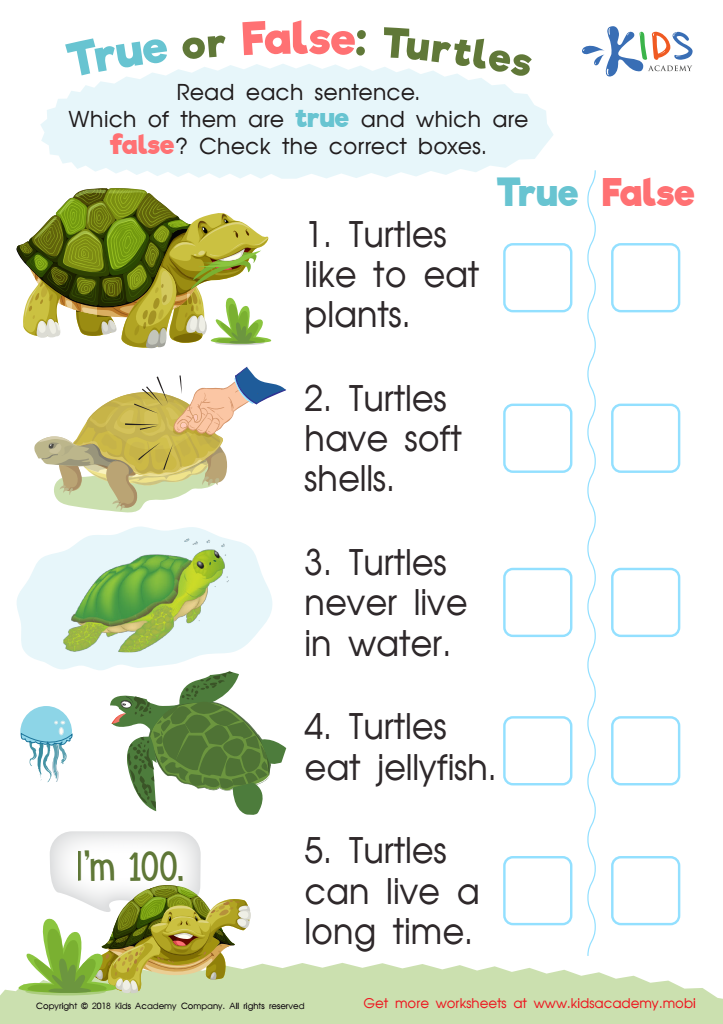
True or False: Turtles Worksheet
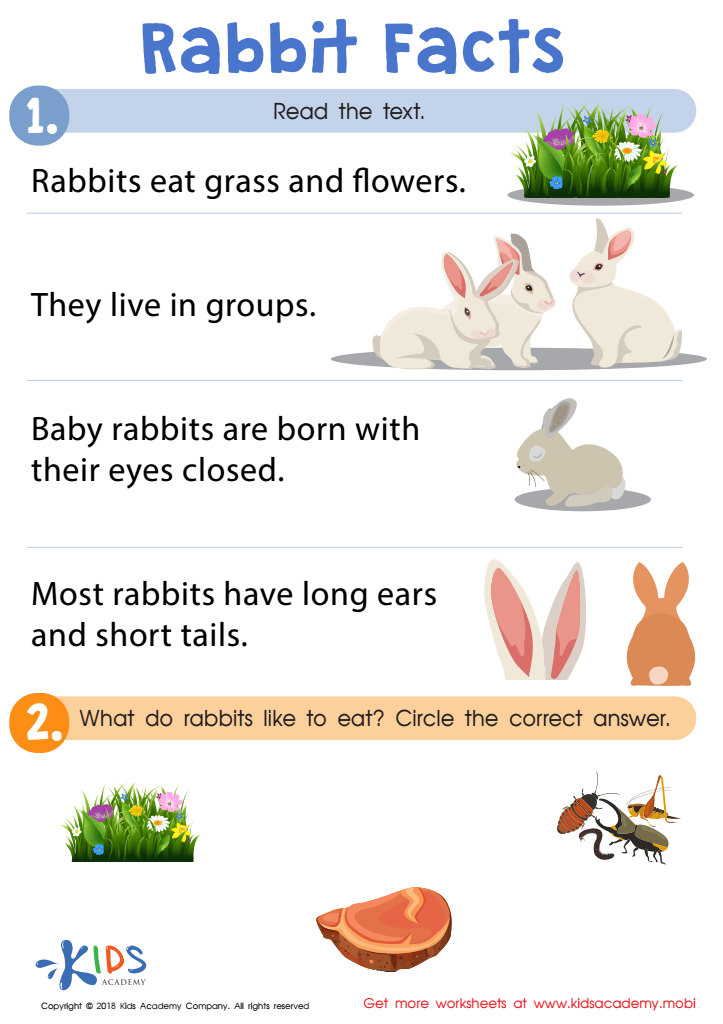
Rabbit Facts Worksheet








Developing a child's interest in animal knowledge through non-fiction reading from ages 3 to 6 offers significant cognitive, emotional, and social benefits. Firstly, young children are naturally curious about animals, which sparks an intrinsic motivation to engage with educational material. This curiosity aids in building a strong foundation for early literacy skills, such as vocabulary acquisition, comprehension, and critical thinking. Secondly, reading non-fiction texts about animals helps children differentiate between reality and make-believe, fostering a more accurate understanding of the world around them.
Emotionally, learning about animals can cultivate empathy and compassion in young children. These qualities are essential for developing healthy social relationships. Through stories of animal behavior, habitats, and conservation, children also learn important ethical values such as kindness, responsibility, and environmental stewardship.
From a social perspective, animal non-fiction encourages interactive learning. Parents and teachers can utilize these books to start meaningful discussions, ask questions, and engage in related activities such as visits to zoos or wildlife documentaries, further reinforcing the learning experience.
Therefore, prioritizing non-fiction animal books in early childhood education fosters a well-rounded, engaging, and interactive learning environment, equipping children with the critical thinking skills, empathy, and curiosity needed to navigate and appreciate the diverse, real world.








