Reading comprehension Reading Non-Fiction Worksheets for Ages 3-6 - Page 2
25 filtered results
-
From - To
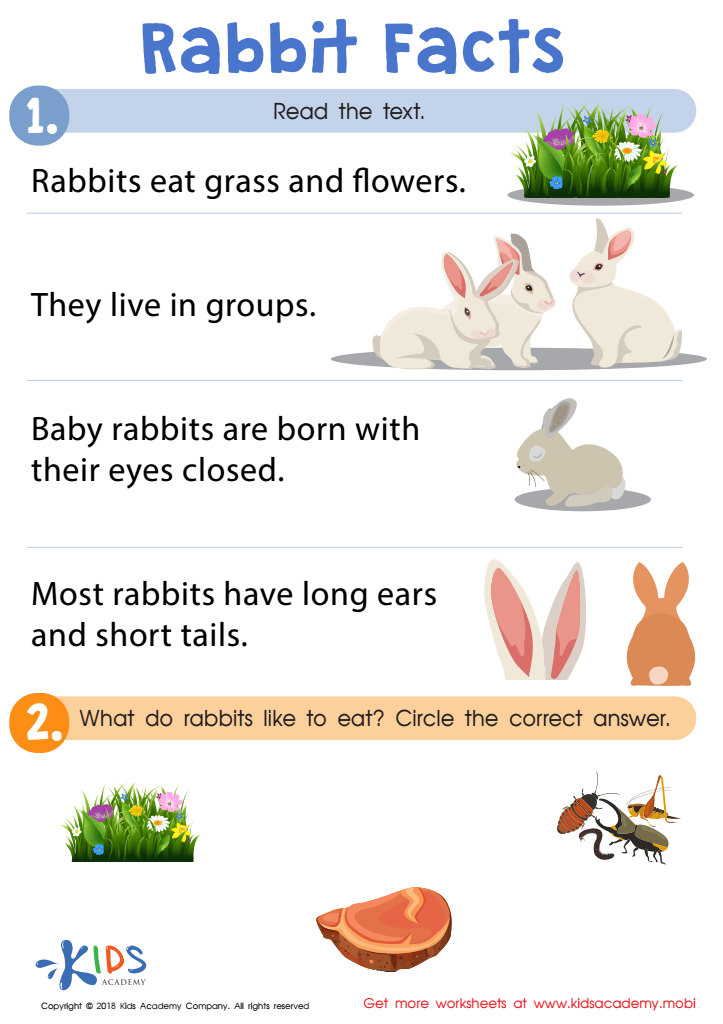
Rabbit Facts Worksheet
 Assign to My Students








Reading comprehension for non-fiction content is essential for young children, and parents and teachers should pay close attention to cultivating this skill between ages 3-6. At this developmental stage, children's brains are highly receptive, making it an ideal time to introduce various forms of literature, including non-fiction. Non-fiction exposes children to real-world concepts, helping them become more knowledgeable about the world around them.
Reading non-fiction helps build vocabulary by introducing words and phrases not commonly found in day-to-day conversations or fictional stories. This increased vocabulary can improve overall language skills and aid in better communication. In addition, non-fiction often includes facts, figures, and explanations that encourage analytical thinking and curiosity. For young minds, this kind of mental stimulation is crucial for cognitive development.
Understanding non-fiction also sets a foundation for later academic success. As children progress through school, they will encounter more non-fiction texts in subjects like science, history, and social studies. Early exposure to and comprehension of non-fiction can ease this transition and foster a lifelong love of learning. By nurturing these skills early, parents and teachers help children develop critical thinking abilities and a curiosity-driven approach to learning that can benefit them throughout their educational journey and beyond.








