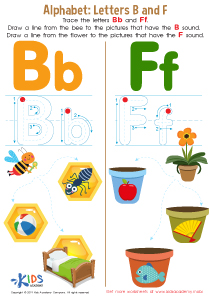
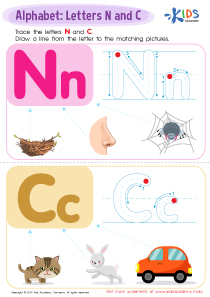
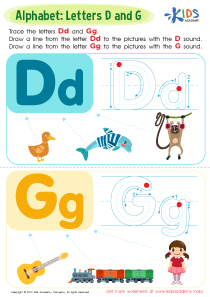
Writing practice Letter A Worksheets for Ages 3-8
3 filtered results
Difficulty Level
Grade
Age
-
From - To
Subject
Activity
Standards
Discover our engaging Writing Practice Letter A Worksheets tailored for children ages 3-8. These fun and educational printable activities help young learners master the foundational skills of writing the letter A through tracing, coloring, and practicing with dotted lines. Perfect for preschool to early elementary students, these worksheets are designed to develop fine motor skills, enhance letter recognition, and build a strong literacy foundation. Join Kids Academy and watch your child’s confidence and ability grow as they embark on an exciting journey of mastering their ABCs. Download and print for free to start learning today!
Favorites
With answer key
Interactive
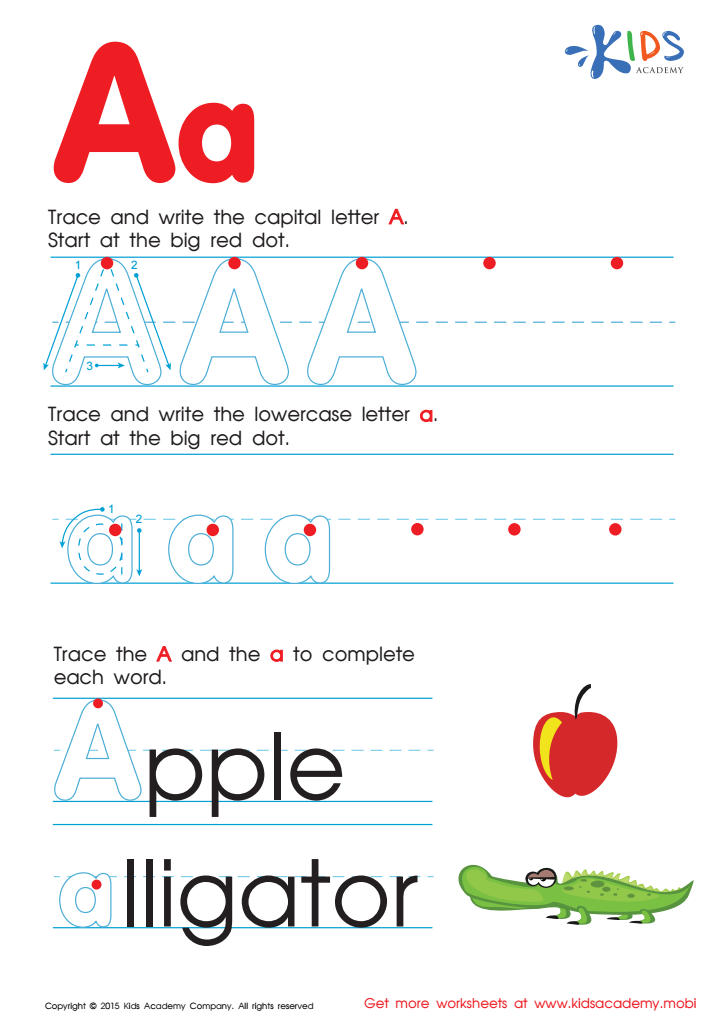
Letter A Tracing Page
Trace and write the letter "A"! Start with the big red dot, then do the capital and lowercase versions. Then write it again with two words - apple and alligator. Download more tracing worksheets at Kids Academy.
Letter A Tracing Page
Worksheet
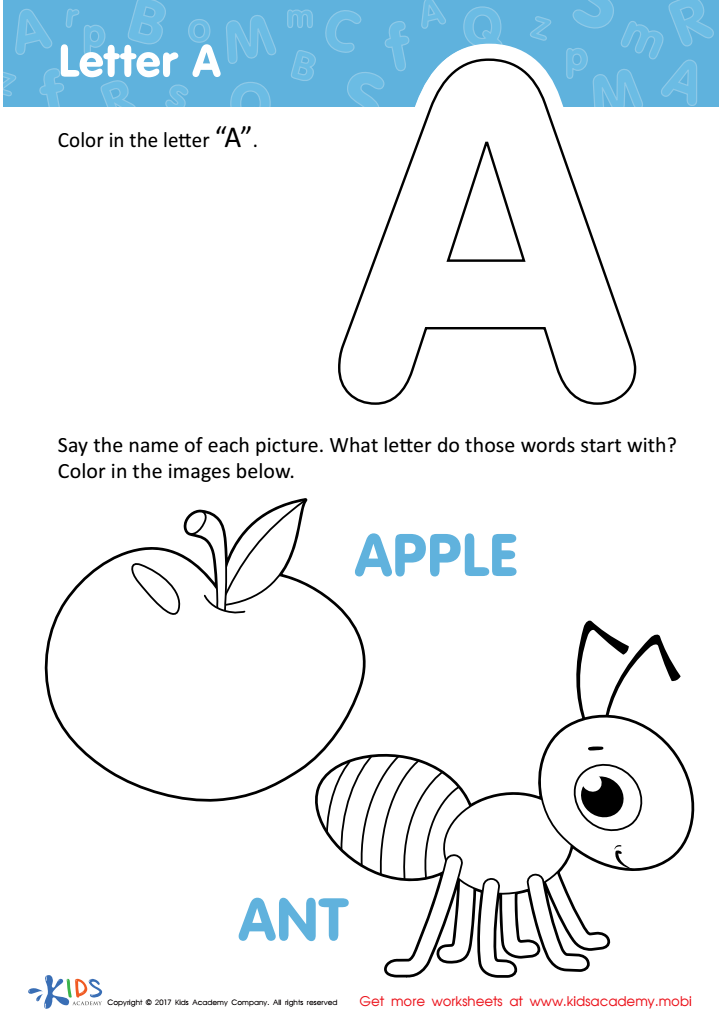
Letter A Coloring Sheet
This letter "A" coloring page is great for introducing kids to the alphabet! Let them exercise their creativity while they learn to recognize letters and sounds - it's a fun and easy way to help them get started.
Download (PDF)
 Assign to My Students
Assign to My Students
Letter A Coloring Sheet
Worksheet
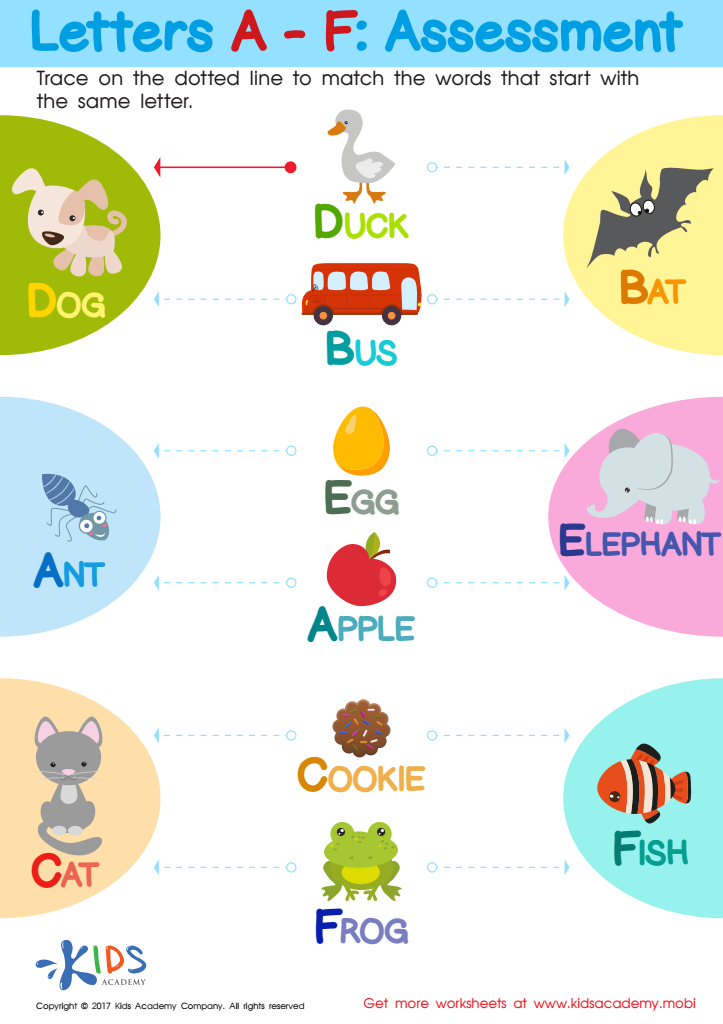
Letters A - F Worksheet
Help your child develop their reading skills with this fun phonics worksheet aimed at preschoolers. They can match letters A-F using colorful words and pictures. Assist your child by sounding out the letters and words - it's a great way to learn!
Letters A - F Worksheet
Worksheet
Join Kids Academy for Free
Who is primarily going to use this learning content?








Writing practice, particularly the letter "A," is fundamental for children aged 3-8, as it lays the groundwork for literacy development. Encouraging this skill at an early age fosters critical cognitive and motor skills. From a cognitive perspective, practicing the letter “A” enhances letter recognition and phonemic awareness, key components in the journey towards reading proficiency. These foundational skills are crucial as they contribute to a child's overall ability to decode and understand written text.
From a motor development angle, writing the letter “A” involves fine motor skills and hand-eye coordination. As children manipulate their pencils or crayons to form shapes, they are strengthening the muscles and coordination needed for writing other letters and more complex shapes. This can directly impact their ability to write words, sentences, and eventually paragraphs.
Additionally, mastery of the basics like the letter "A" instills a sense of accomplishment in young learners. Positive early experiences with learning often foster confidence and enthusiasm for future educational endeavors. Interaction with parents or teachers during writing practice also supports emotional and social development, building stronger relationships and communication skills.
Ultimately, investing effort in writing practice ensures a strong educational foundation, benefiting a child's long-term academic and personal growth.