
Rhyming skills Rhyming Worksheets for Ages 3-8
3 filtered results
Difficulty Level
Grade
Age
-
From - To
Subject
Activity
Standards
Unlock the fun world of words with our "Rhyming Skills Rhyming Worksheets" designed for ages 3-8. These engaging printables help young learners recognize and produce rhyming words, a critical step in language development and reading readiness. Our vibrant, kid-friendly worksheets encourage creativity and phonemic awareness, providing the foundational skills necessary for early literacy success. Perfect for both classroom and home use, they make learning to rhyme an enjoyable adventure. Explore our collection today and give your child a head start in developing strong language skills with these thoughtfully crafted resources!
Favorites
With answer key
Interactive
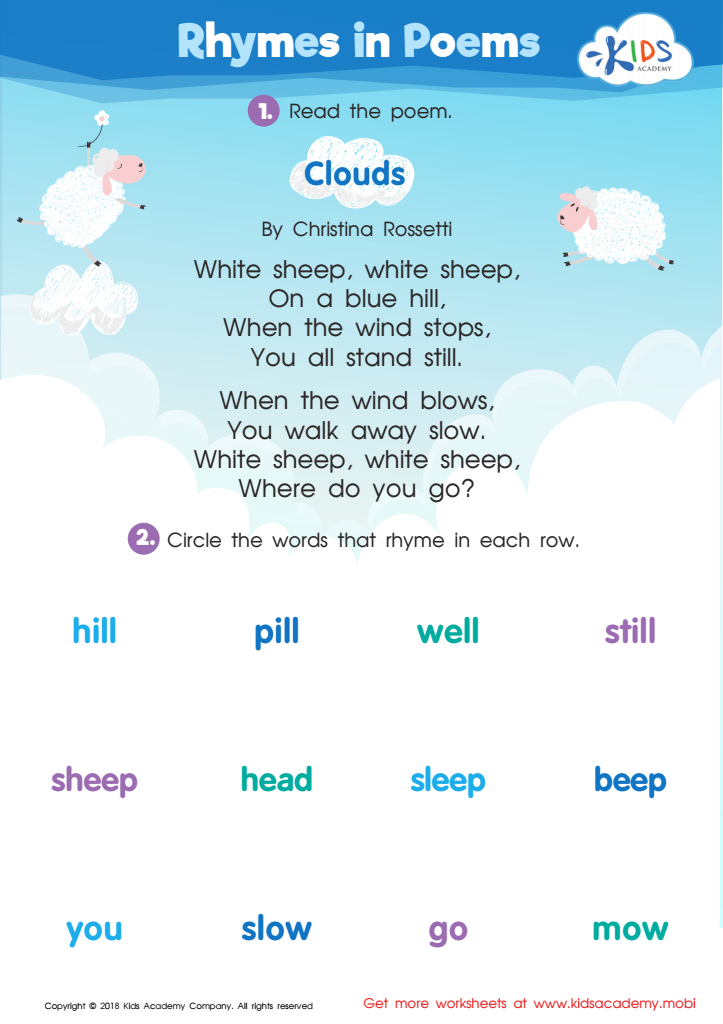
Rhymes in Poems Worksheet
Poems are lovely works of literature; some with rhymes, and some without. This poem for kids is full of rhymes and tells the tale of a sheep. Read it aloud to your kids, then help them circle the rhyming words.
 Assign to My Students
Rhymes in Poems Worksheet
Worksheet
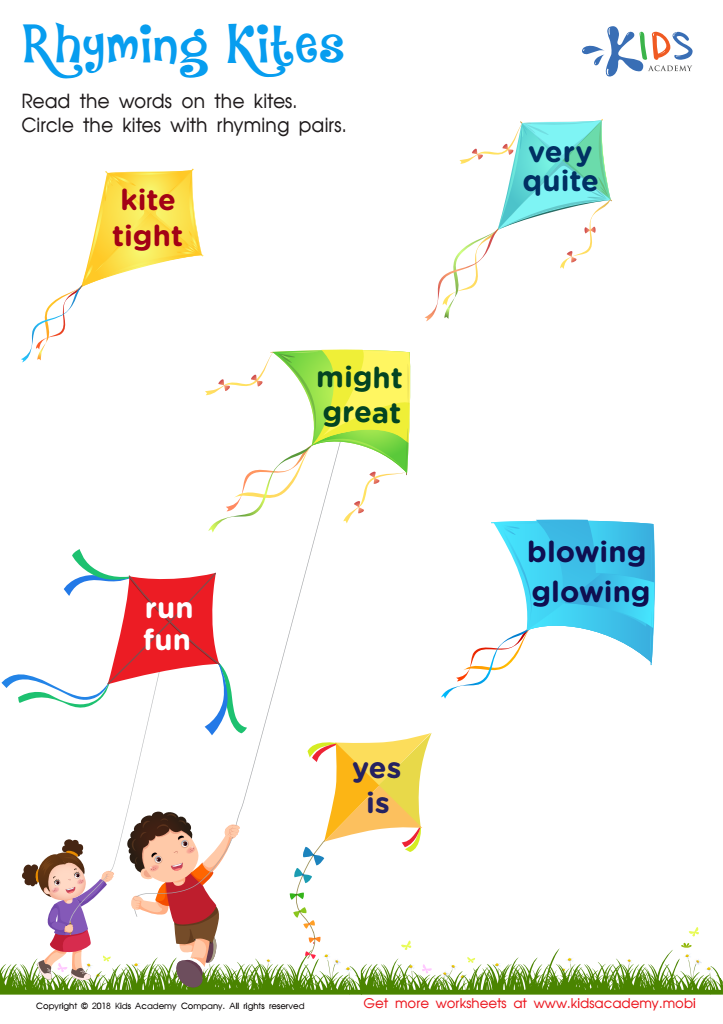
Rhyming Kites Worksheet
On a spring day, fly a kite! Kids Academy has a rhyming worksheet to boost your child's skills. Read the pairs of words aloud. Circle the kites if they rhyme, leave them blank if they don't. Listen carefully and find all the rhyming word pairs to complete this sheet!
Rhyming Kites Worksheet
Worksheet
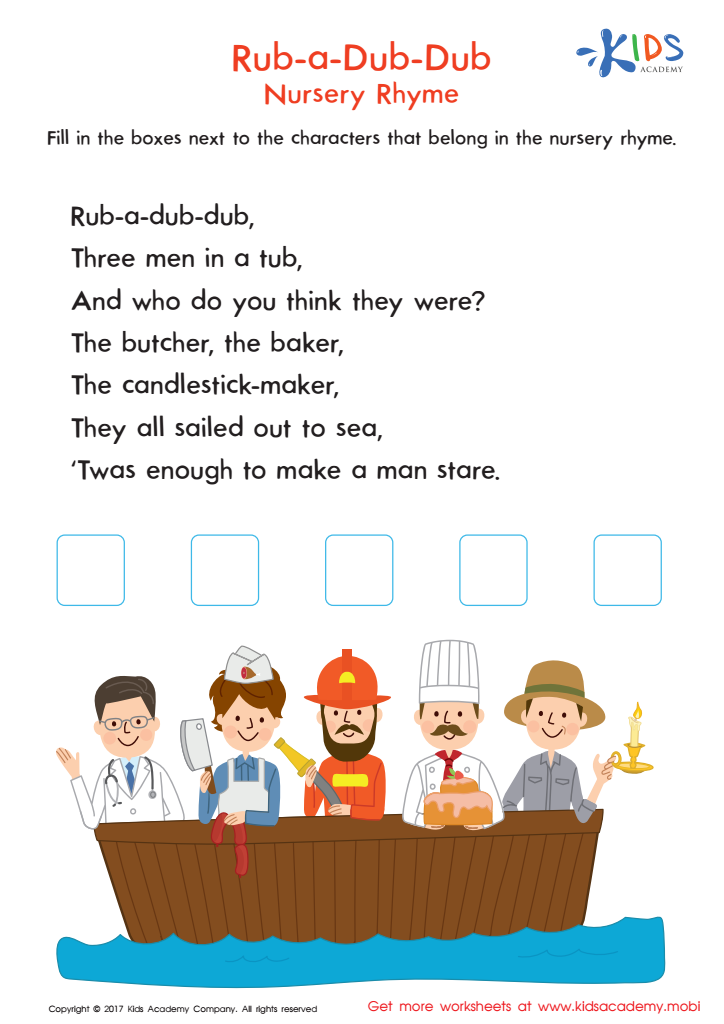
Rub a Dub Dub Printable
Delight your child and foster early reading skills with this printable nursery rhyme, Rub a Dub Dub! Let your little reader select the three men in the tub and practice important reading comprehension skills.
Rub a Dub Dub Printable
Worksheet
Join Kids Academy for Free
Who is primarily going to use this learning content?







Rhyming skills are essential for young children aged 3-8 because they form the foundation of early literacy. Understanding and recognizing rhymes help children with phonemic awareness, which is the ability to hear and manipulate sounds in words. This skill is critical for learning to read and spell.
First, rhyming helps with auditory discrimination, allowing children to hear similarities and differences in sounds, which boosts their ability to decode words later. For instance, recognizing that "cat" and "hat" rhyme teaches them that words can share patterns and sounds.
Second, rhymes are often catchy and fun, capturing children’s interest in language. This enjoyment motivates them to engage more in reading activities, resulting in increased exposure to vocabulary and language structures.
Furthermore, rhyming enhances memory and recall. Poems, songs, and stories with predictable rhymes make it easier for children to guess the next word, fostering their confidence in using language and predicting text. This repetitive exposure strengthens neural connections related to language processing.
Finally, strong rhyming skills often translate to better reading comprehension skills. Children who can identify rhymes are typically better at recognizing word families, thereby making reading a more fluent and enjoyable activity. Therefore, parents and teachers should prioritize rhyming activities to nurture foundational literacy skills in young children.







