Vocabulary expansion Rhyming Worksheets for Ages 3-8
5 filtered results
-
From - To
Enhance your child's vocabulary with our engaging Rhyming Worksheets designed specially for ages 3-8. These worksheets make learning fun as children explore words that rhyme, boosting their language skills and phonemic awareness. Our colorful, kid-friendly activities foster creativity and encourage young learners to think critically about word patterns. Each worksheet features interactive tasks that cater to varying skill levels, ensuring every child can participate and grow. By integrating play into education, our vocabulary expansion resources cover essential early language development. Discover a world of rhymes and improve your child's communication skills today with our delightful and effective worksheets!
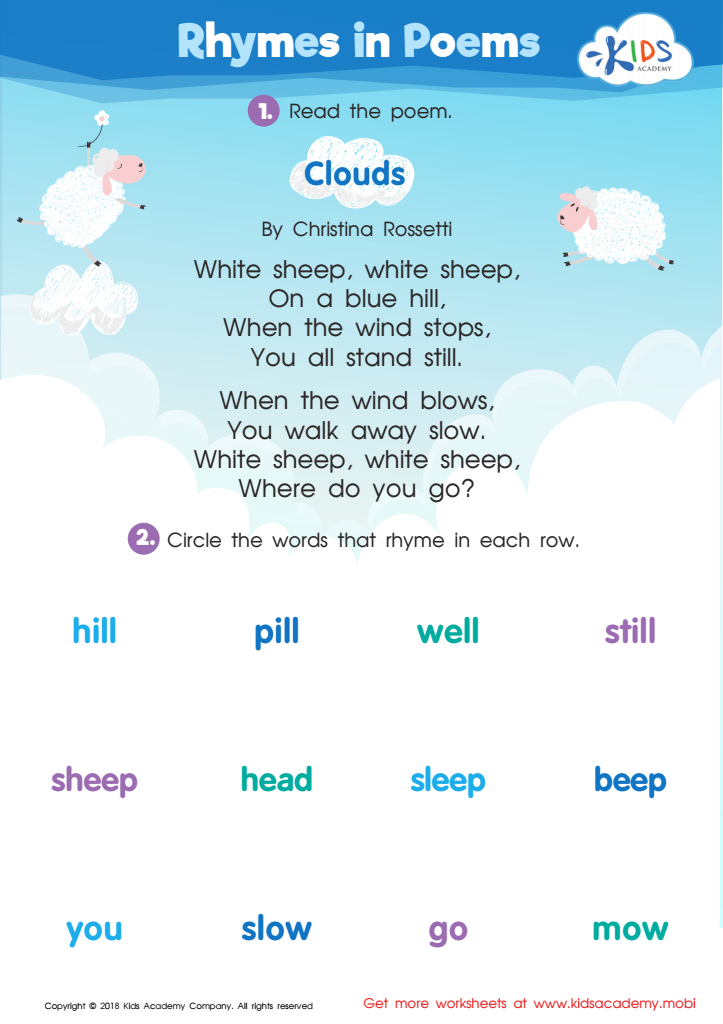
Rhymes in Poems Worksheet
 Assign to My Students
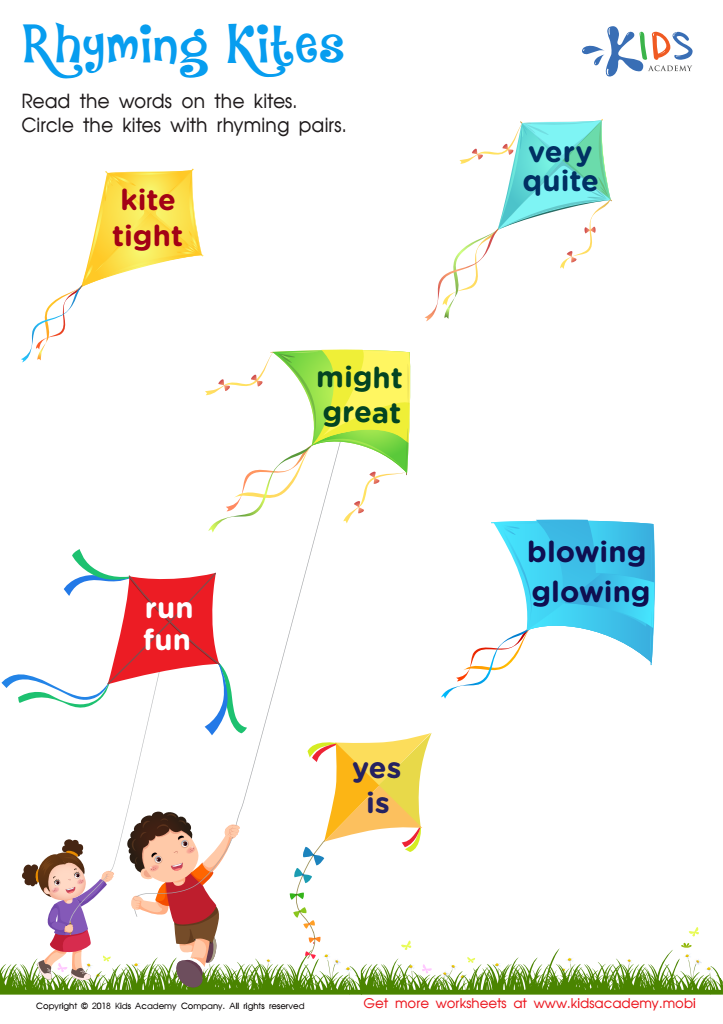
Rhyming Kites Worksheet
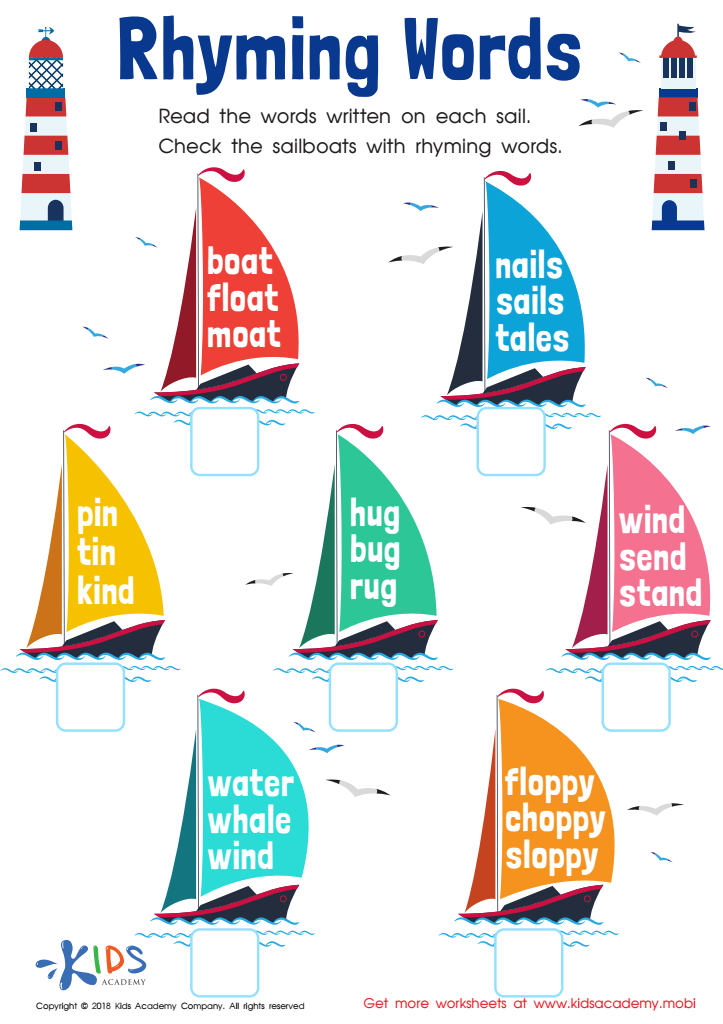
Rhyming Words Worksheet
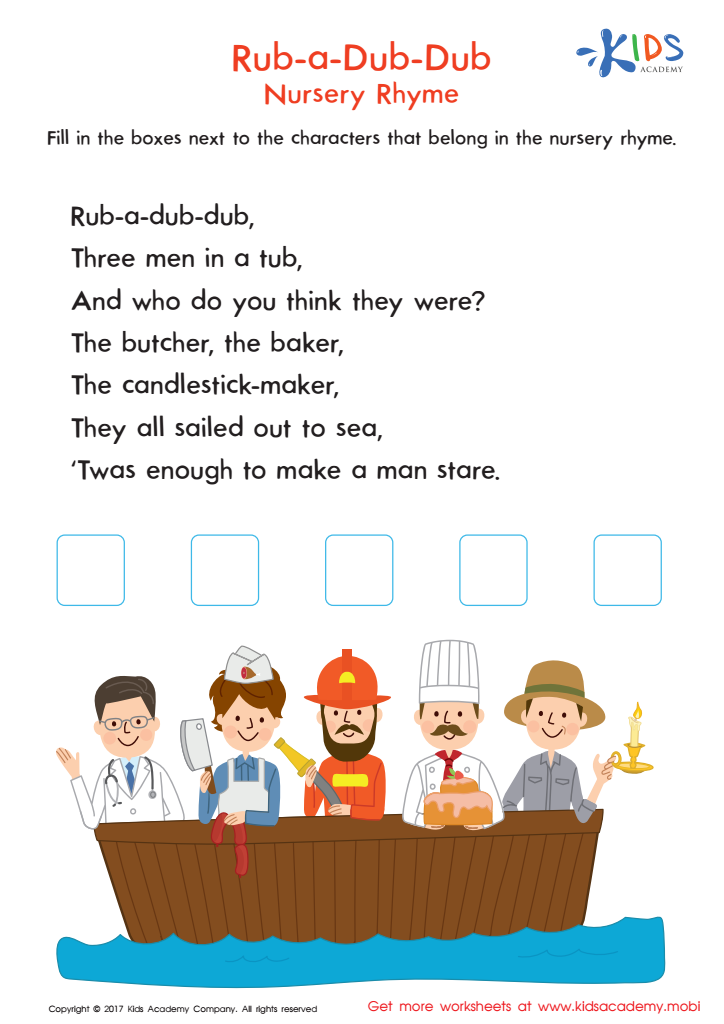
Rub a Dub Dub Printable
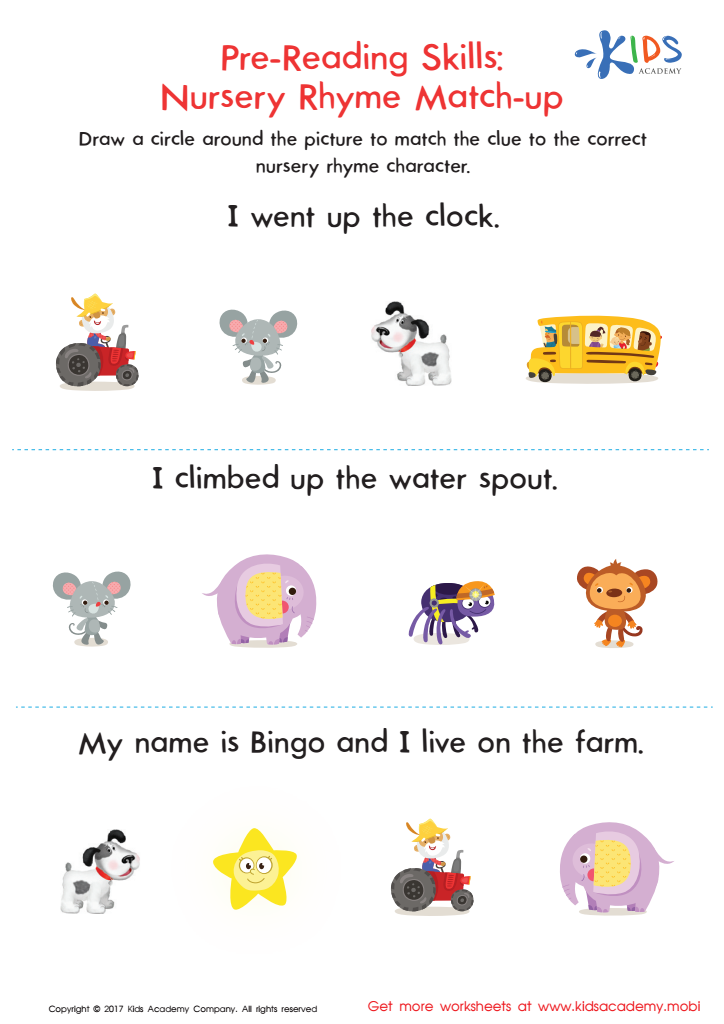
Nursery Rhyme Match–Up Worksheet








Vocabulary expansion through rhyming is essential for children aged 3-8, as it significantly contributes to their language development, early literacy skills, and cognitive growth. First, rhyming helps children recognize sounds and patterns in language, which enhances phonemic awareness—the ability to hear and manipulate sounds. This foundational skill is critical for reading success.
Moreover, exposure to rhyming words introduces new vocabulary in a fun and engaging way. This playful context makes it easier for young learners to remember and use new words, fostering a love for language and reading. Engaging with rhymes also encourages imagination and creativity, as children explore playful language patterns.
By using rhyming in daily activities, parents and teachers create a rich linguistic environment. This can include singing songs, reciting nursery rhymes, or engaging in rhyming games. Such activities not only support vocabulary growth but also strengthen the bond between adults and children through joyful interactions.
Additionally, studies show that strong vocabulary skills are linked to academic success later in life. Therefore, when parents and teachers prioritize rhyming and vocabulary expansion, they equip children with the tools needed for effective communication, critical thinking, and lifelong learning. Ultimately, fostering a rich vocabulary from a young age lays the groundwork for future academic achievement.







