
Sight word recognition Three Letter Words Phonics Worksheets for Ages 3-8
3 filtered results
Difficulty Level
Grade
Age
-
From - To
Subject
Activity
Standards
Boost your child’s reading journey with our Sight Word Recognition Three Letter Words Phonics Worksheets, tailored for ages 3-8! These engaging and colorful worksheets help young learners effortlessly recognize and pronounce three-letter words, enhancing early reading skills. Focusing on phonics and sight words, these resources lay the foundation for strong reading comprehension and fluency. Perfect for preschool, kindergarten, and early elementary students, each worksheet offers fun activities like coloring, tracing, and reading, making learning interactive and enjoyable. Visit our page to download our phonics worksheets and watch your child’s confidence in reading skyrocket!
Favorites
With answer key
Interactive
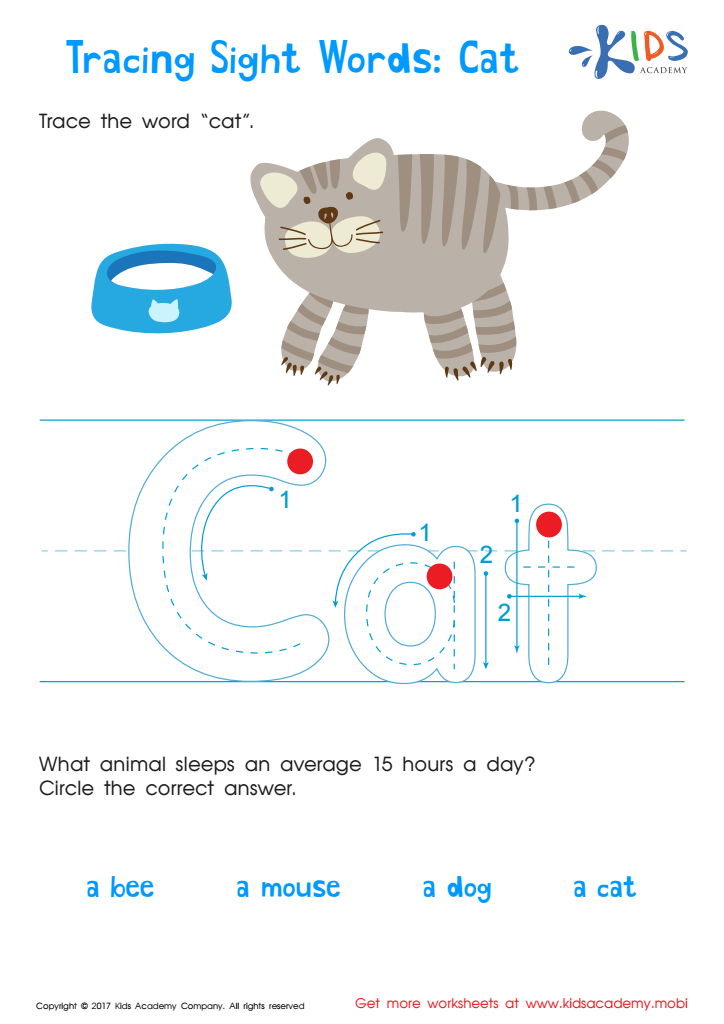
Cat Printable Sight Words Worksheet
Encourage your child's literacy with this fun sight words worksheet: cat PDF! It helps build a solid foundation for reading, featuring activities such as reading and tracing the word cat, and finding it amongst other sight words. With its cute cat, Kids Academy makes learning to read a delight!
Cat Printable Sight Words Worksheet
Worksheet
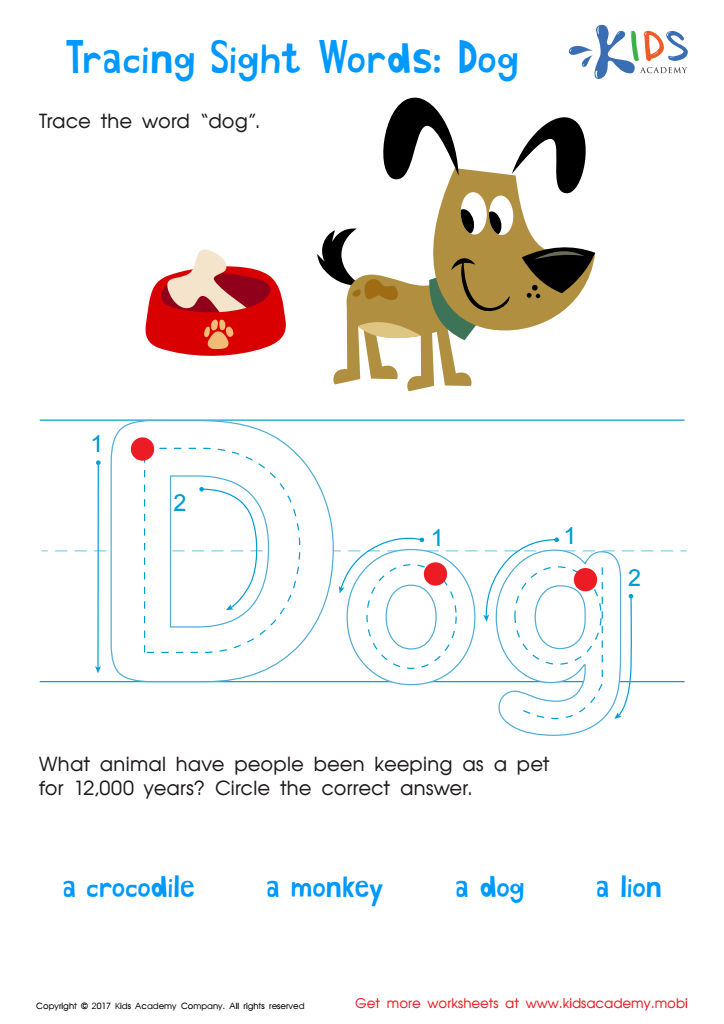
Dog Worksheet Sight Words Worksheet
Get your kids excited to read with our dog-themed sight words worksheet!
Excite your child to read with our sight words worksheet: dog edition! Featuring a lovable dog character to put a smile on any kid's face, this worksheet helps kids practice reading and writing the word "dog". Build a library of words they can read quickly and promote increasing literacy skills with early fluency! Get them ready for reading with our dog-themed sight words worksheet!
Dog Worksheet Sight Words Worksheet
Worksheet
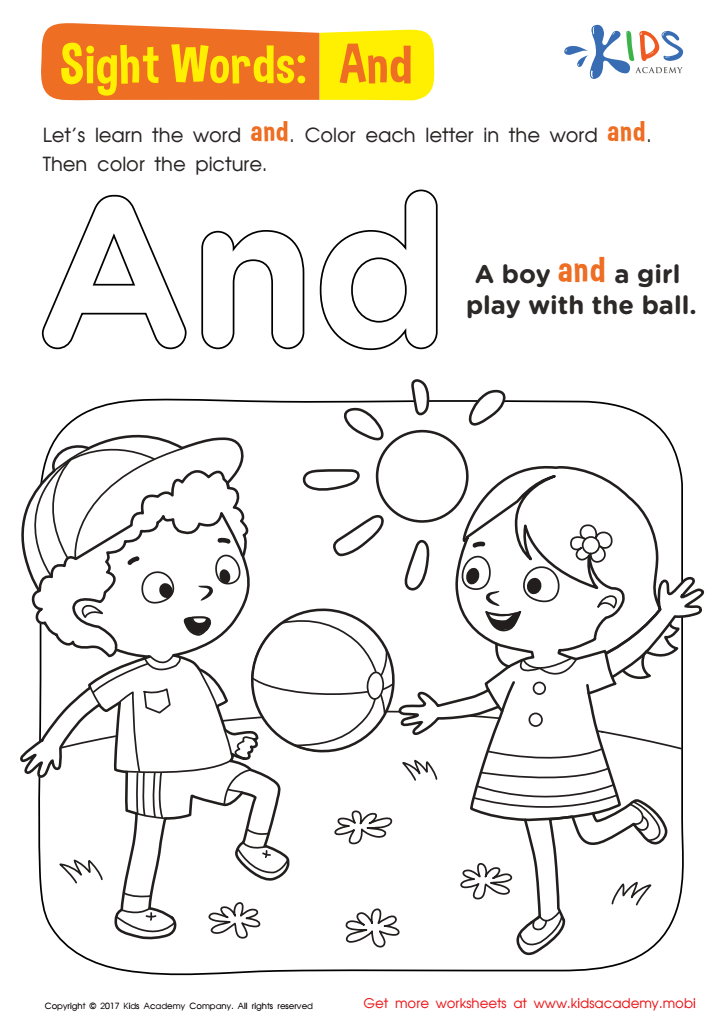
And Worksheet Sight Words Worksheet
Help your child get a jumpstart on reading with sight words! Print out this fun worksheet and get your child to read the sentence. Point out the word "and", then color the word and enjoy the rest of the scene! It's a great way to introduce sight words and get their early reading skills going!
Download (PDF)
 Assign to My Students
Assign to My Students
And Worksheet Sight Words Worksheet
Worksheet
Join Kids Academy for Free
Who is primarily going to use this learning content?




Sight word recognition and phonics, especially with three-letter words, are fundamental aspects of early literacy for children aged 3-8. Sight words are commonly used words that young readers should recognize instantly for fluent reading. Learning these words early helps in reducing the cognitive load during reading, allowing children to focus on comprehension rather than decoding each word. For example, words like “cat,” “bat,” and “dog” are simple but appear frequently in early reading materials.
Three-letter word phonics plays a crucial role in developing a child's understanding of letter-sound relationships. Mastering this skill helps children decode unfamiliar words by breaking them into sounds, fostering both reading and spelling abilities. Phonics instruction promotes the ability to read ‘word families’ such as "hat," "mat," and "rat," enhancing a child's ability to recognize patterns in words.
For parents and teachers, focusing on these aspects develops foundational skills needed for more complex literacy tasks. It positively impacts a child's academic confidence and success, making learning enjoyable and less frustrating. Early proficiency in sight words and phonics sets the stage for a lifetime of reading pleasure and educational achievement, fostering a positive attitude towards learning and intellectual curiosity.
By integrating sight word recognition and phonics into daily learning routines, parents and teachers can provide young learners with the tools they need to succeed.







