Long vowel recognition Vowels and Consonants Worksheets for Ages 3-8
3 filtered results
-
From - To
Our "Long Vowel Recognition Vowels and Consonants Worksheets for Ages 3-8" are designed to make learning fun and effective. These educational resources help children differentiate between short and long vowels, strengthening their reading and writing abilities. Engaging activities, vibrant illustrations, and interactive exercises captivate young learners, making it easier for them to grasp complex vowel sounds. Perfect for both classroom and home settings, our worksheets ensure children build a solid foundation in phonics. Support your child's literacy journey with effective and entertaining long vowel recognition worksheets from Kids Academy. Suitable for preschool to second-grade students.
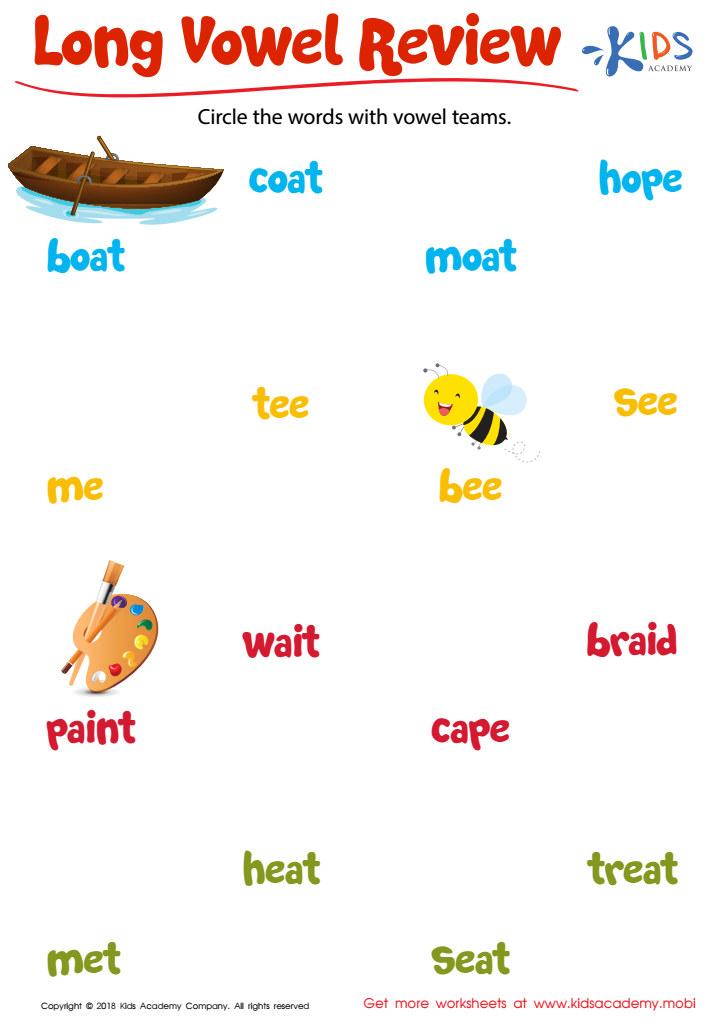
Long Vowel Review Worksheet
 Assign to My Students
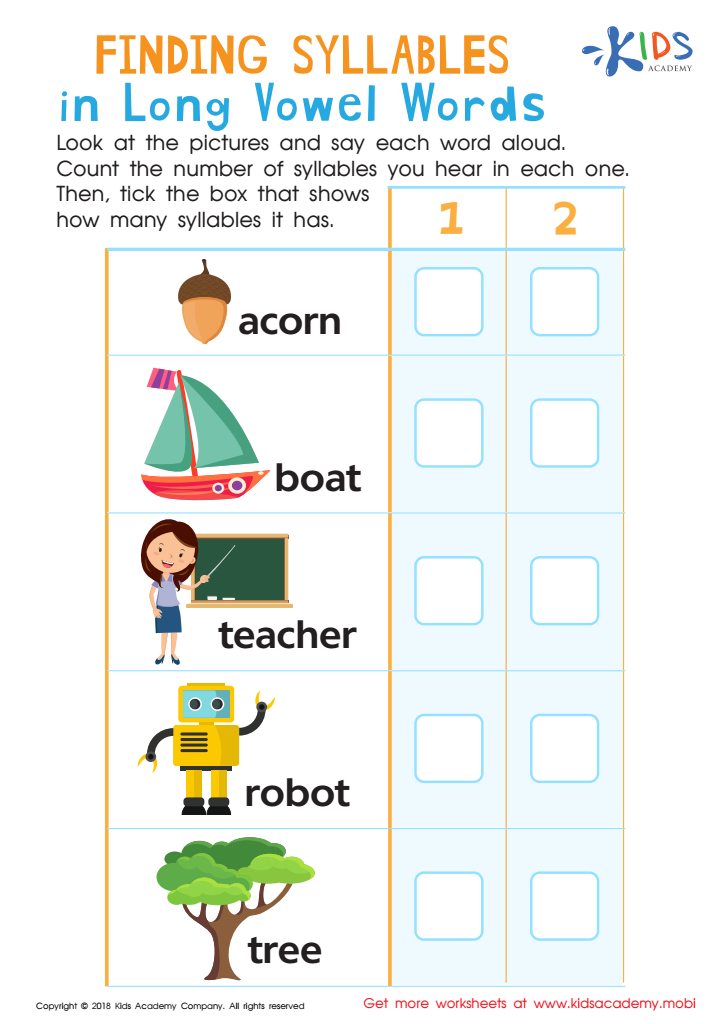
Finding Syllables in Long Vowel Words Worksheet
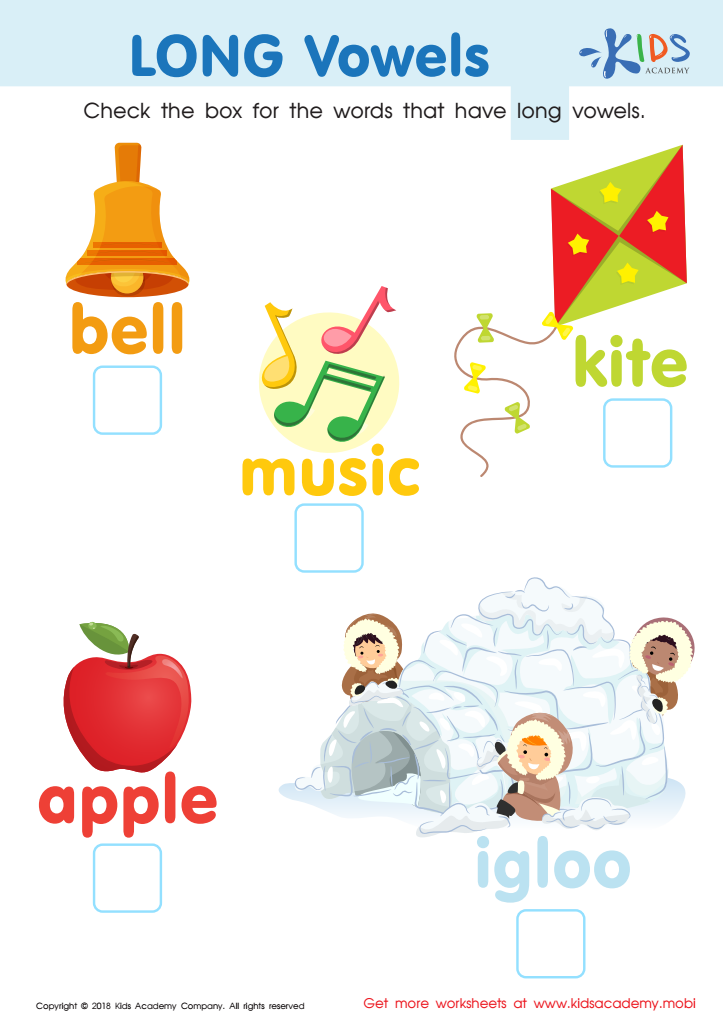
long vowels Worksheet



Recognizing long vowels, vowels, and consonants is foundational for children aged 3-8 because these building blocks are crucial in developing early reading and writing skills. When children can identify and distinguish between these sounds, they can start to understand how words are formed, enabling them to decode unfamiliar words more effectively.
Long vowel sounds are especially important because they often affect the meaning of words. For instance, understanding the difference between "hat" and "hate" or "rid" and "ride" can significantly impact comprehension. Early recognition of vowel sounds helps children improve their phonemic awareness, boosting their ability to read fluently and with accuracy.
Teachers and parents who emphasize these skills are setting the groundwork for academic success. Strong literacy skills are correlated with better performance in many school subjects, reducing frustration and instilling a love for reading. Engaging children in fun, interactive activities, such as songs, games, and storytelling, can make learning these skills more enjoyable and effective.
Investing time in teaching these fundamental concepts in early childhood prepares children not only for elementary schooling but also supports their lifelong learning journey, enhancing their ability to communicate clearly and think critically.